Table of Contents
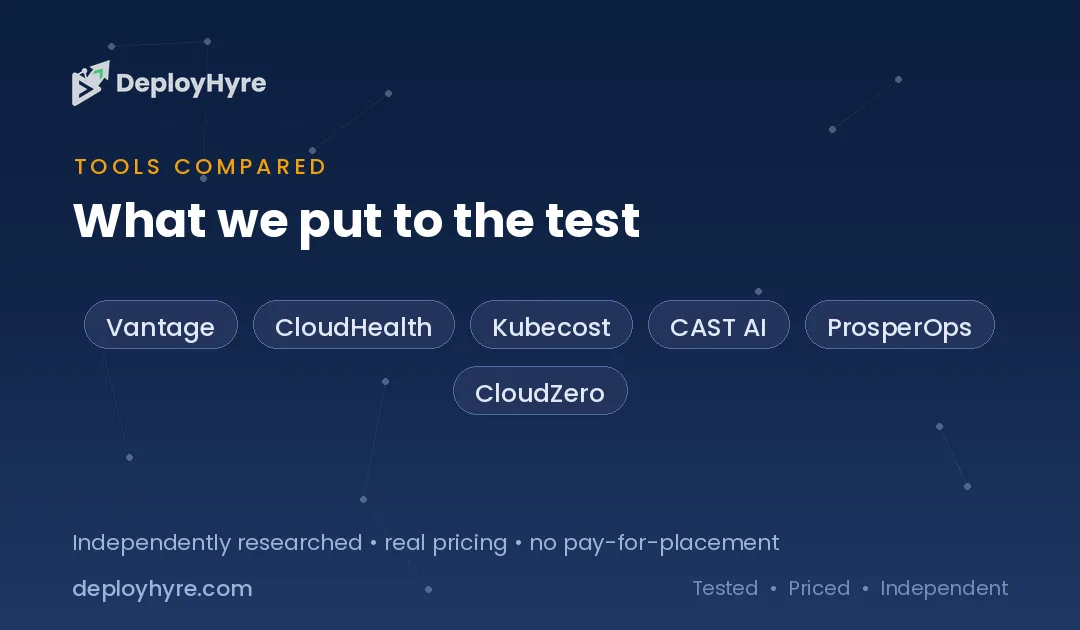
The best AI cloud cost management tool depends on the job: Vantage for mid-market visibility, CloudHealth for enterprise governance, ProsperOps or nOps for automated commitment management, Kubecost or CAST AI for Kubernetes, and CloudZero for unit economics and AI-cost tracking. FinOps tools give you visibility into cloud spend, attribute it to teams and products, and cut waste, turning an opaque, ballooning cloud bill into something you can understand, allocate, and reduce.
The way to choose: FinOps tools split by the specific job they do, and no single tool is best at all of them. Visibility platforms (Vantage, CloudHealth) show where money goes; automation tools (ProsperOps, nOps, Usage.ai) buy and manage commitments to cut rates; Kubernetes specialists (Kubecost, CAST AI) optimize container spend; and unit-economics platforms (CloudZero) tie cost to customers, features, and AI inference. Matching the tool to your primary cost problem, visibility, automation, Kubernetes, or unit economics, is the decision, and large organizations often run more than one.
Every price below is a recent observed figure. Because enterprise platforms quote by spend, treat each as a band.
Quick Comparison: Cloud Cost Management Tools at a Glance
| Tool | Best For | Observed Price | Job |
|---|---|---|---|
| Vantage | Mid-market visibility | Free tier; $99–$499/mo | Visibility |
| CloudHealth (Broadcom) | Enterprise governance | $50,000+/yr | Visibility / governance |
| Kubecost | Kubernetes cost | Open-source core; Pro $499/mo | Kubernetes |
| CAST AI | Kubernetes automation | Usage-based (quote) | Kubernetes automation |
| ProsperOps | Automated commitment management | % of savings (quote) | Rate automation |
| CloudZero | Unit economics + AI cost | Enterprise (quote) | Unit economics |
What AI Cloud Cost Management Tools Do
Cloud bills are notoriously opaque: usage-based pricing across thousands of services, resources spun up and forgotten, and no clear line from spend to business value. FinOps (cloud financial operations) tools fix this by ingesting your cloud billing data, showing where every dollar goes, attributing cost to teams, products, and features, flagging waste (idle resources, over-provisioning), and recommending or automatically making optimizations. They turn cloud cost from a monthly surprise into a managed, accountable discipline.
The AI layer drives optimization and forecasting: it detects anomalies (a sudden spend spike), recommends rightsizing and commitment purchases, forecasts future spend, and, in the automation tools, autonomously buys and manages reserved instances and savings plans to cut your effective rate. A fast-growing 2026 need is AI and GPU spend tracking, platforms like CloudZero, nOps, Vantage, and Finout now track the cost of AI inference (OpenAI, Anthropic, Bedrock) and GPU compute, which has become a major and poorly-understood line item.
FinOps overlaps with cloud infrastructure and data platforms. It manages the spend on the hosting in our best cloud hosting guide, the warehouses in our best cloud data warehouses guide, and the ML compute in our best MLOps platforms guide.
FinOps Tools Split by Job
FinOps tools specialize by job, and choosing well means matching the tool to your primary cost problem rather than expecting one platform to do everything. Visibility tools (Vantage, CloudHealth) answer “where is the money going?” with dashboards, allocation, and reporting. Automation tools (ProsperOps, nOps, Usage.ai) answer “how do I cut the rate?” by autonomously buying and managing commitments (reserved instances, savings plans). Kubernetes specialists (Kubecost, CAST AI) optimize container and cluster spend, which general tools handle poorly. Unit-economics platforms (CloudZero) answer “what does each customer, feature, or AI query cost?”
Large organizations commonly combine tools: at $200,000-plus a month cloud spend, a typical setup pairs an enterprise visibility platform (CloudHealth/Apptio) with specialist automation (CAST AI + ProsperOps), costing $5,000 to $15,000 a month for 30 to 50 percent savings. Smaller teams pick the one tool matching their biggest problem, usually visibility (Vantage) or Kubernetes (Kubecost). Identify whether your pain is understanding spend, cutting rates, controlling Kubernetes, or tying cost to business value, then choose the specialist for that job.
Best for Visibility and Mid-Market
Vantage is the best cloud cost visibility platform for mid-market and startup teams, a self-serve FinOps tool with a free tier, 25-plus SaaS integrations, and clean dashboards aimed at engineers as much as finance, priced $99 to $499 a month. Its self-serve model and engineer-friendly design (API, CLI, clear cost views) make it easy to adopt without an enterprise sales cycle, and its integrations extend cost visibility beyond raw cloud to the SaaS tools that also drive spend. For teams that want to understand and allocate their cloud bill affordably, Vantage is the standout.
CloudHealth (now maintained by Broadcom after the VMware acquisition) is the enterprise governance counterpart, with strong multi-cloud and hybrid coverage at $50,000-plus a year, built for large organizations that need governance, policy, and allocation across complex estates. Both focus on visibility and governance; Vantage for accessible mid-market and startup use, CloudHealth for enterprise multi-cloud governance. For most growing teams, Vantage’s free-to-$499 range delivers the visibility that is the foundation of any FinOps practice, before you layer on automation.
Best for Automated Optimization
ProsperOps is the leader for automated commitment management, autonomously buying and continuously optimizing reserved instances and savings plans to cut your effective cloud rate, typically priced as a percentage of the savings it generates. Commitment management, deciding what to reserve, for how long, and adjusting as usage changes, is complex, high-stakes, and continuous, exactly the kind of work automation does better than humans. ProsperOps’s percentage-of-savings model aligns its incentive with yours (it earns only when it saves you money), which is why it is a favorite for organizations wanting rate optimization without a dedicated FinOps team managing commitments manually.
nOps is the other strong automation platform, combining commitment management with broader optimization and AI/GPU spend tracking, and Usage.ai also leads in automated commitment management. All three answer the “cut the rate” job through automation rather than dashboards. They pair well with a visibility tool: you see where money goes (Vantage/CloudHealth), then automation (ProsperOps/nOps) reduces the rate you pay for it. For organizations spending enough that commitment optimization matters, automation tools deliver savings that manual management leaves on the table.
Best for Kubernetes and Unit Economics
Kubecost is the specialist for Kubernetes cost management, providing granular container- and namespace-level cost visibility that general FinOps tools cannot, with an open-source core and Kubecost Pro at $499 a month. Kubernetes spend is uniquely opaque, many workloads share nodes, so attributing cost to teams and services requires container-level insight, which Kubecost delivers. CAST AI takes the Kubernetes job further with automation, automatically rightsizing and bin-packing clusters to cut spend. For any organization running significant Kubernetes, one of these specialists is essential, since general tools stop at the node level.
CloudZero serves a different specialized job, unit economics: it ties cloud cost to what the business cares about, cost per customer, per product, per feature, per AI inference, connected to how the software is actually built and deployed, with native AI-cost tracking on OpenAI, Anthropic, and Bedrock. For SaaS companies that need to know the cloud cost of serving each customer or running each AI feature (increasingly critical as AI compute grows), CloudZero’s unit-economics approach is unmatched. Choose Kubecost or CAST AI for Kubernetes, and CloudZero for unit economics and AI-cost visibility, alongside our best MLOps platforms guide.
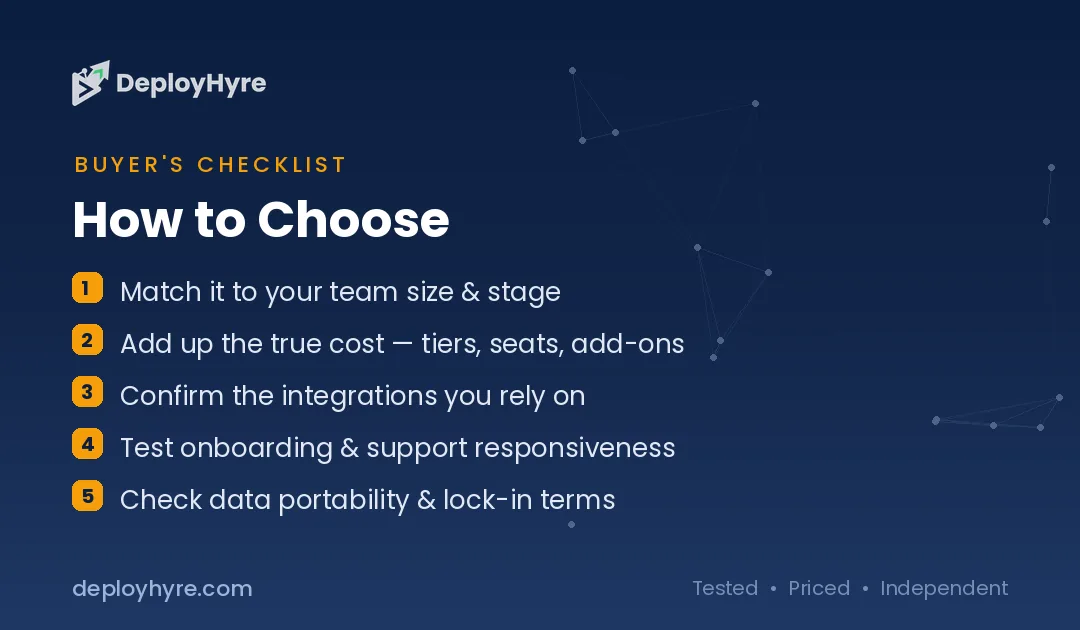
How Should You Choose a FinOps Tool?
Identify your primary cost problem first, because FinOps tools specialize. Understanding and allocating spend points to Vantage (mid-market) or CloudHealth (enterprise). Cutting your rate through commitments points to ProsperOps or nOps. Kubernetes cost points to Kubecost or CAST AI. Tying cost to customers, features, or AI points to CloudZero. Match the specialist to your biggest pain rather than seeking one tool for everything.
Then size to your spend. Small and mid-market teams usually start with visibility (Vantage’s free tier or paid tiers) since you cannot optimize what you cannot see. Large organizations ($200,000-plus a month) combine an enterprise visibility platform with specialist automation, spending $5,000 to $15,000 a month to save 30 to 50 percent, a strong ROI at that scale.
Finally, prioritize AI and GPU cost tracking if it is a growing part of your bill. AI inference and GPU compute have become major, poorly-understood line items, and platforms like CloudZero, nOps, Vantage, and Finout now track them specifically. If your AI spend is climbing, favor a tool that surfaces it, because it is exactly the cost that is hardest to see and fastest to grow.
How We Evaluated These Platforms
We evaluated each tool on visibility and allocation, automated optimization, Kubernetes and unit-economics specialization, AI/GPU cost tracking, and pricing. Figures come from vendor pages and comparison sources. Because FinOps tools specialize by job and enterprise platforms quote by spend, we present observed rates and stress matching the tool to your primary cost problem. We accepted no payment for placement; rankings reflect fit for a stated use case.
The Bottom Line
Vantage is the best mid-market visibility platform and CloudHealth the enterprise governance option, while ProsperOps and nOps lead automated commitment management, Kubecost and CAST AI Kubernetes cost, and CloudZero unit economics and AI-cost tracking. No single tool does every job, so identify whether your pain is visibility, rate automation, Kubernetes, or unit economics, and choose the specialist, combining tools at large scale where the 30-to-50-percent savings justify it.
Frequently Asked Questions
How much do cloud cost management tools cost?
Vantage has a free tier and paid plans from $99 to $499 a month; Kubecost is open-source with Pro at $499 a month; CloudHealth is enterprise at $50,000-plus a year; and ProsperOps charges a percentage of the savings it generates. At $200,000-plus a month cloud spend, a combined platform-plus-automation setup runs $5,000 to $15,000 a month for 30 to 50 percent savings.
What is FinOps?
FinOps (cloud financial operations) is the practice of managing cloud spend as a discipline: gaining visibility into where money goes, attributing it to teams and products, and optimizing to cut waste and rates. FinOps tools automate this by ingesting billing data, flagging waste, recommending optimizations, and often autonomously managing commitments.
Which cloud cost tool is best for Kubernetes?
Kubecost is the specialist for Kubernetes cost visibility, providing container- and namespace-level attribution that general tools lack, with an open-source core and Pro at $499 a month. CAST AI extends this with automation, autonomously rightsizing and bin-packing clusters. Any organization running significant Kubernetes needs one of these, since general FinOps tools stop at the node level.
Can FinOps tools track AI and GPU costs?
Increasingly, yes, and it is a fast-growing 2026 need. Platforms like CloudZero, nOps, Vantage, and Finout now track AI inference costs (OpenAI, Anthropic, Bedrock) and GPU compute, which have become major and poorly-understood line items. If AI spend is a growing part of your bill, choose a tool that surfaces it specifically.
Do I need more than one FinOps tool?
Large organizations often do, because the tools specialize. A common setup pairs an enterprise visibility platform (CloudHealth) with specialist automation (CAST AI for Kubernetes, ProsperOps for commitments). Smaller teams typically start with one tool matching their biggest problem, usually visibility (Vantage) or Kubernetes (Kubecost), and add others as spend and complexity grow.
Related Articles

David Austin is a technology writer and software analyst at DeployHyre, where he covers AI tools, SaaS platforms, cloud hosting, and business automation. He focuses on hands-on comparisons of pricing, features, and real-world performance so teams can pick the right software with confidence.