Table of Contents
The best AI survey tool for most teams is Typeform for engaging, conversational surveys, Qualtrics for enterprise experience management, and Jotform or SurveyMonkey for form-first value. Survey tools collect structured feedback, from customers, employees, or research participants, and use AI to write questions, analyze open-ended responses, and surface insights from the results automatically, turning raw responses into something you can act on.
The clarity that prevents overpaying: three different jobs hide under “survey tool,” at wildly different prices. Experience-design surveys (Typeform, conversational and beautiful) run $29 to $99 a month; enterprise experience management (Qualtrics, deep analytics across customer and employee experience) is custom-quoted at $10,000-plus a year; and form-first value tools (Jotform, SurveyMonkey) sit in between. Most mid-tier tools cost $25 to $165 per user a month. Knowing which job you need, a polished survey, an enterprise research platform, or affordable data collection, keeps you from buying a $10,000 platform for a customer feedback form.
Every price below is a recent observed figure. Because enterprise platforms quote per deployment, treat each as a band.
Quick Comparison: Survey Tools at a Glance
| Tool | Best For | Observed Price | Job |
|---|---|---|---|
| Typeform | Engaging, conversational surveys | Free (10 resp/mo); $29 Basic / $59 Plus / $99 | Experience-design surveys |
| Jotform | Customization + data collection | Fraction of SurveyMonkey; tiered | Form-first value |
| SurveyMonkey | Established general surveys | Per-user pricing | General surveys |
| Qualtrics | Enterprise experience management | Custom ($10,000+/yr) | Enterprise XM |
| Tally | Free, simple forms | Free; low paid tiers | Budget forms |
| Google Forms | Basic free surveys | Free | Basic surveys |
What AI Survey Tools Do
Survey tools let you create questionnaires, distribute them, and collect and analyze the responses. The use cases are broad: customer satisfaction (NPS, CSAT), market research, employee engagement, event feedback, lead capture, and academic research. The basics, building questions, branching logic, sharing a link, viewing results, are commoditized; the differences that matter are how engaging the survey experience is, how deep the analysis goes, and how well the tool handles scale and specialized research needs.
The AI layer is genuinely useful here: it generates survey questions from a goal, analyzes open-ended text responses at scale (sentiment, themes) that were previously too time-consuming to read, summarizes results into insights, and can even adapt questions based on prior answers. Analyzing free-text responses is the standout AI capability, turning thousands of open comments into themes and sentiment automatically, which is where a lot of survey value has always been trapped.
Survey tools feed customer, product, and employee insight. They complement the customer data in our best AI customer data platforms guide, the support insight in our best AI customer service software guide, and broader business decisions across our AI for business coverage.
Three Different Jobs Under One Label
“Survey tool” covers three distinct jobs at very different prices, and matching the job to your need is what avoids overpaying. Experience-design tools (Typeform) make surveys beautiful and conversational to boost completion rates, at $29 to $99 a month. Enterprise experience-management platforms (Qualtrics) provide deep analytics across customer and employee experience for large organizations running formal research programs, custom-priced at $10,000-plus a year. Form-first value tools (Jotform, SurveyMonkey, and free options like Google Forms and Tally) focus on affordable, flexible data collection.
The mismatch to avoid is buying enterprise experience management when you need a customer feedback form, or vice versa. A marketing team wanting engaging surveys needs Typeform, not Qualtrics; a research organization running rigorous studies across the enterprise needs Qualtrics, not Typeform; a team that just needs to collect data cheaply needs Jotform or a free tool. Most mid-tier tools cost $25 to $165 per user a month, so identify which of the three jobs you are doing, engaging surveys, enterprise research, or basic collection, before you shop, because it determines both the tool and a large price difference.
Best for Engaging, Conversational Surveys
Typeform is the best choice when survey experience and completion rates matter, presenting one question at a time in a clean, conversational, on-brand format that drives noticeably higher response rates than traditional grid surveys, with a free tier (10 responses a month) and paid plans at $29 (Basic), $59 (Plus), and $99. For customer-facing surveys, lead capture, and any survey where a polished, engaging experience improves completion, Typeform is the standout. Its design-first approach is the differentiator: people actually finish Typeform surveys, which improves data quality, and its brandable forms suit marketing and customer-experience use.
Typeform’s positioning is experience design, it makes surveys feel like a conversation rather than a chore, which is worth paying for when response rate and brand impression matter. The trade-off is that its response limits and per-plan pricing can add up for high-volume research, where a form-first or enterprise tool may be more economical. For teams whose priority is engaging, well-designed surveys that people complete, especially customer and marketing surveys, Typeform is the leader, feeding insight into our best AI customer data platforms guide.
Best for Enterprise Experience Management
Qualtrics is the enterprise standard for experience management, going far beyond surveys into a full platform for measuring and analyzing customer, employee, product, and brand experience across the organization, custom-priced and often exceeding $10,000 a year. For large organizations running rigorous, ongoing research programs, market research, employee engagement studies, customer experience measurement at scale, Qualtrics provides the statistical depth, advanced analysis, and enterprise integration that lighter tools lack. It is the choice when surveys are part of a formal, strategic experience-management function, not occasional feedback collection.
The cost and complexity are substantial and justified only at genuine enterprise research scale, most teams do not need Qualtrics and would over-buy dramatically. Its strength is depth: sophisticated survey logic, advanced statistical analysis, and the ability to run experience management as a discipline across the enterprise. For organizations where research and experience measurement are core, strategic activities with dedicated teams, Qualtrics leads; for everyone else, it is far more platform than the job requires, and a mid-tier or form-first tool serves better.
Best Value and Form-First Options
Jotform is the best value for customization and data collection, offering thousands of templates, workflow automation, and powerful integrations at a fraction of SurveyMonkey’s price, making it the pragmatic pick for teams that need flexible forms and surveys affordably. Its breadth, forms, surveys, workflows, and integrations in one affordable tool, suits teams that want to collect and route data without enterprise cost, and its template library speeds setup. For general data collection and forms where flexibility and price matter more than Typeform’s conversational polish or Qualtrics’s research depth, Jotform is the value leader.
SurveyMonkey remains the established general-purpose option with broad recognition and per-user pricing, a safe default for standard surveys, while free tools Google Forms and Tally cover basic survey and form needs at no cost. All serve the form-first, value end; Jotform for affordable flexibility and integrations, SurveyMonkey for established general surveys, Google Forms and Tally for free basics. Choose these when your need is straightforward, affordable data collection rather than engagement design or enterprise research, and start with a free tool if your requirements are simple.
How Should You Choose a Survey Tool?
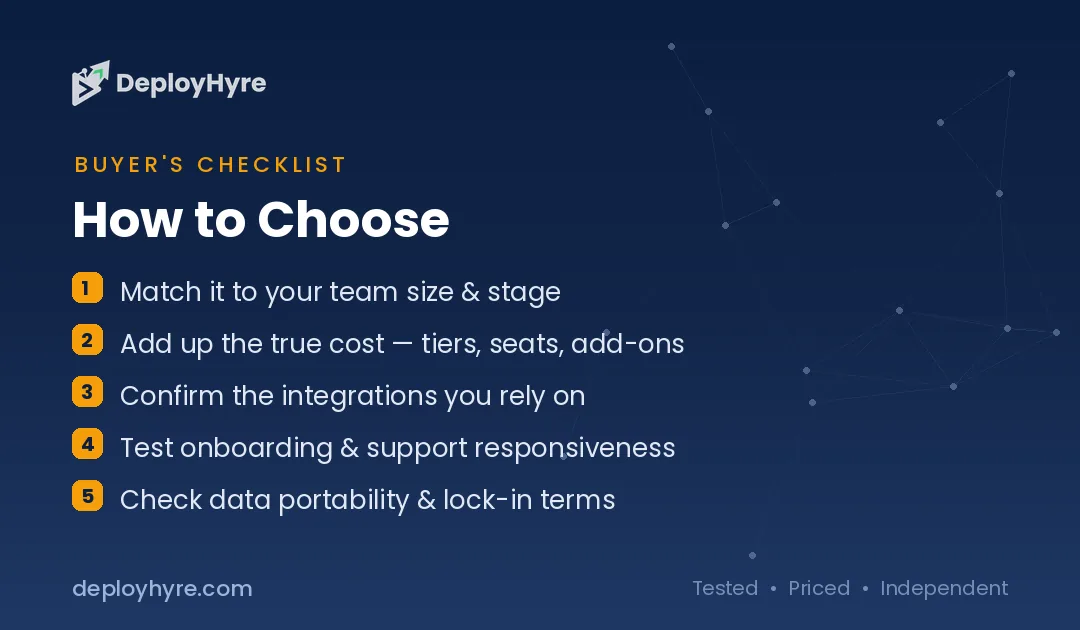
Identify which of the three jobs you need first, because it determines the tool and a large price gap. Engaging, high-completion customer surveys point to Typeform ($29 to $99). Rigorous enterprise research and experience management across the organization point to Qualtrics ($10,000-plus). Affordable, flexible data collection points to Jotform, SurveyMonkey, or free tools. Buying enterprise XM for a feedback form, or vice versa, is the mistake to avoid.
Then weigh completion rate versus depth versus cost. If response rate and brand impression matter, Typeform’s conversational design earns its price. If statistical depth and enterprise-scale research matter, Qualtrics. If cost and flexibility matter most, Jotform or free tools. Match the tool to whether engagement, analytical depth, or affordability is your priority.
Finally, value the AI text-analysis capability. The ability to analyze open-ended responses, themes and sentiment across thousands of free-text answers, is where a lot of survey value has been trapped, so favor tools with strong AI response analysis if you collect meaningful open-ended feedback. For simple, closed-question surveys, a free or value tool suffices; for rich qualitative feedback, the AI analysis is worth prioritizing.
How We Evaluated These Platforms
We evaluated each tool on survey experience and completion, analytical depth, AI question generation and text analysis, integrations, and pricing. Figures come from vendor pages and comparison sources. Because “survey tool” spans experience design, enterprise research, and form-first value at very different prices, we present observed rates and stress matching the tool to the job. We accepted no payment for placement; rankings reflect fit for a stated use case.
The Bottom Line
Typeform is the best for engaging, conversational surveys that people complete, Qualtrics the enterprise experience-management platform for rigorous research at scale (at $10,000-plus), and Jotform the value leader for flexible, affordable data collection, with SurveyMonkey the established general option and Google Forms and Tally the free basics. Identify which of the three jobs you need, engaging surveys, enterprise research, or basic collection, before shopping, because it determines both the tool and a large price gap.
Frequently Asked Questions
How much do survey tools cost?
Paid plans typically run $19 to $99 a month for small teams, with mid-tier tools at $25 to $165 per user a month. Typeform is $29 to $99, Jotform is priced at a fraction of SurveyMonkey with tiered plans, and enterprise Qualtrics is custom-quoted, often exceeding $10,000 a year. Free options like Google Forms and Tally cover basic needs.
What is the best survey tool for customer feedback?
Typeform is the strongest for customer feedback where completion rate matters, because its conversational, one-question-at-a-time design drives higher response rates and better data quality than traditional surveys. For large-scale, formal customer experience measurement across an enterprise, Qualtrics offers deeper analysis, while Jotform is the affordable choice for straightforward feedback forms.
Do I need Qualtrics or is a cheaper tool enough?
For most teams, a cheaper tool is enough. Qualtrics is an enterprise experience-management platform justified only for organizations running rigorous, ongoing research across customer, employee, and brand experience with dedicated teams. For customer feedback, marketing surveys, or general data collection, Typeform or Jotform deliver what you need at a fraction of Qualtrics’s $10,000-plus cost.
How does AI improve survey tools?
AI generates survey questions from a stated goal, analyzes open-ended text responses at scale for themes and sentiment (previously too time-consuming to read manually), summarizes results into insights, and can adapt questions based on prior answers. The standout capability is analyzing free-text responses, which unlocks the qualitative value that used to be trapped in unread open comments.
What is the best free survey tool?
Google Forms is the most widely used free option for basic surveys, and Tally offers free, simple, flexible forms. Typeform has a free tier (10 responses a month) if you want its conversational design. For anything beyond basic needs, volume, advanced logic, deep analysis, a paid tool like Jotform or Typeform becomes worthwhile.
Related Articles

David Austin is a technology writer and software analyst at DeployHyre, where he covers AI tools, SaaS platforms, cloud hosting, and business automation. He focuses on hands-on comparisons of pricing, features, and real-world performance so teams can pick the right software with confidence.