Table of Contents
The best AI MDR service for most small and mid-sized businesses is Huntress on cost, Arctic Wolf for a named team and the largest breach warranty, and Red Canary or Expel for vendor-agnostic detection that works with the tools you already own. Managed detection and response gives you a 24/7 security operations team, threat hunters, analysts, and responders, watching your environment and reacting to threats, without building that team in-house.
The choice that shapes everything: vendor-agnostic MDR works with the security tools you already own, while platform-tied MDR requires you to license the provider’s stack. Expel, Red Canary, and Arctic Wolf plug into your existing tools; CrowdStrike, SentinelOne, and Sophos MDR run on their own platforms you must license. That decision determines both your cost structure and your flexibility, and it matters more than the per-endpoint rate, which ranges from about $5 to $45 per endpoint a month across the category.
Every price below is a recent observed figure. Because coverage scope varies, treat each as a band.
Quick Comparison: MDR Services at a Glance
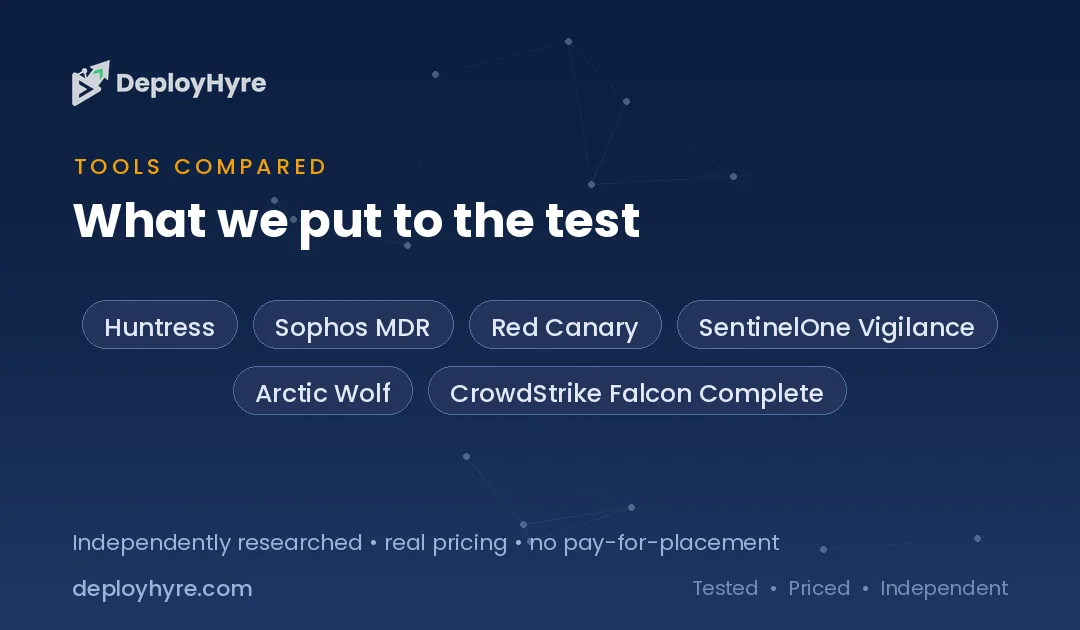
| Provider | Best For | Observed Price | Model |
|---|---|---|---|
| Huntress | SMBs under ~250 endpoints | ~$3–$9/endpoint/mo (~$7.99) | Vendor-agnostic (lightweight) |
| Sophos MDR | Sophos-platform shops | ~$7–$17/endpoint/mo | Platform-tied |
| Red Canary | Vendor-agnostic detection | ~$10/endpoint/mo (published rate card) | Vendor-agnostic |
| SentinelOne Vigilance | SentinelOne customers | ~$7–$23/endpoint/mo | Platform-tied |
| Arctic Wolf | Named team + $3M breach warranty | ~$8–$25/endpoint (~$44K/yr for 100 users) | Vendor-agnostic |
| CrowdStrike Falcon Complete | Premium platform-native MDR | ~$25–$45/endpoint/mo | Platform-tied |
What AI MDR Services Do
MDR is security operations as a service. Instead of hiring and staffing a 24/7 security operations center (SOC), you contract a provider whose analysts and threat hunters monitor your environment around the clock, investigate alerts, and respond to incidents, often containing threats on your behalf. It fills the gap most organizations face: they have security tools generating alerts but no one watching them at 2 a.m., which is exactly when attacks land.
The AI layer is what makes MDR economically viable at scale: machine learning triages the flood of alerts, correlates signals into real incidents, and surfaces the genuine threats so human analysts spend time on what matters rather than chasing noise. The best providers combine AI-driven detection with skilled human response, the AI handles volume and speed, the humans handle judgment and containment. This human-plus-AI model is why MDR grew from a niche to a mainstream security control.
MDR sits on top of your detection tooling and often replaces an in-house SOC. It builds on the telemetry from our best AI endpoint security software and best AI SIEM tools guides, and delivers the human response layer around the broader stack in our best AI cybersecurity tools guide.
Vendor-Agnostic vs Platform-Tied MDR
The biggest MDR decision is whether the service works with your existing tools or requires you to adopt the provider’s platform, because it determines your total cost and lock-in. Vendor-agnostic providers, Expel, Red Canary, and Arctic Wolf, monitor and respond using the security tools you already own, so you keep your stack and pay for the service on top. Platform-tied providers, CrowdStrike Falcon Complete, SentinelOne Vigilance, and Sophos MDR, run their MDR on their own endpoint platform, which you must license, so the MDR and the tooling are bought together.
Neither is inherently better, but they suit different situations. If you have invested in security tools and want expert monitoring without replacing them, vendor-agnostic MDR preserves that investment. If you are buying endpoint protection and MDR together, or want the tightest integration between tooling and response, platform-tied MDR from CrowdStrike or SentinelOne delivers that at a premium. Decide whether you are protecting an existing tool investment or starting fresh, because that, more than the per-endpoint price, points to your category.
Best for Small and Mid-Sized Businesses
Huntress is usually the right answer for organizations under roughly 250 endpoints on cost alone, at about $3 to $9 per endpoint a month (around $7.99), and it is genuinely effective against the threats that hit that segment. Its lightweight, affordable model made real MDR accessible to small businesses and the managed-service providers that serve them, and it focuses on the persistent, practical threats, ransomware precursors, credential theft, that actually target SMBs rather than nation-state exotica. For most small and mid-sized organizations, Huntress delivers the core 24/7 detection-and-response value at a price they can afford, which is why it dominates that segment.
Huntress’s positioning, capable MDR at SMB-friendly pricing, is the differentiator, and it works with your environment rather than forcing a platform switch. For organizations under a few hundred endpoints that need a 24/7 SOC but cannot justify enterprise MDR pricing, Huntress is the default recommendation, and it scales reasonably as you grow. Larger or more complex environments may need the deeper capabilities of Arctic Wolf, Red Canary, or a platform-native provider, but for the SMB core, Huntress leads on value, protecting the endpoints in our best AI endpoint security software guide.
Best Vendor-Agnostic MDR
Arctic Wolf is the standout vendor-agnostic MDR for organizations that want a named security team and the strongest guarantee in the category, offering a breach warranty of up to $3 million, at roughly $8 to $25 per endpoint (about $44,000 a year for 100 users). Its differentiator is the named-team model: you get assigned security engineers who know your environment and provide posture coaching, not just a pooled SOC. That named accountability costs more, Arctic Wolf typically prices 30 to 60 percent above Huntress and Sophos for similar volumes, but for organizations that want a relationship and a large breach warranty, it justifies the premium.
Red Canary and Expel round out the vendor-agnostic leaders, both working with the tools you own. Red Canary is known for strong detection engineering and publishes a rate card (around $10 per endpoint, with resource-based pricing across endpoints, users, and cloud), while Expel offers transparent flat pricing (about $11,600 a year) and broad coverage. Note Red Canary’s resource-based model can scale unexpectedly as your environment grows, so model it. All three preserve your existing tool investment; Arctic Wolf for a named team and warranty, Red Canary for detection depth, Expel for transparent flat pricing. They feed the response layer around our best AI SIEM tools guide.
Best Platform-Native MDR
CrowdStrike Falcon Complete is the premium platform-native MDR, delivering CrowdStrike’s own analysts running on the Falcon platform for the tightest possible integration between detection and response, at roughly $25 to $45 per endpoint a month. For organizations that want best-in-class endpoint protection and expert MDR as one integrated package, and can afford the premium, Falcon Complete is the leader, its analysts work in the same platform that generates the telemetry, which speeds detection and containment. The cost is the highest in the category, justified for organizations where security is paramount and integration matters most.
SentinelOne Vigilance is the comparable platform-native option for SentinelOne customers (about $7 to $23 per endpoint), and Sophos MDR serves the mid-market on the Sophos platform ($7 to $17). All three require licensing the provider’s endpoint platform, so they suit organizations buying tooling and MDR together rather than protecting an existing multi-vendor stack. Choose platform-native MDR when you want the tightest tool-and-response integration and are adopting that vendor’s platform anyway; choose vendor-agnostic when you want to keep your existing tools. Compare the underlying platforms in our best AI endpoint security software guide.
How Should You Choose an MDR Service?
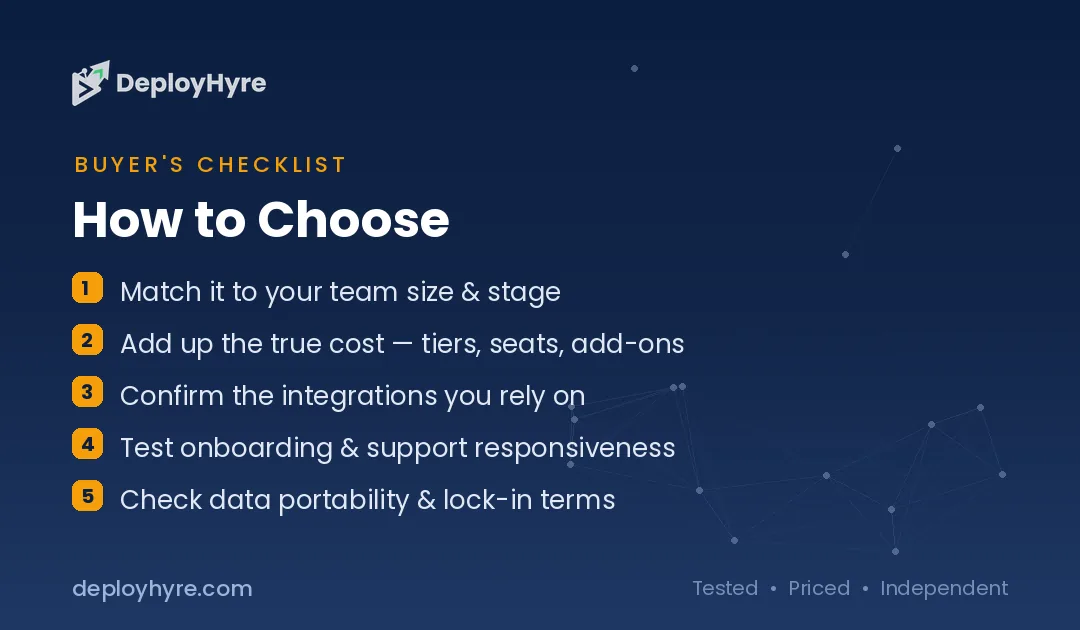
Decide vendor-agnostic versus platform-tied first, because it determines cost and lock-in. If you have invested in security tools and want to keep them, Expel, Red Canary, or Arctic Wolf monitor what you own. If you are buying endpoint protection and MDR together, or want tightest integration, CrowdStrike, SentinelOne, or Sophos deliver platform-native MDR. This split matters more than the per-endpoint rate.
Then size to your organization. Under ~250 endpoints, Huntress usually wins on cost and fit. Mid-market wanting a named team and a large warranty points to Arctic Wolf. Detection-engineering depth points to Red Canary; transparent flat pricing to Expel; premium integrated protection to CrowdStrike Falcon Complete. Match capability and price to your size and risk.
Finally, model the pricing structure, not just the headline rate. Per-endpoint pricing ranges $5 to $45, but resource-based models (Red Canary’s endpoint-plus-user-plus-cloud) can scale unexpectedly, and platform-tied MDR adds the platform license. Also weigh the breach warranty, Arctic Wolf’s up to $3 million is the largest, if guaranteed financial backing matters to your risk posture.
How We Evaluated These Services
We evaluated each service on detection and response quality, human-plus-AI SOC model, vendor-agnostic versus platform-tied delivery, breach warranty, and pricing. Figures come from provider pages and comparison sources. Because coverage scope and pricing models vary, we present observed per-endpoint bands and stress the vendor-agnostic-versus-platform-tied decision. We accepted no payment for placement; rankings reflect fit for a stated use case.
The Bottom Line
Huntress is the SMB value leader under ~250 endpoints, Arctic Wolf the vendor-agnostic pick for a named team and a $3M breach warranty, and Red Canary and Expel the other strong vendor-agnostic options (detection depth and transparent pricing). CrowdStrike Falcon Complete leads premium platform-native MDR, with SentinelOne and Sophos alongside. Decide whether you want MDR that works with your existing tools or on the provider’s platform first, since that shapes cost and lock-in more than the per-endpoint rate.
Frequently Asked Questions
How much do MDR services cost?
MDR pricing ranges from about $5 to $45 per endpoint a month: Huntress $3 to $9, Sophos $7 to $17, SentinelOne $7 to $23, Arctic Wolf $8 to $25 (around $44,000 a year for 100 users), and CrowdStrike $25 to $45. Some providers price per user ($20 to $60 a month) or flat (Expel at about $11,600 a year). Coverage scope drives the variation.
What is MDR (managed detection and response)?
MDR is security operations delivered as a service: a provider’s analysts and threat hunters monitor your environment 24/7, investigate alerts, and respond to incidents on your behalf, combining AI-driven detection with human judgment. It fills the gap for organizations that have security tools but no round-the-clock team to watch them.
What is the difference between vendor-agnostic and platform-tied MDR?
Vendor-agnostic MDR (Expel, Red Canary, Arctic Wolf) works with the security tools you already own, preserving your investment. Platform-tied MDR (CrowdStrike Falcon Complete, SentinelOne Vigilance, Sophos MDR) runs on the provider’s own platform, which you must license. The choice affects cost and lock-in more than the per-endpoint rate.
What is the best MDR for a small business?
Huntress is usually the best choice for organizations under roughly 250 endpoints, on cost (about $7.99 per endpoint) and fit, and it is effective against the threats that actually target that segment. It made real 24/7 detection and response accessible to small businesses and the MSPs that serve them.
What is a breach warranty in MDR?
A breach warranty is a financial guarantee the MDR provider pays out if a breach occurs while they are monitoring you, offsetting incident costs. Arctic Wolf offers the largest in the category at up to $3 million. It is worth weighing if guaranteed financial backing matters to your risk posture, though it is one factor among detection quality and price.
Related Articles

David Austin is a technology writer and software analyst at DeployHyre, where he covers AI tools, SaaS platforms, cloud hosting, and business automation. He focuses on hands-on comparisons of pricing, features, and real-world performance so teams can pick the right software with confidence.