Table of Contents
The best workflow orchestration tool for most teams is Apache Airflow as the proven default, Dagster for asset-centric data pipelines, Prefect for Python-first orchestration, and Mage for smaller teams that want block-based authoring. These tools schedule, run, and monitor the multi-step data and workflow pipelines, extract-transform-load jobs, model training, report generation, that keep a data platform running, retrying failures and alerting when something breaks.
The framing that cuts through the comparison: pick the tool whose scope matches what you want to own, because everything else, syntax, hosting, pricing, is downstream of that choice. All four have free open-source cores, so the cloud fee never buys the orchestration engine itself, it buys managed hosting, scheduling, and observability so you do not run the control plane. Deciding how much you want to operate yourself, versus pay a vendor to manage, is the real decision, more than any feature list.
Every price below is a recent observed figure. Because managed tiers are consumption-based, treat each as a band.
Quick Comparison: Workflow Orchestration Tools at a Glance
| Tool | Best For | Observed Price | Model |
|---|---|---|---|
| Apache Airflow | Proven default, full control | Free (open source) | Self-hosted (managed options exist) |
| Dagster | Asset-centric data pipelines | OSS free; Dagster+ $10–$1,200/mo | Open source + consumption cloud |
| Prefect | Python-first, hybrid execution | OSS free; Cloud $100–$400/mo | Open source + BYO-compute cloud |
| Mage | Smaller teams, block authoring | Open source; managed options | Open source |
| Temporal | Durable application workflows | OSS free; managed cloud | Open source + cloud |
What Workflow Orchestration Tools Do
A data platform runs on many interdependent jobs: pull data from sources, transform it, load it to the warehouse, train a model, refresh a dashboard. Orchestration tools define these as workflows (directed graphs of tasks), schedule them, run them in the right order, handle dependencies, retry failures, and alert when something goes wrong. Without orchestration, teams stitch together cron jobs and scripts that fail silently and are impossible to debug; with it, pipelines are observable, reliable, and recoverable.
The tools differ mainly in their model of the world. Airflow orchestrates tasks; Dagster orchestrates data assets (the tables and models produced), which changes how you reason about pipelines; Prefect emphasizes Python-native flows with a hybrid execution model. The AI and modern-tooling layer adds smarter retries, data-aware scheduling, and better observability into what each run produced. As data stacks grew complex, orchestration became the backbone that ties ingestion, transformation, and ML together.
Orchestration is the control plane of the data stack. It runs the pipelines from our best AI ETL tools guide, feeds the warehouses in our best cloud data warehouses guide, and schedules the training in our best MLOps platforms guide.
Choose by What You Want to Own
The most useful way to choose is by scope, what the tool orchestrates and how much you want to operate, because syntax, hosting, and pricing all follow from that. Airflow orchestrates tasks and is the battle-tested default with the largest community (roughly 30 million monthly downloads, 80,000 organizations), but you run and maintain it. Dagster orchestrates data assets and suits teams that think in terms of the tables and models they produce. Prefect orchestrates Python flows with a hybrid model where your code runs on your infrastructure while the cloud handles scheduling.
Because all four are open-source and free at their core, the paid cloud tiers, Dagster+ from $10 to $1,200 a month, Prefect Cloud $100 to $400, buy managed orchestration (hosting the scheduler, providing a UI, SSO, audit logs), not the engine. So the decision is really: do you want to run the control plane yourself (free, but operational effort) or pay for managed orchestration (convenience, at a consumption cost)? Answer that, then pick the model, task-centric, asset-centric, or Python-flow-centric, that matches how your team thinks about pipelines.
Best Default and Most Adopted
Apache Airflow is the proven default and the most widely adopted orchestration tool, with around 30 million monthly downloads and 80,000 organizations using it, free and open source with the largest ecosystem of integrations and community support. Its ubiquity means abundant documentation, connectors, and hiring pool, engineers know Airflow, so it is the safe choice for teams that want a mature, well-understood orchestrator and are willing to run it (or use a managed Airflow service). The trade-off is that self-hosting requires infrastructure and maintenance, and its task-centric model is less asset-aware than newer tools.
Airflow’s dominance makes it the default reference point every other tool is measured against, and for teams that value maturity, ecosystem, and a large talent pool over the newest paradigm, it remains the right call. Managed Airflow services (from cloud providers and Astronomer) remove the operational burden at a cost, for teams that want Airflow’s ecosystem without running it. Choose Airflow when proven reliability and community depth matter most, orchestrating the pipelines in our best AI ETL tools guide.
Best Modern Alternatives
Dagster is the strongest modern alternative for teams that think in data assets rather than tasks, orchestrating the tables, models, and datasets your pipelines produce, with a free open-source version and Dagster+ cloud from $10 to $1,200 a month on consumption pricing. Its asset-centric model, and features like data lineage and built-in testing, make pipelines easier to reason about and maintain, which suits data teams that want software-engineering rigor. Advanced features (SSO, audit logs, enterprise security) sit in the paid tiers, but the open-source core is fully capable.
Prefect is the pick for Python-first teams, with a design centered on native Python flows and a hybrid execution model, your code runs on your own infrastructure (bring-your-own compute) while Prefect Cloud handles orchestration, scheduling, and observability, priced from $100 to $400 a month with a free open-source version. This hybrid model appeals to teams that want managed orchestration without sending their data or compute to the vendor. Both are modern; Dagster for asset-centric thinking and lineage, Prefect for Python-native flows with BYO-compute, feeding the warehouses in our best cloud data warehouses guide.
Best for Smaller Teams
Mage is the best fit for smaller teams that want a lower-friction, block-based authoring experience, letting you build pipelines from modular blocks with a notebook-like interface rather than writing everything as code from scratch. Its approachable design lowers the barrier for teams without deep data-engineering resources, making orchestration accessible to analysts and smaller data teams. It is open source, so it carries no licensing cost, and its block-based model suits teams that want to get pipelines running quickly without the ceremony of a heavier framework.
The broader point is to match the tool’s complexity to your team. Airflow, Dagster, and Prefect reward teams with real data-engineering capacity; Mage and similar lighter tools suit smaller teams that want orchestration without a steep learning curve. Temporal serves a different niche, durable execution for application-level workflows (not just data pipelines) where reliability across long-running processes matters. Choose Mage for accessible data orchestration on a small team, and match every tool’s weight to your engineering depth, alongside the practices in our best AI DevOps tools guide.
How Should You Choose an Orchestration Tool?
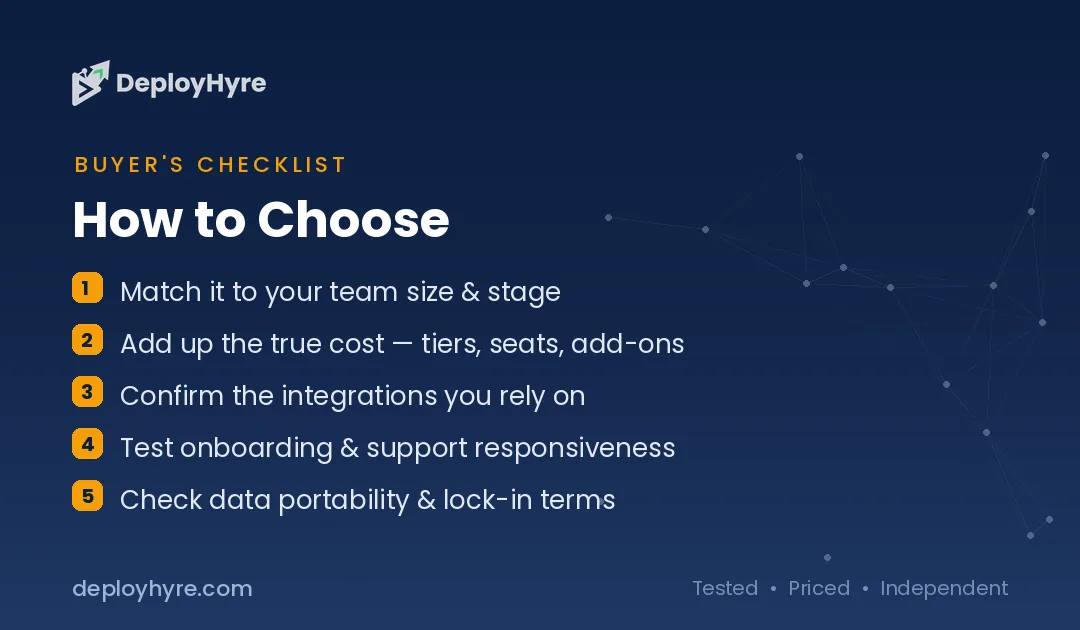
Decide how much you want to own first. All four have free open-source cores, so the question is whether you run the control plane yourself (free, operational effort) or pay for managed orchestration (Dagster+, Prefect Cloud, managed Airflow). Your team’s infrastructure capacity and appetite for ops determine this more than any feature.
Then match the model to how your team thinks. Task-centric and maximum ecosystem point to Airflow. Asset-centric with lineage and testing point to Dagster. Python-first flows with bring-your-own compute point to Prefect. A lighter, block-based experience for a small team points to Mage. The mental model, not the syntax, should drive the choice.
Finally, weigh maturity against modern features. Airflow offers the largest community, talent pool, and integration ecosystem; Dagster and Prefect offer more modern paradigms and developer experience. If proven reliability and hiring matter most, Airflow; if a cleaner model and better data-awareness matter more, a modern tool. Match this to your priorities and your team’s data-engineering depth.
How We Evaluated These Tools
We evaluated each tool on orchestration model (task versus asset versus flow), ecosystem and integrations, developer experience, self-hosted versus managed options, and pricing. Figures come from vendor pages and comparison sources. Because all have free open-source cores, we present observed managed-tier rates and stress that the decision is about what you want to own. We accepted no payment for placement; rankings reflect fit for a stated use case.
The Bottom Line
Apache Airflow is the proven, most-adopted default with the largest ecosystem, Dagster the modern pick for asset-centric pipelines with lineage, Prefect for Python-first flows with bring-your-own compute, and Mage for smaller teams wanting block-based authoring. All have free open-source cores, so the cloud fee buys managed orchestration, not the engine. Choose by what you want to own and how your team models pipelines, because everything else follows from that.
Frequently Asked Questions
How much do workflow orchestration tools cost?
All four have free open-source versions. Managed tiers are consumption-based: Dagster+ runs $10 to $1,200 a month and Prefect Cloud $100 to $400. Airflow is free but requires infrastructure and maintenance to self-host, or a paid managed service. The cloud fees buy managed hosting and orchestration, not the engine, which is free.
What is workflow orchestration?
Workflow orchestration schedules, runs, and monitors multi-step data and workflow pipelines, defining tasks and their dependencies, running them in order, retrying failures, and alerting on problems. It replaces fragile cron jobs and scripts with observable, reliable, recoverable pipelines, and is the backbone tying together ingestion, transformation, and ML in a data platform.
What is the difference between Airflow, Dagster, and Prefect?
Airflow orchestrates tasks and is the most mature and widely adopted, with the largest ecosystem. Dagster orchestrates data assets (the tables and models produced), adding lineage and testing. Prefect emphasizes Python-native flows with a hybrid model where your code runs on your infrastructure while the cloud handles scheduling. Choose by which model matches how your team thinks about pipelines.
Is Apache Airflow still the best choice?
It remains the proven default, with roughly 30 million monthly downloads, 80,000 organizations, and the largest ecosystem and talent pool. It is the safe choice for teams valuing maturity and community. Newer tools like Dagster and Prefect offer more modern paradigms and developer experience, so teams prioritizing a cleaner model or better data-awareness may prefer them.
Do I have to self-host these tools?
No. All have free open-source versions you can self-host, but managed options exist: Dagster+ and Prefect Cloud host orchestration for you, and managed Airflow services (from cloud providers and Astronomer) remove the operational burden. The choice between self-hosting (free, more effort) and managed (paid, less effort) is the central decision.

David Austin is a technology writer and software analyst at DeployHyre, where he covers AI tools, SaaS platforms, cloud hosting, and business automation. He focuses on hands-on comparisons of pricing, features, and real-world performance so teams can pick the right software with confidence.