The strongest Bright Data alternatives are Oxylabs for enterprise-grade scale, Decodo (formerly Smartproxy) for self-serve teams that want low commitment, and Rayobyte for the cheapest per-GB residential traffic. All eight providers below sell residential, datacenter, or mobile proxies. They do the same core job Bright Data does.
They route your requests through real IPs so sites treat them as ordinary users. The real differences are cost model, minimum spend, and how fast you can start.
With some you sign up and start in minutes.
Here is the hook most buyers miss. The sticker rate per gigabyte tells you almost nothing on its own.
A provider may advertise $2/GB but only reach that rate on a four-figure monthly commitment.
Pricing below reflects each vendor’s published rates at the time of writing. We show them as entry-level bands, meaning the lowest paid plan or pay-as-you-go rate.
Proxy pricing is usually quoted per GB for residential traffic, or per IP for datacenter and static plans.
Quick Comparison: Bright Data Alternatives at a Glance
| Provider | Best For | Entry Price | vs Bright Data |
|---|---|---|---|
| Oxylabs | Enterprise-grade scale | Credit plan from $30/mo (~$6/GB residential, about 5 GB); no PAYG | Comparable premium tier and pool; cleaner self-serve entry, still sales-led at scale |
| Decodo (formerly Smartproxy) | Low-commitment self-serve | From ~$11.25/mo for 3 GB; PAYG $4/GB | Much lower entry commitment; simpler onboarding than Bright Data’s KYC gate |
| SOAX | Precise geo-targeting | Builder plan $200/mo + VAT (~$3/GB near 100 GB); Sandbox top-ups ~$5/GB | Flexible credit model and granular targeting; lower entry minimum than enterprise tiers |
| IPRoyal | Pay-as-you-go with no expiry | PAYG ~$7.35/GB at 1 GB, down to ~$5.15/GB at 50 GB; bulk from ~$1.75/GB | No subscription floor and traffic never expires; simpler than Bright Data’s tiers |
| Webshare | Datacenter and free-tier testing | Free tier (10 proxies, 1 GB/mo); datacenter from ~$2.99/mo per 100 proxies; rotating residential from ~$3.50/GB | Far cheaper datacenter entry and a genuine free tier Bright Data lacks |
| Rayobyte | Cheapest per-GB residential | Residential PAYG $3.50/GB (1 to 49 GB), scaling to ~$0.70/GB (1 to 5 TB) | Lower published per-GB rates at every tier; no subscription lock-in |
| Infatica | Mid-volume residential value | PAYG $4/GB; Starter ~$96/mo for 25 GB (~$3.84/GB) | Lower mid-tier per-GB pricing; 20% annual discount and a trial |
| Zyte | Full scraping API, not raw proxies | Zyte API from ~$0.13 per 1,000 HTTP responses (PAYG), to ~$0.06 at $500/mo commit | Pays per successful request, not per GB; replaces proxy management entirely |
Why look for a Bright Data alternative
Bright Data runs one of the largest proxy networks in the industry. For enterprise data operations it is a default choice.
But three common frustrations push buyers to look elsewhere. The first is cost.
Residential traffic lists around $8/GB pay-as-you-go.
None of that makes Bright Data a bad tool. It makes it the wrong tool for a lot of buyers.
Maybe you spend a few hundred dollars a month. Choosing the right one starts with understanding the category as a whole in our guide to the best proxy services.
What Makes a Strong Bright Data Alternative?
The most useful lens for comparing these providers is not the lowest advertised per-GB rate. It is how much you must spend to reach a usable rate.
Two providers can both claim “$2/GB.” One lets you buy 3 GB for pocket change. The other requires a 1 TB, four-figure monthly commitment to hit that number.
A strong alternative beats Bright Data on one of four points.
| Provider | Lowest entry commitment | Entry per-GB band | Best per-GB rate (and what it takes) |
|---|---|---|---|
| Decodo | ~$11.25 (3 GB) or $4 PAYG top-up | ~$4/GB | ~$1.50 to $2 per GB at 1 TB (~$2,000/mo) |
| IPRoyal | No floor; buy 1 GB | ~$7.35/GB at 1 GB | ~$1.75/GB at bulk volume |
| Rayobyte | No subscription; 1 GB PAYG | $3.50/GB (1 to 49 GB) | ~$0.70/GB at 1 to 5 TB |
| Infatica | $4 PAYG; ~$96 Starter (25 GB) | ~$3.84 to $4 per GB | ~$2.60/GB at 1 TB (~$2,600/mo) |
| Webshare (rotating residential) | Free tier, then from ~$3.50 (1 GB) | ~$3.50/GB | Lower on annual/volume grid |
| SOAX | $200/mo (Builder) + VAT | ~$3/GB near 100 GB | Progressive enterprise bands, geo-dependent |
| Oxylabs | ~$30/mo (5 GB Starter) | ~$6/GB | Lower on committed/enterprise tiers |
| Bright Data (reference) | PAYG, after verification | ~$8/GB list (promo lower) | ~$3 to $4 per GB on monthly plans with promo ($5 to $7 list) |
Read this way, the picture flips. Rayobyte and IPRoyal let you reach low per-GB rates without a subscription.
Decodo and Webshare win on low entry commitment.
1. Oxylabs: Best for enterprise-grade scale
Oxylabs is the closest like-for-like replacement for Bright Data at the top of the market, with a large residential pool, strong infrastructure, and a comparable feature set. Its self-serve entry is friendlier than Bright Data’s.
- Strengths: Committed and enterprise tiers bring the per-GB rate down a lot. Compared with Bright Data, Oxylabs matches the premium tier on pool quality and reliability.
- Pricing: The Starter credit plan runs $30/month, about 5 GB of residential traffic (~$6/GB), and there is no longer a pay-as-you-go option.
2. Decodo: Best low-commitment self-serve alternative
Decodo (formerly Smartproxy) is the cleanest escape from Bright Data’s commitment and onboarding friction. Its entry point is about $11.25/month for 3 GB.
- Strengths: Against Bright Data, the gap is the entry experience. Onboarding is fast and self-serve with a short free trial.
- Pricing: You can also pay $4/GB through a wallet-based pay-as-you-go option with no monthly commitment. Rates fall toward $1.50 to $2 per GB only on 1 TB enterprise plans (roughly $2,000/month).
3. SOAX: Best for precise geo-targeting
SOAX wins on precise targeting and a flexible credit model. Its Builder plan starts at $200/month plus VAT with included credits.
- Strengths: Cost varies by the location of the exit IP. US traffic costs more than many other countries. The broader residential landscape, including how SOAX and Oxylabs stack up, is covered in our best residential proxies guide.
- Pricing: That prices residential bandwidth around $3/GB near 100 GB, with top-ups on the free Sandbox plan at about $5/GB. The $200 monthly minimum rules it out for casual or hobby use.
4. IPRoyal: Best pay-as-you-go with no expiry
IPRoyal is the no-strings option. Its residential traffic is pay-as-you-go with no subscription floor.
- Strengths: Unused gigabytes sit in your account until you use them, rather than resetting monthly. Against Bright Data’s tiered, verification-gated model, IPRoyal lets you buy a single gigabyte and start right away, with none of the spend-it-or-lose-it pressure of monthly allowances.
- Pricing: Entry rates run about $7.35/GB at 1 GB and fall to roughly $5.15/GB at 50 GB. Bulk volumes are advertised from around $1.75/GB.
- Limits: The key part is that purchased bandwidth does not expire. So IPRoyal is about convenience and no expiry, not the absolute cheapest headline rate.
- Best fit: Verdict: best for intermittent scrapers who want to buy once and draw down slowly without losing unused data.
5. Webshare: Best for datacenter and free-tier testing
Webshare is the value play for datacenter traffic and for anyone who wants to test before paying. It offers a genuine free tier, with 10 shared datacenter proxies and up to 1 GB a month, and no card required.
- Strengths: Bright Data has no comparable free entry point. So Webshare is the cheapest way to prove out a workflow before committing budget. If your target sites tolerate datacenter IPs, Webshare is far cheaper than premium residential, as laid out in our best datacenter proxies guide.
- Pricing: Paid datacenter plans start at about $2.99/month per 100 proxies. Rotating residential is billed by the gigabyte from roughly $3.50/GB on its public grid.
6. Rayobyte: Best cheapest per-GB residential
Rayobyte publishes the most aggressive per-GB residential rates in this group. After a pricing restructure it moved to a flat pay-as-you-go model with four tiers.
- Strengths: Bright Data reserves its best rates for four-figure monthly commitments. Rayobyte undercuts it at nearly every tier without asking for a contract.
- Pricing: They are $3.50/GB for 1 to 49 GB, $2/GB for 50 to 249 GB, $1.50/GB for 250 to 999 GB, and roughly $0.70/GB at 1 to 5 TB, with no subscription lock-in.
7. Infatica: Best mid-volume residential value
Infatica sits between the budget and premium camps. Residential traffic is available pay-as-you-go at about $4/GB with no commitment.
- Strengths: Annual billing adds a 20% discount, and there is a trial. Against Bright Data, Infatica offers a lower mid-tier per-GB rate and a far gentler entry, with no verification gate before you can start.
- Pricing: A Starter plan runs around $96/month for 25 GB (~$3.84/GB), and larger plans fall toward $2.60/GB at 1 TB (~$2,600/month).
- Limits: Verdict: best mid-volume residential value when Decodo’s pool or pricing does not fit.
8. Zyte: Best scraping API alternative
Zyte is a different answer to the same problem.
- Strengths: Against Bright Data, the difference is the cost model itself. You pay for working extractions, not bandwidth.
- Pricing: Instead of selling you proxies to manage, its Zyte API handles the proxy rotation, retries, and unblocking for you and charges per successful request. Pricing starts around $0.13 per 1,000 HTTP responses pay-as-you-go on the easiest sites. It drops to about $0.06 at a $500/month commitment.
- Limits: Browser-rendered and harder-tier requests cost much more.
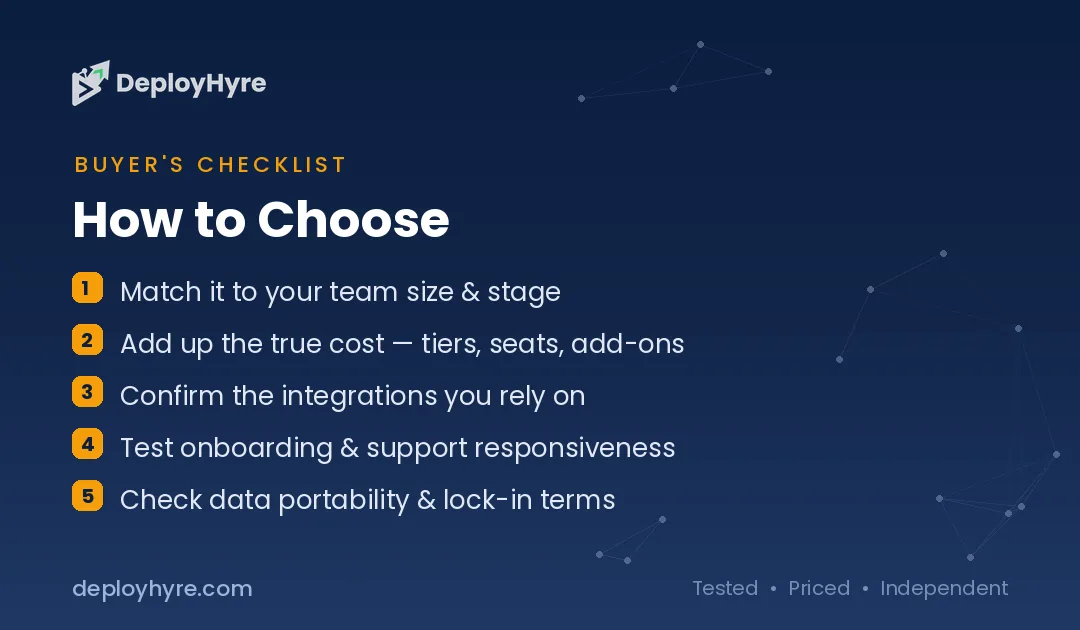
How to Choose a Bright Data Alternative
Start with your monthly volume and your tolerance for commitment, not the headline per-GB rate. Maybe you spend a few hundred dollars a month or scrape now and then.
- Then a no-floor pay-as-you-go provider like Rayobyte or IPRoyal, or a low-entry self-serve option like Decodo, will serve you better than any enterprise plan.
- If you are moving terabytes and need guaranteed reliability and support, Oxylabs is the natural peer to Bright Data.
- SOAX fits when precise geo-targeting is the priority.
- The cheapest advertised rate rarely wins once you factor in the minimum spend needed to reach it.
- Next, match the proxy type to the job.
- Residential IPs are needed for the hardest anti-bot targets, but they are the most expensive.
- Do not pay for them when datacenter proxies would clear the site.
- Webshare’s datacenter plans and free tier make it cheap to test whether datacenter IPs are enough before you commit to residential pricing.
- If you would rather not manage proxies at all, a request-based scraping API like Zyte shifts the cost model from bandwidth to successful extractions.
- It removes the rotation and unblocking work entirely.
- Finally, pilot before you commit, and confirm current pricing on the vendor’s own page.
- Most of these providers offer a trial, a free tier, or small pay-as-you-go top-ups.
- So you can test success rates on your actual target sites with real data before scaling.
- Watch two numbers during the pilot.
- First, your real cost per successful request, not per advertised GB.
- Second, your block rate on the sites that matter.
- A cheap provider that gets blocked is more expensive than a pricier one that does not.
How We Evaluated These Bright Data Alternatives
We compared eight Bright Data alternatives across five dimensions. Those are pool size and sourcing, real per-GB (or per-request) cost versus Bright Data, success rate on protected targets, targeting and features, and ease of onboarding versus Bright Data’s complexity.
- We picked these providers based on market presence, the range of buyers they serve, and how directly they substitute for Bright Data across residential, datacenter, and scraping-API use cases.
- For each one we confirmed the product is live and actively maintained.
- We pulled entry-level pricing from each vendor’s published rates and reputable pricing summaries at the time of writing.
- We recorded the lowest paid plan or pay-as-you-go rate, and we noted whether a free tier or trial exists.
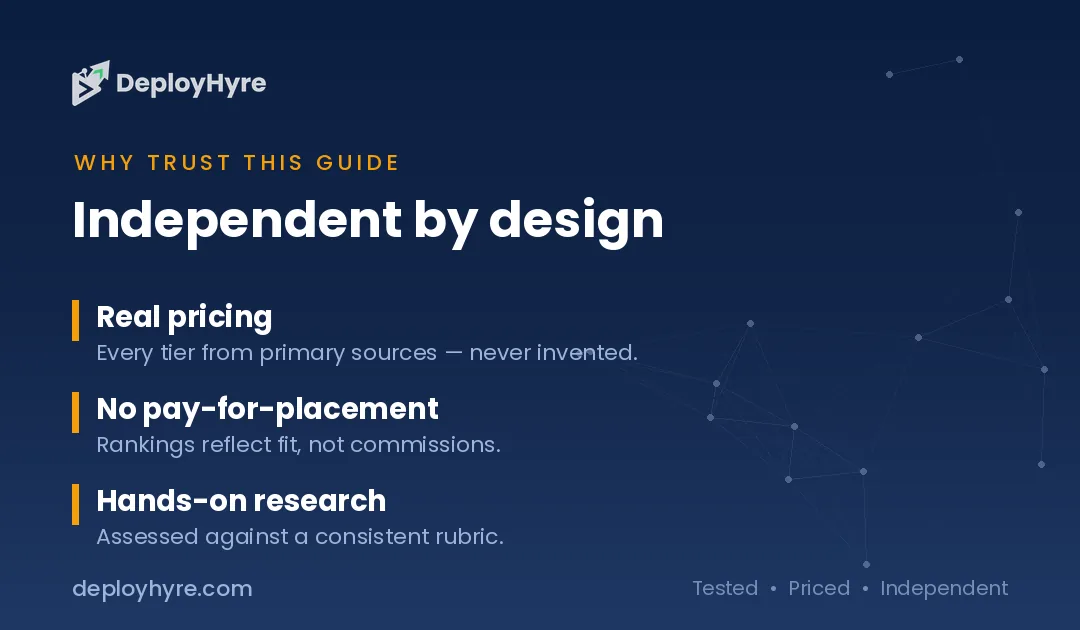
- No vendor paid for placement or a higher ranking in this roundup.
- Recommendations are based on documented pricing, commitment structure, and the use case each provider is built for.
- We present prices as bands rather than single fixed numbers.
- That is because promotions, credit systems, and tiers change often, and because some providers price by GB, some by IP, and one (Zyte) by successful request.
- We did not publish success-rate benchmarks or pool-size claims we cannot source.
- We did not claim hands-on testing we did not perform.
- Where a provider only quotes enterprise or high-volume pricing on request, we label that as quote-only rather than estimate a figure.
- We excluded one widely listed provider on integrity grounds after its network was reported seized.
- Always verify the live price on the vendor’s pricing page before buying, as rates and plan structures shift often.
The Bottom Line
There is no single best Bright Data alternative. There is only the best fit for your volume, your budget, and the proxy type you actually need.
For the lowest per-GB residential traffic, Rayobyte leads with rates from $3.50/GB down to about $0.70/GB at scale. IPRoyal is close behind, with no expiry on purchased data.
For a fast, low-commitment switch, Decodo (formerly Smartproxy) starts around $11.25 for 3 GB or $4/GB pay-as-you-go.
At the premium end, Oxylabs is the closest peer to Bright Data, with a cleaner self-serve entry around $30 for 5 GB. SOAX is the pick when precise geo-targeting justifies its $200 monthly minimum.
If you would rather buy working data than manage proxies, Zyte’s per-request API from about $0.13 per 1,000 responses replaces the whole stack.
Frequently Asked Questions
What is the best Bright Data alternative?
It depends on your use case.
Oxylabs is the closest enterprise-grade peer, with a cleaner self-serve entry. Decodo (formerly Smartproxy) is the best low-commitment switch for small and mid-size teams, from about $4/GB.
Rayobyte offers the cheapest per-GB residential traffic, starting at $3.50/GB and falling to roughly $0.70/GB at scale. Match the provider to your volume and proxy type.
How much do Bright Data alternatives cost?
Residential proxy traffic in this roundup ranges from about $3.50/GB at entry down to roughly $0.70/GB at bulk volumes.
That compares with Bright Data’s roughly $8/GB list rate. Pay-as-you-go options like Decodo and Infatica sit near $4/GB with no commitment.
Datacenter proxies from Webshare start under $3/month per 100 IPs. Confirm the live rate on each vendor’s pricing page, as promotions change often.
Why are Bright Data alternatives often cheaper?
Bright Data prices at a premium and reserves its best per-GB rates for high monthly commitments.
It also gates its residential pool behind business verification. Alternatives like Rayobyte, IPRoyal, and Decodo win on lower entry commitments and simpler, self-serve onboarding, rather than always on raw network quality.
For many small and mid-size scrapers, the lower minimum spend matters more than the headline per-GB price.
Which proxy provider is best for small projects?
For small or occasional projects, choose a provider with no subscription floor.
IPRoyal lets you buy as little as 1 GB and never expires your traffic. Decodo offers pay-as-you-go top-ups from $4/GB.
Webshare has a genuine free tier with 10 datacenter proxies and 1 GB a month. These avoid the four-figure minimums that make enterprise plans a poor value for light use.
Are residential or datacenter proxies the better choice?
Residential proxies use real consumer IPs and succeed against the hardest anti-bot systems, but they cost the most per GB.
Datacenter proxies are far cheaper, often under $3 per 100 IPs monthly, and work well on sites with lighter protection. First test whether datacenter proxies clear your target sites, using a free tier like Webshare’s.
Only pay for residential traffic when you actually need it.
Related Articles

David Austin is a technology writer and software analyst at DeployHyre, where he covers AI tools, SaaS platforms, cloud hosting, and business automation. He focuses on hands-on comparisons of pricing, features, and real-world performance so teams can pick the right software with confidence.