For most teams, the best datacenter proxy provider is Webshare for cheap bulk shared IPs, Oxylabs for enterprise-scale scraping, and Rayobyte for dedicated, static performance. All nine providers here send your traffic through IPs hosted in data centers. That makes them the fastest and cheapest proxy type you can get. They differ in two ways. The first is the billing model. You either pay per IP or pay per gigabyte. The second is whether each IP is yours alone or shared with other users.
Here is what most buyers miss. With datacenter proxies, the headline price means almost nothing until you know the model behind it. A “$0.02/IP” shared plan and a “$2.50/IP” dedicated plan are not the same product at different prices. They are different products. Per-GB billing can be far cheaper than per-IP for light, bursty jobs. It can also cost far more for steady, high-volume ones. We ranked nine leading providers on real entry pricing, the model each one uses, and the buyer each one fits.
The prices below come from each vendor’s published rates at the time of writing. We took them from each vendor’s own datacenter proxy and pricing pages. We show them as entry-level bands, meaning the lowest shared or dedicated tier, or pay-as-you-go per GB. Vendors run promotions, set rates by country, and change prices often. So treat every figure as a starting band. Confirm the live number on the vendor’s own page before you buy. We don’t invent prices, and we don’t claim hands-on testing we didn’t do.
Quick Comparison: Best Datacenter Proxies at a Glance
| Provider | Best For | Entry Price | Model |
|---|---|---|---|
| 1. Webshare | Cheap bulk shared IPs | 10 proxies free; 100 proxies from $2.99/mo (to $0.0179/proxy at scale) | Per-IP (shared, billed per proxy/mo) |
| 2. Oxylabs | Enterprise-scale scraping | Shared from $0.70/IP; dedicated from $1.20/IP; or $0.44/GB | Per-IP or per-GB |
| 3. Bright Data | Compliance-conscious enterprises | Shared from $1.40/IP ($14/mo for 10 IPs); pay-as-you-go $0.60/GB | Per-IP or per-GB |
| 4. Decodo (formerly Smartproxy) | Flexible mid-market projects | Shared from $0.02/IP; dedicated from $1.15/IP; or $0.38/GB | Per-IP or per-GB |
| 5. Rayobyte | Dedicated static US IPs | US dedicated from $2.50/IP/mo (to $0.85/IP at scale, quote-only); IPv6 from $0.20/IP | Per-IP (dedicated, unlimited bandwidth) |
| 6. IPRoyal | Dedicated IPs on flexible terms | From $1.57/IP (30-day) to $1.39/IP (90-day) | Per-IP (dedicated) |
| 7. Proxy-Cheap | Budget IPv4 and cheap IPv6 | Dedicated IPv4 from ~$1.42/IP/mo; IPv6 from $0.15/IP/mo | Per-IP (dedicated) |
| 8. MyPrivateProxy | Private proxies for SEO tools | Private from $1.13/IP/mo at volume; shared from $0.62/IP | Per-IP (dedicated/private) |
| 9. Infatica | Rotating DC with ethical sourcing | Rotating $0.60/GB pay-as-you-go (to $0.30/GB at 2 TB); dedicated from $1/IP | Per-GB or per-IP |
What datacenter proxies actually are
A datacenter proxy is an IP address hosted on a server in a commercial data center. It is not assigned by a home internet provider. Your traffic routes through that IP. So the target site sees the proxy’s address and location, not yours. The path is short and the hardware is fast. That makes datacenter proxies the quickest and cheapest proxy type. You usually get sub-second response times and uptime around 99.9%. The trade-off is that they are easier to spot. The IP ranges are known to belong to hosting companies. So sites with heavy bot defenses flag them more often than residential IPs.
This makes datacenter proxies great for jobs where speed and price matter most. They work best on sites without aggressive blocking. Good uses include bulk web scraping, price and SEO monitoring, ad verification, account management, and performance testing. They sit at the budget end of a wider proxy stack. Most of these vendors also sell residential and ISP IPs for the tougher targets. Still mapping the whole landscape? Start with our guide to the best proxy services. It shows where datacenter fits against the other types. Then come back here to pick a datacenter provider.
What Makes the Best Datacenter Proxy?
The best datacenter proxy is the one whose billing model and IP type match your workload. It is not the one with the lowest headline price. Your most important choice is not which brand you pick. It is which billing model you buy. Per-IP plans rent you specific addresses. They usually come with unlimited or generously capped bandwidth. They reward steady, high-volume traffic on a stable set of targets. Per-GB plans meter the data you move through a rotating pool. They reward light, bursty scraping across many locations. Buy the wrong model and you waste money. You either pay for bandwidth you barely use or blow through a gigabyte allowance in an afternoon. The second choice is shared versus dedicated. Shared IPs are cheapest, but they may arrive already flagged on sensitive targets. Dedicated IPs cost more and give you a clean, exclusive identity. The table below shows what each model rewards.
| Pricing model | What it rewards | Watch out for |
|---|---|---|
| Per-IP, dedicated (e.g. Rayobyte, IPRoyal, MyPrivateProxy) | Heavy, steady traffic on fixed targets; account management needing a consistent identity | Fair-use caps (often ~100 GB/IP/mo); you pay for idle IPs |
| Per-IP, shared (e.g. Webshare, Oxylabs shared, Decodo shared) | Cheapest entry; high concurrency across many cheap addresses | IPs used by others can already be flagged on sensitive targets |
| Per-GB, rotating (e.g. Bright Data, Oxylabs, Infatica) | Light or spiky jobs; wide location mix; pay only for data moved | Costs scale with volume fast; a big scrape can dwarf a per-IP plan |
Here is the practical rule. Estimate your monthly gigabytes first. Will you move a lot of data through a handful of targets? Then per-IP with unlimited bandwidth is almost always cheaper. Will you touch many sites lightly, or can’t you predict volume? Then per-GB keeps you from paying for idle IPs. Several providers here sell both. Oxylabs, Bright Data, Decodo, and Infatica all do. So you can match the model to the job, not the brand.
The 9 Best Datacenter Proxy Providers
1. Webshare: Best for cheap bulk shared IPs
Webshare is the easiest and cheapest entry point in this group. You get 10 shared datacenter proxies free forever, with no card needed. Paid plans start at $2.99 per month for 100 proxies. At the largest volumes, the per-proxy rate falls to as little as $0.0179. Billing is per proxy per month. It supports HTTP and SOCKS5 across 50-plus countries. Some developers want to test, prototype, or run big bulk jobs on easy targets without a sales call. For them, nothing here is cheaper or faster to start.
The strength is self-serve pricing that drops to fractions of a cent per proxy. The honest limit is that these are shared IPs. So on sensitive targets, some addresses may already be flagged by other users’ traffic. It is the right first proxy for anyone whose targets don’t run aggressive bot defenses.
2. Oxylabs: Best for enterprise-scale scraping
Oxylabs is the enterprise workhorse. It is built for demanding, large-scale scraping that needs real IP exclusivity. Shared datacenter IPs start from $0.70 per IP. Dedicated IPs start from $1.20 per IP. A rotating pay-per-GB pool starts at $0.44 per GB. That gives you three ways to run the same network, depending on your workload. It covers 188 countries for dedicated IPs and offers 24/7 support. It is the pick when reliability and coverage matter more than saving the last cent.
Its strength is breadth. You get shared, dedicated, and per-GB on one platform, with enterprise support behind it. So you can match the model to the job without switching vendors. The limit is that above 1,000 IPs, pricing moves to custom quotes. So true costs at scale aren’t public. Comparing it against residential IPs for harder targets? Read our roundup of the best residential proxies before you decide where each job belongs.
3. Bright Data: Best for compliance-conscious enterprises
Bright Data is the choice for compliance-conscious enterprises. Its datacenter pool holds more than 1.3 million IPs. Shared IPs start from $1.40 per IP, or 10 IPs for $14 a month. Pay-as-you-go runs $0.60 per GB. That falls to $0.42 per GB on committed terabyte plans. It leans hardest into ethical sourcing, GDPR and CCPA compliance, and auditability. Those features matter most to large brands and regulated industries.
The strength is governance. You get documented compliance, SLAs, and the auditability regulated buyers need. One of the largest datacenter pools in the market backs it. The limit is price. You pay more than with budget vendors. And above 1,000 IPs, the rate is custom-quoted, not listed. For enterprises where legal and procurement teams have a say, that premium is usually the point.
4. Decodo (formerly Smartproxy): Best for flexible mid-market projects
Decodo rebranded from Smartproxy in 2025. It is the most flexible mid-market option. Shared datacenter IPs start from a headline $0.02 per IP. Dedicated IPs start from $1.15 per IP. A pay-per-GB track starts at $0.38 per GB. So you can switch models as a project changes, without changing vendor. It has a clean dashboard and a free trial. That makes it a good step up from Webshare. Reach for it when you need more locations or dedicated addresses but still want self-serve pricing.
The strength is model flexibility at mid-market prices. You get shared, dedicated, and per-GB from one self-serve dashboard. So a project can grow or pivot without a migration. The honest caveat is about that $0.02 shared headline. It is a volume floor, not what a small plan costs. So price your actual tier before you commit. For teams that have outgrown free tools but aren’t ready for enterprise contracts, it hits the sweet spot.
5. Rayobyte: Best for dedicated static US IPs
Rayobyte is the standout for dedicated, static datacenter IPs that are yours alone. US dedicated IPs start at $2.50 per IP per month for 5 to 99 IPs. The rate drops 15% to 25% as you scale. At enterprise volume with a commitment, it falls to as little as $0.85 per IP (quote-only). Every plan includes unlimited bandwidth under fair use. You also get HTTP(S) and SOCKS and a same-IP-every-month guarantee. Cheaper semi-dedicated IPs start from $1, and IPv6 from $0.20.
The strength is stability and ethics. You get a guaranteed consistent identity, unlimited bandwidth, and ethical sourcing behind the US pool. That is ideal for performance work on fixed targets. The limit is price. The $2.50 entry rate is higher than budget dedicated vendors. And the $0.85 floor only appears at committed enterprise volume you have to request. For stable US work where a clean, persistent IP matters, it is the easiest recommendation.
6. IPRoyal: Best for dedicated IPs on flexible terms
IPRoyal offers dedicated datacenter IPs on the most flexible terms. Pricing starts at $1.57 per proxy on a 30-day plan. It falls to $1.39 per proxy on the 90-day plan. Every IP goes to a single user. You get 60-plus locations and a 100 GB-per-IP monthly traffic pool under fair use. It also offers unlimited sessions and simple username-and-password setup. That makes it a clean pick when you want dedicated IPs without a long contract or an enterprise minimum.
The strength is low-commitment dedicated access. You get a genuine single-user IP from under $1.60. There is no enterprise minimum, and a modest 90-day term earns a discount. The limit is the 100 GB-per-IP fair-use cap. It can pinch heavy, sustained scrapes that an unlimited-bandwidth vendor would absorb. For small teams that want exclusive IPs without a long deal, it fits neatly.
7. Proxy-Cheap: Best for budget IPv4 and cheap IPv6
Proxy-Cheap lives up to the name for buyers who want dedicated IPs on a budget. Dedicated IPv4 datacenter proxies start around $1.42 per IP per month. IPv6 proxies run as low as $0.15 per IP per month at volume. All come with unlimited bandwidth and a one-time flat fee, not metered traffic. A short paid trial lets you test before you commit. For cheap dedicated IPv4 and truly low-cost IPv6, it undercuts most of the field.
The strength is raw cost. You get dedicated IPv4 under $1.50 and IPv6 among the cheapest anywhere, with unlimited bandwidth instead of per-GB metering. The limit is that it is a budget specialist, not an enterprise platform. You won’t find the compliance documentation, SLAs, or coverage depth the market leaders offer. For cost-sensitive buyers who need dedicated IPs but not governance paperwork, it is hard to beat on price.
8. MyPrivateProxy: Best for private proxies for SEO tools
MyPrivateProxy (MPP) is the veteran private-proxy specialist. It is aimed at SEO and marketing tool users. Private dedicated proxies run from about $1.13 per IP per month at volume. A single IP costs roughly $2.49. Shared proxies start from $0.62. All are hosted across US data centers with unlimited bandwidth. It is tuned for white-hat SEO software and multi-account management, not massive rotating scrapes.
The strength is focus. You get a stable block of private US IPs with unlimited bandwidth. It is tuned for SEO tools and multi-account work, where a trusted, consistent identity is everything. The limit is scope. It is built for steady private use, not large rotating scrapes or wide geographic coverage. So heavy data-collection jobs belong elsewhere. For agencies and operators running SEO software, it is a dependable, long-established pick.
9. Infatica: Best for rotating DC with ethical sourcing
Infatica rounds out the list with a strong rotating datacenter network and ethical-sourcing certifications. Rotating datacenter traffic is pay-per-GB. It starts at $0.60 per GB and drops to $0.30 per GB on the 2 TB bundle. Dedicated datacenter IPs are priced per IP, from roughly $1 to $1.50, with unlimited traffic. It has 500,000-plus IPs and ISO certifications. That suits teams that want rotating datacenter scale with documented compliance.
The strength is rotating value with compliance. You get ISO-certified ethical sourcing and a large pool at a gentler per-GB price than the two market leaders. There is also a dedicated option if you need fixed IPs. The limit is that it is less of a household name than Oxylabs or Bright Data. So expect a smaller ecosystem and fewer third-party integrations. For teams wanting rotating scale and documented ethics without top-tier pricing, it is a solid value pick.
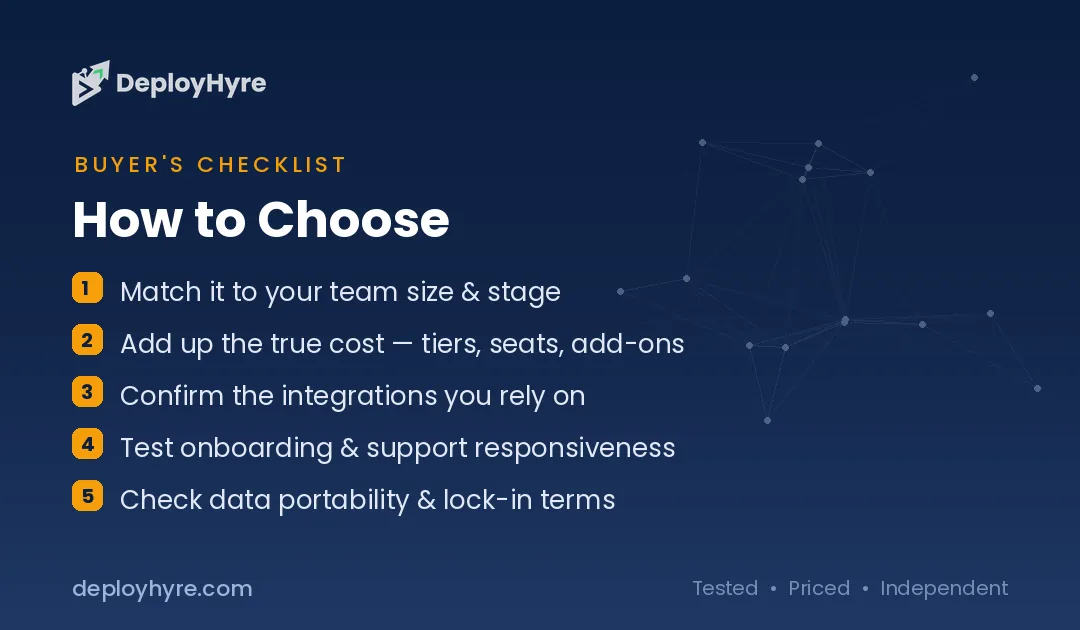
How Should You Choose Datacenter Proxies?
Start by estimating two numbers. First, how many gigabytes you will move in a month. Second, how many distinct targets you will hit. Heavy traffic on a few stable sites points to per-IP plans with unlimited bandwidth. That is where Rayobyte, IPRoyal, and MyPrivateProxy shine. Light or unpredictable traffic across many sites points to per-GB pools from Bright Data, Oxylabs, or Infatica. That way you never pay for idle addresses. Can’t forecast at all? Start on pay-as-you-go per GB. Then switch to per-IP once your usage is clear.
Next, match the IP type to the target. Shared datacenter IPs are cheapest from Webshare, Oxylabs, and Decodo. They are fine for undemanding sites, bulk testing, and high concurrency. But other customers use the same addresses. So they may already be flagged on sensitive targets. Dedicated IPs cost more. They give you exclusive, predictable addresses for account management and anything where a clean, consistent identity matters. When a site has serious bot defenses, no datacenter proxy of either kind will hold up. Move that job to residential or ISP IPs instead.
Finally, weigh governance against price. Budget specialists like Webshare and Proxy-Cheap win on raw cost. Bright Data, Oxylabs, and Infatica compete on ethical sourcing, compliance documentation, and SLAs that regulated buyers need. Confirm the live rate on the vendor’s own page before you commit. Datacenter pricing tiers by country, volume, and plan length, and promotions come and go. A short trial with your own targets reveals success rates no comparison table can.
How We Evaluated These Datacenter Proxies
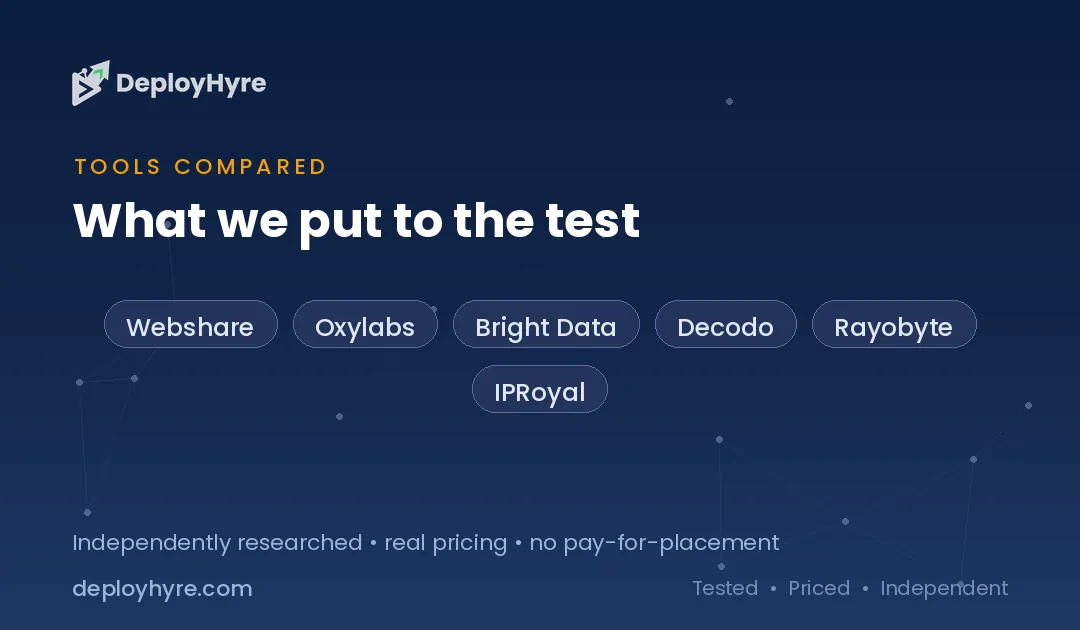
We compared nine datacenter proxy providers across five areas. Those are IP pool size and subnet diversity, real per-IP/per-GB cost, speed and uptime, dedicated vs shared options, and support and ethics. We picked these providers based on market presence. We also weighed the breadth of datacenter products they offer and the range of buyers they serve, from solo developers to regulated enterprises. For each one, we confirmed the datacenter product is live and actively sold. We pulled entry-level pricing straight from each vendor’s own datacenter and pricing pages at the time of writing. We recorded the lowest shared or dedicated per-IP tier and the pay-as-you-go per-GB rate where offered. We show prices as bands, not single fixed numbers, because rates tier by country and volume and change often.
No vendor paid for placement or a higher ranking in this roundup. Our picks are based on documented pricing, billing model, IP type, and the use case each provider is built for. We chose not to publish speed benchmarks, success-rate claims, or adoption statistics we cannot source. We also did not claim hands-on testing we did not perform. Some vendors only quote enterprise or above-threshold volume on request. Examples are Rayobyte’s $0.85/IP floor and Oxylabs and Bright Data above 1,000 IPs. In those cases we label the rate quote-only rather than estimate a figure. Always verify the live price on the vendor’s page before you buy.
The Bottom Line
There is no single best datacenter proxy. There is only the best fit for your volume, your targets, and your tolerance for shared versus dedicated IPs. Webshare is the cheapest, fastest place to start. It is free for 10 proxies and $2.99 a month for 100. Decodo and Proxy-Cheap extend the budget tier with flexible models and cheap dedicated IPs. For enterprise scale, Oxylabs leads on coverage from $0.70 per IP or $0.44 per GB. Bright Data leads on compliance from $0.60 per GB. Infatica leads on rotating value from $0.30 per GB at volume.
For dedicated, static performance, Rayobyte is the pick for US IPs from $2.50 each. IPRoyal wins on flexible terms from $1.39 per IP. MyPrivateProxy wins for private SEO-tool proxies from $1.13 per IP at volume. Estimate your monthly gigabytes. Pick per-IP or per-GB to match. Choose shared or dedicated by how sensitive your targets are. Then confirm the live rate before you buy. Match the model to the job, and datacenter proxies are the best value in the proxy market.

Frequently Asked Questions
How much do datacenter proxies cost?
Entry pricing covers a wide range by model. Shared per-IP plans start as low as $0.02 per IP at Decodo. Webshare starts at $2.99 a month for 100 proxies. Dedicated IPs run roughly $1.13 to $2.50 per IP per month at IPRoyal, MyPrivateProxy, and Rayobyte. Pay-per-GB pools start around $0.38 to $0.60 per GB at Decodo, Infatica, and Bright Data, and they drop with volume.
What is the difference between per-IP and per-GB datacenter proxy pricing?
Per-IP plans rent you specific addresses. They usually come with unlimited or generously capped bandwidth. They suit heavy, steady traffic on a fixed set of targets. Per-GB plans meter the data you move through a rotating pool. They suit light, bursty, or geographically varied jobs. Estimate your monthly gigabytes first. High volume favors per-IP. Unpredictable or low volume favors per-GB.
Are shared or dedicated datacenter proxies better?
It depends on your targets. Shared datacenter IPs are cheapest. They are fine for bulk testing, high concurrency, and undemanding sites. But other customers use the same addresses. So they may already be flagged on sensitive targets. Dedicated IPs cost more. They give you exclusive, consistent addresses. That matters for account management and any task that needs a clean, stable identity.
When should I use datacenter proxies instead of residential proxies?
Use datacenter proxies when speed and price matter most. They work best when the target site does not run aggressive bot detection. Good uses include bulk scraping, price and SEO monitoring, ad verification, and performance testing. Datacenter IPs are faster and far cheaper, but they are easier to detect. For sites with heavy defenses, such as large social platforms and retailers, switch that job to residential or ISP proxies instead.
Is Decodo the same as Smartproxy?
Yes. Smartproxy rebranded to Decodo in 2025. So Decodo (formerly Smartproxy) is the same provider under a new name, with the same datacenter products. Its datacenter proxies start from a headline $0.02 per IP for shared, $1.15 per IP for dedicated, or $0.38 per GB. You can switch between per-IP and per-GB billing from the same dashboard.

David Austin is a technology writer and software analyst at DeployHyre, where he covers AI tools, SaaS platforms, cloud hosting, and business automation. He focuses on hands-on comparisons of pricing, features, and real-world performance so teams can pick the right software with confidence.