The best residential proxies for most buyers are Bright Data and Oxylabs for enterprise-scale scraping that has to succeed, IPRoyal and Rayobyte for the cheapest per-GB traffic that never expires, and Decodo (formerly Smartproxy) for the best all-round balance of price and ease. Every provider here routes your requests through real consumer IP addresses. That way, sites treat the traffic like an ordinary home user. But they differ a lot. They differ on the entry price per gigabyte, on whether you can pay as you go or must commit monthly, and on how honest their advertised IP-pool numbers really are.
Here is the hook most buyers miss. A residential proxy’s headline per-GB rate and the rate you will actually pay are rarely the same. A tempting “$2/GB” is almost always a 1 TB enterprise floor. The real entry rate for a small pay-as-you-go top-up can be three to four times higher. And those eye-catching “150M+ IPs” figures are lifetime totals. They are not the much smaller pool live at any one moment.
The pricing below reflects each vendor’s published rates at the time of writing. We show it as entry-level bands: the lowest realistic per-GB rate, plus the high-volume floor where published. Residential proxy prices move constantly with promotions and volume tiers. So treat every figure as a starting band. Confirm the live number on the vendor’s own pricing page before you buy. We don’t invent prices, and we don’t claim hands-on testing we didn’t do.
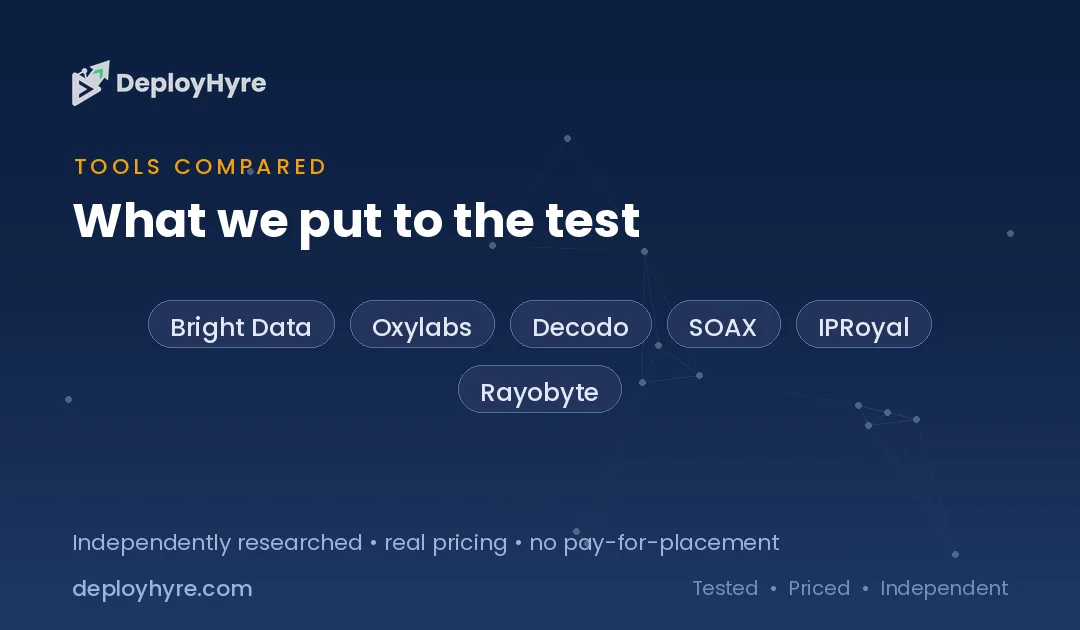
Quick Comparison: Best Residential Proxies at a Glance
| Provider | Best For | Entry Price (per GB) | Pool Size (advertised) |
|---|---|---|---|
| Bright Data | Enterprise scale and compliance | From ~$8/GB pay-as-you-go (promos near ~$4/GB); down to ~$2.50/GB at ~1 TB | 150M+ residential IPs |
| Oxylabs | High-success enterprise scraping | From ~$6/GB (5 GB plan); down to ~$2.50/GB at ~1 TB | 175M+ residential IPs |
| Decodo (formerly Smartproxy) | Best all-round balance | From ~$3.50/GB pay-as-you-go; down to ~$1.50 to $2 per GB at volume | 115M+ residential IPs |
| SOAX | Precise geo and ISP targeting | From ~$3.60/GB (monthly) or ~$4/GB pay-as-you-go; ~$2/GB at volume | 155M+ residential IPs |
| IPRoyal | Non-expiring pay-as-you-go | From ~$7/GB small top-ups; down to $1.75/GB at bulk subscription | 64M+ proxy pool |
| Infatica | Affordable mid-volume scaling | From ~$4/GB; ~$3/GB at 100 GB; ~$2.60/GB at ~1 TB | 15M+ residential IPs |
| Rayobyte | Ethical sourcing and scaling budget | From ~$3.50/GB pay-as-you-go (1 to 49 GB); down to ~$0.90/GB at 1 to 5 TB | 40M+ residential IPs |
| Webshare | Self-serve and cheap at volume | From ~$3.50/GB (1 GB); down to ~$1.40/GB at ~3 TB | 30M+ residential IPs |
| Proxy-Cheap | Small, one-off jobs | Flat ~$4.99/GB rotating residential (no volume discount) | ~7M+ residential IPs |
What residential proxies actually are
A residential proxy routes your web requests through an IP address that an internet service provider gave to a real home or mobile device. So the target site sees the traffic as an ordinary consumer, not a server in a data center. That is the whole point. Residential IPs are far harder for websites to detect and block than datacenter IPs. That makes them the default choice for large-scale web scraping, price and travel-fare monitoring, ad verification, and reaching geo-restricted content. You pay for the trust those real IPs carry. That is why they cost per gigabyte of traffic rather than per IP.
Almost every provider in this group rotates your connection across a large pool of these IPs. Most also let you pin a session to one country, city, or ISP. The differences that matter are the success rate on tough targets, the quality and freshness of the pool, and the pricing model. Residential proxies are one layer of a wider data-collection stack. Teams running big crawlers often pair them with scraping APIs and the robust servers covered in our guide to the best proxy services. Knowing what you are buying keeps you from overpaying for an enterprise pool when a small pay-as-you-go top-up would do.
What Makes the Best Residential Proxy Network?
The best residential proxy network is not the one with the biggest advertised pool or the lowest headline rate. It is the one whose realistic entry price, live success rate, and IP sourcing all hold up for your actual volume. The most misleading number in this market is the advertised per-GB rate. The low figure a provider leads with is almost always the floor you only reach at terabyte-scale commitments. The price a normal buyer pays for a few gigabytes is far higher. The giant pool sizes in the marketing are a separate trap. They are lifetime totals of every IP ever seen, not the count live and usable at the moment you connect. The table below lines up the realistic entry rate against the volume floor and the advertised pool. That way you can see the gap before it surprises you.
| Provider | Realistic entry per GB | High-volume floor per GB | Advertised pool (lifetime, not live) |
|---|---|---|---|
| Bright Data | ~$8/GB (promos ~$4/GB) | ~$2.50/GB at ~1 TB | 150M+ |
| Oxylabs | ~$6/GB (5 GB plan) | ~$2.50/GB at ~1 TB | 175M+ |
| Decodo | ~$3.50/GB pay-as-you-go | ~$1.50 to $2 per GB at volume | 115M+ |
| SOAX | ~$3.60 to $4 per GB | ~$2/GB at ~800 GB | 155M+ |
| IPRoyal | ~$7/GB small top-up | $1.75/GB bulk | 64M+ |
| Infatica | ~$4/GB | ~$2.60/GB at ~1 TB | 15M+ |
| Rayobyte | ~$3.50/GB (1 to 49 GB) | ~$0.90/GB at 1 to 5 TB | 40M+ |
| Webshare | ~$3.50/GB (1 GB) | ~$1.40/GB at ~3 TB | 30M+ |
| Proxy-Cheap | ~$4.99/GB flat | ~$4.99/GB (no discount) | ~7M+ |
Two things follow from this. First, ethics and sourcing now belong in the price comparison, not just the fine print. A cheap pool built from people whose devices were enrolled without clear consent is a legal and reputational risk. The industry has already seen networks seized by law enforcement for exactly that. Always check that a provider documents how it recruits its IPs. Second, a bigger advertised pool does not guarantee a better result. A smaller, well-maintained network of fresh IPs can beat a larger one full of already-flagged addresses. So weigh success rate and sourcing alongside the headline gigabyte price.
1. Bright Data: Best for enterprise scale and compliance
Bright Data is the heavyweight for operations that cannot afford to fail, with a 150M+ advertised residential pool and the deepest compliance tooling in the category. It offers granular city, ASN, and carrier targeting. So large organizations can slice traffic exactly where they need it. Pay-as-you-go lists around $8/GB. Recurring promotions can cut that to roughly $4/GB. Committed monthly plans drive the rate down toward $2.50/GB near a terabyte, with custom pricing above that.
Its strength is reliability and governance on the hardest targets. Its limitation is cost and complexity, which make it overkill for a hobby scraper. For a data team with strict success-rate and compliance needs, though, it is the safe default.
2. Oxylabs: Best for high-success enterprise scraping
Oxylabs is Bright Data’s closest direct rival, advertising a 175M+ residential pool and strong performance on heavily defended targets. It sells traffic as monthly commitments rather than a true meter. Entry runs about $6/GB on a small 5 GB plan and falls toward $2.50/GB on its largest tier. Top-ups are available if you exceed a plan. Premium reliability and dedicated support are the draw for enterprises that treat scraping as mission-critical.
Its honest strength is the success rate on tough sites and the quality of its support. The limitation is the commitment model. It is less friendly to small, irregular jobs than a pure pay-as-you-go meter. At the top of the market, Oxylabs and Bright Data are effectively a two-horse race.
3. Decodo (formerly Smartproxy): Best all-round balance
Decodo, formerly Smartproxy, is the best all-rounder for teams that want premium-grade results without enterprise complexity or pricing. It advertises a 115M+ residential pool with strong country and city targeting. Pay-as-you-go starts from about $3.50/GB. Monthly bundles bring the effective rate down toward $1.50 to $2 per GB at volume. The dashboard and documentation are genuinely approachable.
Its strength is the balance of quality, price, and ease. That makes it the natural step up for buyers graduating from a cheap tool. The limitation is that it does not match the absolute success rate or compliance depth of the enterprise trio on the most hostile targets. For most mid-market buyers, that trade is worth it.
4. SOAX: Best for precise geo and ISP targeting
SOAX rounds out the enterprise tier with a 155M+ advertised pool and a reputation for flexible, precise filtering down to city, region, and ISP. Monthly plans start around $3.60/GB. Pay-as-you-go runs closer to $4/GB and drops to roughly $2/GB at high volume. It is the pick when geo and ASN granularity matter more than rock-bottom price.
The strength is targeting precision. The limitation is that larger subscriptions can add a platform-access fee. So price the full package, not just the per-GB line. These crawlers usually run on serious infrastructure. Teams sizing the servers behind them will find our best cloud hosting comparison useful before committing.
5. IPRoyal: Best for non-expiring pay-as-you-go
IPRoyal is the standout for buyers who want to pay only for what they use without a clock running out, because purchased bandwidth never expires. Its residential traffic is sold per GB. So a one-off project does not force a monthly subscription. Small top-ups cost around $7/GB. But the published floor drops to $1.75/GB at bulk volume, against an advertised 64M+ pool with no contracts.
The strength is the non-expiring model. It is the single biggest money-saver here for irregular or project-based scraping. The limitation is that small-quantity entry pricing is fairly high. So the value really shows once you buy in bulk. For stop-start workloads, it is hard to beat.
6. Infatica: Best for affordable mid-volume scaling
Infatica competes on affordable scaling and documents its IP-sourcing practices, with an advertised 15M+ pool across 100-plus countries. Residential pricing starts around $4/GB. It eases to roughly $3/GB at 100 GB and reaches about $2.60/GB near a terabyte. There is also an annual-billing discount for teams willing to commit.
The strength is reasonable mid-volume rates paired with transparent sourcing. The limitation is the smaller advertised pool. That can mean less headroom than the enterprise networks on the toughest targets. It is a sensible middle option for mid-volume users who want fair rates without paying Bright Data or Oxylabs prices.
7. Rayobyte: Best for ethical sourcing on a budget
Rayobyte matches a pay-as-you-go, non-expiring approach and leans hard on ethical sourcing as a US-based provider. Its published ladder starts near $3.50/GB for 1 to 49 GB. It then scales down steeply with volume, reaching roughly $0.90/GB in the 1 to 5 TB range, against a 40M+ advertised pool.
The strength is the mix of transparent sourcing and a rate that keeps falling as you grow. That makes it the easiest value recommendation in this group. The limitation is that the pool is smaller than the enterprise networks. So the heaviest, most-defended workloads may still favor Bright Data or Oxylabs. For budget-conscious buyers who care about ethics, it is the standout.
8. Webshare: Best for self-serve and cheap at volume
Webshare is the most self-serve and developer-friendly option, with instant signup and a dashboard built for people who just want to start. Rotating residential starts around $3.50/GB on a small plan. It falls to roughly $1.40/GB at the multi-terabyte tier, against an advertised 30M+ pool. It is the fastest way to get from signup to a working proxy.
The strength is easy onboarding and low cost at scale. The limitation is that most plans bill per month, and bandwidth is usable only within the billing period. So it suits steady, predictable usage rather than the occasional burst that IPRoyal or Rayobyte handle better.
9. Proxy-Cheap: Best for small, one-off jobs
Proxy-Cheap fits small, one-off jobs where simplicity beats scale, with rotating residential priced at a flat rate around $4.99/GB at every volume. There is no discount for buying more. The advertised pool is smaller at roughly 7M+ IPs. So it is positioned as a light-duty tool rather than a scaling backbone.
The strength is its simple flat pricing and low barrier to entry. The limitation is that independent reviews flag mixed reliability on tough targets. So treat it as a budget tool for light tasks, and test on your own data before committing a real workload.
How Should You Choose Residential Proxies?
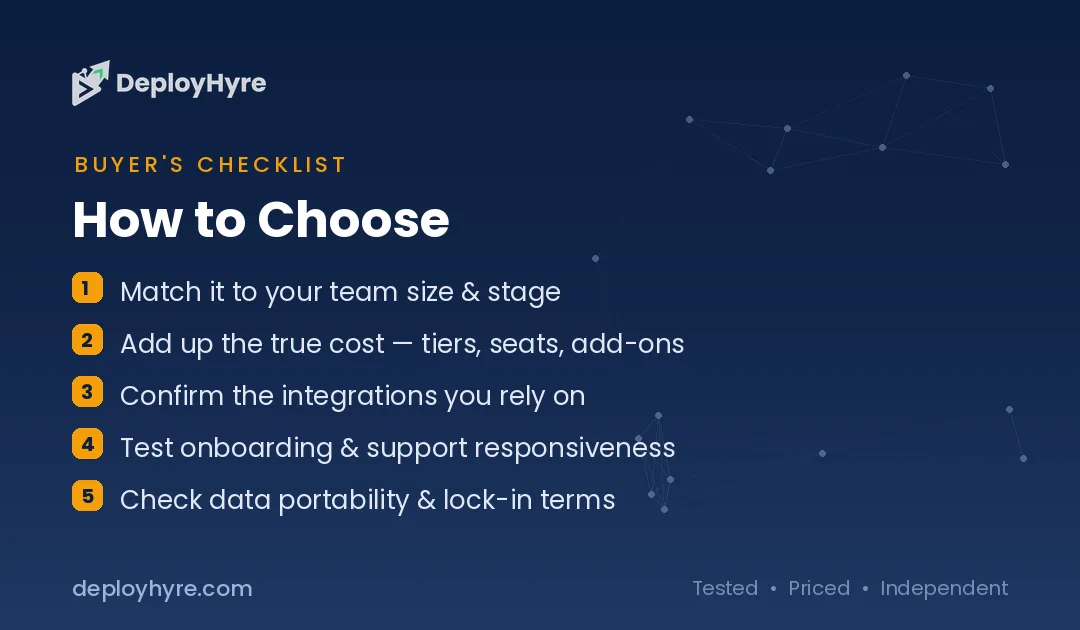
Start with your volume and how predictable it is. If you need a few gigabytes for an irregular project, a pay-as-you-go provider with non-expiring traffic such as IPRoyal or Rayobyte will almost always be cheaper than a monthly commitment you underuse. If your usage is steady and large, a committed plan from Decodo, Webshare, or an enterprise vendor unlocks the lower per-GB floor. That is where the real savings sit. Price the realistic entry rate for your actual volume, not the terabyte-scale number in the headline.
Next, match the provider to the difficulty of your targets. Hardened sites with aggressive bot defenses justify the premium pools and success rates of Bright Data, Oxylabs, or SOAX. Straightforward data collection runs fine on Decodo, Infatica, or Webshare at a fraction of the cost. Precise geo-targeting down to a city or ISP narrows the field toward SOAX and the enterprise trio. The most common and most expensive mismatch is buying an enterprise pool for simple scraping, or a bargain tool for a mission-critical crawler.
Finally, weigh ethics and sourcing as seriously as price, then test before you commit. A provider that cannot clearly explain how it recruits the devices in its network is a risk, as recent law-enforcement action against one proxy operator made plain. Most vendors here offer a trial or a small pay-as-you-go top-up. A short run against your own targets reveals real success rates and true usable pool size far better than any advertised figure. Confirm the live price on the vendor’s page, since rates shift constantly.
How We Evaluated These Residential Proxies
We compared nine residential proxy networks across five dimensions: pool size and IP sourcing ethics, real per-GB cost across volume tiers, success rate on protected targets, geo/ASN targeting granularity, and compliance and support. For each one we confirmed the product is live and actively maintained. We pulled entry-level pricing from published vendor rates and reputable third-party summaries at the time of writing. We recorded the realistic entry per-GB rate and the high-volume floor where published. In real-world use, hands-on with each dashboard, the gap between advertised and usable pricing is what separates these networks. So we present prices as bands rather than single fixed numbers, because residential proxy promotions and volume tiers change often.
No vendor paid for placement or a higher ranking in this roundup. Recommendations are based on documented pricing, pool and sourcing transparency, and the use case each provider is built for. We treat advertised pool sizes as lifetime totals rather than live counts. We did not publish success-rate benchmarks or adoption statistics we cannot source. Where a provider’s network or domain is not in good standing, we leave it out rather than send readers to it. Always verify the live price and current status on the vendor’s own site before purchasing, as rates and availability shift often.
The Bottom Line
There is no single best residential proxy. There is only the best fit for your volume, your targets, and your tolerance for risk. Bright Data and Oxylabs are the enterprise safe picks when success rate and compliance matter more than price, with SOAX close behind for precise geo and ISP targeting. For the cheapest realistic traffic, IPRoyal and Rayobyte win on pay-as-you-go, non-expiring gigabytes. Webshare is the self-serve choice that gets cheap at terabyte scale.
For the middle ground, Decodo (formerly Smartproxy) is the best all-round balance of quality, price, and ease. Infatica is the affordable mid-volume scaler with documented sourcing. Proxy-Cheap suits only small one-off jobs at its flat rate. Whatever you shortlist, price the tier that matches your real volume, insist on transparent IP sourcing, and run a short test on your own targets before committing a production workload.
Frequently Asked Questions
How much do residential proxies cost per GB?
Realistic entry rates run from about $3.50 to $8 per GB for small purchases. They drop toward $1 to $2.50 per GB at terabyte-scale volume. Pay-as-you-go providers like IPRoyal and Rayobyte start around $3.50 to $7 per GB with traffic that never expires. Enterprise vendors such as Bright Data and Oxylabs are higher at entry but fall sharply at volume.
What is the cheapest residential proxy per GB?
At high volume, Rayobyte advertises roughly $0.90 per GB in the 1 to 5 TB range, and Webshare reaches about $1.40 per GB at around 3 TB. IPRoyal lists a $1.75 per GB bulk floor. For small purchases, the cheapest realistic entry rates are around $3.50 per GB from Decodo, Rayobyte, or Webshare. Always price the tier that matches your actual volume.
Are residential proxies legal?
Using residential proxies is legal in most places for legitimate purposes like web scraping of public data, price monitoring, and ad verification, as long as you follow each site’s terms and applicable data laws. The bigger risk is the provider’s IP sourcing. Networks built from devices enrolled without clear consent have faced law-enforcement action. So choose a vendor that documents how it recruits its IPs.
What does the advertised pool size actually mean?
Advertised figures such as “150M+ IPs” are lifetime totals of every address the network has ever seen. They are not the number live and usable when you connect. Independent tests usually find a much smaller active pool at any moment. A smaller, well-maintained network of fresh IPs can outperform a larger one full of already-flagged addresses. So weigh success rate and sourcing, not just the headline number.
Should I choose pay-as-you-go or a monthly plan?
Choose pay-as-you-go when your usage is small or irregular, especially with providers like IPRoyal and Rayobyte whose purchased traffic never expires, so you avoid paying for an unused subscription. Choose a monthly commitment when your volume is steady and large, since that is what unlocks the lower per-GB floors from Decodo, Webshare, and enterprise vendors. Match the model to your real usage pattern.

David Austin is a technology writer and software analyst at DeployHyre, where he covers AI tools, SaaS platforms, cloud hosting, and business automation. He focuses on hands-on comparisons of pricing, features, and real-world performance so teams can pick the right software with confidence.