
Table of Contents
The best AI endpoint management software for most teams is Microsoft Intune for Microsoft estates, Jamf for Apple fleets, and NinjaOne for mixed environments and MSPs, with Kandji (now Iru) a strong Apple-first alternative expanding to other platforms. Unified endpoint management (UEM) tools enroll, configure, secure, and patch every laptop, phone, and tablet in your organization from one console, enforcing policy and pushing updates whether the device is in the office or across the world.
The cost mechanic to grasp: the device-to-headcount ratio flips which pricing model is cheaper. Per-device platforms (NinjaOne from ~$1.50, Jamf $3.75, Hexnode $2.20) bill by each managed device, while per-user platforms (Intune from $8) bill by person regardless of how many devices they carry. A user with three devices is cheap on per-user and expensive on per-device, and vice versa. Your real device-to-user ratio, not the headline rate, decides the winner over a 12-month total.
Every price below is a recent observed figure. Because NinjaOne and others quote by fleet size, treat each as a band.
Quick Comparison: Endpoint Management Software at a Glance
| Platform | Best For | Observed Price | Model |
|---|---|---|---|
| Microsoft Intune | Microsoft-centric enterprises | From $8/user/mo (free in E3/E5) | Per user |
| NinjaOne | Mixed fleets, MSPs, RMM | From ~$1.50/device/mo (quote) | Per device |
| Jamf | Apple fleets | From $3.75/device/mo | Per device |
| Kandji (Iru) | Apple-first, expanding | Per-device (quote) | Per device |
| Hexnode | Affordable cross-platform | From $2.20/device/mo | Per device |
| Workspace ONE | Enterprise cross-platform | From $3.00/device/mo | Per device |
What AI Endpoint Management Software Does
Endpoint management, often called unified endpoint management or mobile device management (MDM), is how IT controls the fleet of devices employees use. From one console, IT enrolls new devices, pushes configuration and security policy, installs and updates software, enforces encryption and passcodes, and can remotely lock or wipe a lost or stolen device. As workforces went remote and multi-device, managing endpoints one at a time became impossible, and UEM centralized it.
The modern platform spans operating systems, Windows, macOS, iOS, Android, and increasingly bundles adjacent capabilities: patch management, remote support, and even endpoint detection and response. The AI layer adds automated patching prioritized by risk, anomaly detection on device behavior, and automated remediation of common issues, reducing the manual work of keeping a large fleet secure and compliant. UEM is both an IT-operations and a security control, which is why it overlaps with endpoint security.
Endpoint management sits alongside endpoint security and IT service management. It complements the protection in our best AI endpoint security software guide, feeds the service desk in our best AI IT service management software guide, and supports the compliance controls in our best AI cybersecurity tools guide.
The Device-to-Headcount Ratio Flips the Cheaper Option
The right comparison is total cost against your actual device-to-headcount ratio over 12 months, not the headline per-unit price, because per-device and per-user models flip depending on how many devices each person carries. Per-device platforms, NinjaOne from around $1.50, Hexnode $2.20, Workspace ONE $3.00, Jamf $3.75, bill for every managed device. Per-user Intune (from $8) bills once per person no matter how many devices they use. An organization where each employee has a laptop and a phone pays twice on per-device but once on per-user; a shared-device or single-device environment favors per-device.
The decisive factor for Microsoft shops is bundling: Intune is included with Microsoft 365 E3 and E5 at no additional cost, so if you already hold those licenses, its effective price is zero, which usually beats any per-device competitor outright. For non-Microsoft or Apple-heavy environments, the per-device platforms compete on device rate and OS fidelity. Count your devices, your users, and your existing licenses, then model the 12-month total on each unit, because that ratio, not the sticker, determines the cheaper platform.
Best for Microsoft Estates
Microsoft Intune is the clear default for Microsoft-centric enterprises, with the deepest Entra ID and Microsoft 365 integration and, decisively, inclusion in E3 and E5 subscriptions at no additional cost. If your organization already runs Microsoft 365 E3 or E5, you effectively already own Intune, and its native integration with Entra, Defender, and the Microsoft security stack makes it the path of least resistance. It manages Windows, macOS, iOS, and Android from the Microsoft admin center, correlating device management with identity and security signals you already collect.
Standalone, Intune starts around $8 per user a month, but the bundling is the story, few competitors can beat “already paid for” for organizations on E3 or E5. Its per-user model also suits environments where employees carry multiple devices, since you pay once per person. For any Microsoft-committed organization, Intune is the default UEM, and the burden of proof falls on any alternative to justify a separate spend when Intune is likely already in the license. It ties into the identity controls in our best AI identity security tools guide.
Best for Apple Fleets
Jamf is the standard for Apple fleets, offering the deepest macOS and iOS management fidelity available, from $3.75 per device a month, and is the choice for organizations where Apple devices dominate. Its Apple specialization means same-day support for new macOS and iOS releases and management depth that cross-platform tools cannot match on Apple hardware. The trade-off is that it is Apple-focused, so it is expensive and less suitable for mixed-OS fleets, but for Apple-heavy organizations, design agencies, education, Apple-first companies, Jamf’s fidelity justifies its position.
Kandji, which rebranded to Iru in October 2025, is the strong Apple-first alternative that has expanded from Apple MDM into a broader suite including endpoint management, EDR, vulnerability management, and workforce identity, now adding Windows and Android support. For Apple-centric teams wanting a modern platform that is growing beyond pure MDM into security and cross-platform, Kandji/Iru is the up-and-coming choice. Both serve Apple fleets; Jamf for maximum Apple depth and maturity, Kandji/Iru for a modern, expanding platform. For securing these endpoints, see our best AI endpoint security software guide.
Best for Mixed Fleets and MSPs
NinjaOne is the best overall UEM for mixed fleets and managed service providers, combining endpoint management, patching, automation, and remote support in one console, from around $1.50 per device a month at scale on quote-based pricing. It unifies UEM with remote monitoring and management (RMM), which is exactly what MSPs and IT teams managing diverse Windows, Mac, and mobile fleets need, and its low per-device rate at scale makes it cost-effective for large device counts. Its single console for endpoints, patching, and remote support reduces tool sprawl for lean IT teams.
Hexnode and Workspace ONE round out the cross-platform options, Hexnode as an affordable per-device choice from $2.20 and Workspace ONE (Omnissa) as an enterprise cross-platform platform from $3.00. Both manage mixed fleets across operating systems, with Hexnode favoring value and Workspace ONE enterprise breadth. For organizations with genuinely mixed fleets and no Microsoft-bundling advantage, these per-device platforms compete on rate and capability, with NinjaOne standing out for its combined UEM-plus-RMM console and MSP fit, supporting the service desk in our best AI IT service management software guide.
How Should You Choose a UEM Tool?
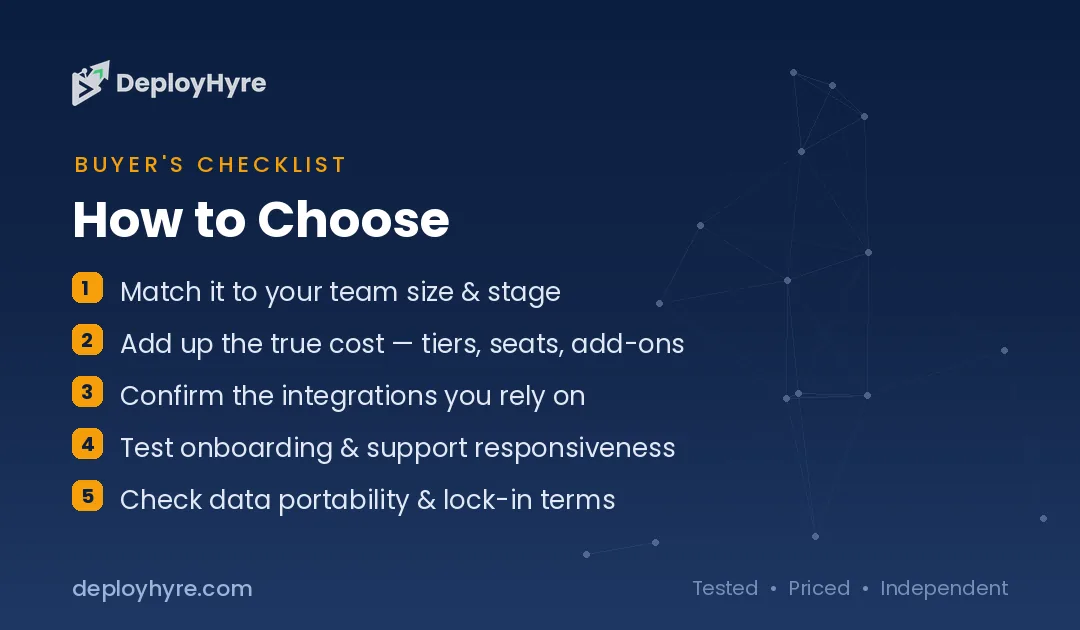
Check your Microsoft licensing first. If you hold Microsoft 365 E3 or E5, Intune is included, so its effective cost is zero and it usually wins outright for Windows-centric or mixed estates. This single fact settles the decision for many organizations before any comparison.
Then follow your fleet composition. Apple-dominant fleets point to Jamf (depth) or Kandji/Iru (modern, expanding). Genuinely mixed fleets and MSPs point to NinjaOne’s combined UEM-plus-RMM console, or Hexnode and Workspace ONE for cross-platform. Match the platform to the operating systems you actually run.
Finally, model the 12-month total on your real device-to-user ratio, because per-device and per-user pricing flip depending on how many devices each person carries. Count your devices, users, and existing licenses, then compare the annual total on each model, since the headline per-unit rate rarely predicts the cheaper platform for your specific fleet.
How We Evaluated These Platforms
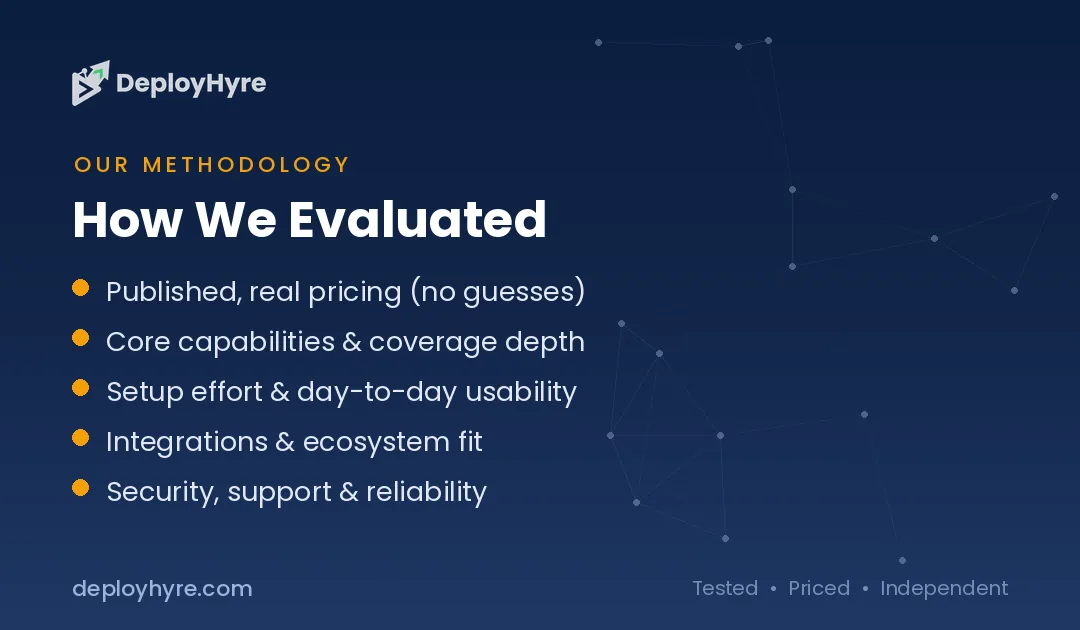
We evaluated each platform on OS coverage and management depth, patching and automation, security and RMM integration, MSP and multi-tenant support, and pricing model. Figures come from vendor pages and comparison sources. Because per-device and per-user models flip by device ratio, we present observed rates and stress modeling the 12-month total against your fleet. We accepted no payment for placement; rankings reflect fit for a stated use case.
The Bottom Line
Microsoft Intune is the default for Microsoft estates, effectively free inside E3 or E5, while Jamf leads for Apple depth and Kandji (Iru) is the modern Apple-first alternative expanding cross-platform. NinjaOne is the best overall for mixed fleets and MSPs with combined UEM and RMM, with Hexnode and Workspace ONE as cross-platform options. Check your Microsoft licensing first, then model the 12-month total against your real device-to-user ratio, because that flips which pricing model wins.
Frequently Asked Questions
How much does endpoint management software cost?
Per-device platforms run roughly $1.50 to $6 a month: NinjaOne from ~$1.50, Hexnode $2.20, Workspace ONE $3.00, Jamf $3.75. Microsoft Intune is per user from $8 a month, but is included free in Microsoft 365 E3 and E5. The cheaper model depends on your device-to-headcount ratio and existing licenses.
What is unified endpoint management (UEM)?
UEM is software that enrolls, configures, secures, and patches all your organization’s devices, laptops, phones, tablets, from one console. It enforces policy, pushes updates, and can remotely lock or wipe lost devices across Windows, macOS, iOS, and Android. It evolved from mobile device management (MDM) to cover all endpoint types in one platform.
Is Microsoft Intune free?
Intune is included at no additional cost in Microsoft 365 E3 and E5 subscriptions, so if you already hold those licenses, its effective price is zero. Standalone, it starts around $8 per user a month. For Microsoft-licensed organizations, this bundling usually makes Intune the most cost-effective UEM.
What is the best endpoint management tool for Apple devices?
Jamf offers the deepest Apple management fidelity, from $3.75 per device a month, with same-day support for new macOS and iOS releases. Kandji, rebranded to Iru in October 2025, is a strong modern alternative that has expanded from Apple MDM into broader security and cross-platform management. Both are Apple-first specialists.
Does the device-to-user ratio really change the cost?
Yes, significantly. Per-device platforms charge for each managed device, so a user with a laptop and a phone costs twice. Per-user Intune charges once per person regardless of device count. An organization with many devices per employee favors per-user pricing, while single-device or shared-device environments favor per-device, so model your actual ratio.

David Austin is a technology writer and software analyst at DeployHyre, where he covers AI tools, SaaS platforms, cloud hosting, and business automation. He focuses on hands-on comparisons of pricing, features, and real-world performance so teams can pick the right software with confidence.