Personalized recommendations drive a huge share of ecommerce revenue. McKinsey research, widely cited for finding that 35% of Amazon purchases come from its recommendation engine, shows how much “you might also like” matters. An AI recommendation engine brings that same lift to your store by showing each shopper the products they are most likely to buy.
Table of Contents
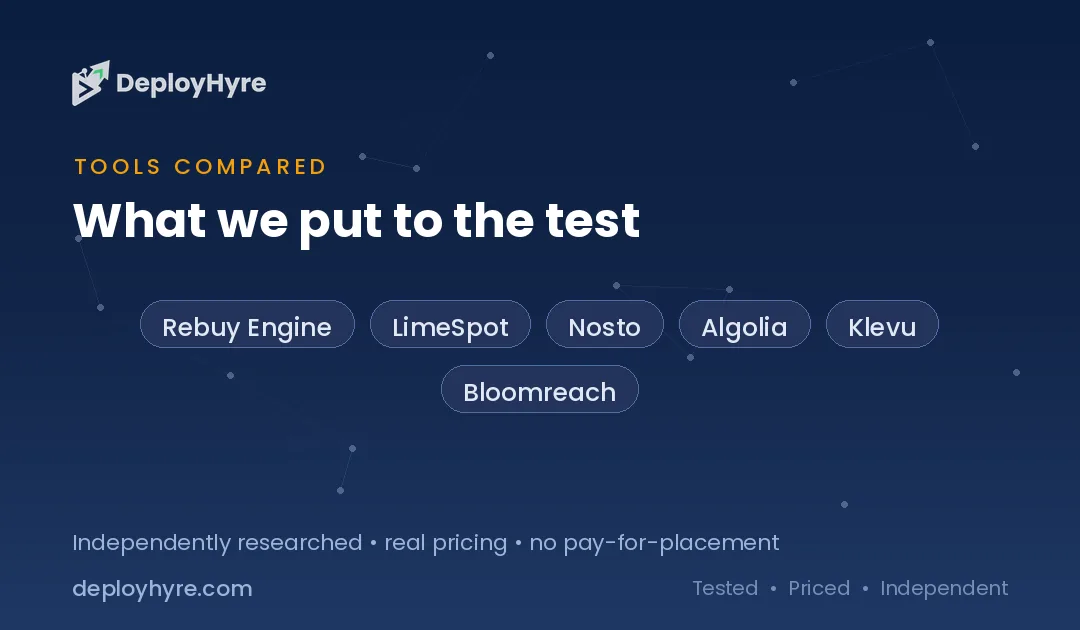
We tested 9 AI product recommendation engines on three jobs: recommendation quality, ease of setup, and fit by store size. This guide is part of our AI tools for ecommerce cluster. For the full stack, see our AI for business pillar.
Quick Comparison: Top AI Recommendation Engines
| Tool | Best For | Starting Price | Core Strength |
|---|---|---|---|
| Rebuy Engine | Shopify recommendations | ~$99/mo | Upsell + smart cart |
| LimeSpot | SMB personalization | ~$18/mo | Affordable recs |
| Nosto | Mid-market personalization | Custom | Full personalization |
| Algolia | Search plus recs | Free tier + paid | Neural search |
| Klevu | Search-led discovery | Custom | Smart search |
| Bloomreach | Search + personalization | Custom | Unified discovery |
| Dynamic Yield | Enterprise experimentation | Custom | Deep testing |
| Coveo | Enterprise relevance | Custom | AI relevance |
| Syte | Visual search | Custom | Image discovery |
What Is an AI Product Recommendation Engine?
An AI product recommendation engine analyzes shopper behavior, purchase history, and catalog data to suggest the products each visitor is most likely to buy. It powers “related products,” “frequently bought together,” and personalized homepages. The aim is to raise average order value and conversion by showing the right product at the right moment.
These engines use machine learning to spot patterns across many shoppers, then apply them to each individual in real time. Some focus on recommendations alone, while others combine recommendations with site search and broader personalization. The best fit depends on your platform, store size, and whether search is also a pain point.
Best AI Recommendation Engines for Shopify and SMB
These tools are easy to install and priced for small and mid-size stores.
1 Rebuy Engine: Best for Shopify recommendations
Rebuy is a leading recommendation app for Shopify.
What it does well. It powers AI recommendations, upsells, cross-sells, and smart cart offers that raise average order value, with A/B testing built in. It is deeply integrated with Shopify checkout. See where it fits among the best AI tools for Shopify.
Key features:
- AI recommendations and upsells
- Smart cart and checkout offers
- A/B testing
- Shopify-native setup
Pricing. Plans start around $99 per month, with a Scale tier near $249.
Best for: Shopify stores focused on order value.
Limitations. Pricing suits stores with steady sales.
2 LimeSpot: Best for SMB personalization
LimeSpot brings recommendations to smaller budgets.
What it does well. It adds personalized product recommendations across the store at a low entry price, with easy setup for Shopify and BigCommerce. It is a strong first step for stores under $1M.
Key features:
- Personalized recommendations
- Upsell and cross-sell widgets
- Simple setup
- A/B testing
Pricing. Essentials starts around $18 per month.
Best for: small stores wanting cheap recommendations.
Limitations. Less depth than enterprise platforms.
3 Nosto: Best for mid-market personalization
Nosto is a full personalization platform.
What it does well. It covers AI recommendations, dynamic content, onsite search, and email personalization for mid-market brands on Shopify, Magento, and BigCommerce. It unifies personalization across the store.
Key features:
- Product recommendations
- Dynamic content personalization
- Onsite search
- Email and SMS personalization
Pricing. Custom pricing by traffic and scope.
Best for: mid-market brands wanting one platform.
Limitations. Custom pricing needs a sales call.
Best AI Engines for Search and Discovery
These tools combine recommendations with powerful site search.
4 Algolia: Best for search plus recs
Algolia pairs neural search with recommendations.
What it does well. Its Recommend feature uses neural networks for next-basket and related-product suggestions, while real-time indexing keeps results aligned with live inventory and pricing. It excels when search matters as much as recs.
Key features:
- Neural search and Recommend
- Real-time indexing
- Next-basket suggestions
- Developer-friendly APIs
Pricing. A free tier exists, with paid plans by usage.
Best for: stores with high search-driven traffic.
Limitations. Best results need developer setup.
5 Klevu: Best for search-led discovery
Klevu focuses on smart search and discovery.
What it does well. It uses AI to understand shopper intent in search, then surfaces relevant products and recommendations. It suits stores where shoppers browse by searching.
Key features:
- Intent-based search
- Personalized results
- Recommendation banners
- Merchandising controls
Pricing. Custom pricing by catalog and traffic.
Best for: search-heavy catalogs.
Limitations. Recommendations are tied to search strength.
6 Bloomreach: Best for search and personalization
Bloomreach unifies discovery and marketing.
What it does well. It combines AI search, recommendations, and customer data into one discovery platform, so large stores personalize the full journey. It is credible at scale.
Key features:
- AI search and recommendations
- Customer data platform
- Content personalization
- Marketing automation
Pricing. Custom enterprise pricing.
Best for: larger brands unifying discovery.
Limitations. Enterprise cost and onboarding.
Best Enterprise AI Recommendation Platforms
These platforms offer the deepest testing and relevance for high-traffic stores.
7 Dynamic Yield: Best for enterprise experimentation
Dynamic Yield, owned by Mastercard, leads on testing.
What it does well. It offers the deepest experimentation capabilities, letting large teams test recommendation strategies and personalization across the journey. It is most credible at scale.
Key features:
- Advanced experimentation
- Recommendation algorithms
- Personalization across channels
- Audience targeting
Pricing. Custom enterprise pricing.
Best for: enterprises that test heavily.
Limitations. Complexity suits large teams only.
8 Coveo: Best for enterprise relevance
Coveo applies AI relevance across touchpoints.
What it does well. It delivers AI-powered search and recommendations with strong relevance models, plus analytics that tie results to revenue. It serves complex, high-traffic catalogs.
Key features:
- AI relevance models
- Search and recommendations
- Revenue analytics
- Enterprise integrations
Pricing. Custom enterprise pricing.
Best for: enterprises needing deep relevance.
Limitations. Built for large operations.
9 Syte: Best for visual search
Syte adds image-based discovery.
What it does well. It powers visual search and recommendations, letting shoppers find products by image, which suits fashion, home, and jewelry brands. It opens a discovery path text search misses.
Key features:
- Visual search by image
- Similar-item recommendations
- Automated product tagging
- Personalized discovery
Pricing. Custom pricing by catalog.
Best for: visual-first categories like fashion.
Limitations. Less useful for non-visual products.
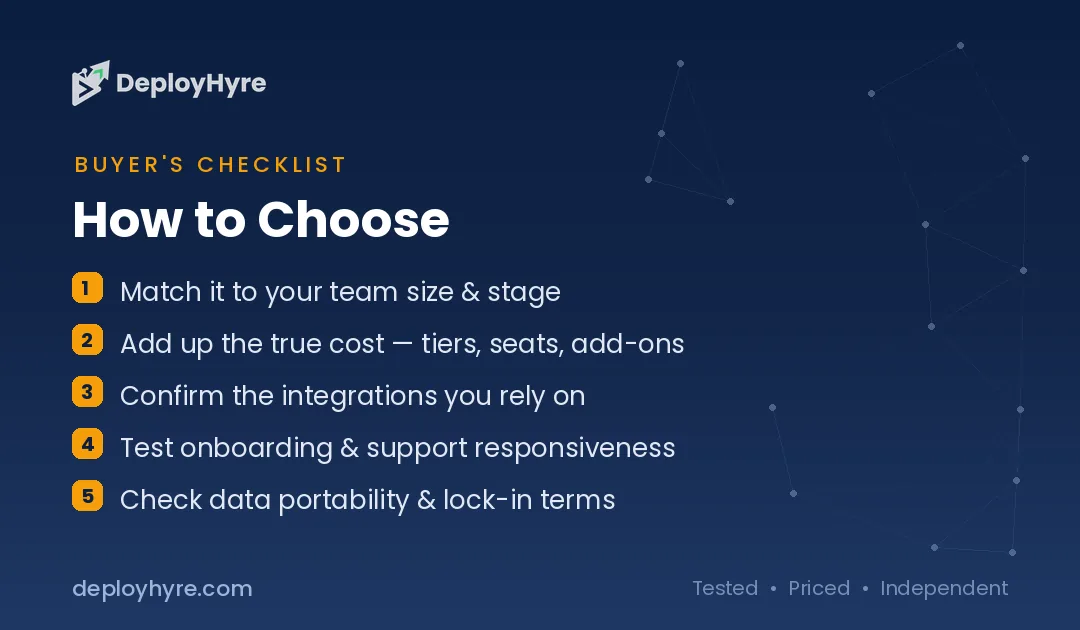
How Should You Choose a Recommendation Engine?
Choose based on platform, store size, and whether search is also a problem. Pick Rebuy or LimeSpot for Shopify recommendations, Nosto for mid-market personalization, and Algolia or Klevu when search needs work too. Reserve Dynamic Yield and Coveo for enterprise scale.
Start with your platform and budget. A Shopify store under $1M does well with LimeSpot, while a mid-market brand benefits from Rebuy or Nosto. If shoppers rely on search, an engine that combines search and recs, like Algolia, lifts more revenue. Then check integration depth and reporting, since you need to tie recommendations to order value. Recommendations work best alongside personalized messaging, so connect them to your email marketing software and ecommerce chatbots.
How We Evaluated These Recommendation Engines
We scored each tool on four factors: recommendation quality, setup ease, integration depth, and cost. We weighted quality and integration most, since recommendations only help when they reflect live inventory and shopper intent. We reviewed vendor documentation, current pricing, and ecommerce personalization research, and flagged custom pricing where a sales call is required.
The Bottom Line
The best AI recommendation engine matches your platform and scale. For Shopify, Rebuy and LimeSpot lead. For mid-market personalization, Nosto fits. For search-driven stores, Algolia stands out, and enterprises should look at Dynamic Yield or Coveo. Connect your choice to the rest of your AI ecommerce stack to turn higher order value into lasting growth.
Frequently Asked Questions
What is the best AI product recommendation engine?
Rebuy is the best pick for Shopify stores focused on order value, while Nosto leads for mid-market personalization and Algolia wins when search matters as much as recommendations. Enterprises with heavy testing needs should consider Dynamic Yield or Coveo. The right choice depends on platform and scale.
Do product recommendations actually increase sales?
Yes. Personalized recommendations raise average order value and conversion by showing shoppers relevant products. McKinsey research is widely cited for finding that 35% of Amazon purchases come from its recommendation engine, showing how much targeted suggestions can contribute to revenue.
What is the cheapest AI recommendation tool?
LimeSpot is among the cheapest, with Essentials starting around $18 per month, and Algolia offers a free tier for lower usage. These suit small stores, while mid-market and enterprise brands usually need Rebuy, Nosto, or a custom-priced platform for deeper personalization.
Do recommendation engines work with Shopify?
Yes. Rebuy, LimeSpot, and Nosto integrate directly with Shopify to read products, orders, and behavior. Once connected, they show personalized recommendations across product pages, carts, and checkout. Always confirm checkout integration, since cart recommendations drive much of the order-value lift.
What is the difference between recommendations and search personalization?
Recommendations suggest products based on behavior and catalog patterns, like “frequently bought together.” Search personalization tailors search results to each shopper’s intent. Many tools combine both, and stores where shoppers browse by searching benefit most from engines like Algolia or Klevu that do both well.

David Austin is a technology writer and software analyst at DeployHyre, where he covers AI tools, SaaS platforms, cloud hosting, and business automation. He focuses on hands-on comparisons of pricing, features, and real-world performance so teams can pick the right software with confidence.
Know AI, SaaS, or cloud tools inside out? Pitch a guest post and get in front of thousands of buyers researching their next tool.