Shopify now ships AI on every plan, and the app ecosystem adds far more. The platform’s own data shows AI moving from novelty to core store infrastructure, with the market for AI in ecommerce forecast to roughly double by 2030. For a Shopify merchant, the question is no longer whether to use AI, but which apps to install first.
Table of Contents
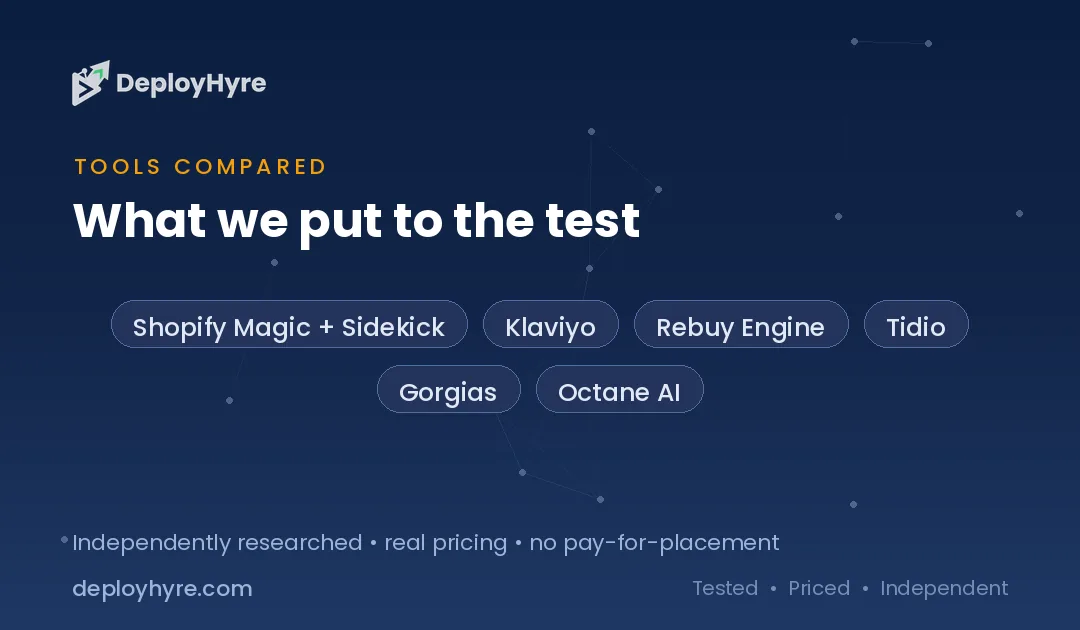
We tested 9 AI tools for Shopify across the jobs that grow a store: content, marketing, support, recommendations, and inventory. This guide is part of our AI tools for ecommerce cluster and ranks each app by use case so you install only what you need.
Quick Comparison: Top AI Tools for Shopify
| Tool | Best For | Starting Price | Job |
|---|---|---|---|
| Shopify Magic + Sidekick | Built-in free AI | Free with Shopify | Content + assistant |
| Klaviyo | Email and SMS | Free to ~$45/mo | Marketing |
| Rebuy Engine | Recommendations | ~$99/mo | Upsell |
| Tidio | Support for small stores | ~$29/mo | Chat support |
| Gorgias | Support for busy stores | ~$10/mo | Helpdesk |
| Octane AI | Quizzes and data | ~$50/mo | Personalization |
| Prediko | Inventory forecasting | Free tier + paid | Stock planning |
| Triple Whale | Analytics and attribution | ~$129/mo | Data |
| Describely | Bulk product copy | ~$0.75/description | Catalog |
What Are AI Tools for Shopify?
AI tools for Shopify are native features and apps that use machine learning to automate store tasks like writing copy, personalizing offers, answering shoppers, and forecasting stock. They connect directly to your Shopify data, so they read your products and orders to deliver tailored output. The result is a store that runs with less manual work and converts more visitors.
Shopify gives every merchant a free AI base through Shopify Magic and Sidekick. Apps then add depth for specific jobs, from email to inventory. The best approach is to start with the built-in tools, then install one specialist app per bottleneck rather than dozens at once.
Best Built-In and Content AI for Shopify
Start here, since these cover content and store guidance at low or no cost.
1 Shopify Magic and Sidekick: Best built-in free AI
Shopify Magic and Sidekick are the platform’s native AI.
What it does well. Magic writes product descriptions, email subject lines, and FAQs, while Sidekick acts as an AI assistant that answers store questions and runs admin tasks by request. Both are free on every plan, so they are the natural first step.
Key features:
- AI content across the admin
- Sidekick merchant assistant
- Image background removal
- Free on all plans
Pricing. Free with any Shopify plan.
Best for: every Shopify store as a starting base.
Limitations. Output is general and lacks specialist depth.
2 Describely: Best for bulk product copy
Describely handles catalog copy at scale.
What it does well. It generates product descriptions in bulk, enriches product data, and publishes back to Shopify with a set brand voice. It goes well beyond Magic for stores with large catalogs. See our full guide to the best AI product description generators.
Key features:
- Bulk catalog generation
- Data enrichment
- Brand voice controls
- Shopify publish-back
Pricing. Pay as you go, about $0.75 per description.
Best for: Shopify stores with many SKUs.
Limitations. Per-item pricing grows with catalog size.
Best AI Marketing and Personalization Apps for Shopify
These apps turn Shopify data into personalized offers that raise revenue per visitor.
3 Klaviyo: Best for email and SMS
Klaviyo is the leading Shopify retention app.
What it does well. It predicts each shopper’s next order date and churn risk, then automates email and SMS around those signals. Its Shopify integration is among the deepest in the ecosystem. Compare it in our best AI email marketing software guide.
Key features:
- Predictive analytics
- Email and SMS flows
- Store-data segmentation
- Prebuilt ecommerce automations
Pricing. Free up to 250 contacts, then from about $45 per month.
Best for: stores growing repeat revenue.
Limitations. Cost climbs with large lists.
4 Rebuy Engine: Best for recommendations
Rebuy personalizes offers across the store.
What it does well. It powers AI recommendations, upsells, and smart cart offers that raise average order value. It is a top recommendation app for Shopify and tests offers automatically.
Key features:
- AI recommendations and upsells
- Smart cart and checkout offers
- A/B testing
- Shopify-native setup
Pricing. Plans start around $99 per month.
Best for: stores raising order value.
Limitations. Better suited to stores with steady sales.
5 Octane AI: Best for quizzes and data
Octane AI captures zero-party data with quizzes.
What it does well. It builds product-finder quizzes that guide shoppers and collect their preferences, then uses that data to personalize products and marketing across Shopify and Klaviyo.
Key features:
- Product recommendation quizzes
- Zero-party data capture
- Personalized flows
- Klaviyo integration
Pricing. Plans start around $50 per month.
Best for: stores with many product options.
Limitations. Quizzes need careful design.
Best AI Support, Inventory, and Analytics Apps for Shopify
These apps run the operations that keep a growing store stable.
6 Tidio: Best support for small stores
Tidio brings AI chat to smaller Shopify stores.
What it does well. Its Lyro AI assistant learns your catalog and order history to resolve 60 to 70% of common questions automatically. It is simple to set up and affordable for small teams.
Key features:
- Lyro AI resolution
- Live chat and email inbox
- Order lookups in chat
- Shopify integration
Pricing. Plans start around $29 per month, with Lyro priced separately.
Best for: stores under $2M in yearly sales.
Limitations. High volume can outgrow it.
7 Gorgias: Best support for busy stores
Gorgias is the helpdesk for high-volume Shopify stores.
What it does well. It connects to Shopify orders, auto-tags tickets, and drafts AI replies that agents review and send. It scales support for stores above $2M in sales. For the wider field, see the best AI customer service software.
Key features:
- Shopify order actions in tickets
- AI reply drafting
- Auto-tagging and rules
- Multichannel inbox
Pricing. Plans start around $10 per month, with usage-based AI fees.
Best for: busy stores with heavy support volume.
Limitations. AI fees rise with resolution volume.
8 Prediko: Best for inventory forecasting
Prediko predicts demand and plans purchase orders.
What it does well. It forecasts demand from sales history and generates purchase order suggestions with quantities and timing, which prevents stockouts and overbuying. It runs on Shopify data.
Key features:
- SKU-level forecasts
- Auto purchase order suggestions
- Stock alerts
- Shopify-native
Pricing. Free tier, with paid plans for larger catalogs.
Best for: stores that hold inventory.
Limitations. Needs clean sales history.
9 Triple Whale: Best for analytics and attribution
Triple Whale unifies Shopify and ad data.
What it does well. It pulls Shopify, Meta, and Google data into one dashboard with AI insights, so you see real profit and ad attribution in real time and know where to spend next.
Key features:
- Unified profit dashboard
- AI attribution
- Real-time alerts
- Creative analytics
Pricing. Plans start around $129 per month.
Best for: stores running paid ads.
Limitations. Cost suits stores with real ad budgets.
How Should You Choose AI Tools for Shopify?
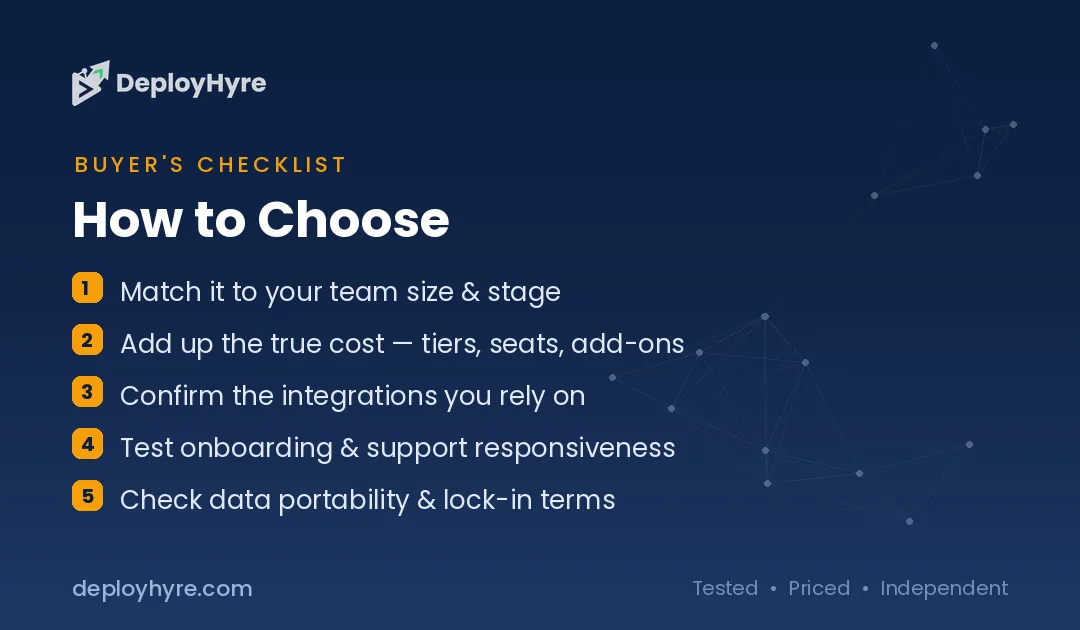
Start with the free built-in AI, then add one app per bottleneck. Use Shopify Magic and Sidekick first, add Klaviyo for retention, and add Tidio or Gorgias when support volume grows. Match each app to your sales stage so you do not stack costs early.
Map your biggest problem before installing. If product pages are thin, add Describely. If repeat sales are low, add Klaviyo and Rebuy. If stockouts hurt, add Prediko. If ad spend is unclear, add Triple Whale. Choose Tidio for stores under $2M in sales and Gorgias above that line. Keep the stack lean, since every app adds cost and complexity. A strong storefront helps too, so review the best AI website builders if you are still setting up.
How We Evaluated These Shopify AI Tools
We scored each app on four factors: revenue impact, Shopify integration depth, ease of setup, and cost. We weighted integration and revenue impact most, since an app that does not read your Shopify data adds work. We reviewed vendor documentation, current pricing, and Shopify app listings, and flagged pricing to verify, since plans change often.
The Bottom Line
The best AI tools for Shopify match apps to jobs. Start free with Shopify Magic and Sidekick, add Klaviyo and a support app as you grow, and layer in Rebuy, Prediko, and Triple Whale when volume demands it. Each guide in our AI ecommerce cluster goes deeper, and the AI for business pillar covers the wider picture.
Frequently Asked Questions
What are the best AI tools for Shopify?
The best AI tools for Shopify are Shopify Magic and Sidekick for built-in content, Klaviyo for email and SMS, Rebuy for recommendations, Tidio and Gorgias for support, Prediko for inventory, and Triple Whale for analytics. The right set depends on your store size and main bottleneck.
Does Shopify have built-in AI?
Yes. Shopify Magic is a free AI suite on every plan that writes product descriptions, email subject lines, and FAQs. Sidekick is the built-in AI assistant that answers store questions and runs admin tasks. Both are included at no extra cost.
What is the best free AI tool for Shopify?
Shopify Magic and Sidekick are the best free tools, since they are included on every plan. Klaviyo and Prediko also offer free tiers, so a new store can cover content, email, and inventory basics before paying for specialist apps.
What AI tool is best for Shopify customer service?
Tidio is best for smaller Shopify stores, with its Lyro AI resolving most common questions. Gorgias is best for busy stores above $2M in sales, since it connects to orders and drafts AI replies agents review. Pick based on your support volume.
How many AI apps should a Shopify store use?
Start lean with the free built-in AI, then add one specialist app per bottleneck. Most growing stores run three to five: content, email, recommendations, support, and inventory. Adding too many apps raises cost and slows your store, so install only what solves a clear problem.

David Austin is a technology writer and software analyst at DeployHyre, where he covers AI tools, SaaS platforms, cloud hosting, and business automation. He focuses on hands-on comparisons of pricing, features, and real-world performance so teams can pick the right software with confidence.
Know AI, SaaS, or cloud tools inside out? Pitch a guest post and get in front of thousands of buyers researching their next tool.