TL;DR: Shopify is powerful, but its transaction fees on outside payment gateways push many sellers to look elsewhere. Our top pick is BigCommerce for its zero platform transaction fees and built-in features. WooCommerce wins for full control, while Wix and Squarespace suit design-first sellers. Your best alternative depends on budget, tech skills, and how much you want to own.
Shopify now powers roughly 4.9 million active stores worldwide, making it the most recognized name in ecommerce. But recognition does not mean it fits every store. Many merchants leave because Shopify charges up to a 2% transaction fee on the Basic plan when you use a payment provider other than Shopify Payments. Add app costs and rising plan prices, and the “simple” platform gets expensive fast.
The good news: the ecommerce market is full of strong competitors. Some cost less. Some give you more control. Some remove transaction fees entirely. Before you commit, it helps to understand the best AI tools for ecommerce that plug into any of these platforms and automate the busywork.
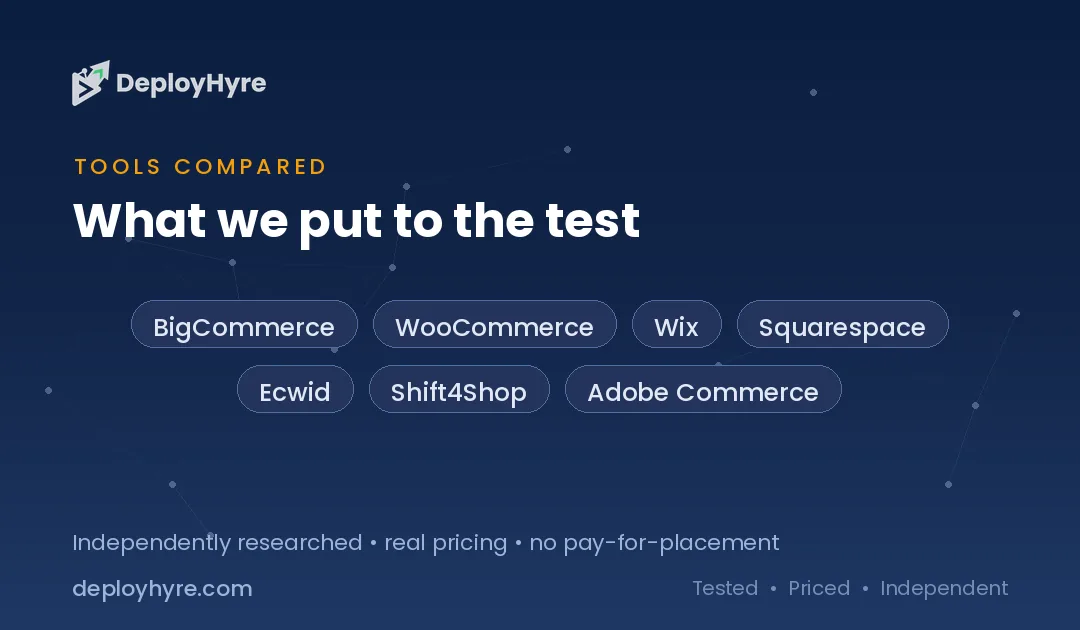
Below we rank 7 real Shopify alternatives, with verified pricing and honest limitations for each.
Quick Comparison: Shopify Alternatives
| Tool | Best For | Starting Price | Key Strength |
|---|---|---|---|
| BigCommerce | Scaling stores | $39/mo | No platform transaction fees |
| WooCommerce | Full control | Free plugin | Open-source flexibility |
| Wix | Beginners | $29/mo (Core) | Drag-and-drop design |
| Squarespace | Visual brands | $23/mo (annual) | Award-winning templates |
| Ecwid | Add-to-existing-site | $5/mo (Starter) | Sell anywhere widget |
| Shift4Shop | US free-plan hunters | $0 (with Shift4 Payments) | Feature-rich free tier |
| Adobe Commerce | Enterprise | Free (Open Source) | Deep customization |
Why Look for a Shopify Alternative?
Most sellers leave Shopify to escape stacking costs: transaction fees on outside gateways, monthly plan hikes, and paid apps that add up fast. Shopify’s clean setup hides a real total cost. If you use Stripe or PayPal instead of Shopify Payments, you pay an extra fee on every sale. Growing stores also hit paywalls where basic features require higher plans or third-party apps. The right alternative can cut those fees, hand you more ownership, or simply match your workflow better. For a deeper look, compare the best ecommerce platforms side by side.
#1 BigCommerce: Best for Scaling Without Transaction Fees
BigCommerce is the closest thing to a drop-in Shopify replacement for stores that plan to grow. It offers a hosted, all-in-one platform like Shopify, but skips the extra platform transaction fees that push Shopify’s real cost up.
What it does well. BigCommerce ships more native features than Shopify, so you rely on fewer paid apps. It supports multi-channel selling, B2B tools, and unlimited staff accounts out of the box.
Key features:
-
Zero platform transaction fees on any plan
-
Built-in multi-currency and multi-channel selling
-
No product or bandwidth limits
-
Strong SEO controls and URL customization
-
24/7 support across all plans
Pricing. Plans start at $39/month for Standard, $105/month for Plus, and $399/month for Pro when billed monthly. Annual billing lowers each tier. As of June 2026, BigCommerce renamed these plans Core, Growth, and Scale.
Best for: Mid-size and growing stores that want Shopify’s ease without the payment-gateway penalty.
Limitations. BigCommerce ties your plan to annual sales volume, so a busy store can get bumped to a higher tier. The interface also feels busier than Shopify’s for total beginners.
Want a head-to-head breakdown? Read our full Shopify vs BigCommerce comparison.
#2 WooCommerce: Best for Full Control
WooCommerce is a free, open-source plugin that turns any WordPress site into an online store. If you value ownership over convenience, nothing beats it. You control the code, the data, and the hosting.
What it does well. WooCommerce gives you near-total flexibility. With thousands of extensions and themes, you can build almost any store type, from a simple shop to a complex marketplace.
Key features:
-
Fully open-source and self-hosted
-
Massive library of extensions and themes
-
Complete control over data and design
-
No forced transaction fees from WooCommerce itself
-
Deep integration with WordPress content and SEO
Pricing. The core plugin is free to download. Real costs come from hosting, themes, and extensions. A basic DIY store can run around $150 to $200 per year, while a production store often costs $1,800 or more annually once you add hosting and premium plugins.
Best for: Content-heavy brands and technically comfortable owners who want to own their stack.
Limitations. You handle hosting, security, and updates yourself. There is no built-in support line, so troubleshooting falls on you or a developer.
#3 Wix: Best for Beginners
Wix is a website builder with a genuinely capable ecommerce arm. Its drag-and-drop editor makes it one of the easiest ways to launch a store with zero coding.
What it does well. Wix removes the learning curve. You design visually, drop in a store, and go live in an afternoon. The ecommerce plans include solid tools for small and mid-size shops.
Key features:
-
True drag-and-drop design freedom
-
Hundreds of templates to start from
-
Built-in blog, booking, and marketing tools
-
Multi-channel selling on higher plans
-
App market for added functionality
Pricing. Ecommerce starts on the Core plan at $29/month, with the Business plan at $39/month when billed annually. Monthly billing costs slightly more.
Best for: First-time sellers and small stores that want design freedom without technical work.
Limitations. Once you pick a template, you cannot swap it without rebuilding. Wix also handles very large catalogs less gracefully than dedicated platforms.
#4 Squarespace: Best for Visual Brands
Squarespace is the go-to for design-led sellers. Its templates are polished enough that many stores need little customization to look premium.
What it does well. Squarespace pairs award-quality design with a clean editor. It suits brands where presentation drives sales, like art, apparel, and lifestyle goods.
Key features:
-
Best-in-class templates and typography
-
Built-in blogging and content tools
-
Zero transaction fees on Core and higher plans
-
Member areas and digital product selling
-
Integrated email marketing
Pricing. Commerce pricing starts around $23/month billed annually, rising to $39/month for Plus and $99/month for Advanced. The Basic plan carries a 2% transaction fee, which the higher plans remove on physical products.
Best for: Visual-first brands and creators who want a beautiful storefront with minimal fuss.
Limitations. Squarespace offers fewer advanced ecommerce features than BigCommerce or WooCommerce. Its app ecosystem is also smaller, which limits deep customization.
#5 Ecwid: Best for Adding a Store to an Existing Site
Ecwid (now Ecwid by Lightspeed) is a store widget you can drop onto almost any website, social page, or marketplace. If you already have a site, you do not need to rebuild it.
What it does well. Ecwid syncs one catalog across every channel. Sell on your WordPress site, Instagram, and a marketplace at once, all managed from one dashboard.
Key features:
-
Embeds into any existing website
-
One catalog across web, social, and marketplaces
-
No transaction fees on any plan
-
Easy to set up in minutes
-
Central inventory management
Pricing. The Starter plan costs $5/month, with paid tiers starting around $19/month for Venture and scaling to $130/month for Unlimited. Ecwid charges no setup or transaction fees.
Best for: Sellers who already have a website or strong social presence and want to bolt on a store.
Limitations. As a widget, Ecwid gives you less control over the full storefront experience than a standalone platform. Advanced features live behind higher tiers.
#6 Shift4Shop: Best for US Sellers Wanting a Free Plan
Shift4Shop offers a feature-rich free plan for US merchants who use Shift4 Payments. It packs in tools that competitors charge for.
What it does well. The End-to-End plan gives US stores a genuinely complete platform at $0/month, including features many rivals lock behind paid tiers.
Key features:
-
Free End-to-End plan for US merchants
-
Unlimited products and no transaction fees
-
Built-in CRM and cart abandonment recovery
-
Real-time shipping from major carriers
-
Advanced SEO tools and 24/7 support
Pricing. The End-to-End plan is $0/month for US businesses using Shift4 Payments. Merchants who prefer another gateway can use paid plans starting at $29/month.
Best for: US-based sellers comfortable using Shift4 Payments who want maximum features for free.
Limitations. The free plan requires Shift4 Payments, so you lose gateway choice. The platform is US-focused, and its interface feels dated next to newer builders.
#7 Adobe Commerce: Best for Enterprise Stores
Adobe Commerce, built on Magento, is the heavyweight option for large and complex catalogs. It offers customization that hosted platforms cannot match.
What it does well. Adobe Commerce handles huge catalogs, B2B workflows, and deep custom logic. Magento Open Source gives developers a free, endlessly flexible foundation.
Key features:
-
Enterprise-grade scalability and B2B tools
-
Advanced customer segmentation and personalization
-
Free Magento Open Source edition
-
Deep customization for complex catalogs
-
Strong multi-store and multi-region support
Pricing. Magento Open Source is free to download; you pay for hosting and development. Adobe Commerce (the paid enterprise edition) starts around $22,000 per year for on-premise and roughly $40,000 per year on cloud, with pricing tied to sales volume.
Best for: Large retailers and enterprises with development resources and complex needs.
Limitations. Adobe Commerce demands real technical skill and budget. It is overkill for small stores and requires a developer to run well.
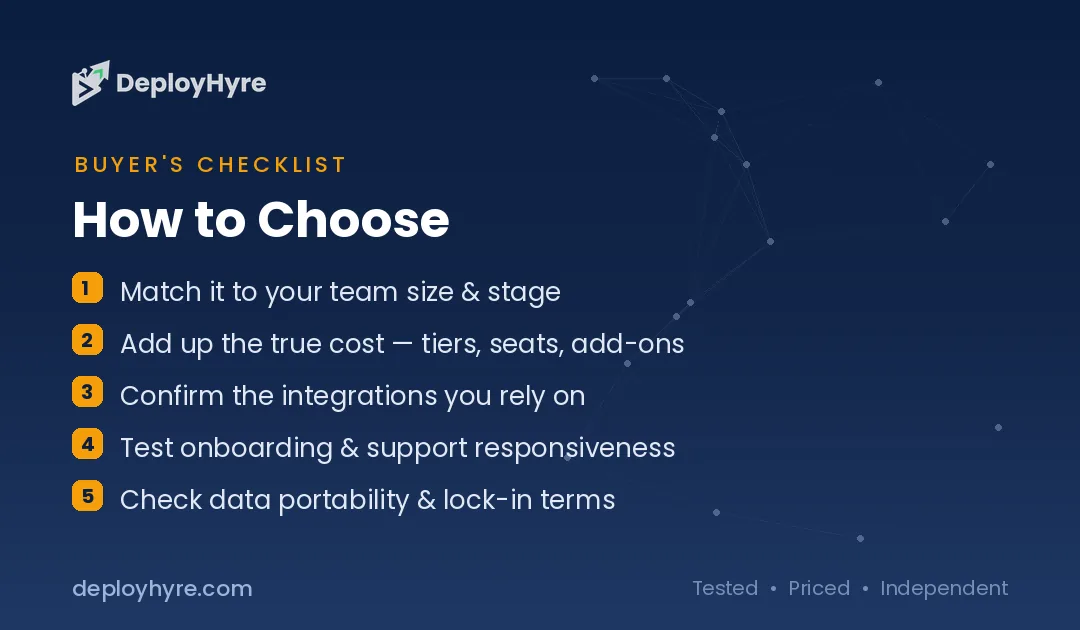
How to Choose a Shopify Alternative
Match the platform to your budget, skills, and growth plans, not just its feature list. Start with money. If transaction fees drove you away, BigCommerce, Ecwid, and Shift4Shop remove them. Next, weigh technical comfort. Wix and Squarespace need no code, while WooCommerce and Adobe Commerce reward developer skills with control.
Then think about where you are today. Already have a website? Ecwid bolts on cleanly. Building a content-heavy brand? WooCommerce leans on WordPress. Running a design-first shop? Squarespace wins on looks. Planning aggressive growth? BigCommerce scales without the fee penalty.
Finally, test before you commit. Most of these platforms offer free trials or free tiers. Load a few real products, run a test checkout, and see how the dashboard feels. The right fit is the one you will actually enjoy using every day.
The Bottom Line
Shopify is a strong platform, but it is not the only one, and for many sellers it is not the cheapest. BigCommerce is our top overall pick because it delivers Shopify-level ease without platform transaction fees. WooCommerce wins on control, Wix and Squarespace win on design, and Shift4Shop offers a rare free plan for US stores.
The best move is to pick the two that fit your budget and skills, then trial both. Your ideal ecommerce platform is the one that keeps more money in your pocket while making everyday selling simple.
Frequently Asked Questions
What is the best alternative to Shopify?
BigCommerce is the best all-around Shopify alternative for most stores. It offers a similar hosted, all-in-one experience but charges no platform transaction fees on any plan. For sellers who want full control, WooCommerce is the top pick, while Wix and Squarespace suit design-focused beginners.
Is there a free alternative to Shopify?
Yes. WooCommerce is a free open-source plugin, though you pay for hosting. Shift4Shop offers a free End-to-End plan for US merchants who use Shift4 Payments. Ecwid also has a low-cost Starter plan at $5/month, and Magento Open Source is free to download.
Why do people leave Shopify?
Most sellers leave Shopify over cost. Shopify charges up to a 2% transaction fee on its Basic plan when you use a payment gateway other than Shopify Payments. Rising plan prices and the need for paid apps to unlock features also push merchants to look for cheaper or more flexible alternatives.
Which Shopify alternative has no transaction fees?
Several do. BigCommerce charges zero platform transaction fees on every plan. Ecwid and Shift4Shop also charge no transaction fees. Note that you still pay standard payment-processing rates from your gateway, typically around 2.9% plus 30 cents per sale, on any platform.
Is WooCommerce better than Shopify?
WooCommerce is better if you want full control, own your data, and are comfortable managing hosting and updates. Shopify is better if you want a hands-off, hosted platform with built-in support. WooCommerce has no monthly plan fee, but real costs come from hosting, themes, and extensions.
Know AI, SaaS, or cloud tools inside out? Pitch a guest post and get in front of thousands of buyers researching their next tool.

David Austin is a technology writer and software analyst at DeployHyre, where he covers AI tools, SaaS platforms, cloud hosting, and business automation. He focuses on hands-on comparisons of pricing, features, and real-world performance so teams can pick the right software with confidence.