Table of Contents
The best AI backup software depends on your workload: Veeam for on-prem and VMware, Rubrik or Cohesity for ransomware-focused zero-trust recovery, and Druva for cloud-first and SaaS environments. Backup and data-protection platforms copy your systems and data so you can recover from failure, deletion, disaster, or a ransomware attack, and they increasingly emphasize immutable, ransomware-resistant backups and AI-driven anomaly detection.
The principle that should drive selection: your workload decides the vendor, not a feature checklist. On-prem-heavy environments favor Veeam or Rubrik; hybrid environments favor Commvault or Cohesity; cloud-first environments favor Druva. And watch the renewal: Veeam’s licensing can rise 2.85x or more at renewal, a trap that inflates total cost of ownership well beyond the first-year quote. Matching the platform to where your data actually lives, and modeling multi-year cost, is the real decision.
Every price point below is a recent observed figure. Because most vendors do not publish list pricing and quote by environment, treat each as a band.
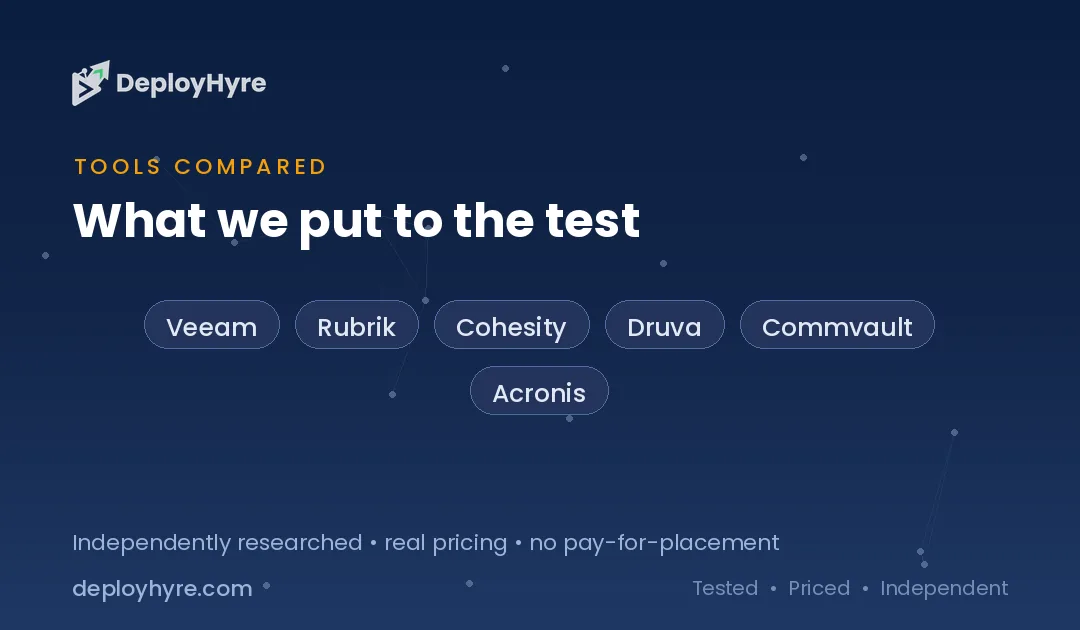
Quick Comparison: Backup Software at a Glance
| Platform | Best For | Observed Price | Note |
|---|---|---|---|
| Veeam | On-prem, VMware, Microsoft | Quote; Azure from $42/TB/mo | Most deployed; 2.85x renewal risk |
| Rubrik | Ransomware recovery, immutability | Enterprise quote | Fastest-growing, zero-trust |
| Cohesity | Hybrid, unified data platform | Enterprise quote | Consolidated data management |
| Druva | Cloud-first, SaaS, endpoints | Enterprise quote (SaaS) | No infrastructure to run |
| Commvault | Hybrid, broad workload coverage | Enterprise quote | Widest workload support |
| Acronis | SMB, backup + security | Accessible tiers | Cyber Protect bundle |
What AI Backup Software Does
Backup software creates recoverable copies of your data and systems on a schedule, so that when something goes wrong, hardware failure, accidental deletion, a natural disaster, or a ransomware attack, you can restore to a known-good state. Modern enterprise backup covers virtual machines, physical servers, databases, cloud workloads, SaaS applications like Microsoft 365, and endpoints, and it is measured by two metrics: recovery point objective (how much data you can afford to lose) and recovery time objective (how fast you can be back up).
Ransomware reshaped the category. Because attackers now target backups themselves, modern platforms emphasize immutable backups (copies that cannot be altered or deleted once written) and air-gapped, zero-trust architectures, so you always have a clean copy to recover from. The AI layer adds anomaly detection, spotting the unusual data-change patterns that signal a ransomware encryption event, and helps identify the last clean recovery point. Backup shifted from an IT-hygiene task to a frontline security control.
Backup is a core resilience and security capability. It complements the defenses in our best AI cybersecurity tools guide, protects the workloads in our best cloud hosting guide, and pairs with the data-protection controls in our best AI data loss prevention software guide.
Your Workload Decides the Vendor
The single best predictor of the right backup platform is where your data lives, because each leader is optimized for a different environment. On-prem-heavy and VMware/Microsoft environments favor Veeam or Rubrik. Hybrid environments spanning on-prem and cloud favor Commvault or Cohesity. Cloud-first and SaaS-heavy environments favor Druva or cloud-native options. Buying a platform optimized for a different environment than yours means paying for capability you cannot use and missing the integration you need.
Cost is largely quote-based, verified enterprise contracts range from roughly $57,000 to $425,000-plus a year for mid-to-large environments, so the multi-year total matters more than any first-year number. The specific trap is Veeam’s renewal: licensing can rise 2.85x or more at renewal, so a favorable initial quote can become expensive once you are committed. When evaluating, ask for multi-year pricing including renewal terms, and weight it heavily, because backup is a long-term commitment where switching later is painful and the renewal curve is where the real cost lives.
Best for On-Prem and VMware
Veeam is the most widely deployed backup platform and the default for on-prem, VMware, and Microsoft workloads, with the largest installed base and the broadest ecosystem of any backup tool. Its depth in virtualization backup and its maturity make it the safe choice for environments centered on VMware and Windows Server, and its Veeam Data Cloud for Azure starts at $42 per terabyte a month for that specific workload. The caveats are that it is feature-rich but premium-priced, and its renewal licensing can rise 2.85x or more, so model the multi-year cost before committing.
Veeam’s dominance means abundant expertise, integrations, and support, which is a real advantage for teams that value a proven, widely-understood platform. For on-prem-heavy organizations whose priority is reliable virtualization and Microsoft-workload backup, Veeam remains the reference standard, provided you negotiate renewal terms upfront. Commvault is the alternative for hybrid environments needing the broadest workload coverage across on-prem and cloud, favored where diverse systems must all be protected by one platform. Both are mature; Veeam for virtualization depth, Commvault for hybrid breadth.
Best for Ransomware Recovery
Rubrik is the fastest-growing platform in the category, built from the ground up around immutable backups and ransomware recovery, making it the choice for organizations that treat backup primarily as a security control. Its architecture centers on zero-trust and immutability, copies that cannot be altered or deleted, so you always have a clean recovery point after an attack, plus AI-driven detection of the anomalies that signal ransomware. For organizations where a ransomware attack is the primary disaster they are protecting against (which is increasingly most of them), Rubrik’s security-first design is compelling.
Cohesity competes closely, also emphasizing zero-trust security and unified data management, consolidating backup, recovery, and data services onto one platform at enterprise price points. It suits organizations that want to consolidate fragmented backup and data-management tools while gaining ransomware resilience. Both are enterprise-grade and security-focused; Rubrik for immutable, ransomware-first recovery, Cohesity for unified data management with zero-trust. As ransomware made backups a target, these security-built platforms became the modern default for organizations prioritizing recoverability from attack, complementing our best AI cybersecurity tools guide.
Best for Cloud-First and SaaS
Druva is the leading choice for cloud-first and SaaS-heavy environments, delivered as a fully-managed SaaS platform with no backup infrastructure for you to run, ideal for organizations protecting cloud workloads, Microsoft 365, and endpoints. Because it is cloud-native and SaaS-delivered, Druva removes the hardware and management overhead of traditional backup, which suits organizations that have moved to the cloud and do not want to run backup infrastructure. For SaaS data protection (Microsoft 365, Google Workspace, Salesforce) and cloud workloads, its managed model is a natural fit.
Acronis serves the SMB and mid-market end, bundling backup with security in its Cyber Protect platform at accessible tiers, a good fit for smaller organizations that want data protection and endpoint security together without enterprise complexity. Both suit teams that want managed, cloud-oriented protection; Druva for cloud-first and SaaS at scale, Acronis for SMB backup-plus-security. The broader shift is that cloud-first organizations increasingly prefer SaaS-delivered backup over running their own, mirroring the move to managed infrastructure covered in our best cloud hosting guide.
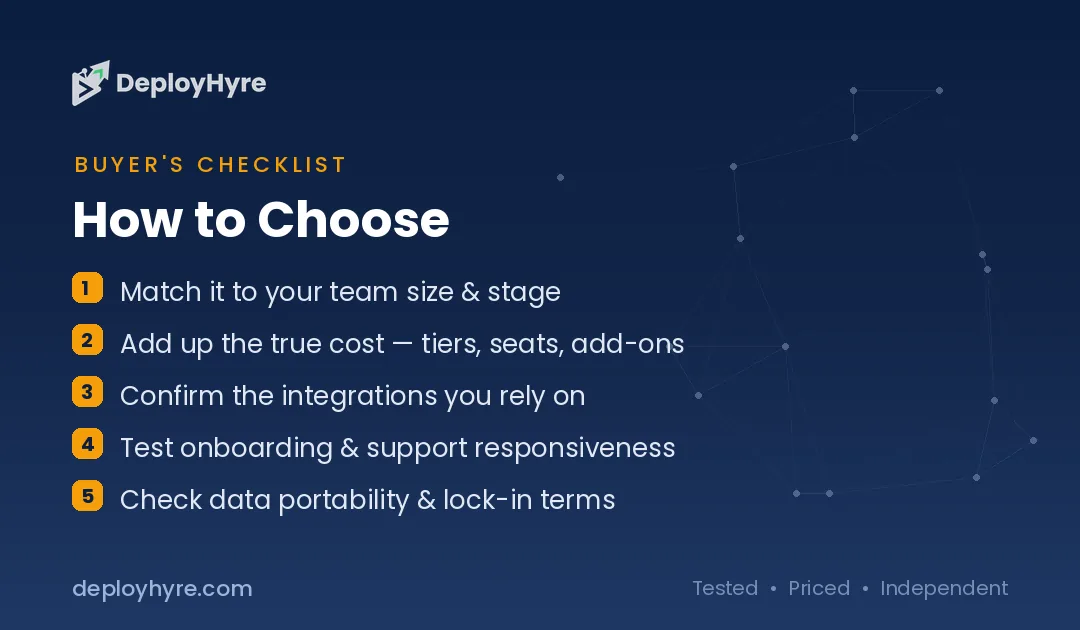
How Should You Choose Backup Software?
Start with where your data lives, because it points directly to the vendor. On-prem and VMware point to Veeam. Hybrid points to Commvault or Cohesity. Cloud-first and SaaS point to Druva. Ransomware recovery as the top priority points to Rubrik or Cohesity. SMB backup-plus-security points to Acronis. Match the platform to your actual environment before comparing features.
Then weight ransomware resilience heavily, because backups are now attack targets. Prioritize immutable, air-gapped, zero-trust backups and AI anomaly detection, which is exactly what Rubrik and Cohesity are built around, and which even the traditional platforms now offer. The ability to recover a clean copy after an attack is the capability that matters most.
Finally, model the multi-year total cost including renewals, not the first-year quote. Veeam’s 2.85x renewal risk is the clearest example of why the renewal curve, not the initial price, determines true cost. Ask every vendor for multi-year pricing and renewal terms upfront, and weight them heavily, since backup is a long-term commitment that is painful to switch.
How We Evaluated These Platforms
We evaluated each platform on workload coverage (on-prem, VMware, cloud, SaaS, endpoints), ransomware resilience and immutability, recovery speed, management model (self-run versus SaaS), and pricing including renewals. Figures come from vendor and comparison sources. Because most vendors quote by environment, we present observed bands and stress workload fit and multi-year cost. We accepted no payment for placement; rankings reflect fit for a stated use case.
The Bottom Line
Veeam is the default for on-prem and VMware (mind the 2.85x renewal), Rubrik and Cohesity lead for ransomware-focused zero-trust recovery, Druva for cloud-first and SaaS with no infrastructure to run, Commvault for the broadest hybrid coverage, and Acronis for SMB backup-plus-security. Let your workload pick the vendor, weight ransomware immutability heavily, and model the multi-year cost including renewals, because that is where backup’s true cost lives.
Frequently Asked Questions
How much does enterprise backup software cost?
Most vendors do not publish list pricing, but verified enterprise contracts range from roughly $57,000 to $425,000-plus a year for mid-to-large environments. Veeam Data Cloud for Azure starts at $42 per terabyte a month for that workload. Because Veeam’s licensing can rise 2.85x or more at renewal, the multi-year total matters more than the first-year quote.
What is the best backup software for ransomware protection?
Rubrik and Cohesity are built around ransomware recovery, emphasizing immutable backups (copies that cannot be altered or deleted) and zero-trust architectures so you always have a clean recovery point, plus AI anomaly detection. As attackers increasingly target backups, these security-first platforms have become the modern default for ransomware resilience.
Should I choose backup software based on my workload?
Yes, it is the best predictor of the right vendor. On-prem and VMware environments favor Veeam or Rubrik, hybrid environments favor Commvault or Cohesity, and cloud-first or SaaS-heavy environments favor Druva. Buying a platform optimized for a different environment means missing the integration you need and paying for capability you cannot use.
What is an immutable backup?
An immutable backup is a copy that cannot be modified or deleted once written, even by an administrator or attacker, for a set retention period. This protects against ransomware that tries to encrypt or delete your backups, ensuring you always have a clean copy to recover from. Immutability is now a core feature of modern backup platforms.
Why is Veeam’s renewal cost a concern?
Veeam’s licensing can rise 2.85x or more at renewal, so a favorable initial quote can become significantly more expensive once you are committed and switching is painful. This makes the multi-year total cost, including renewal terms, far more important than the first-year price, so negotiate renewals upfront when evaluating Veeam.
Related Articles

David Austin is a technology writer and software analyst at DeployHyre, where he covers AI tools, SaaS platforms, cloud hosting, and business automation. He focuses on hands-on comparisons of pricing, features, and real-world performance so teams can pick the right software with confidence.