Your rankings can look fine while your traffic quietly disappears. That is because Google now answers many queries inside AI Overviews and AI Mode, and a classic rank tracker has no idea whether you were cited in those answers.
Table of Contents
For the full picture, see our complete guide to AI for SEO.
AI search tracking tools fix the blind spot. They check what AI engines actually say, then report whether your brand is mentioned, cited, or ignored. Pricing has settled into a clear range: from $29/month for basic prompt tracking to $500+ for enterprise multi-engine suites, with an industry average around $337/month.
This guide tests the 10 best AI Overviews and AI Mode rank tracking tools in 2026. For the wider category, see our guide to the best AI search visibility tools, and to fix what they find, read how to rank in AI Overviews.
What Is AI Overviews and AI Mode Rank Tracking Software?
AI Overviews and AI Mode rank tracking software monitors whether your brand appears in Google’s AI-generated answers and other AI engines, then reports your mentions, citations, position, and share of voice. Unlike a normal rank tracker that records blue-link positions, these tools query the AI systems directly and measure visibility inside the answer itself, which is where clicks increasingly go.
The key distinction matters. AI Overviews are short answer panels above search results, while AI Mode is a fully conversational interface where users ask follow-up questions and get multi-turn answers. Good tools track both, plus ChatGPT, Gemini, and Perplexity.
Quick Comparison: 10 Best AI Rank Tracking Tools in 2026
| Tool | Best For | Starting Price | Engines Tracked |
|---|---|---|---|
| Otterly AI | Affordable prompt tracking | $29/mo | AI Overviews, ChatGPT, Perplexity, more |
| SE Ranking AI Visibility | All-in-one SEO + AI | ~$65/mo (suite) | AI Overviews, AI Mode, Gemini, Perplexity, ChatGPT |
| Rankability | Agencies and multi-client | Custom | AI Overviews citations + history |
| Profound | Enterprise GEO | ~$399/mo | Multi-engine, enterprise |
| Ahrefs Brand Radar | Existing Ahrefs users | Add-on | AI Overviews + AI engines |
| Semrush AI Toolkit | Existing Semrush users | Add-on | AI engines + AI Mode |
| ZipTie | Lightweight AIO tracking | Mid-tier | AI Overviews, ChatGPT, Perplexity |
| Peec AI | GEO-focused teams | Mid-tier | Multi-engine |
| Nightwatch | Geo-granular tracking | Mid-tier | AI + classic rankings |
| Radarkit | Real-browser accuracy | Mid-tier | ChatGPT, Gemini, Perplexity, AI Overviews, AI Mode |
What Makes a Great AI Rank Tracking Tool?
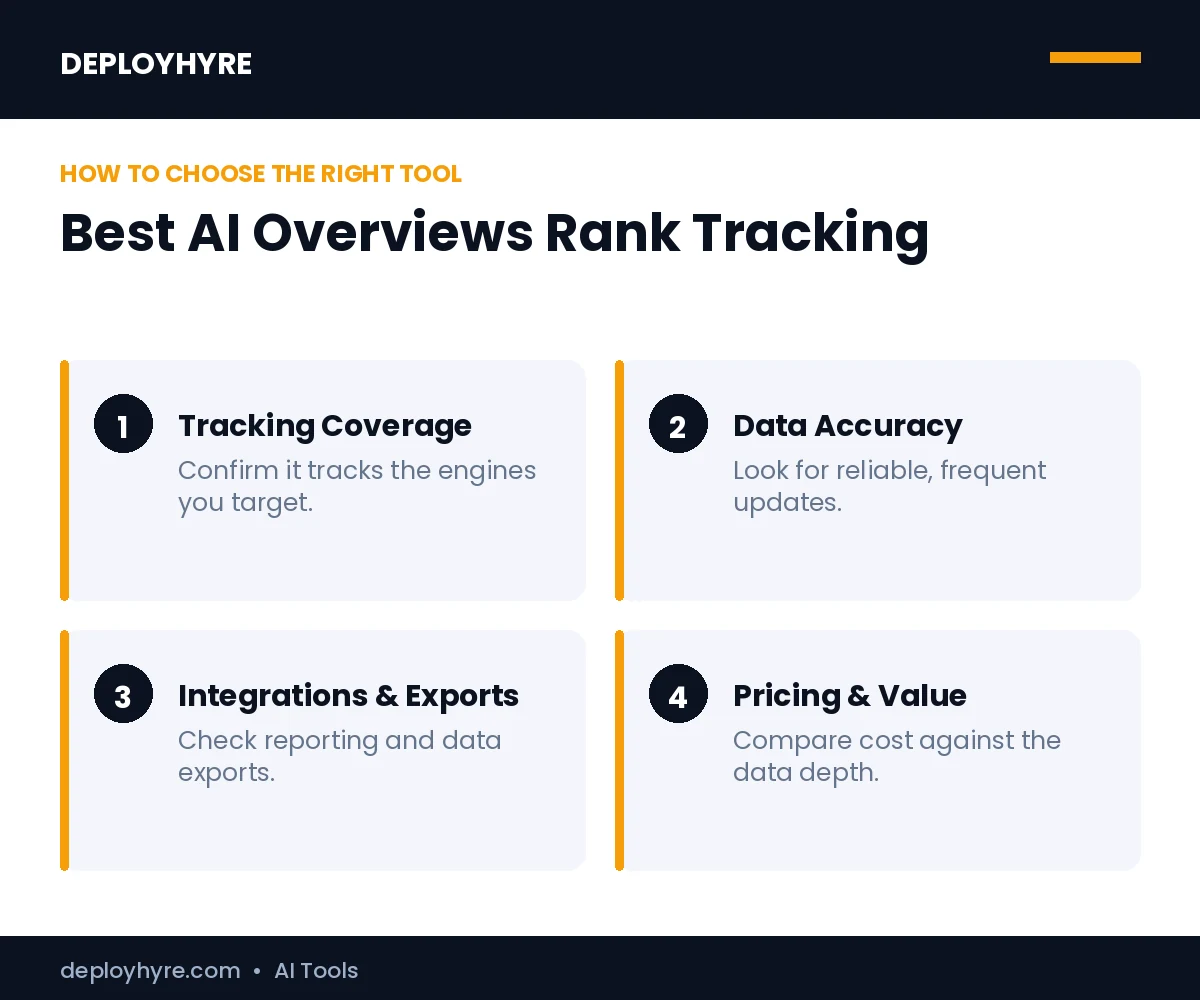
A great AI rank tracking tool checks the actual AI answers (not estimates), covers the engines your buyers use, and reports clear metrics: mentions, citations, average position, sentiment, and share of voice versus competitors. The best ones add alerts, screenshots, and recommendations so you can act, not just observe.
We weighed five things: engine coverage (especially AI Overviews and AI Mode), tracking accuracy, depth of metrics, transparent pricing, and how fast a small team gets value.
Best Affordable AI Rank Trackers
1 Otterly AI: Best for Affordable Prompt Tracking
Otterly AI is the easiest entry point for small brands that want ongoing AI search monitoring without enterprise costs.
What it does well. Otterly is a generative engine optimization platform that monitors brand visibility across multiple AI search platforms with prompt-based tracking. It is simple to set up and reports mentions, citations, and competitor share clearly.
Key features:
- Prompt-based monitoring across major AI engines
- Brand mention and citation tracking
- Competitor share of voice
- Clean, beginner-friendly reporting
Pricing. Starts at $29/month for the Lite plan, which includes 15 search prompts.
Best for: Freelancers, small brands, and agencies wanting affordable AI search monitoring.
Limitations. Prompt limits on lower tiers fill quickly, and deep enterprise analytics are thinner than dedicated suites.
2 ZipTie: Best Lightweight AI Overview Tracker
ZipTie focuses on doing AI Overview tracking well without forcing you onto a large platform.
What it does well. ZipTie monitors Google AI Overviews, ChatGPT, and Perplexity, and is built for SEOs who want screenshots, checks, and summaries of what shows up in AI answers without enterprise overhead.
Key features:
- AI Overviews, ChatGPT, and Perplexity tracking
- Screenshots and visibility checks
- Summary reporting
- Focused, no-bloat workflow
Pricing. Mid-tier monthly plans; check the vendor for current rates.
Best for: SEOs who want focused AI Overview tracking without a big suite.
Limitations. Fewer engines and less enterprise reporting than the larger platforms.
Best All-in-One SEO and AI Trackers
3 SE Ranking AI Visibility: Best All-in-One SEO Plus AI
SE Ranking folds AI search tracking into a full SEO platform, so you do not need a separate subscription.
What it does well. It combines traditional rank tracking, keyword research, and site audits with AI visibility monitoring across Google AI Overviews, AI Mode, Gemini, Perplexity, and ChatGPT, tracking prompt-triggered AI results, brand mentions, and links in one place.
Key features:
- Classic rank tracking plus AI visibility
- Coverage of AI Overviews and AI Mode
- Keyword research and site audits included
- Brand mention and link tracking
Pricing. Bundled into SE Ranking’s SEO suite (mid-tier monthly), with the AI visibility tracker as part of the platform.
Best for: Teams that want classic SEO and AI tracking in one tool.
Limitations. AI features are newer than the core SEO suite, and prompt volumes vary by plan.
4 Ahrefs Brand Radar and 5 Semrush AI Toolkit: Best for Existing Users
If you already pay for Ahrefs or Semrush, their AI tracking add-ons are the path of least resistance.
What they do well. Ahrefs Brand Radar and the Semrush AI Toolkit add AI Overview and AI engine visibility on top of the SEO data you already use, so reporting lives next to your keyword and backlink data. They are convenient and well-integrated.
Key features:
- AI visibility layered onto established SEO platforms
- Shared data with keyword, backlink, and rank tools
- Familiar dashboards and reporting
- Competitor visibility comparisons
Pricing. Sold as add-ons or higher tiers on top of existing Ahrefs or Semrush subscriptions.
Best for: Teams already standardized on Ahrefs or Semrush.
Limitations. AI engine coverage can trail specialist tools, and full features require the higher plans.
Best for Agencies and Enterprise
6 Rankability: Best for Agencies and Multi-Client Reporting
Rankability is built for teams managing AI visibility across many clients.
What it does well. It combines AI Overview citation and history tracking with white-label reporting and a weekly planning cadence built for multi-client workflows, which agencies need.
Key features:
- AI Overview citation and history tracking
- White-label client reporting
- Advisor-driven weekly planning
- Multi-client workflow support
Pricing. Custom, aimed at agencies and enterprise teams.
Best for: Agencies and enterprise teams managing multiple brands.
Limitations. Heavier than a solo SEO needs, and pricing requires a sales conversation.
7 Profound: Best for Enterprise GEO
Profound targets large organizations that treat generative engine optimization as a core channel.
What it does well. Profound delivers enterprise-grade, multi-engine AI visibility analytics with the depth and governance large teams require.
Key features:
- Multi-engine enterprise analytics
- Deep competitive and citation analysis
- Governance and team features
- Scalable prompt volumes
Pricing. Custom enterprise pricing, with entry-level plans around $399/month and up.
Best for: Enterprises running GEO as a serious channel.
Limitations. Overkill and over budget for small teams.
Best for Accuracy and Granularity
8 Radarkit: Best for Real-Browser Accuracy
Radarkit prioritizes accuracy by querying AI engines the way a real user would.
What it does well. It prompts major AI assistants through real browser sessions, then reports visibility scores, average positions, citations, sentiment, and competitor analysis across ChatGPT, Gemini, Perplexity, Copilot, AI Overviews, and AI Mode.
Key features:
- Real-browser querying for accuracy
- Visibility scores and average positions
- Sentiment and citation tracking
- Broad engine coverage including AI Mode
Pricing. Mid-tier monthly plans.
Best for: Teams that want the most realistic, browser-based measurement.
Limitations. Real-browser checks can mean fewer prompts per dollar than API-based tools.
9 Nightwatch and 10 Peec AI: Best for Granular and GEO-Focused Tracking
Two strong specialists round out the list.
What they do well. Nightwatch is known for geo-granular tracking that blends AI and classic rankings across locations, while Peec AI is a GEO-focused tracker for teams that live in AI search optimization. Both report mentions, citations, and competitive position across multiple engines.
Key features:
- Geo-granular tracking (Nightwatch)
- GEO-focused multi-engine monitoring (Peec AI)
- Mentions, citations, and competitor data
- Flexible reporting
Pricing. Mid-tier monthly plans for both.
Best for: Local and multi-location brands (Nightwatch); GEO-first teams (Peec AI).
Limitations. Each is strongest in its niche rather than as an all-in-one suite.
How Should You Choose an AI Rank Tracking Tool?
Start with coverage. Confirm the tool tracks the engines your buyers use, and specifically both AI Overviews and AI Mode, since they behave differently. Next, match it to your structure: Otterly or ZipTie for small teams, SE Ranking for all-in-one SEO, Ahrefs or Semrush add-ons if you already pay for them, and Rankability or Profound for agencies and enterprise.
Then weigh prompt volume against price. AI tools charge by prompts or queries, so estimate how many you need before comparing plans. Always run a short pilot and check the data against what you see in the live AI answers before committing.
How We Evaluated These AI Rank Trackers
We assessed each tool on five criteria: engine coverage (with weight on AI Overviews and AI Mode), tracking accuracy, depth of metrics like citations and share of voice, pricing transparency, and time-to-value for a small team. We prioritized tools with published capabilities and real 2026 usage, and cross-checked features against vendor documentation and independent reviews. AI tracking pricing changes fast, so confirm current rates and prompt limits before buying.
What is AI Overviews rank tracking?
It measures your AI answer visibility. AI Overviews rank tracking monitors whether your site is cited in Google AI Overview answers and where, not just blue links. Pair it with our guide on how to rank in AI Overviews.
Why track AI Overviews separately from normal rankings?
Because they appear above links. AI Overviews answer queries directly, so being cited drives visibility even when blue-link rank is lower. Tracking both shows your full search presence as AI reshapes results pages.
How accurate is AI Overviews tracking?
It is directional. Accuracy varies by tool and sampling frequency, since AI Overviews change by user and query. Good tools track many keywords and update often. Watch trends over time rather than single snapshots.
For Google AI Mode specifically, compare the best AI Mode SEO rank tracking software.
The Bottom Line
You cannot improve what you cannot measure, and classic rank trackers are blind to AI answers. An AI Overviews and AI Mode rank tracker shows whether you are winning or losing the visibility that increasingly replaces blue-link clicks.
Pick by team size and engine coverage. Start with an affordable option like Otterly, confirm it tracks your buyers’ engines, run a pilot, and expand once you trust the data. Then use what you learn to earn more citations.
Next steps: Compare the wider category in our best AI search visibility tools guide, then act on the data with our playbook on how to rank in AI Overviews and our roundup of the best AI SEO tools.
Frequently Asked Questions
What is the best AI Overviews rank tracking software in 2026?
There is no single best tool; it depends on your team. Otterly AI is best for affordable prompt tracking from $29/month, SE Ranking is best for all-in-one SEO plus AI visibility, Rankability suits agencies, and Profound fits enterprise GEO. Existing Ahrefs or Semrush users can add their AI tracking toolkits. Match the tool to your engine coverage needs and budget.
How do you track rankings in Google AI Mode?
You track Google AI Mode rankings with dedicated AI visibility tools that query AI Mode directly and report whether your brand is mentioned or cited. Classic rank trackers cannot see AI Mode. Tools like SE Ranking, Radarkit, Superlines, and Profound monitor AI Mode specifically, reporting mentions, citations, average position, and competitor share of voice.
What is the difference between AI Overviews and AI Mode tracking?
AI Overviews are short AI answer panels above normal search results, while AI Mode is a full conversational search interface with follow-up questions. Tracking differs because AI Mode answers are multi-turn and dynamic. The best tools track both separately, since a brand can appear in one and not the other.
How much does AI rank tracking software cost?
AI rank tracking software ranges from about $29/month for basic prompt tracking to $500+ per month for enterprise multi-engine suites, with an industry average near $337/month. Pricing usually scales with the number of tracked prompts, engines covered, and reporting features. Small teams can start affordably and upgrade as needs grow.
Can traditional rank trackers monitor AI Overviews?
Mostly no. Traditional rank trackers record blue-link positions and cannot see whether your brand is cited inside AI Overviews or AI Mode. Some established SEO platforms like Ahrefs and Semrush now add AI visibility toolkits, but dedicated AI search trackers generally offer deeper, more accurate coverage of AI-generated answers.
David Austin is a technology writer and software analyst at DeployHyre, where he covers AI tools, SaaS platforms, cloud hosting, and business automation. He focuses on hands-on comparisons of pricing, features, and real-world performance so teams can pick the right software with confidence.