Table of Contents
The best status page tool for most teams is Instatus or Better Stack for value and unlimited subscribers, Atlassian Statuspage for large organizations that want the established standard, and Better Stack again when you want monitoring and status pages together. A status page publicly communicates your service’s health, uptime, incidents, and maintenance, so when something breaks, customers see a clear update instead of flooding your support channels asking if it is just them.
The pricing mechanic that decides value: Atlassian Statuspage charges by subscriber count, which is what makes it expensive, while Instatus and Better Stack offer unlimited subscribers cheaply or free. Statuspage scales from $29 a month (250 subscribers) to $1,499 (25,000 subscribers), so a popular service pays heavily just to notify its users. Instatus and Better Stack decouple price from subscriber count entirely, which is why the modern alternatives undercut Statuspage dramatically for any service with a large audience.
Every price below is a recent observed figure. Because tiers vary by subscribers and features, treat each as a band.
Quick Comparison: Status Page Tools at a Glance
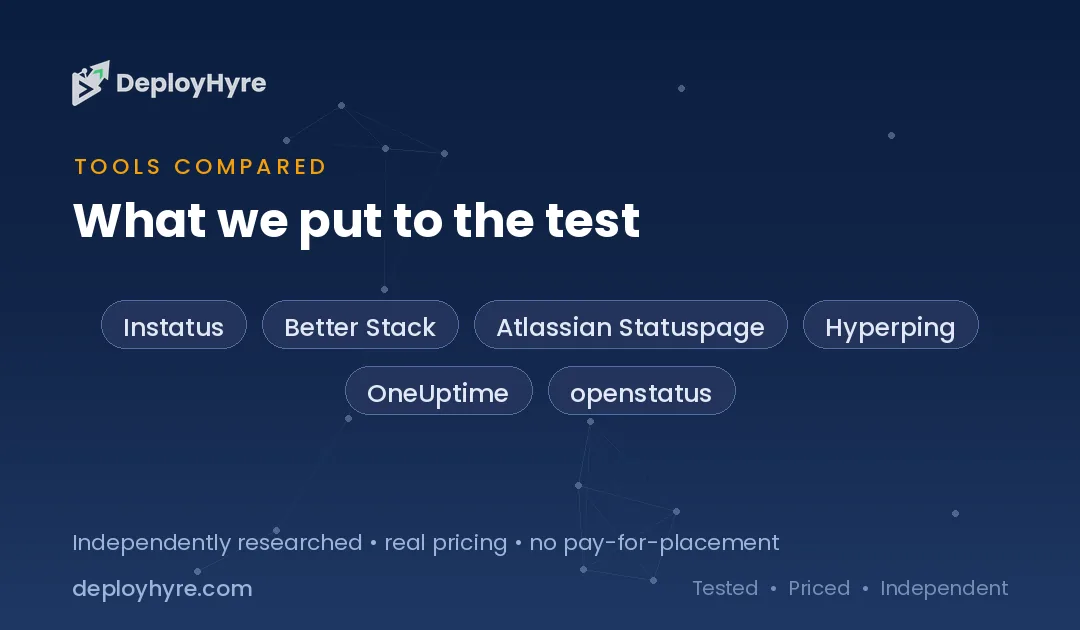
| Tool | Best For | Observed Price | Subscriber Model |
|---|---|---|---|
| Instatus | Value, unlimited subscribers | Free; Pro from $20/mo; Business $300/mo | Unlimited (even free) |
| Better Stack | Status page + monitoring | Free; pay-as-you-go | Generous |
| Atlassian Statuspage | Established enterprise standard | $29 (250 subs) to $1,499 (25K subs) | Priced by subscriber count |
| Hyperping | Simple monitoring + status | Accessible tiers | Bundled |
| OneUptime | Open-source all-in-one | Free (open source) / cloud | Self-hosted |
| openstatus | Open-source, developer-first | Free (open source) / low tiers | Self-hosted |
What AI Status Page Tools Do
A status page is the public (or private) page customers check when they suspect your service is down. It shows the real-time status of your components, current and past incidents with updates, scheduled maintenance, and uptime history, and it lets users subscribe for notifications. During an outage, a good status page is your single source of truth: it cuts support ticket volume, reassures customers that you are aware and working on it, and builds trust through transparency. It is a small tool with outsized impact on customer experience during the worst moments.
The AI and automation layer connects status pages to your monitoring and incident response: pages update automatically when monitoring detects an outage, incident updates can be drafted for you, and status communication is coordinated with your internal incident workflow. Many status page tools now bundle uptime monitoring, so the page reflects reality automatically rather than requiring a human to update it mid-crisis, which is exactly when no one has time to.
Status pages are part of incident communication and reliability. They pair with the workflows in our best AI incident management software guide, the detection in our best AI observability tools guide, and the uptime checks in our best AI network monitoring tools guide.
Why Subscriber-Based Pricing Makes Statuspage Expensive
Atlassian Statuspage prices by how many subscribers can receive notifications, so the more successful your service, the more you pay just to keep users informed, and that is the single biggest cost driver in the category. Statuspage runs $29 a month for 250 subscribers, $99 for 1,000, $399 for 5,000, and $1,499 for 25,000, with a free tier capped at 100 subscribers and no custom domain. For a growing service with thousands of users who want status updates, this subscriber-based model becomes expensive fast, you are effectively taxed on your own popularity.
The modern alternatives broke this model. Instatus offers unlimited subscribers and unlimited teams even on its free plan (the free page just lacks a custom domain), with Pro from $20 and Business at $300, and Better Stack similarly does not gate on subscriber count. So a service with 10,000 users pays $399-plus on Statuspage but a fraction of that, or nothing, on Instatus for comparable status-page functionality. Unless you specifically need Statuspage’s enterprise ecosystem, the subscriber-based pricing is a strong reason to choose an alternative, especially as your audience grows.
Best Value and Modern Options
Instatus is the best-value status page tool, offering a polished, fast status page with unlimited subscribers and teams even on its free plan, and paid tiers at just $20 (Pro) and $300 (Business). Its decoupling of price from subscriber count is the key advantage: where Statuspage charges more as your audience grows, Instatus does not, so it is dramatically cheaper for any service with a meaningful user base. The free tier is genuinely usable (only the custom domain requires paying), making it the pragmatic default for startups and growing services that want a professional status page without a subscriber tax.
Better Stack is the other strong modern option, combining a customizable status page with uptime monitoring and incident features on a free plan plus pay-as-you-go pricing, ideal for teams that want status pages and monitoring in one affordable tool. Both undercut Statuspage substantially; Instatus as the polished status-page-first choice with unlimited subscribers, Better Stack for status-plus-monitoring value. For most teams, one of these delivers everything Statuspage does at a fraction of the cost, feeding the incident flow in our best AI incident management software guide.
Best for Large Organizations
Atlassian Statuspage remains the established standard for large organizations, with the deepest ecosystem, integrations, and recognition, at $29 (250 subscribers) to $1,499 (25,000 subscribers) a month. For enterprises already in the Atlassian ecosystem (Jira, Opsgenie/Jira Service Management) or that want the most widely-recognized status page with mature enterprise features, Statuspage is the safe choice, and its brand familiarity can reassure enterprise customers. The trade-off is the subscriber-based pricing that makes it expensive at scale, which is justified mainly by the ecosystem integration and enterprise polish rather than the core functionality.
The honest assessment is that Statuspage’s core status-page capability is matched or exceeded by cheaper modern tools, so its premium is really for the Atlassian ecosystem and enterprise trust. Organizations deeply invested in Atlassian, or that specifically want the market-standard status page, get value from it; others usually get better economics from Instatus or Better Stack. Choose Statuspage when ecosystem integration and enterprise recognition outweigh the subscriber-based cost, and the modern alternatives when value and unlimited subscribers matter more.
Best Integrated With Monitoring
Better Stack is the best choice when you want status pages and uptime monitoring in one platform, so your status page updates automatically from the same tool that detects your outages, on a free plan plus pay-as-you-go pricing. Integrating monitoring and status pages is genuinely valuable: when your monitoring catches downtime, the status page can reflect it automatically, without a human updating it during the crisis. For teams that want this closed loop, detect, communicate, in one affordable tool rather than stitching together a monitor and a separate status page, Better Stack is the standout.
Hyperping similarly bundles simple uptime monitoring with status pages at accessible pricing, and the open-source options, OneUptime (an all-in-one observability-and-status platform) and openstatus (developer-first, self-hostable), let teams that prefer to self-host run monitoring-plus-status for free plus infrastructure. All integrate status with monitoring; Better Stack and Hyperping as affordable managed options, OneUptime and openstatus as open-source self-hosted ones. Choose an integrated tool when you want your status page to update itself from your monitoring, which is the reliability best practice, connecting to our best AI network monitoring tools guide.
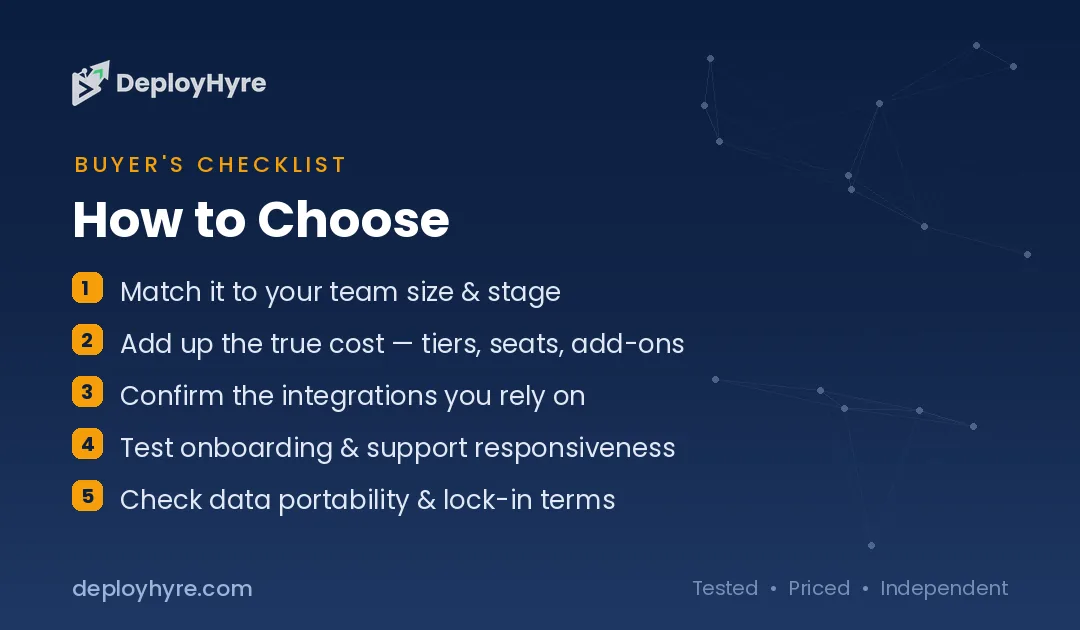
How Should You Choose a Status Page Tool?
Weigh subscriber-based versus unlimited pricing first, because it is the biggest cost driver. If your service has or will have many users who want status updates, Statuspage’s subscriber-based pricing (up to $1,499 a month) becomes expensive, and Instatus or Better Stack’s unlimited-subscriber models save substantially. For a large audience, the modern alternatives are usually the clear economic choice.
Then decide whether you want monitoring bundled. If you want your status page to update automatically from outage detection, an integrated tool like Better Stack or Hyperping (or open-source OneUptime/openstatus) closes that loop in one platform. If you already have monitoring and just need a status page, a status-first tool like Instatus fits.
Finally, weigh ecosystem and recognition against value. Atlassian Statuspage offers the deepest ecosystem and enterprise recognition, worth it for Atlassian-invested enterprises, while Instatus and Better Stack offer better economics and unlimited subscribers for everyone else. Match the choice to whether enterprise integration or value-at-scale matters more, and remember the core status-page functionality is similar across all of them.
How We Evaluated These Platforms
We evaluated each tool on status-page functionality, subscriber and notification model, monitoring integration, customization, and pricing. Figures come from vendor pages and comparison sources. Because subscriber-based pricing is the dominant cost driver, we present observed rates and stress the unlimited-versus-subscriber-priced distinction. We accepted no payment for placement; rankings reflect fit for a stated use case.
The Bottom Line
Instatus and Better Stack are the best-value modern status page tools, offering unlimited subscribers cheaply or free, with Better Stack adding integrated monitoring. Atlassian Statuspage remains the enterprise standard but its subscriber-based pricing (to $1,499 a month) makes it expensive at scale, and open-source OneUptime and openstatus serve self-hosting teams. Weigh subscriber-based versus unlimited pricing first, since that, not the core functionality, is what separates the value leaders from the premium standard.

Frequently Asked Questions
How much do status page tools cost?
Atlassian Statuspage runs $29 a month (250 subscribers) to $1,499 (25,000 subscribers), priced by subscriber count. Instatus is free with unlimited subscribers (custom domain requires paying), then $20 (Pro) and $300 (Business). Better Stack has a free plan and pay-as-you-go pricing. Open-source OneUptime and openstatus are free to self-host.
What is a status page?
A status page publicly shows your service’s health, current and past incidents, component status, scheduled maintenance, and uptime history, and lets users subscribe for notifications. During an outage it acts as a single source of truth, cutting support tickets, reassuring customers you are aware, and building trust through transparency.
Why is Atlassian Statuspage so expensive?
Because it prices by subscriber count, so the more users who want status notifications, the more you pay, up to $1,499 a month for 25,000 subscribers. A popular service is effectively taxed on its own audience. Modern alternatives like Instatus and Better Stack decouple price from subscriber count, offering unlimited subscribers cheaply or free.
What is the best free status page tool?
Instatus offers the strongest free tier, with unlimited subscribers and teams (only the custom domain requires paying), making it genuinely usable for startups. Better Stack also has a free plan with monitoring included, and open-source OneUptime and openstatus are free to self-host for teams that want to run their own.
Should my status page connect to my monitoring?
Ideally yes. When your status page updates automatically from your monitoring’s outage detection, it reflects reality without a human updating it mid-crisis, exactly when no one has time. Integrated tools like Better Stack, Hyperping, and open-source OneUptime provide this closed loop of detect-and-communicate in one platform.
Related Articles


David Austin is a technology writer and software analyst at DeployHyre, where he covers AI tools, SaaS platforms, cloud hosting, and business automation. He focuses on hands-on comparisons of pricing, features, and real-world performance so teams can pick the right software with confidence.