Table of Contents
The best internal developer platform depends on your team size: Port or OpsLevel for under 50 developers, Backstage for 200-plus with a dedicated platform team, and Cortex for teams wanting fast time-to-value with managed convenience. An internal developer platform (IDP) gives engineers a self-service portal to build, deploy, and manage software, catalogs of services, golden-path templates, scorecards, so they ship faster without waiting on ops, and platform teams enforce standards consistently.
The cost myth to see through: open-source Backstage is “free” to license but costs over $2 million in engineering over three years to run. Backstage requires 3 to 12 dedicated engineers to build and maintain, so its true total cost of ownership dwarfs the per-seat price of managed IDPs like Port ($30), OpsLevel ($39), and Cortex ($65 to $69) per developer a month. Whether you self-build with Backstage or buy a managed platform is the central decision, and it hinges on your developer count and whether you can staff a platform team.
Every price below is a recent observed figure. Because enterprise tiers quote per deployment, treat each as a band.
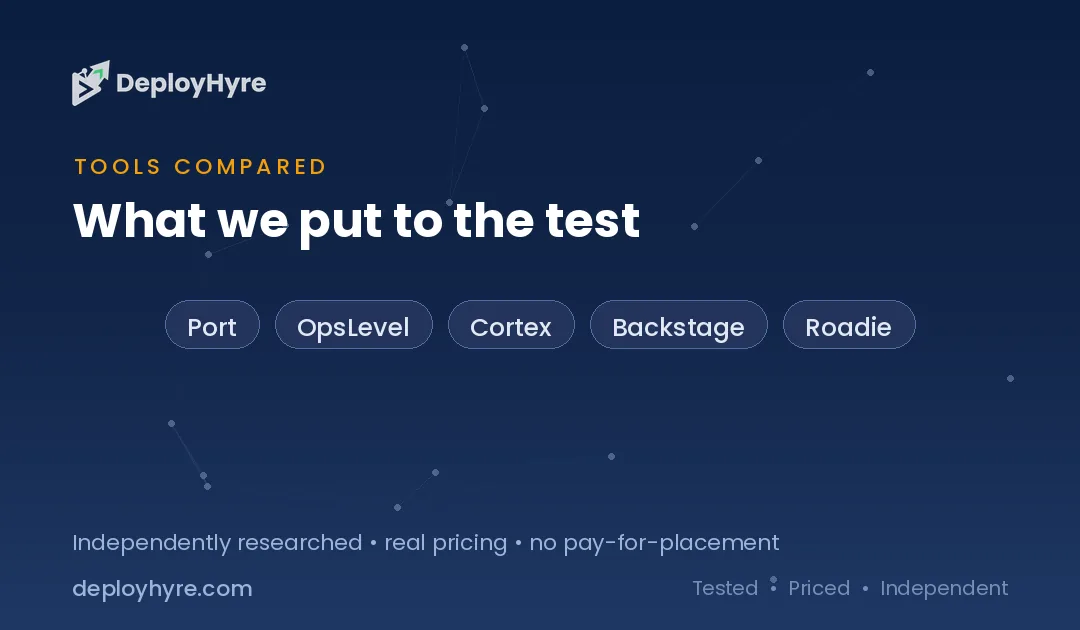
Quick Comparison: Internal Developer Platforms at a Glance
| Platform | Best For | Observed Price | Model |
|---|---|---|---|
| Port | Fast start, under 50 devs | Free to ~15 users; from ~$30/seat/mo | Managed |
| OpsLevel | Value managed IDP | ~$39/dev/mo (~$46,800/yr at 100) | Managed |
| Cortex | Feature-rich managed IDP | ~$65–$69/dev/mo (~$78K–$83K/yr at 100) | Managed |
| Backstage | 200+ devs, dedicated platform team | Open-source (free license); $2M+ TCO over 3 yrs | Self-hosted OSS |
| Roadie | Managed Backstage | Quote (managed Backstage) | Managed OSS |
What an Internal Developer Platform Does
As engineering organizations grow, developers spend more time navigating internal complexity, which service does what, how to deploy, who owns this, what standards apply, than writing code. An internal developer platform solves this with a self-service layer: a software catalog (every service, its owner, docs, and dependencies), golden-path templates (scaffold a new service the right way in one click), scorecards (measure services against standards like security and reliability), and self-service actions (deploy, provision, without filing a ticket). The goal is developer productivity and consistency at scale.
The platform-engineering movement drives this: rather than every team reinventing tooling, a platform team builds paved roads that all developers use. The AI layer adds intelligent service discovery, automated documentation, scorecard insights, and increasingly natural-language interfaces to the catalog and actions. For organizations past a certain size, an IDP is how you keep developers productive and standards enforced without heavy manual coordination.
An IDP sits atop your delivery and tooling stack. It organizes the pipelines in our best AI DevOps tools guide, surfaces the documentation covered in our best AI documentation tools guide, and complements the coding assistants in our best AI coding tools guide.
The “Free” Backstage Myth
Backstage, the open-source IDP from Spotify, is free to license but is the most expensive option to run, because it requires 3 to 12 dedicated engineers and a total cost of ownership exceeding $2 million over three years. Backstage is a framework, not a finished product, you build your IDP on it, which means significant engineering to stand it up, integrate it, and maintain it. For large organizations with the scale to justify a dedicated platform team, that investment pays off in a fully-customized platform. But the “$0 license” badly understates the real cost, and smaller teams that adopt Backstage often find they lack the headcount to operate it.
This reframes the whole decision. Managed IDPs, Port, OpsLevel, Cortex, charge per developer but require no platform team to build and maintain the tool itself, so their true cost can be far lower than Backstage for organizations that would otherwise dedicate engineers to it. The honest comparison is not “$0 Backstage versus $39-a-developer OpsLevel,” it is “$2M-plus in engineering over three years versus a per-seat subscription and no platform-build burden.” Decide based on whether you can and want to staff a platform team, because that determines which is actually cheaper.
Best Managed IDPs
Port is the best managed IDP for fast time-to-value, especially for smaller teams, free up to about 15 users and from around $30 per seat a month, letting you stand up a developer portal in days rather than the months a Backstage build takes. Its no-platform-team-required model and quick setup make it ideal for organizations under 50 developers that want the benefits of an IDP without the headcount to build one. For teams that need self-service, catalogs, and scorecards working quickly and affordably, Port is the standout entry point.
OpsLevel is the value-focused managed IDP at around $39 per developer a month (roughly $46,800 a year at 100 developers), strong on service maturity scorecards and catalog management. Cortex is the feature-rich managed option at $65 to $69 per developer (about $78,000 to $83,000 a year at 100), favored for depth and enterprise capabilities. All three are managed, requiring no platform team to build the tool; Port for fastest start and small teams, OpsLevel for value, Cortex for depth. They deliver most of Backstage’s benefit without the multi-year build, organizing the delivery stack in our best AI DevOps tools guide.
Best Open-Source for Large Teams
Backstage is the right choice for large organizations (200-plus developers) that can staff a dedicated platform team of 3 to 4 engineers, giving you a fully-customizable, open-source IDP with no per-seat license and complete control. At sufficient scale, the fixed cost of a platform team is spread across enough developers that Backstage becomes economical, and the customization, building exactly the paved roads your organization needs, is worth the engineering. Spotify and many large tech organizations run Backstage precisely because they have the scale and the platform team to exploit it.
The prerequisite is real: you need the headcount and commitment to build and maintain it, which is why it suits 200-plus-developer organizations, not smaller ones. Roadie offers a middle path, managed Backstage, giving you Backstage’s model and ecosystem without running it yourself, on quote-based pricing, which suits teams that want Backstage specifically but lack the platform team to self-host. Choose self-hosted Backstage when you have the scale and platform team, Roadie when you want Backstage managed, and a native managed IDP (Port, OpsLevel, Cortex) when you want the fastest path with no build.
Which IDP by Team Size
Team size is the clearest guide to the right IDP, because it determines whether you can justify a platform team. Under 50 developers, you lack the headcount to operate Backstage, so a managed IDP like Port or OpsLevel is the right call, fast to adopt, no platform-build burden. From 50 to 200 developers, you can consider Backstage with a small (2-person) platform team if you want maximum customization, or Port and Cortex for faster time-to-value. At 200-plus developers, Backstage with a dedicated 3-to-4-engineer platform team becomes economical and gives you full control.
The underlying logic is that the fixed cost of running Backstage (a platform team) only amortizes at scale, while managed IDPs’ per-seat cost scales linearly, so managed wins for smaller teams and Backstage can win for large ones. Match your choice to your developer count and your appetite for platform engineering: smaller and speed-focused points to managed; larger with platform-team commitment points to Backstage. And weigh time-to-value, managed IDPs deliver benefits in days, Backstage in months, which often matters more than the per-seat comparison for teams that need results now.
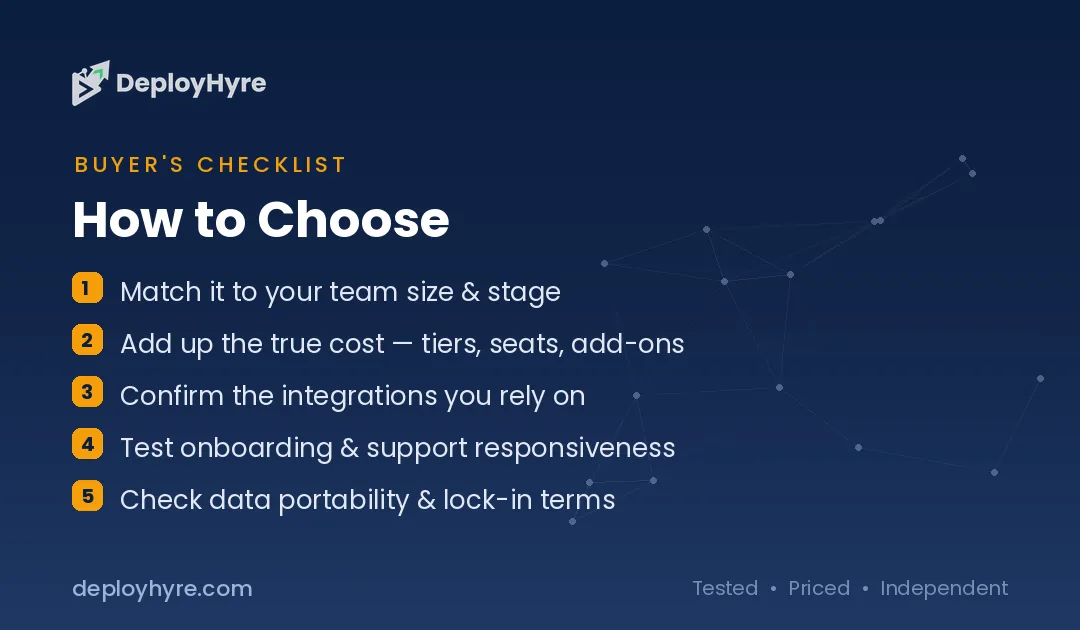
How Should You Choose an IDP?
Start with team size and platform-team capacity. Under 50 developers, choose a managed IDP (Port or OpsLevel), you cannot justify operating Backstage. At 200-plus with a dedicated platform team, Backstage becomes economical and offers full control. In between, weigh Backstage-with-a-small-team against managed IDPs for faster time-to-value.
Then see through the “free” Backstage cost. Compare Backstage’s true TCO ($2M-plus over three years in engineering) against managed per-seat pricing, not its $0 license against the subscription. For many organizations, a managed IDP is genuinely cheaper once you count the platform team Backstage requires.
Finally, weigh time-to-value and depth. Managed IDPs (Port, OpsLevel, Cortex) deliver a working portal in days; Backstage takes months to build. If you need results quickly, managed wins; if you need deep customization and have the scale, Backstage or managed Backstage (Roadie) fit. Match the choice to whether speed or bespoke control matters more for your organization.
How We Evaluated These Platforms
We evaluated each platform on catalog and self-service capability, scorecards and standards enforcement, customization, time-to-value, platform-team requirements, and true total cost. Figures come from vendor pages and comparison sources. Because open-source Backstage’s real cost is engineering rather than license, we present per-seat rates alongside Backstage’s TCO and stress the team-size decision. We accepted no payment for placement; rankings reflect fit for a stated use case.
The Bottom Line
Port and OpsLevel are the best managed IDPs for teams under 50 developers (fast start, no platform team), Cortex the feature-rich managed option, and Backstage the choice for 200-plus-developer organizations that can staff a platform team, with Roadie offering managed Backstage. See through the “free” Backstage myth, its true cost is $2M-plus in engineering over three years, and let developer count and platform-team capacity, plus time-to-value, drive the decision.
Frequently Asked Questions
How much do internal developer platforms cost?
Managed IDPs are per developer: Port is free to ~15 users then from ~$30 a seat, OpsLevel ~$39 (about $46,800 a year at 100 developers), and Cortex ~$65 to $69 (about $78,000 to $83,000 a year at 100). Backstage is open-source with a $0 license but a true total cost of ownership exceeding $2 million over three years in engineering to build and run.
What is an internal developer platform (IDP)?
An IDP is a self-service layer for engineers, offering a software catalog, golden-path templates, scorecards, and self-service deploy and provision actions, so developers ship faster without waiting on ops and platform teams enforce standards consistently. It is the core deliverable of the platform-engineering movement, aimed at developer productivity at scale.
Is Backstage really free?
The license is free, but running Backstage requires 3 to 12 dedicated engineers and a total cost of ownership exceeding $2 million over three years. Backstage is a framework you build your IDP on, not a finished product, so its real cost is engineering. For smaller teams, managed IDPs are often cheaper once you count the platform team Backstage demands.
What is the best IDP for a small engineering team?
For teams under 50 developers, a managed IDP like Port (free to ~15 users, from ~$30 a seat) or OpsLevel (~$39 per developer) is the right choice, because you lack the headcount to operate Backstage. Managed IDPs deliver a working developer portal in days with no platform-build burden.
When does Backstage make sense over a managed IDP?
Backstage makes sense for large organizations (roughly 200-plus developers) that can staff a dedicated 3-to-4-engineer platform team. At that scale, the fixed cost of the platform team amortizes across enough developers, and Backstage’s full customization is worth the engineering. Below that scale, managed IDPs are usually faster and cheaper.
Related Articles

David Austin is a technology writer and software analyst at DeployHyre, where he covers AI tools, SaaS platforms, cloud hosting, and business automation. He focuses on hands-on comparisons of pricing, features, and real-world performance so teams can pick the right software with confidence.