The best Oxylabs alternative for most teams is Decodo (formerly Smartproxy). It gives a self-serve, mid-market balance. Bright Data is best for enterprise-scale coverage. Rayobyte or IPRoyal fit budget projects that need non-expiring traffic. Every provider here sells rotating residential proxies. They do web scraping and data collection, the same core job Oxylabs does. They differ in a few ways. One is the price floor. Another is whether you can buy small without talking to a salesperson. The last is whether unused bandwidth expires at the end of the month.
Here is the point most buyers miss. Oxylabs is not expensive because its per-GB rate is wild. It is expensive because of how the plans are built. Its pay-as-you-go plan has a monthly bandwidth cap. The lowest unit rates sit behind committed subscriptions and enterprise quotes. So the right alternative depends less on the sticker price. It depends more on what you need. Do you need true pay-as-you-go flexibility, bulk volume, or traffic that rolls over?
The prices below come from each vendor’s published residential-proxy rates at the time of writing. We show them as entry-level bands, either pay-as-you-go or the smallest paid plan. Vendors run promotions and change tiers often. So treat every figure as a starting band. Always confirm the live number on the vendor’s own pricing page before you buy. We do not invent prices. We also do not claim hands-on testing we did not do. Smartproxy rebranded to Decodo in 2025. That is why it appears here as “Decodo (formerly Smartproxy).”
Quick Comparison: Oxylabs Alternatives at a Glance
| Provider | Best For | Entry Price (residential) | vs Oxylabs |
|---|---|---|---|
| Bright Data | Enterprise scale and coverage | Pay-as-you-go around $8/GB (promotions cited near $4/GB); monthly plans from roughly $3.50/GB | Comparable list rate and a similar enterprise, KYC-gated model; larger network and tooling |
| Decodo (formerly Smartproxy) | Self-serve mid-market | Smallest plan around $11.25 for 3 GB; pay-as-you-go roughly $3.50 to $4/GB; lower per-GB at volume | Fully self-serve with a lower small-plan floor; no enterprise sales call to start |
| SOAX | Fine-grained geo targeting | Starter around $90 for 25 GB (about $3.60/GB); pay-as-you-go around $4/GB, 1 GB minimum | Lower monthly entry and strong targeting; smaller pool than Oxylabs |
| IPRoyal | Irregular jobs, non-expiring traffic | Pay-as-you-go around $7/GB at 1 GB, dropping toward $5/GB near 50 GB; traffic does not expire | Much lower barrier to start; bandwidth you keep instead of a monthly cap |
| Webshare | Self-serve, scale-down pricing | Residential roughly $3.50/GB at small volume, down toward $1.40/GB at multi-TB; free datacenter tier | Cheaper at the small end and self-serve; residential bandwidth must be used within the month |
| Rayobyte | Volume scraping on a budget | Pay-as-you-go tiers from about $3.50/GB (1 to 49 GB) down to roughly $0.90/GB at 1 to 5 TB; non-expiring | Far lower top-volume rate; US-based support and ethical sourcing focus |
| Infatica | Mid-volume, rollover traffic | Pay-as-you-go around $4/GB; 25 GB plan near $96/mo (about $3.84/GB); down toward $2.60/GB at 1 TB | Lower entry and rollover bandwidth; smaller brand footprint |
| Proxy-Cheap | Simple flat-rate buying | Residential commonly cited around $4.99/GB flat, with little scale discount | No sales process and predictable flat pricing; no bulk discount and smaller pool |
Why look for an Oxylabs alternative
Oxylabs is one of the largest and most capable proxy networks on the market. For enterprise data teams, it is a safe default. But two things push buyers to look elsewhere. The first is price structure. Its pay-as-you-go residential plan sits around $8 per GB. It is capped at roughly 50 GB per month. So when your usage is very small or very large, the math stops working for you. The lowest per-GB rates are saved for committed subscriptions and custom enterprise deals. The second reason is the sales process. Serious volume and premium products often go through a sales call and account review. There is no instant self-serve checkout. That slows down a solo developer or a small team that just wants to start scraping today.
None of this makes Oxylabs a bad product. It just makes it a specific kind of product. Say you are a small team, a freelancer, or a startup running irregular jobs. Then you are paying for an enterprise sales and compliance operation you may never use. The providers below cover the full range. Some are direct enterprise rivals. Others are truly cheap self-serve options. We cover each one in more depth in our best proxy services pillar guide. The goal is not to find the single cheapest row. It is to match the buying model to how you actually work.
What Makes a Strong Oxylabs Alternative?
The biggest difference between these providers is not the headline per-GB rate. It is the shape of the plan. Three things decide what you will really pay. First, is there a true pay-as-you-go option with a low minimum? Second, is there a monthly bandwidth cap on that option? Third, does unused traffic expire at the end of the billing period, or does it roll over forever? Oxylabs offers pay-as-you-go. But it is capped near 50 GB per month. So a provider with uncapped PAYG and non-expiring bandwidth can be much cheaper in practice. That is true for spiky, irregular work, even at a similar sticker rate. A strong alternative wins on buying model as much as on price. Look for a low or no minimum. Look for self-serve signup with no sales gate. Look for pool size and sourcing that hold up on your targets. And look for traffic terms that match your usage. The table below maps that structure, not the number.
| Provider | True pay-as-you-go? | Monthly cap or commitment | Does unused traffic expire? |
|---|---|---|---|
| Oxylabs (baseline) | Yes, from about 1 GB | PAYG capped near 50 GB/mo; best rates need subscriptions | Subscription bandwidth is monthly |
| Bright Data | Yes, no commitment | Access often gated by KYC / use-case review | Monthly on plans |
| Decodo (formerly Smartproxy) | Yes, Wallet-based PAYG | Self-serve; no enterprise call to start | Varies by plan |
| SOAX | Yes (beta), 1 GB minimum | Subscriptions start near $90/mo | Monthly on subscriptions |
| IPRoyal | Yes, from 1 GB | No subscription floor | No, traffic is non-expiring |
| Webshare | Subscription-first, self-serve | Monthly plans | Yes, residential bandwidth is monthly |
| Rayobyte | Yes, tiered by volume | No subscription required | No, traffic is non-expiring |
| Infatica | Yes, from about $4/GB | Plans and PAYG both offered | Rollover on some plans |
| Proxy-Cheap | Yes, flat rate | Low minimum | Varies by plan |
Read that table before you read any price. A $5/GB rate can beat a $4/GB rate in real use. The $5/GB rate here is non-expiring and uncapped pay-as-you-go. The $4/GB rate expires monthly. That forces you to over-buy to cover peak weeks. This is the most common way buyers overpay. It is also the exact pain that sends people looking for an Oxylabs alternative.
1. Bright Data: Best for enterprise-scale scraping
Bright Data is the most direct enterprise rival to Oxylabs. It is the clear pick for teams that need the largest pool and the deepest tooling. Its residential pay-as-you-go rate is cited around $8 per GB. Promotions have been seen near $4/GB. Committed monthly plans bring the effective rate down toward roughly $3.50/GB at the low hundreds of gigabytes. It falls further at terabyte scale. That is a comparable list rate to Oxylabs, not a lower one. So you are not switching here to save money. You are switching for coverage and infrastructure.
Like Oxylabs, Bright Data gates the residential network behind know-your-customer and use-case review. So it uses a similar compliance-first sales model, not a frictionless signup. That is its honest limitation if you just want to start today. Its strength is breadth. It has the largest network of the eight. It has mature tooling. And it has account management built for teams that put coverage and success rate first. Are you already looking at it? Our Bright Data alternatives comparison shows where it wins and where lighter tools come in cheaper.
2. Decodo (formerly Smartproxy): Best all-round self-serve pick
Decodo (formerly Smartproxy) is the best all-round self-serve alternative. It is our top pick for most teams leaving Oxylabs. Its smallest residential plan starts around $11.25 for 3 GB. Pay-as-you-go runs roughly $3.50 to $4 per GB through a wallet-based option. The per-GB rate drops at higher monthly volume. Against Oxylabs, the headline unit rate is similar. But the small-plan floor is far lower. And there is no enterprise sales call between you and your first request.
The strength is the full self-serve flow. You sign up, load a wallet, and start scraping the same hour. The dashboard is clean and support is responsive. The honest limitation is network scale. It is smaller than Bright Data’s or Oxylabs’ enterprise pool. So the very largest jobs may still want a heavier network. For a mid-market team that wants reliable residential IPs without an enterprise contract, Decodo hits the best balance of price, ease of use, and support here.
3. SOAX: Best for fine-grained geo targeting
SOAX is the enterprise-adjacent pick for teams whose edge is targeting, not raw scale. Its Starter subscription runs around $90 for 25 GB, or about $3.60/GB. It also has a pay-as-you-go option near $4/GB at a 1 GB minimum. That monthly entry point is well below what a committed Oxylabs plan implies. Compared with Oxylabs, you give up some pool size. In return you get an easier start and precise control.
The draw is fine-grained geo control down to city and carrier level, plus a clean dashboard. That makes it strong for location-sensitive scraping and ad verification. The limitation is pool size. It is smaller than Oxylabs’ or Bright Data’s. So SOAX fits teams that need precise, well-targeted sessions more than the largest network. If your jobs live or die on accurate geo-targeting, it is a strong, low-friction swap.
4. IPRoyal: Best for irregular jobs and non-expiring traffic
IPRoyal is the easiest low-commitment entry point. It is the best fit for freelancers and irregular jobs. Residential pay-as-you-go starts around $7/GB at a single gigabyte. It falls toward roughly $5/GB near 50 GB. Oxylabs resets subscription bandwidth each month. IPRoyal does not. Its purchased traffic is non-expiring. That difference is the whole point for stop-start work.
The strength is flexibility. There is a 1 GB minimum and no subscription floor. Bandwidth rolls over forever. So you buy a little, use it whenever, and top up when you run low. The honest limitation is the per-GB rate. It is higher than the budget volume plans. It is well above Rayobyte at terabyte scale. So IPRoyal is not where you run your heaviest recurring jobs. But for usage you cannot forecast, it is ideal.
5. Webshare: Best self-serve console with a free tier
Webshare is the pick for buyers who want a self-serve dashboard. Its pricing scales down as well as up. Its residential rate sits around $3.50/GB at small volume. It falls toward roughly $1.40/GB at multi-terabyte commitments. It is also one of the few providers with a truly free datacenter tier. That tier gives you 10 proxies and 1 GB a month to test the platform before paying. Oxylabs does not match that free entry point.
The strength is the single tidy console. You start free on datacenter proxies. Then you move up to residential without changing tools. The honest limitation is that residential bandwidth must be used within the month. Unlike IPRoyal or Rayobyte, there is no rollover. So it is best for steady, predictable work, not spiky work. See how it stacks up in our best residential proxies guide.
6. Rayobyte: Best for volume scraping on a budget
Rayobyte is the standout for volume scraping on a budget. Its non-expiring traffic model is the opposite of Oxylabs’ monthly cap. Pay-as-you-go tiers start around $3.50/GB for 1 to 49 GB. They scale down steeply to roughly $0.90/GB in the 1 to 5 TB range. The bandwidth you buy stays in your account until you use it. At the top of that curve, it is far cheaper per GB than Oxylabs.
The strength is that mix of a low top-volume rate and non-expiring traffic. It also has a US base and a strong ethical-sourcing stance. That matters for teams with compliance needs. The honest limitation is that the lowest rates only unlock at serious volume. So for small one-off jobs, the entry tiers are nothing special. For large but irregular jobs, paying once for a terabyte that never expires beats a capped monthly plan.
7. Infatica: Best for mid-volume rollover traffic
Infatica sits between the budget and mid-volume camps. Pay-as-you-go is around $4/GB. A 25 GB plan is near $96 a month, or about $3.84/GB. Rates fall toward roughly $2.60/GB at the terabyte tier. Some plans offer rollover bandwidth instead of a hard monthly reset. That softens the over-buying problem that Oxylabs’ monthly subscription bandwidth creates.
The strength is that rollover flexibility at a mid-market price. You do not need a full enterprise contract. The honest limitation is brand footprint. It is smaller than the market leaders’. So there is less third-party reporting and community coverage to lean on. For mid-volume scraping where you want rollover without an enterprise commitment, it is a solid, well-priced choice.
8. Proxy-Cheap: Best for simple flat-rate buying
Proxy-Cheap earns a place for buyers who value simplicity above all. Its residential pricing is commonly cited around a flat $4.99/GB with little volume discount. That makes budgeting easy. There is no sales process and no tier math. The minimum to get going is low. Against Oxylabs’ tiered, sales-gated setup, the appeal is predictability, not a lower ceiling.
The strength is that flat, no-surprises pricing and instant self-serve start. The honest limitation is the other side of the same coin. The network is smaller and there are no real bulk savings. So it is a poor fit for high-volume work. For small, occasional jobs, a predictable flat rate beats chasing the last cent per gigabyte. There, it does the job cleanly.
How to Choose an Oxylabs Alternative
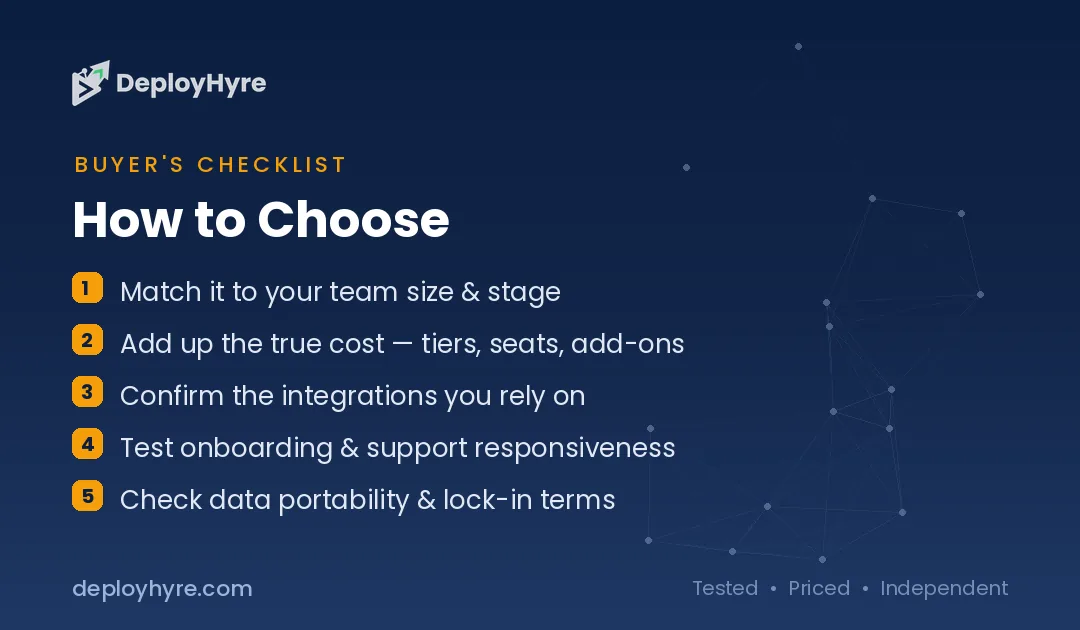
Start with your usage shape, not the per-GB number. Is your volume small or unpredictable? Then look for a true pay-as-you-go plan with a low minimum and non-expiring traffic. IPRoyal and Rayobyte are built for that. You will never pay for bandwidth you did not use. Is your volume steady and mid-sized? Then a self-serve subscription from Decodo, Webshare, or Infatica gives a lower effective rate without an enterprise contract. Only one case favors a direct enterprise rival like Bright Data. That is when you need the largest pool and formal account management.
Next, match the buying model to your patience and compliance needs. Many teams leave Oxylabs because of the sales-gated process. So if starting today matters, favor the fully self-serve providers. Those are Decodo, Webshare, Proxy-Cheap, and IPRoyal. They beat the KYC-gated enterprise networks here. But say you work in a regulated industry. Then the use-case review that slows down Bright Data and Oxylabs is a feature, not a bug. A US-based, ethics-forward provider like Rayobyte may clear your procurement process more easily than a cheaper unknown.
Finally, price the plan that fits your real traffic, and test before you commit. The headline $/GB hides the real cost. Failed requests still use bandwidth. Finer geo-targeting is often a paid add-on. And expiring traffic forces you to over-buy for peaks. Run a small paid test against your actual target sites. Measure your true success rate. Then work out cost per successful request, not cost per gigabyte. A slightly higher rate can win. That happens when it brings a higher success rate and rollover bandwidth. Once the real numbers land, it is often the cheaper choice.
How We Evaluated These Oxylabs Alternatives
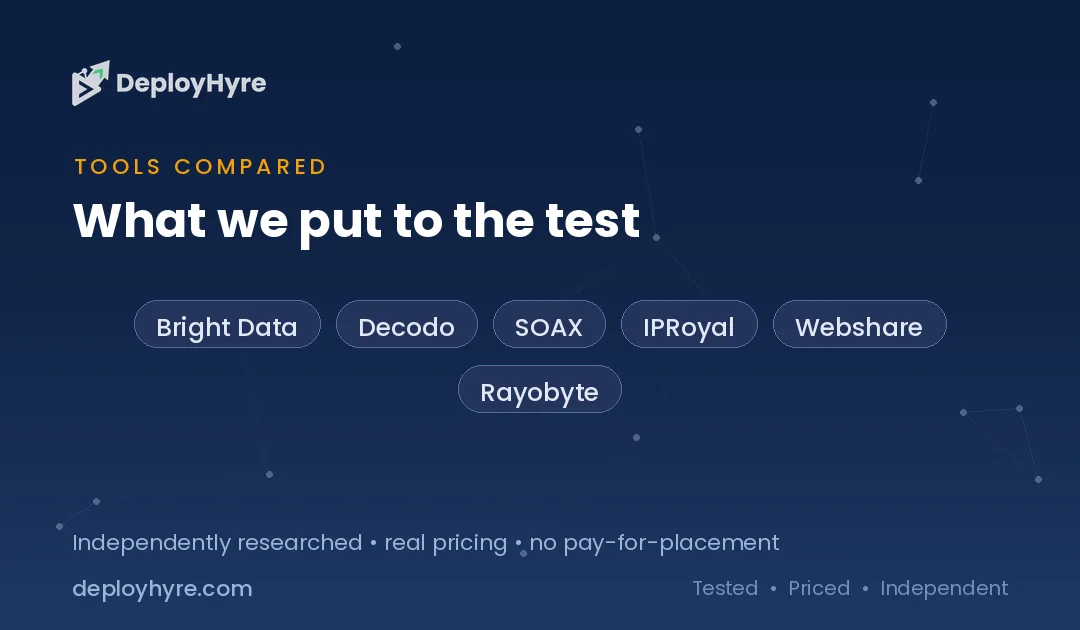
We compared eight Oxylabs alternatives across five areas. Those are pool size and sourcing, real per-GB cost versus Oxylabs, success rate on protected targets, targeting and features, and self-serve onboarding versus Oxylabs’ enterprise sales model. We chose the eight based on three things. One is market presence. Another is the range of buyers they serve. The last is how directly they compete with Oxylabs on residential proxies. They range from enterprise-scale rivals to truly cheap self-serve options. For each one, we confirmed the product is live and actively maintained. We pulled entry-level residential pricing from each vendor’s published rates and recent trusted reporting at the time of writing. We recorded the pay-as-you-go rate or the smallest paid plan. We show prices as bands, not single fixed numbers. That is because promotions and tiers change often in this market.
No vendor paid for placement or a higher ranking here. Our picks are based on documented pricing structure, the buying model, and the use case each provider is built for. We did not publish performance benchmarks or success-rate numbers we cannot source. We also did not claim hands-on testing we did not do. Some providers only quote bulk or enterprise rates on request. In those cases, we label that instead of guessing a figure. We left out one provider whose network was subject to a law-enforcement seizure notice. We did that on integrity grounds. Always check the live price on the vendor’s own pricing page before you buy. Rates and plans shift often.
The Bottom Line
There is no single best Oxylabs alternative. There is only the best fit for your usage shape and buying model. For most teams leaving Oxylabs, Decodo (formerly Smartproxy) is the strongest all-round swap. It is fully self-serve. It has a low small-plan floor around $11.25 for 3 GB. And there is no sales call to start. Bright Data is the direct enterprise rival when coverage and account management matter more than fast signup. SOAX is the pick when fine-grained geo targeting matters more than raw pool size.
For budget and irregular work, Rayobyte and IPRoyal win on non-expiring traffic. Rayobyte scales to roughly $0.90/GB at volume. IPRoyal offers the easiest low-commitment start. Webshare is the best self-serve console, with a free datacenter tier to test. Infatica suits mid-volume teams who want rollover bandwidth. Proxy-Cheap keeps things simple with flat pricing around $4.99/GB. Match the plan to how your traffic actually behaves. Test before you commit. And measure cost per successful request, not the sticker rate.
Frequently Asked Questions
What is the cheapest Oxylabs alternative?
At the small end, two options are the easiest cheap entries. One is Webshare, around $3.50/GB residential, plus a free datacenter tier. The other is the flat-rate Proxy-Cheap, about $4.99/GB. For large volume, Rayobyte is cheapest. It scales to roughly $0.90/GB at the 1 to 5 TB tier, with non-expiring traffic. The true cheapest depends on your volume. So match the tier to your real usage.
Why do people switch away from Oxylabs?
Two reasons stand out: price structure and the sales model. Oxylabs’ pay-as-you-go residential rate sits around $8/GB. It has a roughly 50 GB monthly cap. The lowest rates require committed subscriptions or enterprise quotes. Premium access often goes through a sales call and account review, not instant self-serve signup. That frustrates small teams and freelancers who want to start scraping right away.
Which Oxylabs alternative is best for enterprise scraping?
Bright Data is the closest enterprise-scale rival. It offers a very large residential pool and deep tooling. Its committed plans fall toward roughly $3.50/GB, and lower at volume. Like Oxylabs, it gates residential access behind KYC and use-case review. SOAX is a strong enterprise-adjacent option. It fits when fine-grained geo targeting matters more than the single largest network.
Do any Oxylabs alternatives offer non-expiring traffic?
Yes. IPRoyal and Rayobyte both sell residential bandwidth that stays in your account until you use it. It does not reset monthly like Oxylabs’ subscription plans. Infatica offers rollover on some plans too. For spiky or irregular work, non-expiring traffic is often cheaper in practice. A lower sticker rate that expires each month forces you to over-buy for peak weeks.
Is Decodo the same as Smartproxy?
Yes. Smartproxy rebranded to Decodo in 2025. So the two names refer to the same provider and network. Its residential proxies start around $11.25 for a 3 GB plan. Wallet-based pay-as-you-go is near $3.50 to $4 per GB. Per-GB rates drop at higher volume. It is fully self-serve. That makes it a popular swap for teams leaving Oxylabs’ sales-gated model.

David Austin is a technology writer and software analyst at DeployHyre, where he covers AI tools, SaaS platforms, cloud hosting, and business automation. He focuses on hands-on comparisons of pricing, features, and real-world performance so teams can pick the right software with confidence.