TL;DR: Shopify is the best ecommerce platform for most stores. It pairs an easy setup with a huge app market and strong checkout. Prices range from free (Ecwid, WooCommerce core) to $39/month for hosted plans like Shopify and BigCommerce, up to $22,000+/year for Adobe Commerce. Pick by store size, budget, and how much you want to build yourself.
Global retail ecommerce sales are projected to reach $6.88 trillion in 2026, about 21.5% of all retail. Your platform decides how much of that you can capture. The wrong choice caps your growth, adds hidden fees, and slows your checkout.
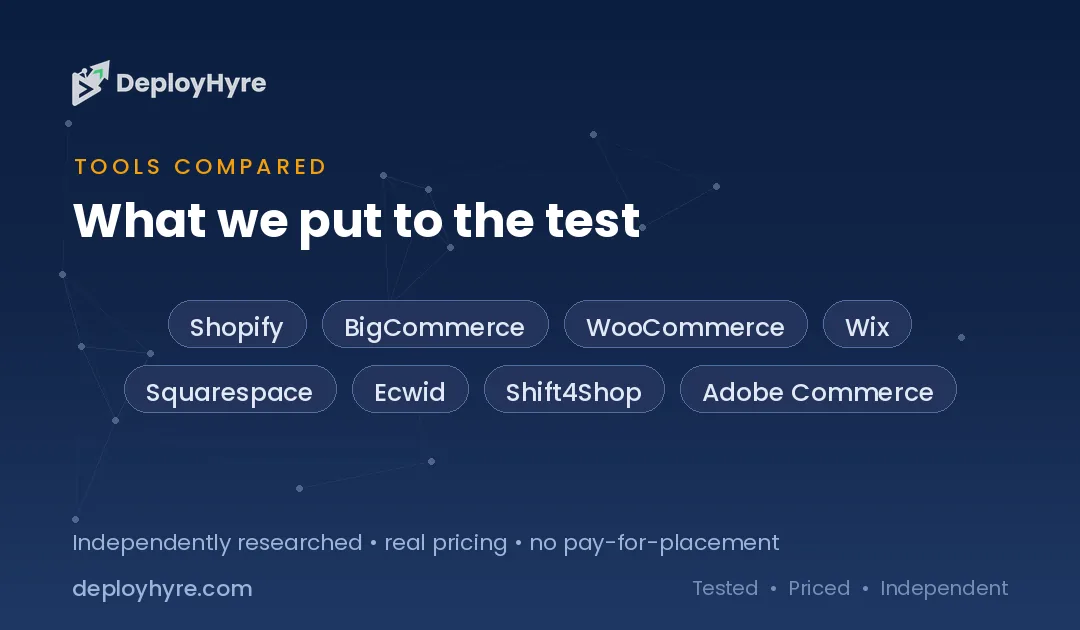
We compared 8 of the most popular ecommerce platforms on pricing, transaction fees, features, and fit. Each pick below serves a different type of store. Before you commit, it also helps to explore the best AI tools for ecommerce so your platform and your automation stack work together.
Quick Comparison: Best Ecommerce Platforms
| Platform | Best For | Starting Price | Transaction Fees |
|---|---|---|---|
| Shopify | Most stores overall | $39/mo (Basic) | 0% with Shopify Payments; up to 2% on third-party gateways |
| BigCommerce | Growing and B2B stores | $39/mo (Standard/Core) | 0% platform fee; new Open Payment Provider fee up to 2% |
| WooCommerce | WordPress users | Free plugin (hosting extra) | 0% platform fee; payment processor rates only |
| Wix | Beginners and small stores | $29/mo (Core) | 0% platform fee; 2.9% + $0.30 processing |
| Squarespace | Design-first brands | $16/mo (Basic) | 0% on physical goods (Core+); 2% on Basic |
| Ecwid | Adding a store to any site | Free plan (up to 5 products) | 0% platform fee; payment processor rates only |
| Shift4Shop | Budget stores in the US | Free with Shift4 payments | 0% platform fee with Shift4 Payments |
| Adobe Commerce | Enterprise and complex catalogs | ~$22,000+/yr (quote) | Payment processor rates only |
What Makes a Great Ecommerce Platform?
A great ecommerce platform combines low total cost, a fast reliable checkout, flexible design, and room to scale. It should fit your store today and still work when your catalog and traffic grow.
Look past the sticker price. The real cost includes transaction fees, app subscriptions, payment processing, and hosting. A $39 plan with a 2% fee can cost more than a pricier plan with 0% fees once sales grow.
Great platforms also protect your checkout speed and uptime. A slow or broken checkout kills sales. The best platforms handle security, PCI compliance, and traffic spikes for you.
#1 Shopify: Best for most stores overall
Shopify is the default choice for merchants who want to launch fast and scale without touching code.
What it does well. Shopify makes store setup simple. You get a clean admin, reliable hosting, and a checkout that converts well. Its app store is the largest in ecommerce, so you can add almost any feature. Shopify Payments removes extra transaction fees when you use it.
Key features:
-
Hosted platform with automatic updates and security
-
Largest app marketplace in the industry
-
Built-in POS for in-person selling
-
Multichannel selling across social and marketplaces
-
24/7 support
Pricing. Shopify Basic costs $39/month ($29/month billed annually). Higher tiers add lower card rates and staff accounts. With Shopify Payments you pay 2.9% + 30 cents online and no extra Shopify fee. Third-party gateways add a 0.2% to 2% surcharge.
Best for: Small to mid-size stores and direct-to-consumer brands that want speed and scale.
Limitations. Costs climb with premium apps and themes. Using an outside payment gateway triggers extra fees.
If you run on Shopify, layer in the right AI tools for Shopify to automate product content and support.
#2 BigCommerce: Best for growing and B2B stores
BigCommerce targets stores that need built-in features and B2B tools without heavy app reliance.
What it does well. BigCommerce ships with more native features than most rivals. You get advanced product options, B2B pricing, and multi-storefront support out of the box. It charges no platform transaction fee, which appeals to higher-volume sellers.
Key features:
-
Rich built-in features, fewer paid apps needed
-
Strong B2B and wholesale tools
-
No platform transaction fees
-
Multi-storefront and headless options
-
Open API for custom builds
Pricing. BigCommerce starts at $39/month for Standard (renamed Core in 2026), $105/month for Plus, and $299/month for Pro. In 2026 BigCommerce added an Open Payment Provider fee of up to 2% on orders not settled through an embedded provider. Plans also carry annual sales caps.
Best for: Scaling stores, B2B sellers, and brands that want native features over add-ons.
Limitations. New 2026 fees and lower sales caps raise costs for some stores. The theme library is smaller than Shopify’s.
Still deciding between the top two? Read our full Shopify vs BigCommerce breakdown.
#3 WooCommerce: Best for WordPress users
WooCommerce turns any WordPress site into a store. It is open source and free to install.
What it does well. WooCommerce gives you full control. You own your data, pick your host, and extend the store with thousands of plugins. There is no platform transaction fee. For content-heavy brands that already run WordPress, it is a natural fit.
Key features:
-
Free, open-source core plugin
-
Deep WordPress and SEO integration
-
Thousands of extensions and themes
-
Full ownership of data and code
-
No platform transaction fees
Pricing. The core WooCommerce plugin is free. Real costs come from hosting, themes, plugins, and payment processing. A production store typically runs $1,800 to $3,000+ per year, and more for complex builds. You pay only your payment processor’s rates.
Best for: WordPress users, bloggers, and stores that want maximum control.
Limitations. You manage hosting, security, and updates yourself. Costs add up across plugins and maintenance.
#4 Wix: Best for beginners and small stores
Wix pairs a drag-and-drop builder with simple ecommerce tools for first-time sellers.
What it does well. Wix is easy to learn. Its visual editor lets you design a store without code. Templates look modern, and setup takes minutes. For small stores and side projects, Wix removes the technical hurdles.
Key features:
-
Drag-and-drop visual editor
-
Hundreds of templates
-
Built-in marketing and blog tools
-
No platform transaction fees
-
Included hosting and security
Pricing. Wix requires at least the Core plan at $29/month (billed annually) to sell online. Business is $39/month and Business Elite is $159/month. Wix charges no platform fee, but Wix Payments costs 2.9% + 30 cents per transaction.
Best for: Beginners, small catalogs, and service businesses adding a store.
Limitations. It scales less smoothly than Shopify or BigCommerce. Switching templates later can be hard.
#5 Squarespace: Best for design-first brands
Squarespace is built for merchants who want a store that looks polished with little effort.
What it does well. Squarespace leads on design. Its templates are clean and award-winning, ideal for creators, artists, and boutique brands. Ecommerce is built in, so you can sell products, services, and digital content from one site.
Key features:
-
Best-in-class design templates
-
Built-in blogging and content tools
-
Sells physical, digital, and subscription products
-
Included hosting and SSL
-
Member areas and scheduling add-ons
Pricing. Squarespace plans run from $16/month (Basic) to $99/month (Advanced), billed annually. The Basic plan charges a 2% transaction fee. The Core plan and above waive fees on physical products. Payment processing runs 2.5% to 2.9% + 30 cents.
Best for: Creators, portfolios, and boutique brands that value design.
Limitations. Fewer third-party apps than Shopify. The lowest plan adds a 2% fee on sales.
#6 Ecwid: Best for adding a store to any site
Ecwid lets you drop a store into an existing website, social page, or marketplace.
What it does well. Ecwid is flexible and light. You embed it into any site, whether WordPress, Wix, or plain HTML, and sync the same catalog everywhere. It sells across websites, social media, and marketplaces from one dashboard. A free plan lets you start at no cost.
Key features:
-
Embeds into any existing website
-
Free plan available
-
Sells across social and marketplaces
-
Single catalog synced everywhere
-
No platform transaction fees
Pricing. Ecwid offers a free plan for a small product count. Paid plans range from about $15/month (Venture) to $99/month (Unlimited). Ecwid charges no platform fee, so you pay only your payment processor.
Best for: Existing sites, social sellers, and stores with small catalogs.
Limitations. The free plan limits products and features. Standalone stores get more from a dedicated platform.
#7 Shift4Shop: Best for budget stores in the US
Shift4Shop offers a full-featured plan free for US merchants who use Shift4 Payments.
What it does well. Shift4Shop bundles a complete ecommerce toolkit at no monthly cost when you process payments through Shift4. You get product management, shipping tools, and SEO features that rivals charge for. For US stores on a tight budget, the value is strong.
Key features:
-
Free End-to-End plan with Shift4 Payments (US)
-
Full feature set with no monthly cost on that plan
-
Built-in SEO and marketing tools
-
Unlimited products on the free plan
-
No platform transaction fees on Shift4 Payments
Pricing. Shift4Shop offers a free End-to-End plan for US merchants using Shift4 Payments. Standalone paid plans are also available for stores that want a different processor. Payment processing rates apply.
Best for: US-based budget stores that will use Shift4 Payments.
Limitations. The free plan requires Shift4 Payments and US residency. The interface feels dated next to newer platforms.
#8 Adobe Commerce: Best for enterprise and complex catalogs
Adobe Commerce (formerly Magento) powers large stores with complex catalogs and custom needs.
What it does well. Adobe Commerce handles scale that hosted platforms cannot. It supports huge catalogs, multiple stores, advanced B2B rules, and deep customization. Enterprise brands choose it for control and integration with the Adobe Experience Cloud.
Key features:
-
Enterprise-grade scalability
-
Advanced B2B and multi-store support
-
Deep customization and open architecture
-
Adobe Experience Cloud integration
-
Cloud and on-premise options
Pricing. Adobe Commerce uses quote-based pricing tied to your annual sales. Licenses start around $22,000 per year and rise into six figures for large enterprises. Implementation and developer costs add substantially to the total.
Best for: Enterprise brands, large catalogs, and complex B2B operations.
Limitations. High cost and complexity. It needs a developer team to build and maintain.
How to Choose an Ecommerce Platform
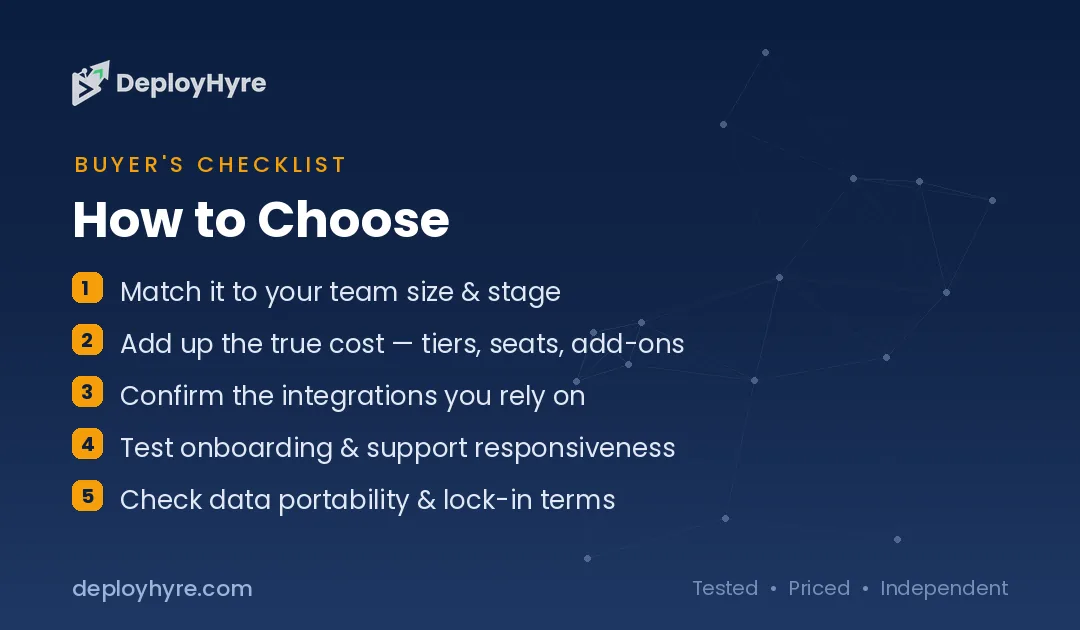
Match the platform to your store size, budget, and technical skill. Start with your monthly sales volume and how much you can spend, then narrow from there.
For a first store or small catalog, pick a hosted builder like Wix, Squarespace, or Shopify. They handle hosting and security so you can focus on selling.
For a growing store, weigh transaction fees against monthly cost. Shopify and BigCommerce both scale well, but their fee structures differ. Run your expected sales through each to see the true cost.
For WordPress users, WooCommerce keeps you in one system and cuts platform fees. For enterprise catalogs, Adobe Commerce offers the control large brands need.
Also factor in payment processing. A plan with a low monthly price but a 2% transaction fee can cost more at scale than a pricier plan with 0% fees.
The Bottom Line
The best ecommerce platform is the one that fits your store today and scales tomorrow. Shopify wins for most merchants thanks to its balance of ease, features, and reliability. BigCommerce suits growing and B2B stores, WooCommerce fits WordPress users, and Adobe Commerce serves enterprise brands.
Pick two or three finalists, run your real numbers through their fee structures, and test the checkout. The right platform pays for itself in conversions and saved time.
Ready to launch? Start with our top pick.
Frequently Asked Questions
What is the best ecommerce platform for beginners?
Wix and Squarespace are the best ecommerce platforms for beginners. Both use drag-and-drop editors, include hosting, and require no code. Shopify is also beginner-friendly and scales better if you expect fast growth.
Which ecommerce platform has the lowest fees?
WooCommerce, Ecwid, and Shift4Shop charge no platform transaction fees, so you pay only your payment processor. Shopify charges 0% when you use Shopify Payments. Watch for BigCommerce’s new 2026 Open Payment Provider fee if you use an outside gateway.
Is Shopify better than WooCommerce?
Shopify is better for merchants who want an all-in-one hosted store with less maintenance. WooCommerce is better for WordPress users who want full control and no platform fees. Shopify handles hosting and updates, while WooCommerce leaves those tasks to you.
How much does an ecommerce platform cost?
Ecommerce platforms range from free to enterprise pricing. Ecwid and WooCommerce core are free to start. Hosted plans like Shopify and BigCommerce begin at $39/month. Adobe Commerce starts around $22,000 per year for large stores.
Which ecommerce platform is best for a large store?
Adobe Commerce and BigCommerce are best for large stores. Adobe Commerce handles complex catalogs and heavy customization for enterprises. BigCommerce scales well for high-volume and B2B sellers without needing a large developer team.
Know AI, SaaS, or cloud tools inside out? Pitch a guest post and get in front of thousands of buyers researching their next tool.
Related Articles


David Austin is a technology writer and software analyst at DeployHyre, where he covers AI tools, SaaS platforms, cloud hosting, and business automation. He focuses on hands-on comparisons of pricing, features, and real-world performance so teams can pick the right software with confidence.