
For most modern software teams that value speed, Linear wins; for large or regulated organizations that need deep configuration and agile governance, Jira wins. That split is the whole story, and almost every other difference between these two tools flows from it. Linear is the opinionated, keyboard-first tracker built for product and engineering teams who want to move fast without wrestling the tool. Jira is the configurable workhorse that can model nearly any workflow, which is exactly why it dominates in enterprises and exactly why smaller teams often find it heavy. The question is not which is “better” in the abstract, but which matches how your team actually works.
If you are picking a tracker right now, the real decision is a trade: do you want a tool that makes good decisions for you, or a tool you can bend to any process you can imagine? A five-person startup and a 2,000-person engineering org answer that question very differently, and both can be right.
A sourcing note: all prices below are vendor list prices pulled directly from Linear’s and Atlassian’s own pricing pages and are stated as bands rather than exact promises, because both vendors adjust pricing and run annual-vs-monthly discounts. Atlassian has announced a price increase for Jira Cloud Standard and Premium effective October 2026, so treat Jira’s paid tiers as a floor. Confirm current numbers on the vendor pages before you buy.
Quick Comparison: Linear vs Jira at a Glance
| Tool | Best For | Entry Price | Note |
|---|---|---|---|
| Linear | Startups, product and engineering teams that want speed and a clean, opinionated workflow | Free plan; paid from ~$10/user/mo (Basic, billed annually) | Fast, modern, minimal setup; less flexible if you need heavy custom process |
| Jira | Enterprise, regulated, and large agile orgs that need deep configuration and governance | Free for up to 10 users; Standard from ~$8/user/mo | Extremely configurable and widely integrated; steeper setup and admin overhead |

What an Issue Tracker Actually Does
Strip away the branding and both Linear and Jira do the same core job: they turn vague intentions into trackable units of work, give those units a status and an owner, and roll them up into something a team can plan and ship against. An issue tracker is where “we should fix the onboarding flow” becomes a ticket, lands in a sprint or cycle, moves across a board, and eventually closes with a record of who did what and when. Done well, it is the single source of truth for what the team is building and why.
The differences start to appear in how each tool treats that core loop. Linear assumes you want a tight, familiar workflow and optimizes relentlessly for the speed of creating, triaging, and closing issues. Jira assumes you might need to model a completely custom process, multiple issue types, custom fields, conditional transitions, approval gates, and gives you the machinery to build it. Both are legitimate philosophies; they just serve different teams. If you are still mapping the broader category before committing, our guide to the best AI project management tools covers how modern trackers are folding automation and AI assistance into this same loop.
Speed and Opinion vs Power and Configuration
The cleanest way to understand Linear vs Jira is as a trade between opinion and flexibility. Linear is opinionated by design: it ships with a workflow that most product teams can adopt almost unchanged, a famously fast keyboard-driven interface, built-in cycles (its version of sprints), and increasingly an “agent platform” with AI features baked into higher tiers. You give up some configurability and gain a tool that feels frictionless on day one. Teams rarely need a dedicated administrator to run Linear.
Jira sits at the other end. It is the most configurable mainstream tracker on the market, custom workflows, custom issue types, custom fields, complex permission schemes, and a vast marketplace of apps and integrations through the Atlassian ecosystem. That power is why Jira runs the engineering orgs of some of the largest companies in the world. It is also why Jira often needs a dedicated admin and a deliberate setup phase, and why smaller teams sometimes feel they are paying a complexity tax they do not need. Cost at scale matters here too: Jira charges per licensed user whether or not that person logs in, and Linear’s mid and upper tiers climb as you add advanced security and analytics.
| Dimension | Linear | Jira |
|---|---|---|
| Philosophy | Opinionated, speed-first, minimal setup | Highly configurable, process-first |
| Interface | Fast, keyboard-driven, modern and minimal | Feature-dense; more surface area to learn |
| Setup effort | Low, usable out of the box | Moderate to high, often needs an admin |
| Customization | Deliberately limited to stay fast | Deep: workflows, fields, issue types, schemes |
| Agile support | Cycles, projects, initiatives | Scrum and Kanban boards, backlogs, advanced roadmaps |
| Ecosystem | Growing; strong dev-tool and AI integrations | Vast Atlassian Marketplace and native Confluence/Bitbucket ties |
| Entry paid price | ~$10/user/mo (Basic) | ~$8/user/mo (Standard) |
| Free tier ceiling | Unlimited members, 2 teams, 250 issues | Up to 10 users |
Best for Startups and Product Teams
Winner: Linear. This is Linear’s home turf. Startups and product-led engineering teams want to spend their energy shipping, not administering a tracker, and Linear’s opinionated defaults mean a new team can be productive in minutes. The keyboard-first interface, built-in cycles, and clean project and initiative hierarchy map neatly onto how fast-moving teams actually plan and execute. Linear’s free plan supports unlimited members with up to 2 teams and 250 issues, which is often enough to get a seed-stage company off the ground. When you outgrow it, the Basic plan starts at roughly $10 per user per month billed annually and unlocks unlimited issues and more teams, while the Business tier at around $16 per user per month adds the intelligence and analytics features larger product orgs lean on.
The verdict for startups: Linear’s speed and low setup overhead translate directly into shipped work, and the pricing scales gently enough that it rarely becomes the thing you regret. Jira can absolutely serve a startup, but you will spend early time configuring it that Linear simply does not ask for. If your team is comparing broader stacks of lightweight tools, our ClickUp vs Notion breakdown is a useful companion for teams that also want docs and wikis in the same surface. And if your engineers live in their editor, pairing Linear with one of the best AI coding tools keeps the issue-to-pull-request loop tight.
Best for Enterprise and Agile at Scale
Winner: Jira. When you need to model complex, auditable processes across many teams, Jira is the default for good reason. Its configurable workflows, custom issue types and fields, granular permission schemes, and advanced roadmaps let a large organization enforce a consistent process while still letting individual teams tailor their boards. Jira’s agile tooling, Scrum and Kanban boards, backlogs, sprint reports, and cross-team planning, is mature and battle-tested, and the Atlassian ecosystem (Confluence for docs, Bitbucket for code, plus a deep marketplace) means Jira rarely stands alone. For regulated industries, Jira’s Premium and Enterprise tiers add the security, compliance, and administrative controls that procurement teams require.
On pricing, Jira is free for up to 10 users, with the Standard plan starting around $8 per user per month and Premium around $14.50 per user per month; Enterprise is custom and billed annually. Remember that Atlassian bills per licensed user and has an announced increase landing in October 2026, so model your real seat count carefully. The verdict: for enterprises and large agile programs that need governance, auditability, and deep customization, Jira’s power is the point, and Linear’s deliberate simplicity would feel like a constraint. Teams weighing other work-management suites at this scale often also look at Asana vs Monday, though neither matches Jira’s depth for software engineering specifically.
Best for Budget and Small Teams
Winner: Jira (narrowly), with Linear close behind. For a genuinely small, cost-sensitive team, Jira’s free plan is hard to beat on paper: it covers up to 10 users at no cost with real agile boards and automation, and its paid Standard entry price of roughly $8 per user per month undercuts Linear’s ~$10 Basic tier. If raw dollars per seat are the deciding factor and you are comfortable with some setup, Jira’s free tier stretches further for a team under ten people.
That said, “cheapest” and “best value” are not the same. Linear’s free plan allows unlimited members (capped on teams and issues rather than seats), and its lower administrative overhead means you spend less time, a real, if invisible, cost, keeping the tool running. For a small team that prizes speed and simplicity over configurability, the modest premium for Linear often pays for itself in saved setup and maintenance. The verdict: pick Jira’s free tier if you are strictly counting seats and dollars; pick Linear if your scarce resource is time and attention. Small teams that also want a flexible all-in-one workspace should weigh the trade-offs in our ClickUp vs Notion comparison before committing to a dedicated issue tracker at all.
How Should You Choose Between Linear and Jira?
Start with the shape of your team and your process. If you are a product or engineering team that wants to move fast, adopt sensible defaults, and avoid dedicating someone to tool administration, Linear is the stronger fit. Its opinionated design is a feature, not a limitation, for teams whose workflow looks roughly like what Linear already assumes. The less process customization you need, the more Linear’s speed pays off.
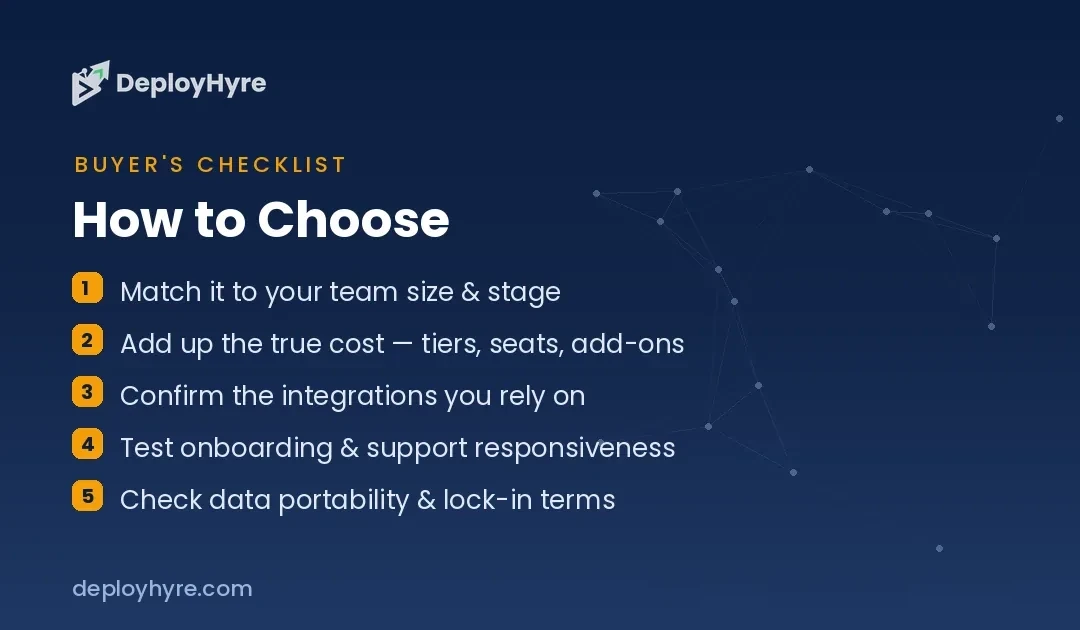
If your organization needs to enforce a specific, often complex process, multiple issue types, approval gates, custom fields, cross-team roadmaps, and audit trails, Jira is built for exactly that. Large orgs, regulated industries, and teams already invested in Confluence, Bitbucket, or the wider Atlassian ecosystem will get the most from Jira, and will have the administrative capacity to tame its complexity. The configurability that overwhelms a five-person startup is precisely what a 500-person engineering org needs.
Finally, weigh cost against hidden cost. Jira’s per-user entry price is lower and its free tier covers up to 10 users, but its real expense includes setup time, administration, and per-seat licensing that counts every licensed user. Linear costs a little more per seat at entry but asks far less of your time. Run a short trial of each with a real project before committing, both offer free plans generous enough to test the actual feel of the tool, which matters more than any spec sheet.
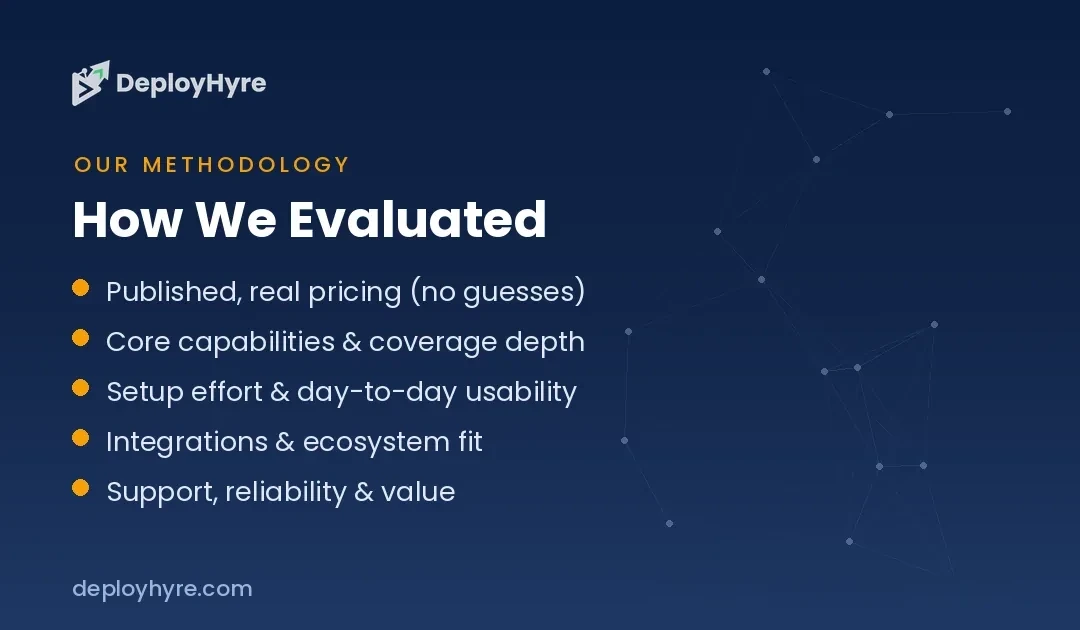
How We Evaluated Linear and Jira
We based this comparison on each vendor’s official documentation and pricing pages, and the publicly stated feature sets of their current plans. Pricing was taken directly from Linear’s pricing page and Atlassian’s Jira pricing page and is presented as bands rather than fixed figures, because both vendors run annual-versus-monthly discounts and adjust list prices over time, Atlassian has an announced increase to Jira Cloud Standard and Premium landing in October 2026, which we flag rather than bury.
Neither Linear nor Jira paid to appear here, and the “winner” calls in each section reflect fit for a specific use case, not a sponsorship. Where a figure could not be confirmed from a primary source, we labeled it as an estimate or omitted it rather than guessing. Because both products ship frequently, always confirm current pricing and feature availability on the vendor’s own site before you purchase.
The Bottom Line
Linear and Jira are both excellent trackers aimed at different teams. Linear is the faster, more opinionated, lower-maintenance choice that product and engineering teams, especially startups, tend to love, with a free plan and paid tiers starting around $10 per user per month. Jira is the deeply configurable, enterprise-grade standard that large and regulated organizations rely on, free for up to 10 users and starting around $8 per user per month on Standard. Choose Linear if your scarce resource is time and your process is reasonably standard; choose Jira if you need to model complex workflows at scale and have the capacity to administer them. Trial both on a real project before you commit, the right answer is the one that matches how your team actually works.
Frequently Asked Questions
Is Linear or Jira better for a small startup?
For most startups, Linear is the better fit. Its opinionated, keyboard-first design means a team can be productive in minutes without a dedicated administrator, and its free plan supports unlimited members with up to 2 teams and 250 issues. Jira can serve a startup and its free tier covers up to 10 users, but it typically requires more setup and configuration time before it feels fast.
How much do Linear and Jira cost?
Both offer free plans. Linear’s paid Basic tier starts at roughly $10 per user per month billed annually, with Business around $16 per user per month. Jira is free for up to 10 users, with Standard starting around $8 per user per month and Premium around $14.50 per user per month. Prices are vendor list figures and are stated as bands; Atlassian has announced a Jira increase for October 2026, so confirm current numbers before buying.
Why do large companies use Jira instead of Linear?
Large and regulated organizations choose Jira for its deep configurability, custom workflows, issue types, fields, and granular permissions, plus mature agile tooling and tight integration with Confluence and Bitbucket. That flexibility lets a big org enforce a consistent, auditable process across many teams. Linear deliberately limits customization to stay fast, which suits smaller teams but can feel constraining at enterprise scale.
Can Linear replace Jira for engineering teams?
For many product and engineering teams, yes. Linear handles issues, cycles, projects, and initiatives with strong developer-tool integrations and a fast interface, and plenty of teams have migrated from Jira to Linear successfully. The main gaps are heavy process customization, advanced roadmaps across many teams, and the broader Atlassian ecosystem. If your team needs those, Jira remains the stronger choice.
Which tool is easier to learn and set up?
Linear is markedly easier to learn and set up. It ships with sensible defaults and a minimal, keyboard-driven interface that most teams can adopt with little configuration. Jira is more powerful but has far more surface area, custom workflows, schemes, and permissions, and often benefits from a dedicated administrator, especially in larger organizations with complex processes to model.
Related Articles


The DeployHyre Editorial Team writes buyer guides on AI tools, SaaS, cloud hosting and proxies. We compare tools using published pricing, official documentation and third-party reviews. All content is for educational and informational purposes only.