Table of Contents
The best AI low-code platform depends on what you are building: OutSystems or Mendix for enterprise applications, Retool for internal tools, and Bubble for no-code web and mobile apps. Low-code platforms let you build software visually, dragging components, configuring logic, connecting data, with far less hand-written code, so teams ship applications faster and non-specialists can build what once required a full development team.
The distinction that prevents an expensive mismatch: three very different categories hide under the “low-code” label, and the price gap between them is enormous. Enterprise application platforms (OutSystems from $36,300 a year, Mendix from $2,495 a month) build mission-critical apps at scale. Internal-tool builders (Retool at $65 a user) build admin panels and dashboards fast. No-code builders (Bubble) build web and mobile apps without code. Per-user tiers span $8 to $55, but enterprise platforms are five-to-six-figure custom deals. Picking by what you are building, not the label, is the whole decision.
Every price below is a recent observed figure. Because enterprise platforms use custom pricing, treat each as a band.
Quick Comparison: Low-Code Platforms at a Glance
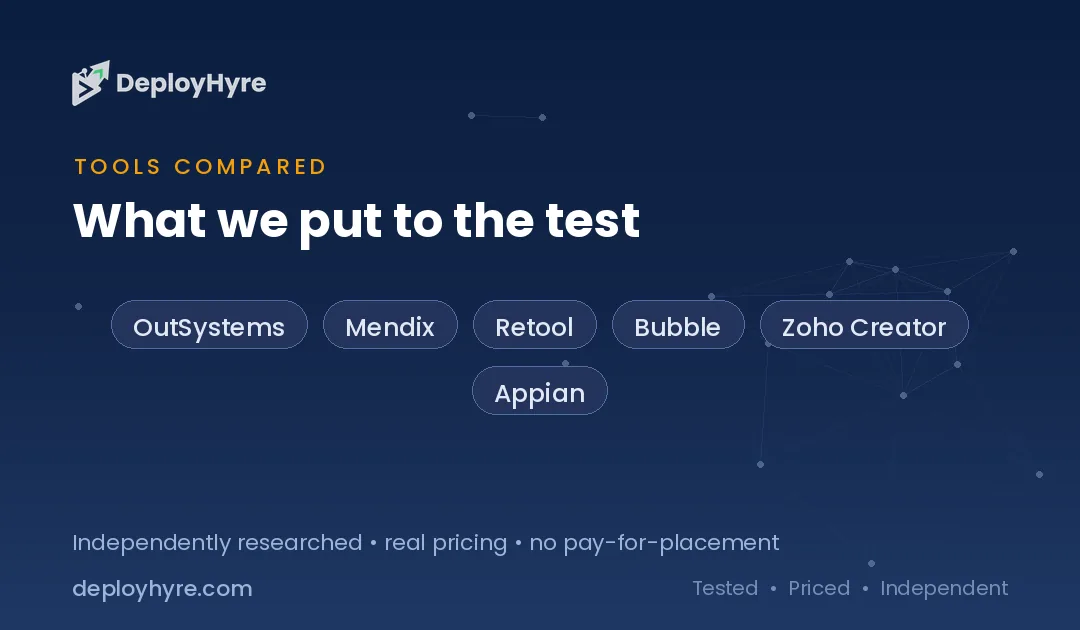
| Platform | Best For | Observed Price | Category |
|---|---|---|---|
| OutSystems | Enterprise apps at scale | From ~$36,300/yr (100 users) | Enterprise application platform |
| Mendix | Multi-app enterprise low-code | From $2,495/mo + $15/user | Enterprise application platform |
| Retool | Internal tools, admin panels | $65/user/mo (Business); $12 self-host | Internal-tool builder |
| Bubble | No-code web and mobile apps | Tiered (no-code plans) | No-code builder |
| Zoho Creator | Affordable business apps | From ~$8/user/mo | Business app builder |
| Appian | Enterprise process automation | Custom (enterprise) | Enterprise application platform |
What AI Low-Code Platforms Do
Low-code platforms replace much of the hand-coding in software development with visual building: you assemble interfaces from components, define logic in flowcharts or simple expressions, and connect to data sources through pre-built connectors. This lets professional developers build faster and lets “citizen developers”, business analysts, ops staff, build applications they could not code from scratch. The result is dramatically shorter delivery times for the internal apps, workflows, and tools that businesses need but rarely have developer capacity to build.
The AI layer is accelerating the category fast: platforms now generate app scaffolding, UI, and logic from natural-language descriptions, suggest data models, and auto-build integrations, blurring the line between low-code and AI app generation. Gartner projects 75 percent of new applications will be built with low-code, and the market is heading toward $44.5 billion, growth driven largely by AI making these platforms even more accessible. The AI turns “describe the app” into a starting point, then you refine visually.
Low-code sits alongside traditional development and automation. It complements the coding assistants in our best AI coding tools guide, the process automation in our best AI automation tools guide, and the delivery practices in our best AI DevOps tools guide.
Three Categories Hide Under “Low-Code”
“Low-code” spans three distinct categories with enormous price differences, and buying the wrong one means either massive overspend or outgrowing the tool fast. Enterprise application platforms (OutSystems, Mendix, Appian) build mission-critical, scalable applications with governance and are priced accordingly, OutSystems from $36,300 a year, Mendix from $2,495 a month plus per-user. Internal-tool builders (Retool) build admin panels and dashboards over your databases and APIs, at $65 a user. No-code builders (Bubble) let non-developers build web and mobile apps entirely visually.
The cost gulf is real: as one comparison put it, for the price of a single Mendix enterprise app you could run dozens of users on a lightweight internal-tool builder, so Mendix is hard to justify unless you are building mission-critical apps at massive scale. Per-user tiers across the lighter tools run $8 to $55, while enterprise platforms are five-to-six-figure custom deals. Diagnose honestly what you are building, a scaled enterprise application, an internal admin tool, or a standalone no-code app, before you shop, because that determines which category, and which price tier, you belong in.
Best Enterprise Application Platforms
OutSystems is the leading enterprise low-code platform for building mission-critical applications at scale, with deep governance, performance, and lifecycle management, priced from around $36,300 a year for 100 internal users and scaling substantially higher on custom quotes. For large organizations building core business applications, customer portals, complex internal systems, that must scale and be governed like traditional software, OutSystems provides the enterprise rigor that lighter tools lack. It is the choice when low-code is a strategic development platform for the whole organization, not a departmental tool.
Mendix is the other enterprise leader, strong on multi-app portfolios and collaboration between business and IT, with licensing from $2,495 a month plus $15 per user. Appian rounds out this tier, distinguished by process automation and workflow, favored where the applications are fundamentally about orchestrating complex business processes. All three are enterprise application platforms priced for scale; OutSystems for broad enterprise app development, Mendix for multi-app portfolios, Appian for process-centric applications. They are justified only when you are building mission-critical apps at real scale, not a handful of internal tools.
Best for Internal Tools
Retool is the best platform for building internal tools, admin panels, dashboards, CRUD interfaces, over your existing databases and APIs, at $65 per user a month for Business (or $12 per user self-hosted). It hits the exact sweet spot most companies actually need: not full custom applications, but the internal operational tools, customer-support consoles, data-admin panels, ops dashboards, that developers otherwise build slowly by hand. Retool connects to your data sources and lets developers assemble functional internal apps in hours, which is why it became the default for internal tooling and a far better fit (and far cheaper) than an enterprise platform for this use case.
Retool’s positioning matters: many teams reach for an enterprise low-code platform when what they actually need is internal tools, and Retool does that job better and cheaper. Its self-hosted option ($12 per user) further lowers cost for teams that want to run it themselves. For the very common need of building internal operational software fast over existing data, Retool is the standout, and choosing it over a heavier enterprise platform avoids the overspend the category’s price gulf makes easy. It pairs with the databases in our best cloud data warehouses guide.
Best No-Code and Value Options
Bubble is the leading no-code platform for building web and mobile applications without writing code, ideal for founders and non-technical builders creating standalone products, MVPs, and apps entirely visually. Unlike internal-tool builders that sit over your existing data, Bubble builds complete, standalone applications with their own database, workflows, and UI, so a non-developer can launch a real web app or startup MVP. For entrepreneurs and teams that want to build a product without a development team, Bubble is the no-code standard, trading the ceiling of a code-based platform for genuine accessibility.
Zoho Creator is the value pick for affordable business apps, from around $8 per user a month, suited to companies that want to build straightforward internal business applications cheaply, especially those already in the Zoho ecosystem. Both serve teams that want accessibility and low cost over enterprise depth; Bubble for standalone no-code apps and MVPs, Zoho Creator for affordable business apps. Choose these when you are building a standalone product without developers (Bubble) or simple business apps on a budget (Zoho Creator), rather than mission-critical enterprise systems.
How Should You Choose a Low-Code Platform?
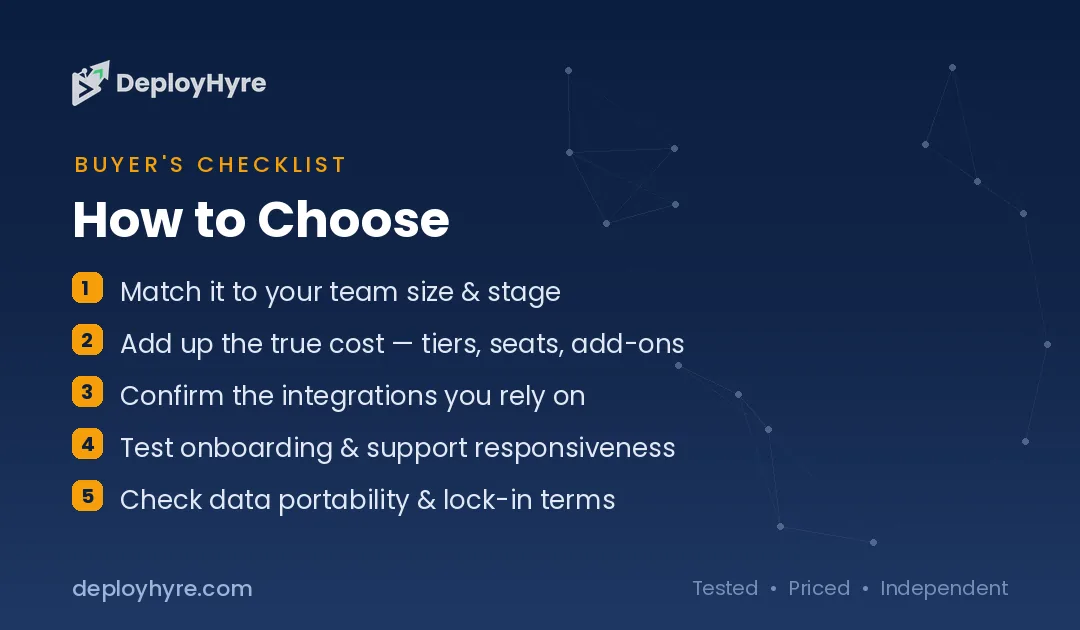
Identify which category you need first, because the price gap is enormous. Building mission-critical, scaled enterprise applications points to OutSystems, Mendix, or Appian (five-to-six figures). Building internal tools over existing data points to Retool ($65 a user). Building a standalone product without developers points to Bubble (no-code). This diagnosis, not the “low-code” label, is the whole decision.
Then be honest about scale and criticality. The enterprise platforms are justified only for genuinely mission-critical apps at scale, most teams that reach for them actually need internal tools, which Retool does better and far cheaper. Overbuying an enterprise platform for internal tooling is the category’s most common expensive mistake.
Finally, weigh who is building. Professional developers building internal tools favor Retool; citizen developers and founders building standalone apps favor Bubble or Zoho Creator; enterprise IT building governed core apps favor OutSystems or Mendix. Match the platform to your builders’ skills and your governance needs, and use the AI app-generation features, now common across the category, to accelerate whichever you choose.
How We Evaluated These Platforms
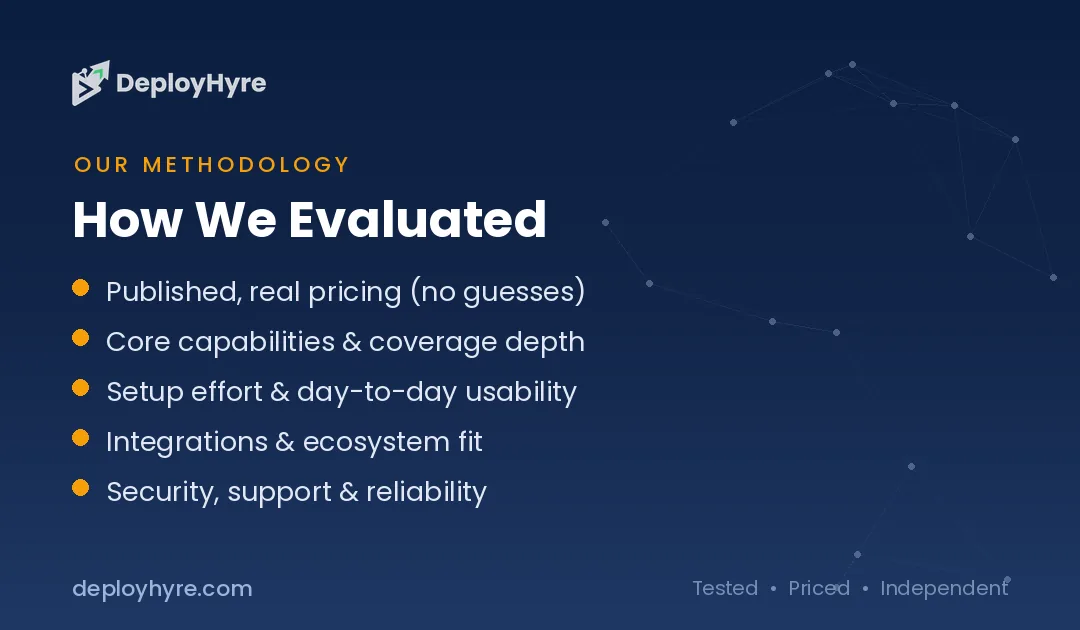
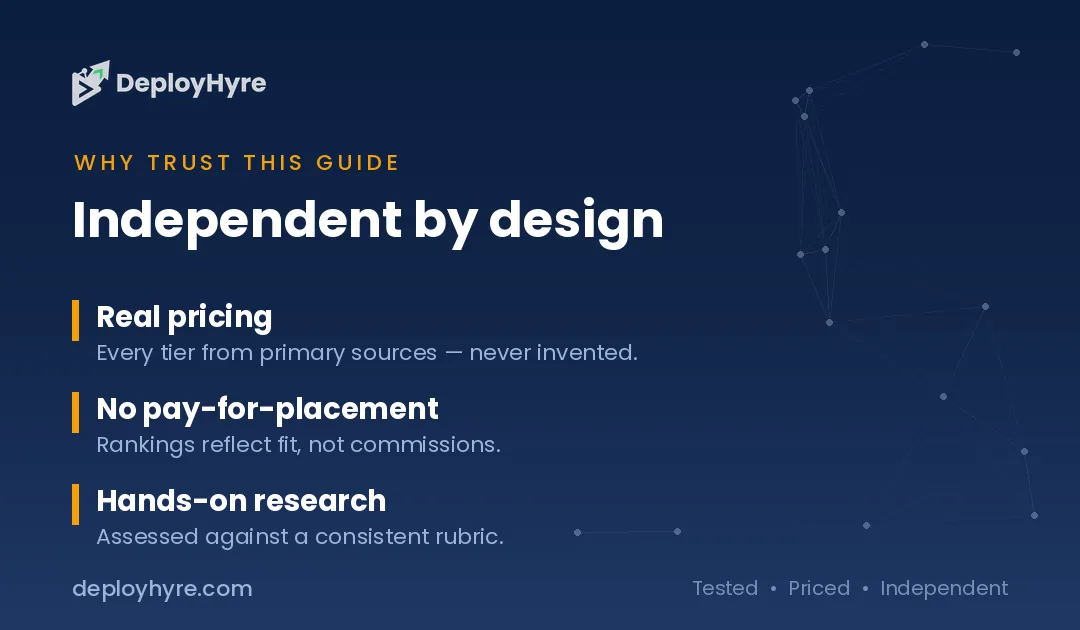
We evaluated each platform on what it is built to create (enterprise apps, internal tools, standalone apps), scalability and governance, AI generation features, ease of use for the intended builder, and pricing. Figures come from vendor pages and comparison sources. Because “low-code” spans three categories with vastly different pricing, we present observed rates and stress matching the category to what you are building. We accepted no payment for placement; rankings reflect fit for a stated use case.
The Bottom Line
OutSystems and Mendix lead enterprise application platforms for mission-critical apps at scale (with Appian for process-centric ones), Retool is the best for internal tools at a fraction of the cost, and Bubble the no-code standard for standalone apps, with Zoho Creator the value pick. Diagnose which of the three categories you actually need before shopping, because the “low-code” label hides an enormous price gap, and most teams reaching for enterprise platforms really need internal tools.
Frequently Asked Questions
How much do low-code platforms cost?
It depends on the category. Enterprise platforms are expensive: OutSystems from about $36,300 a year, Mendix from $2,495 a month plus $15 per user. Internal-tool builders like Retool are $65 per user a month ($12 self-hosted). Lighter business-app tools like Zoho Creator start around $8 per user. No-code Bubble uses its own tiered plans. Per-user tiers broadly span $8 to $55.
What is the difference between low-code and no-code?
Low-code still involves some coding or technical configuration and targets developers and technical builders, offering more power and flexibility. No-code (like Bubble) requires no coding at all, targeting non-technical builders, with more accessibility but a lower ceiling. Many platforms blend both, but the distinction reflects who the tool is built for and how much control it offers.
Should I use an enterprise platform or an internal-tool builder?
Most teams that reach for an enterprise platform actually need internal tools, which Retool builds better and far cheaper ($65 a user versus five-to-six figures). Choose an enterprise platform like OutSystems or Mendix only for genuinely mission-critical applications at scale with strict governance. For admin panels, dashboards, and operational tools, Retool is the right fit.
What is the best low-code platform for internal tools?
Retool is the standout for internal tools, connecting to your existing databases and APIs to build admin panels, dashboards, and operational interfaces quickly, at $65 per user a month or $12 self-hosted. It targets the exact need most companies have, internal operational software, better and more cheaply than heavier enterprise application platforms.
Can I build a full product with a no-code platform?
Yes. No-code platforms like Bubble build complete, standalone web and mobile applications with their own database, logic, and UI, so founders and non-technical builders can launch real products and MVPs without a development team. The trade-off is a lower ceiling than code-based platforms for highly complex or performance-critical applications.
Related Articles

David Austin is a technology writer and software analyst at DeployHyre, where he covers AI tools, SaaS platforms, cloud hosting, and business automation. He focuses on hands-on comparisons of pricing, features, and real-world performance so teams can pick the right software with confidence.