
The tax preparation software market is set to grow from about $17.6 billion in 2024 to $43 billion by 2034 at a 9.2% CAGR, and AI sits at the center of that growth. Generative AI now reads bank statements, finds deductions, drafts client letters, and answers tax-code questions in seconds.
For the full picture, see our complete guide to AI for finance.
Table of Contents
The payoff is real for firms. Practices that adopt AI tax software report revenue increases of 15% to 25% in the first year, mostly by handling more returns without adding staff. For self-employed filers, the same tools surface write-offs a manual review would miss.
We tested 9 AI tax tools across self-employed filing, professional preparation, firm workflow, and small-business accounting. Each pick below is grouped by who it serves best, with pricing, strengths, and limits. For broader context on automating finance work, see our guide to AI for business.
Quick Comparison: Top AI Tax Software
| Tool | Best For | Starting Price | Standout AI Feature |
|---|---|---|---|
| FlyFin | Freelancer write-offs | Tiered, with CPA review | Scans statements for 1099 deductions |
| Keeper | Gig workers | Low monthly fee | Text-message expense tracking |
| TurboTax | Complex personal returns | Free to ~$129 | Intuit Assist cites IRS codes |
| TaxGPT | AI tax research | Per-seat subscription | Answers tax questions with sources |
| CoCounsel Tax | Return review and memos | Custom (firm) | Flags 1040 and Schedule C issues |
| Intuit ProConnect | High-volume prep | Pay-per-return | AI data intake and review |
| TaxDome | Firm workflow | $700/user/yr | AI document sorting |
| Canopy | Tax plus advisory firms | $74/user/mo | AI email triage |
| Zoho Books | Small-business prep | Free to low monthly | Automated categorization |
What Makes a Great AI Tax Tool?
A great AI tax tool combines accurate automation with a clear audit trail. It reads source documents, categorizes transactions, finds deductions, and explains each suggestion with a tax-code reference. The best tools keep a human in the loop for review, so accuracy and compliance never depend on the model alone.
Strong tools share four traits. They connect to bank feeds and import forms automatically. They cite IRS rules instead of giving vague answers. They flag risky entries before filing. And they let a preparer or CPA confirm the final return. Tools that skip the review step trade speed for risk, which rarely pays off at tax time.
Best AI Tax Software for Self-Employed and Freelancers
Freelancers lose the most money to missed deductions. These tools focus on finding write-offs and keeping records clean year-round.
1 FlyFin: Best for 1099 write-off discovery
FlyFin targets self-employed filers who leave deductions on the table.
What it does well. FlyFin uses generative AI to scan every line of your bank statements for hidden 1099 write-offs, then routes the return to a real CPA before you file. The mix of AI discovery and human review fits gig and contractor income well.
Key features:
- AI deduction scanning across linked accounts
- CPA review on higher tiers
- Quarterly estimated-tax tracking
- Self-employment income and expense reports
Pricing. FlyFin positions itself as roughly 5x cheaper than a human CPA, with tiered plans that add CPA review as you move up.
Best for: Contractors and freelancers with messy 1099 income.
Limitations. It centers on self-employment, so complex investment or multi-state returns may need more. Pair it with clean books from AI bookkeeping software for the best results.
2 Keeper: Best for gig workers
Keeper makes expense tracking feel like texting a friend.
What it does well. Keeper offers a text-message-based interface that asks about transactions in plain language. The simple flow suits rideshare and delivery drivers who track expenses on the go.
Key features:
- Chat-style expense classification
- Automatic write-off detection
- Year-round mileage and expense logging
- Direct filing for simple returns
Pricing. Keeper charges a low monthly fee that bundles tracking and filing.
Best for: Uber, DoorDash, and other gig workers with steady small expenses.
Limitations. The lightweight design fits simple returns, not complex business filings.
3 TurboTax: Best for complex personal returns
TurboTax pairs a familiar interview with a built-in AI assistant.
What it does well. Intuit Assist is a generative AI helper that cites specific IRS codes when you ask whether an expense is deductible. The assistant shines on layered personal returns with investments, property, or side income.
Key features:
- Intuit Assist AI guidance with code citations
- Automatic import of W-2 and 1099 forms
- Investment and rental income support
- Expert review add-ons
Pricing. Personal plans run from free to about $129, and TurboTax Business ranges from $99.99 to $299.99 by complexity.
Best for: Individuals with complex but personal returns.
Limitations. Costs climb fast once you add expert help or business modules.
Best AI Tax Software for Accounting Firms
Firms need research speed and review accuracy at scale. These tools cut hours from professional prep.
4 TaxGPT: Best for AI tax research
TaxGPT answers tax questions with citations instead of guesses.
What it does well. TaxGPT is an AI assistant trusted by more than 80,000 active users, including CPAs and enrolled agents, who have asked over 650,000 tax questions at a 95% satisfaction rate. It returns sourced answers a preparer can verify.
Key features:
- Sourced answers to complex tax questions
- Memo and client-letter drafting
- Document analysis and intake
- Firm-wide knowledge base
Pricing. TaxGPT sells per-seat subscriptions for firms and solo preparers.
Best for: Preparers who research nonstandard situations often.
Limitations. It supports the preparer rather than filing returns directly.
5 CoCounsel Tax: Best for return review and memos
CoCounsel Tax reviews returns and drafts the paperwork around them.
What it does well. CoCounsel Tax can review client returns like Form 1040 and Schedule C to flag issues, draft client letters, and spot saving opportunities. At advisory firm Copeland Buhl, it helped staff finish research two to three times faster and save 15 to 30 minutes per memo.
Key features:
- Automated 1040 and Schedule C review
- Template-based client letters
- Tax-saving opportunity detection
- Thomson Reuters research integration
Pricing. CoCounsel Tax uses custom firm pricing.
Best for: Mid-size and larger firms with heavy review loads.
Limitations. Custom pricing and setup suit established firms more than solo preparers.
6 Intuit ProConnect Tax: Best for high-volume professional prep
ProConnect Tax streamlines firm-wide return production.
What it does well. ProConnect helps firms collect client data, prepare returns, and collaborate across teams while covering many individual and business scenarios. AI speeds data intake and review across large client lists.
Key features:
- Cloud-based professional preparation
- Wide individual and business form coverage
- Team collaboration and e-signature
- QuickBooks data sync
Pricing. ProConnect charges per return, so cost scales with volume.
Best for: Firms filing hundreds of returns a season.
Limitations. Per-return pricing can add up for high-volume, price-sensitive practices.
Best AI Tax Practice Management Platforms
These platforms run the whole firm around tax work, from intake to billing.
7 TaxDome: Best for firm workflow
TaxDome ties client portal, documents, and billing into one system.
What it does well. TaxDome combines workflow, a client portal, document management, and billing, and its AI sorts incoming documents to the right engagement. It fits any US tax-focused firm from solo to mid-size.
Key features:
- Client portal and secure messaging
- AI document organization
- Workflow automation and templates
- Time tracking and invoicing
Pricing. TaxDome starts at $700 per user per year on Essentials, rising to $900 on Pro and $1,100 on Business.
Best for: Tax-only firms that want one platform end to end.
Limitations. Annual per-seat pricing favors firms ready to commit.
8 Canopy: Best for tax plus advisory firms
Canopy suits firms that mix tax with advisory services.
What it does well. Canopy covers workflow, client portal, documents, and billing, and its AI assistant triages client emails and attaches documents to the right engagement automatically. It tends to win when a firm blends tax with advisory or client accounting.
Key features:
- AI email triage and document matching
- Client portal and engagement tracking
- Time, billing, and payments
- Modular service add-ons
Pricing. Canopy starts at $74 per user per month.
Best for: Multi-service firms blending tax and advisory work.
Limitations. The modular model means costs grow as you add services.
Best AI Tax Software for Small Business
Small businesses want tax-ready books without a full firm stack. This pick keeps prep affordable.
9 Zoho Books: Best for affordable small-business prep
Zoho Books delivers AI accounting at a small-business price.
What it does well. Zoho Books offers affordable AI accounting with continuous fraud monitoring and automated expense tracking across multiple currencies. Clean, categorized books make tax filing far simpler at year-end.
Key features:
- Automated transaction categorization
- Multi-currency expense tracking
- Continuous fraud monitoring
- Tax summaries and reports
Pricing. Zoho Books offers a free tier for the smallest businesses and low monthly plans as you grow.
Best for: Freelancers and small firms that want tax-ready books cheaply.
Limitations. It prepares the books, not the final return, so pair it with a filing tool.
How Should You Choose the Right AI Tax Software?
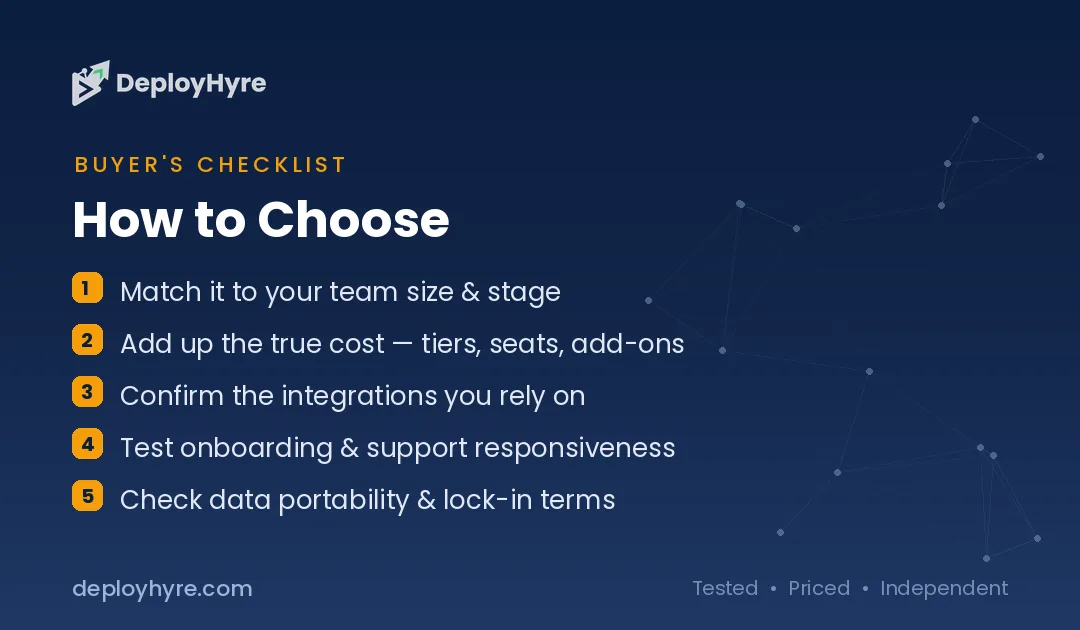
Choose based on who files the return. Self-employed filers want deduction discovery and a CPA backstop. Firms want research speed, review accuracy, and workflow. Small businesses want tax-ready books at a low price. Match the tool to that job first, then compare price.
Check three things before you buy. Confirm the tool cites tax rules and keeps a clear audit trail. Confirm it connects to your bank feeds and existing software, such as AI expense management software or AI payroll software. And confirm a human can review every AI suggestion before filing. Speed matters, but compliance matters more.
How We Evaluated These AI Tax Tools
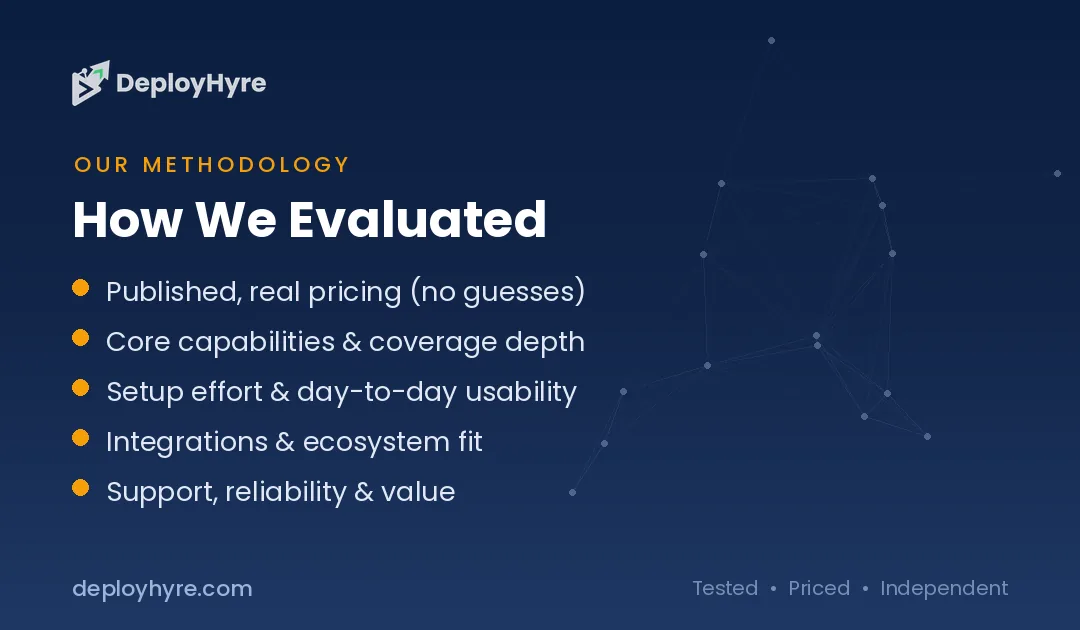
We scored each tool on five factors: AI accuracy and source citations, deduction or research value, pricing transparency, integration with bank feeds and accounting software, and the strength of human review. We drew pricing and feature details from vendor pages and current 2026 reviews, then weighted tools toward those that keep a person in the loop. We did not file live returns through each platform; this guide reflects documented features, published pricing, and reported user outcomes.
The Bottom Line
AI tax software now does the heavy lifting of reading documents, finding deductions, and answering tax questions, but accuracy still depends on human review. Self-employed filers should start with FlyFin or Keeper. Individuals with complex returns should use TurboTax. Firms should test TaxGPT and CoCounsel Tax for research and review, then run their practice on TaxDome or Canopy.
Whatever you pick, feed it clean books. Start with AI bookkeeping software, then read our take on whether AI will replace accountants to see where human judgment still wins.

Frequently Asked Questions
Is AI tax software accurate enough to file returns?
AI tax software is accurate for data intake, categorization, and deduction discovery, but the best tools keep a human in the loop. Platforms like FlyFin and CoCounsel Tax pair AI with CPA or preparer review, so a person confirms the final return before filing.
Can AI tax software find deductions I would miss?
Yes. Tools like FlyFin scan every line of your bank statements for 1099 write-offs that manual review often misses. For self-employed filers, this deduction discovery is the main reason to use AI tax software.
How much does AI tax software cost?
Pricing ranges widely. Personal TurboTax plans run from free to about $129, while firm platforms like TaxDome start at $700 per user per year and Canopy at $74 per user per month. Per-return tools like ProConnect scale cost with volume.
Will AI replace tax preparers and accountants?
No. AI handles research, document review, and drafting, but preparers still verify returns, advise clients, and own compliance. Firms using AI report higher revenue per preparer, not fewer preparers. See our guide on whether AI will replace accountants for more.
What is the best AI tax software for small business?
For small businesses that want tax-ready books, Zoho Books offers affordable AI categorization and reporting. Pair it with QuickBooks-style accounting or a filing tool, and keep clean records year-round to simplify filing season.

David Austin is a technology writer and software analyst at DeployHyre, where he covers AI tools, SaaS platforms, cloud hosting, and business automation. He focuses on hands-on comparisons of pricing, features, and real-world performance so teams can pick the right software with confidence.
Know AI, SaaS, or cloud tools inside out? Pitch a guest post and get in front of thousands of buyers researching their next tool.