
Last updated June 17, 2026. We evaluate finance tools on automation depth, accuracy, integrations, and price. See our methodology below.
For the full picture, see our complete guide to AI for finance.
Table of Contents
AI now does the bookkeeping work that used to eat whole afternoons. A 2025 Stanford and MIT study reported in the Journal of Accountancy found accountants using AI closed their books 7.5 days sooner and shifted about 8.5 percent of their time, roughly 3.5 hours a week, away from data entry. The tools below automate that grind.
Demand is climbing fast. Grand View Research projects the AI in accounting market will grow from $4.87 billion in 2024 to $96.69 billion by 2033, a 39.6 percent annual growth rate, with automated bookkeeping as the leading application. The catch is that “AI bookkeeping software” now covers four very different products.
Some are full accounting suites. Some are AI-native ledgers built to replace QuickBooks. Some are managed services that pair AI with human bookkeepers. Some are automation layers for firms. We tested 10 of the best AI bookkeeping tools in 2026 against automation, accuracy, integrations, and verified pricing. Pair clean books with the best AI invoicing software, control outflows using the best AI expense management software, and see how AI will replace accountants.
What Is AI Bookkeeping Software?
AI bookkeeping software records, categorizes, and reconciles financial transactions automatically. It imports bank and card feeds, sorts each transaction into the right account, matches receipts, flags anomalies, and produces tax-ready reports, keeping the general ledger current without manual data entry.
The software chains four jobs: capture, categorization, reconciliation, and reporting. The AI pulls transactions from connected accounts, learns your coding rules, then reconciles statements against the books. It surfaces odd entries for human review, so the ledger stays accurate while you skip the spreadsheet work. The difference between products is how much they automate and whether a human reviews the output.
Quick Comparison: 10 Best AI Bookkeeping Tools
| Tool | Best For | Starting Price (US) | Type |
|---|---|---|---|
| QuickBooks Online | Small business books | From $38/mo | Accounting suite |
| Xero | Growing teams, unlimited users | From $25/mo | Accounting suite |
| FreshBooks | Freelancers and service firms | From $23/mo | Accounting + invoicing |
| Puzzle | Startups wanting an AI-native ledger | From $25/mo | AI-native general ledger |
| Digits | Autonomous SMB books | From $35/mo | AI-native general ledger |
| Zeni | Funded startups wanting a team | From $494/mo | AI + human service |
| Pilot | Startups with AI-only or human tiers | From $99/mo | AI + human service |
| Booke AI | QuickBooks and Xero users | $129/mo | Automation layer |
| Docyt | Multi-entity and hospitality | From $299/mo | AI accounting platform |
| Botkeeper | Accounting firms | From $59/license/mo | Firm automation |
Prices are vendor list rates verified in June 2026. Most vendors run new-customer promotions, so confirm current pricing before you buy.
What Makes Great AI Bookkeeping Software?
Great AI bookkeeping software categorizes transactions accurately, reconciles accounts on its own, and produces tax-ready reports you can trust. The best tools learn your coding rules, scan receipts to cut data entry, flag anomalies for review, and integrate with your bank feeds and tax systems, keeping the ledger current with minimal manual work.
We weighed four things: automation depth, accuracy, integrations, and pricing clarity. Accuracy matters most because AI categorization reaches high precision only after it learns from a few months of your data. Mercury advises not judging accuracy in the first two weeks and committing to 60 to 90 days of active correction, which is when the automation gain becomes real.
Best AI Bookkeeping Software for Small Businesses
1. QuickBooks Online: Best for Small Business Books
QuickBooks Online runs the books most US small businesses already use.
What it does well. Intuit’s AI agents auto-categorize expenses, reconcile accounts, and find and fix errors inside the platform. A built-in chat assistant answers questions about your numbers. Keeping books, tax, and reporting in one hub removes a separate sync.
Key features:
- AI transaction categorization
- Automated bank reconciliation
- Receipt capture and matching
- Tax-ready financial reports
Pricing. QuickBooks Online runs $38 (Simple Start), $75 (Essentials), $115 (Plus), and $275 (Advanced) per month, before promotions.
Best for: Small businesses wanting books and tax in one hub.
Limitations. The priciest suite here, and the AI chat is capped at 25 questions a month.
2. Xero: Best for Growing Teams With Unlimited Users
Xero scales clean bookkeeping and adds users at no extra cost as you grow.
What it does well. Xero’s JAX assistant and beta auto-reconcile speed bank matching, while Smart Document Capture pulls data from bills and receipts. Every plan includes unlimited users, which suits teams that share the books. A large app marketplace connects payroll and inventory.
Key features:
- JAX AI assistant
- Beta auto-reconciliation
- Smart Document Capture
- Unlimited users on all plans
Pricing. Xero plans are Early $25, Growing $55, and Established $90 per month, with the Early tier capped at 20 invoices.
Best for: Growing teams and global sellers needing shared access.
Limitations. No built-in US payroll, and auto-reconcile is still beta.
3. FreshBooks: Best for Freelancers and Service Firms
FreshBooks pairs simple bookkeeping with the smoothest invoicing for solo operators.
What it does well. FreshBooks tracks income and expenses, scans receipts, and ties bookkeeping to time tracking and invoicing. The interface suits owners who are not accountants. Higher tiers add line-item capture from bills, which cuts data entry for service firms.
Key features:
- Expense and receipt scanning
- Time tracking to books
- Automated invoicing and reminders
- Simple profit reports
Pricing. FreshBooks runs Lite $23, Plus $43, and Premium $70 per month, with a custom Select tier, priced by billable client count.
Best for: Freelancers and service firms billing by project or time.
Limitations. The lightest AI story here, and plans cap billable clients.
Best AI-Native Bookkeeping Ledgers for Startups
4. Puzzle: Best for an AI-Native General Ledger
Puzzle is built AI-first as a modern replacement for a traditional ledger.
What it does well. Puzzle reports up to 98 percent automatic categorization, with AI accuracy review and AI Close agents that handle reconciliations and variance. It connects natively to Stripe, Mercury, Ramp, Brex, and Gusto, so startup stacks reconcile without manual imports.
Key features:
- Up to 98 percent auto-categorization
- AI Close and accuracy agents
- Native fintech integrations
- Cash, burn, and runway insights
Pricing. Puzzle runs free under $20k in transactions, then Starter $25, Core $60, and Complete $100 per month, with a Scale tier above.
Best for: US startups under roughly $5M in revenue and their accountants.
Limitations. Multi-entity consolidation needs a third-party integration.
5. Digits: Best for Autonomous SMB Books
Digits runs AI bookkeeping around the clock with an assistant you can question.
What it does well. Digits automates reconciliation and close, and in 2026 launched outcome-based pricing where firms pay only where it auto-handles at least 95 percent of transactions. Its “Ask Digits” assistant answers questions, and it connects to thousands of banks and payroll systems.
Key features:
- 24/7 AI bookkeeping
- AI Close agents and anomaly flags
- Ask Digits assistant
- Broad bank and payroll links
Pricing. Digits starts around $35 per month for a Starter tier and about $100 for Core, with custom pricing for firms.
Best for: SMBs and firms wanting near-autonomous books.
Limitations. Top-tier and firm pricing is custom.
Best AI Bookkeeping Services With Human Experts
6. Zeni: Best for Funded Startups Wanting a Team
Zeni blends AI bookkeeping with a dedicated finance team built for funded startups.
What it does well. Zeni automates data posting, categorization, journal entries, and real-time reconciliation, then layers a human team of bookkeepers, CPAs, and controllers on top. Founders get real-time dashboards for burn, cash flow, and operating expense.
Key features:
- AI bookkeeping with human review
- Real-time finance dashboards
- Free AI bill pay and reimbursements
- Optional CFO, tax, and payroll
Pricing. Zeni starts at $494 per month (Starter) and $719 per month (Growth), with a custom Enterprise tier and required QuickBooks Online Plus.
Best for: US funded startups needing real-time numbers and a team.
Limitations. US-only, not GDPR-compliant, and priced above DIY suites.
7. Pilot: Best for AI-Only or Human-Backed Tiers
Pilot lets you start with AI-only books and add a human bookkeeper later.
What it does well. Pilot’s AI Accountant categorizes, reconciles, and closes monthly, with instant AI answers on past transactions and cash flow. A dedicated US bookkeeper and accrual accounting come on the higher Core tier. Customers include OpenAI and Airtable.
Key features:
- AI Accountant for monthly close
- Instant AI transaction Q&A
- Dedicated bookkeeper on Core
- Add-on tax and CFO services
Pricing. Pilot Essentials starts at $99 per month for AI-only, cash-basis books, while the human-backed Core tier is quote-only.
Best for: Startups wanting a low-cost AI start with room to add humans.
Limitations. Real human bookkeeping requires the quote-only Core tier.
Best AI Bookkeeping Tools for Firms and Multi-Entity
8. Booke AI: Best for QuickBooks and Xero Users
Booke AI adds an automation layer to the accounting software you already run.
What it does well. Booke AI uses GPT-based categorization, daily bank-feed processing, and document matching, running close to 95 percent autonomously. It flags inconsistencies and asks clients questions automatically, cutting back-and-forth for bookkeepers.
Key features:
- QuickBooks, Xero, and Zoho integration
- AI transaction categorization
- Receipt and invoice matching
- Automated client queries
Pricing. Booke AI is $129 per business per month, with quote-only firm and white-label plans.
Best for: Bookkeepers and SMBs keeping QuickBooks or Xero as the ledger.
Limitations. Not a standalone ledger; it depends on your accounting platform.
9. Docyt: Best for Multi-Entity and Hospitality
Docyt automates consolidation for businesses running several locations or entities.
What it does well. Docyt’s AI agents handle revenue reconciliation, bill pay, month-end close, and real-time reporting across entities. It augments QuickBooks and is strong in hotels and franchises that need consolidation across locations.
Key features:
- Multi-entity consolidation
- AI revenue and expense agents
- Automated month-end close
- Real-time financial reporting
Pricing. Docyt runs Impact $299, Advanced $499, Advanced Plus $799, and Enterprise $999 per month, with each location billed separately.
Best for: Multi-location firms like franchises and hospitality groups.
Limitations. A separate subscription per entity adds up quickly.
10. Botkeeper: Best for Accounting Firms
Botkeeper gives accounting firms automation to scale client bookkeeping.
What it does well. Botkeeper automates categorization, bank reconciliation, and journal entries, with an autonomous month-end review that flags anomalies. Firms manage many client books from one dashboard and add consolidated reporting.
Key features:
- Bulk client bookkeeping
- Automated categorization and rec
- Autonomous anomaly review
- Embedded consolidated reporting
Pricing. Botkeeper is priced per license, from $149 a month for 1 to 4 entities down to $59 at 25 or more, with no free trial.
Best for: Accounting and bookkeeping firms scaling client volume.
Limitations. Built for firms, where one license equals one client, not single businesses.
What About Bench? A Cautionary Tale on Vendor Risk
Bench is operating again in 2026, but its history is a warning about depending on one bookkeeping vendor. Bench abruptly shut down on December 27, 2024, locking thousands of businesses out of their books days before tax season, then was acquired by Employer.com and relaunched.
TechCrunch reported that the shutdown left thousands of customers without access to their accounting and tax documents over the holidays. Bench uses a proprietary platform with no QuickBooks or Xero export, so customers faced data lock-in. The lesson holds for any managed service: keep your own backups, prefer tools that export to a standard ledger, and avoid single-vendor dependency for records you need at tax time.
What AI Bookkeeping Does Well, and Where You Still Need a Human
AI bookkeeping handles transaction coding, categorization, data entry, receipt matching, and basic reconciliation well. Humans are still required for capitalize-versus-expense calls, revenue recognition under ASC 606, tax timing, exception handling, and audit or IRS representation. The best setups keep a person reviewing low-confidence entries.
The risk is quiet errors. The Journal of Accountancy lists AI hallucinations, confident but wrong outputs, among the top risks for accountants, with human fact-checking as the main defense. Miscategorized or duplicated entries can hide true profit for months. Treat AI as a fast first pass, then have a bookkeeper or CPA review the result before you file.
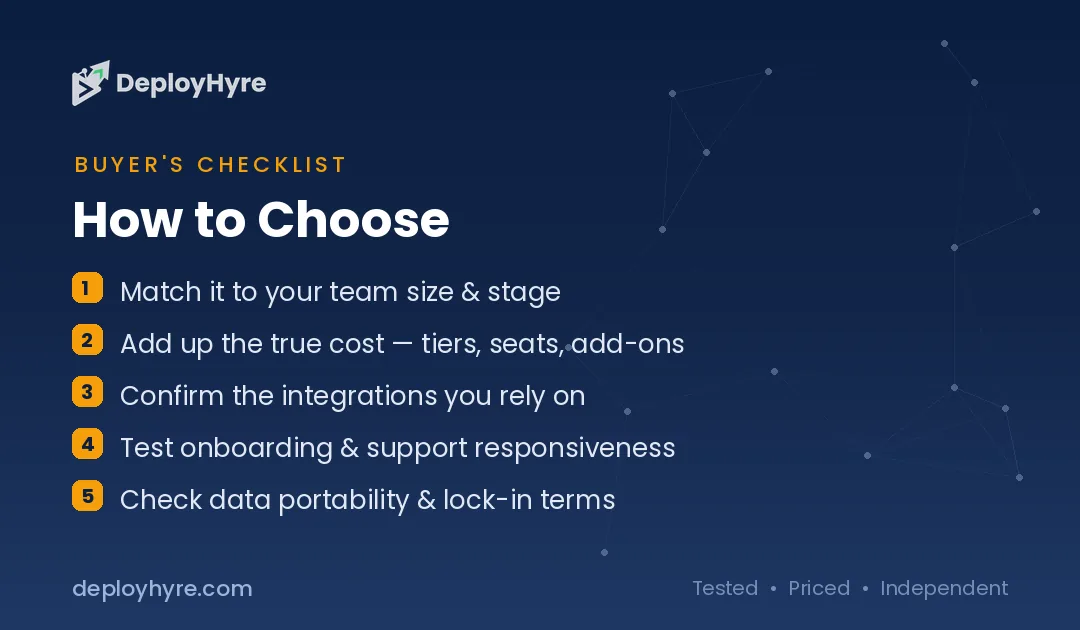
How Should You Choose AI Bookkeeping Software?
Start with who keeps the books. Choose QuickBooks Online, Xero, or FreshBooks to do it yourself, Puzzle or Digits for an AI-native ledger, Zeni or Pilot to add a human team, and Booke AI, Docyt, or Botkeeper to automate an existing ledger or firm. The right pick depends on whether you want software, a service, or an automation layer.
Next, weigh total cost, not sticker price. Add software fees, review time, error rework, and migration. Confirm the tool connects to your banks, codes transactions correctly, exports to a standard ledger, and uses bank-level encryption. Run one month on real data and review the categorization before you trust it. To round out finance operations, compare the best AI invoicing software and connect numbers to strategy with AI for business.
How We Evaluated These Bookkeeping Tools
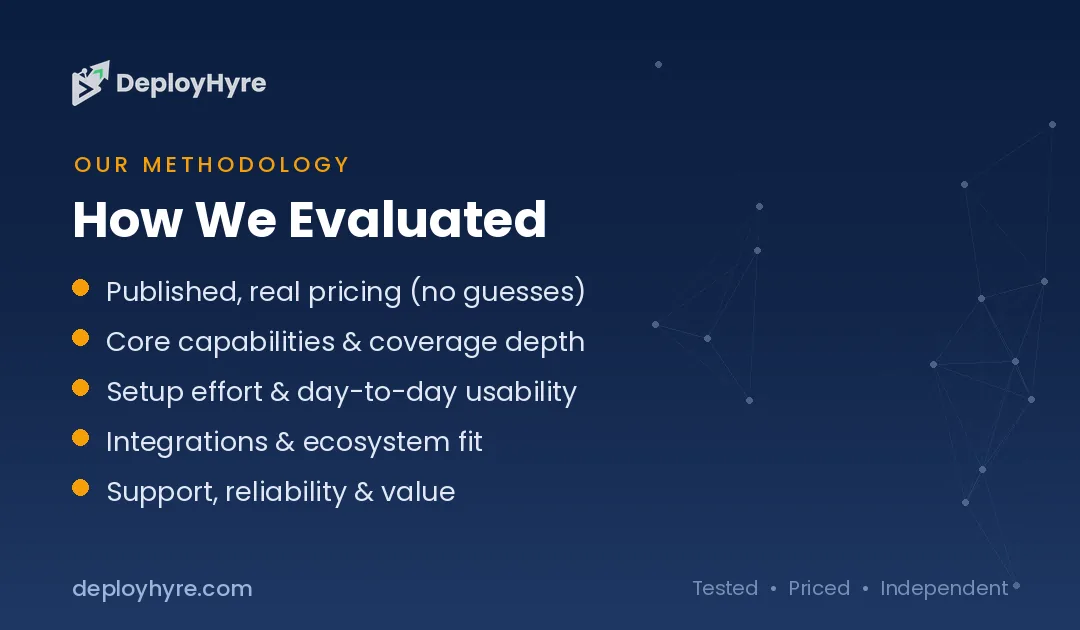
We assessed each tool on four criteria: automation depth, accuracy, integrations, and pricing clarity. We verified current US list pricing and AI features against each vendor’s own pricing and product pages in June 2026, then cross-checked capabilities and risks against independent 2025 and 2026 sources, including the Journal of Accountancy, Grand View Research, and CPA-authored reviews. We grouped tools by who manages the books. Bookkeeping plans and service fees change often and most vendors run promotions, so confirm pricing and scope before you commit.
The Bottom Line
AI bookkeeping software removes the manual grind from keeping accurate books, and the market is racing ahead. With the AI in accounting market on track to grow nearly 20-fold by 2033, owners who still code transactions by hand fall behind on time and accuracy.
Match the tool to your model. Do-it-yourself owners should start with QuickBooks Online or Xero, startups with Puzzle, Digits, Zeni, or Pilot, and firms with Docyt or Botkeeper. Whichever you choose, keep a human reviewing the output, export your data to a standard ledger, and run one month before you rely on it. Then scale once the books reconcile cleanly.
Next steps: Speed up cash with the best AI invoicing software, control spend with the best AI expense management software, and clean up reports with the best AI credit repair software.

Frequently Asked Questions
What is the best AI bookkeeping software?
There is no single best tool; it depends on who keeps your books. QuickBooks Online and Xero lead for do-it-yourself owners, Puzzle and Digits for an AI-native ledger, Zeni and Pilot for a service with humans, and Docyt or Botkeeper for firms. Match the tool to whether you want software, a service, or an automation layer.
Can AI fully replace a bookkeeper?
AI automates most routine bookkeeping, including categorization, reconciliation, and reporting, but it does not fully replace human judgment. The Journal of Accountancy flags AI hallucinations as a top risk, so a person should review the output. Services like Zeni and Pilot still pair AI with accountants who handle exceptions, tax timing, and revenue recognition.
How accurate is AI bookkeeping?
AI bookkeeping is accurate for routine, recurring transactions, with tools like Puzzle reporting up to 98 percent auto-categorization after training on your data. It is weaker on new or unusual entries. Experts advise 60 to 90 days of active correction before trusting the numbers, and keeping a human review of low-confidence transactions.
How much does AI bookkeeping software cost?
AI bookkeeping software ranges from free to custom pricing. Puzzle starts free under $20k in transactions, Xero at $25, QuickBooks Online at $38, and Booke AI at $129 per month. Managed services with human teams cost more: Pilot from $99, Zeni from $494, and Docyt from $299 per month, with firm plans often quote-only.
Is it safe to rely on one bookkeeping service?
Relying on one managed service carries vendor risk, as Bench’s December 2024 shutdown showed when thousands lost access to their books before tax season. Reduce the risk by keeping your own data backups, choosing tools that export to a standard ledger like QuickBooks or Xero, and avoiding proprietary platforms with no export path.

David Austin is a technology writer and software analyst at DeployHyre, where he covers AI tools, SaaS platforms, cloud hosting, and business automation. He focuses on hands-on comparisons of pricing, features, and real-world performance so teams can pick the right software with confidence.
Know AI, SaaS, or cloud tools inside out? Pitch a guest post and get in front of thousands of buyers researching their next tool.