TL;DR: Figma is powerful, but it is not the only option. Our top pick is Sketch for native Mac speed and a one-time license path, while Penpot wins for free, open-source teams. Designers leave Figma over subscription costs, cloud lock-in, or pricing changes after the Adobe deal fell through. This guide ranks 7 alternatives with real pricing, key features, and the best use case for each.
Figma dominates the design world. The 2025 UX Tools Design Tools Survey found that roughly 83% of professional UI designers name it as their primary tool. That is near-total market control.
But dominance does not mean it fits everyone. Rising subscription costs, cloud-only files, and pricing shifts push many teams to look elsewhere. Some want to own their files. Others want a free tool that just works.
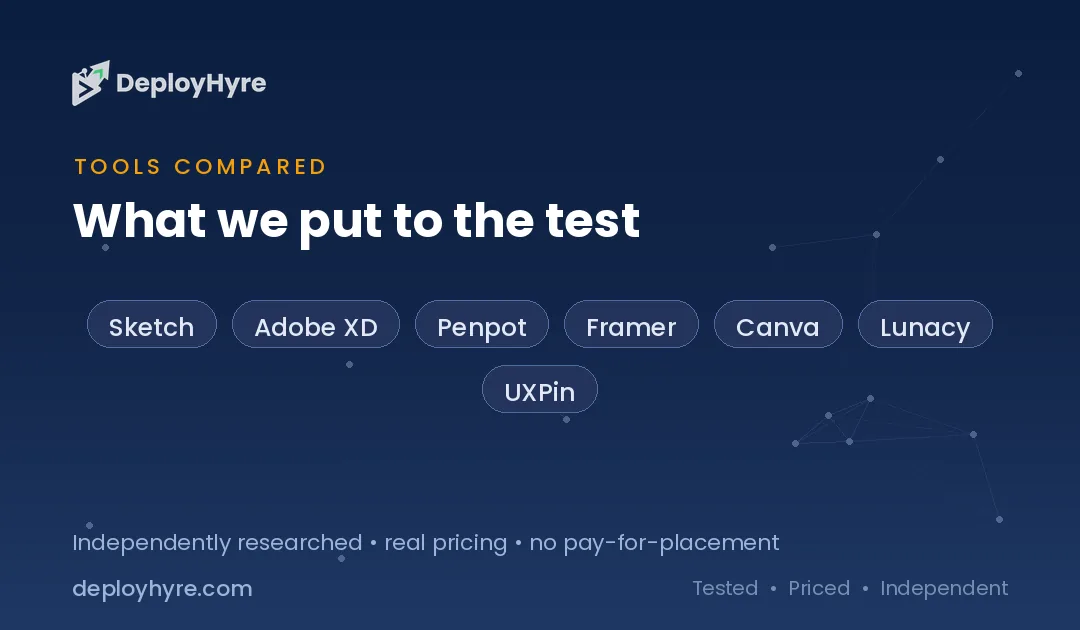
We vetted 7 real Figma alternatives across UI/UX design, prototyping, and web design. Each pick below is verified for current pricing and features. Before you commit, it also helps to review the best AI design tools shaping the market right now.
Quick Comparison: Figma Alternatives
| Tool | Best For | Starting Price | Key Strength |
|---|---|---|---|
| Sketch | Native Mac UI design | $12/editor/mo (annual) | Fast native app + one-time license option |
| Adobe XD | Creative Cloud users | Included in CC All Apps | Deep Adobe ecosystem ties |
| Penpot | Free, open-source teams | $0 (free forever) | Self-hostable, no vendor lock-in |
| Framer | Design-to-live-website | $0 free / $10/mo | Publish real sites, not just mockups |
| Canva | Non-designers and marketing | $0 free / $15/mo Pro | Templates and ease of use |
| Lunacy | Budget cross-platform work | $0 (fully free) | Free forever, opens Sketch files |
| UXPin | Advanced interactive prototypes | $49/mo | Code-backed, functional components |
Why Look for a Figma Alternative?
Designers leave Figma when subscription costs climb, when cloud-only files feel risky, or when a simpler tool fits the job better. No single tool is right for every team, and Figma’s near-monopoly means its pricing decisions affect everyone.
The pressure grew after Adobe’s attempt to acquire Figma collapsed in 2023. That left Adobe XD in maintenance mode and reshaped the market. Some teams now want files they truly own, free tools with no seat fees, or apps that run fast offline. The right alternative depends on your budget, platform, and whether you design apps or full websites.
#1 Sketch: Best for native Mac UI design
Sketch is the original UI design tool that Figma disrupted, and it remains a strong native choice.
What it does well. Sketch runs as a fast, native macOS app rather than a browser tab. It handles vector design, symbols, and design systems with polish. It pioneered many patterns the whole industry copied, and its Mac-first performance still feels snappy for detailed UI work.
Key features:
-
Native macOS app with real-time collaboration
-
Reusable symbols, components, and shared libraries
-
Prototyping and developer handoff tools
-
Huge plugin and extension ecosystem
-
Opens and edits .sketch files natively
Pricing. The Standard plan is $12 per editor per month billed annually, or $14 monthly. Sketch also offers a Mac-only one-time license at roughly $120 per seat, which covers one year of updates. That one-time option is rare among modern tools.
Best for: Mac-based designers and teams who want a fast native app or a license they own.
Limitations. Sketch is macOS-only. Windows and Linux users are locked out, which is a dealbreaker for mixed teams.
#2 Adobe XD: Best for Creative Cloud users
Adobe XD is Adobe’s UI and prototyping tool, still useful if you live inside Creative Cloud.
What it does well. XD connects tightly to Photoshop, Illustrator, and the wider Adobe ecosystem. If your assets already sit in Creative Cloud, moving between apps feels natural. It offers clean vector design, repeat grids, and solid click-through prototyping.
Key features:
-
Vector UI design and prototyping in one app
-
Tight integration with Photoshop and Illustrator
-
Repeat Grid for fast list layouts
-
Component states and auto-animate transitions
-
Runs on both Mac and Windows
Pricing. XD is no longer sold as a standalone app. It comes bundled in the Creative Cloud All Apps subscription. There is no way to buy it on its own anymore.
Best for: Existing Adobe subscribers who want prototyping without leaving Creative Cloud.
Limitations. XD is in maintenance mode. Adobe stopped active feature development, so it is a stable but stagnant choice. Treat it as legacy, not future-proof.
#3 Penpot: Best for free, open-source teams
Penpot is the leading open-source Figma alternative, built for teams that want control over their tools.
What it does well. Penpot is fully open-source and browser-based, so it runs on any operating system. You can use the hosted version or self-host it on your own servers. That removes vendor lock-in completely. It uses open web standards, which makes designer-to-developer handoff smoother.
Key features:
-
Free and open-source under the MPL-2.0 license
-
Self-hostable for full data ownership
-
Real-time multi-user collaboration
-
Interactive prototyping in the browser
-
Works on Mac, Windows, and Linux
Pricing. Penpot is free forever with unlimited users and files. A paid Unlimited plan adds capacity for larger teams, and self-hosting stays free under the open-source license.
Best for: Startups, agencies, and privacy-focused teams who want zero seat fees and no lock-in.
Limitations. Its plugin ecosystem is younger than Figma’s. Some advanced features are still catching up to the market leader.
#4 Framer: Best for design-to-live-website
Framer blends design and web publishing, letting you ship a real site instead of just a mockup.
What it does well. Framer turns your design directly into a live, responsive website. You design and publish in one place, with no separate developer build needed. Its CMS, animations, and AI tools make it a genuine web design platform, not only a prototyping app.
Key features:
-
Design that publishes to a live website
-
Built-in CMS and responsive layouts
-
Rich animations and interactions
-
AI-assisted design and content tools
-
Custom domains on paid plans
Pricing. Framer has a free plan with a Framer subdomain, then Basic at $10/month and Pro at $30/month, plus custom Enterprise plans, all billed annually. Custom domains require a paid tier.
Best for: Designers and founders who want to design and launch a marketing site fast.
Limitations. Framer leans toward websites over app UI work. For complex product interfaces, a pure UI tool fits better.
#5 Canva: Best for non-designers and marketing
Canva is the friendliest design tool on this list, built for speed and templates over pixel control.
What it does well. Canva makes design easy for people who are not designers. Its template library and drag-and-drop editor let anyone produce social posts, decks, and simple layouts in minutes. It has grown into a full content platform with brand kits and team features.
Key features:
-
Over a million templates
-
Simple drag-and-drop editor
-
Brand Kit and team collaboration
-
Background remover and Magic Resize
-
Runs in any browser plus mobile apps
Pricing. Canva Free covers the basics. Canva Pro is $15/month or $120/year, and Canva Business runs about $20 per user per month. The free tier is generous for casual use.
Best for: Marketers, small businesses, and non-designers who need fast, good-looking graphics.
Limitations. Canva is not built for detailed UI/UX or app prototyping. Serious product designers will hit its ceiling quickly. For more picks in this lane, see our Canva alternatives guide.
#6 Lunacy: Best for budget cross-platform work
Lunacy by Icons8 is a fully free design app that runs on every major operating system.
What it does well. Lunacy is free for personal and commercial use, with no subscription at all. It runs on Windows, Mac, and Linux, and it works offline. It even opens Sketch files and imports from Figma, so switching is low-friction. Built-in icons, photos, and UI kits speed up real work.
Key features:
-
Completely free, personal and commercial use
-
Native apps for Windows, Mac, and Linux
-
Works offline
-
Opens .sketch files and imports Figma designs
-
Built-in icons, illustrations, and UI kits
Pricing. Lunacy is free with no paid tiers. Icons8 monetizes its wider asset library, not the design app itself.
Best for: Budget-conscious designers, Windows and Linux users, and anyone who wants a free native tool.
Limitations. Its collaboration and prototyping depth trail Figma. Large enterprise teams may need more advanced controls.
#7 UXPin: Best for advanced interactive prototypes
UXPin is a high-fidelity prototyping tool that makes mockups behave like real software.
What it does well. UXPin builds prototypes with real logic, states, and data, not just static screens. Its code-backed components let you test flows that feel like a working app. That makes usability testing and stakeholder demos far more convincing than clickable images.
Key features:
-
Code-backed, functional components
-
Conditional logic and variables
-
Real data inputs and form interactions
-
Design systems and pattern libraries
-
AI-assisted prototyping tools
Pricing. UXPin paid plans start at $49/month for the Core plan, with Growth at $69/month and Company tiers higher. Every plan starts with a 14-day free trial and no credit card.
Best for: UX teams that need realistic, interactive prototypes for testing complex flows.
Limitations. UXPin costs more than most alternatives here. It is overkill if you only need basic static mockups.
How to Choose a Figma Alternative
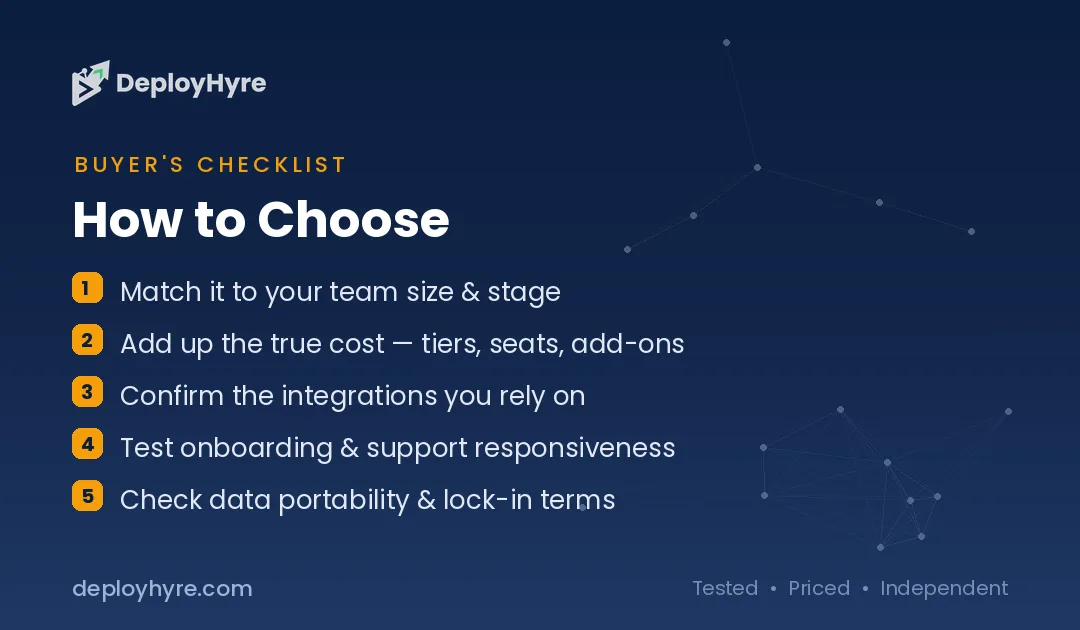
Pick your Figma alternative based on platform, budget, and what you actually design. Match the tool to the job instead of chasing the most popular option.
Start with your operating system. Sketch is Mac-only, while Penpot, Lunacy, and Canva run everywhere. Next, weigh cost. Lunacy and Penpot are free, Canva and Framer offer strong free tiers, and Sketch and UXPin are paid.
Then look at output. If you build app interfaces, choose Sketch, Penpot, or UXPin. If you want a live website, Framer wins. If non-designers need quick graphics, Canva fits best. For deep interactive testing, UXPin leads. If you also work with print or vector art, compare Adobe Illustrator alternatives before you settle.
The Bottom Line
No single tool beats Figma at everything, but the right alternative can beat it for your specific needs. Sketch is our top overall pick for Mac teams who want native speed and a license they can own. For free and open-source work, Penpot is the clear winner, and Lunacy is the best fully free cross-platform choice.
Framer stands out if you want to design and publish a real website, while Canva serves non-designers best. UXPin is worth the price for teams building serious interactive prototypes.
Test a couple of free plans before you commit. Most of these tools cost nothing to try.
Frequently Asked Questions
What is the best free alternative to Figma?
Penpot and Lunacy are the best free Figma alternatives. Penpot is open-source, browser-based, and self-hostable with unlimited users. Lunacy by Icons8 is a fully free native app for Windows, Mac, and Linux that even opens Sketch files. Both cost nothing for commercial use.
Is Sketch better than Figma?
Sketch is better for Mac-based teams who want a fast native app or a one-time license instead of a subscription. Figma wins on cross-platform access and browser-based collaboration. Sketch runs only on macOS, so mixed-OS teams usually favor Figma or Penpot.
Is Adobe XD still available?
Adobe XD is still available but only inside the Creative Cloud All Apps subscription. Adobe stopped selling it as a standalone app and moved it into maintenance mode after the Figma acquisition fell through. It gets bug fixes but no new features, so treat it as a legacy option.
Which Figma alternative is best for building websites?
Framer is the best Figma alternative for building websites. It lets you design and publish a live, responsive site in one place, with a built-in CMS, animations, and custom domains on paid plans. It removes the separate developer build step for marketing sites.
Can I open my Figma files in these alternatives?
Some alternatives support Figma imports. Lunacy and Penpot can import Figma designs, which eases migration. Others rely on their own file formats. Always test an import with a real project file before you fully switch tools, since complex files may not transfer perfectly.
Know AI, SaaS, or cloud tools inside out? Pitch a guest post and get in front of thousands of buyers researching their next tool.
Related Articles




David Austin is a technology writer and software analyst at DeployHyre, where he covers AI tools, SaaS platforms, cloud hosting, and business automation. He focuses on hands-on comparisons of pricing, features, and real-world performance so teams can pick the right software with confidence.