Table of Contents
The best web application firewall for most teams is Cloudflare for value and ease, Akamai or Imperva for enterprise depth, and AWS WAF or Azure WAF for single-cloud native stacks. A WAF sits in front of your web applications and APIs, inspecting every request to block the attacks, SQL injection, cross-site scripting, bot abuse, credential stuffing, that target the application layer, where firewalls and network security cannot see.
The structure that shapes the decision: the market splits between integrated CDN+WAF providers and standalone enterprise WAFs, and the price gap is roughly 10x. Cloudflare and Fastly bundle WAF with a content delivery network for a few hundred to a couple thousand dollars a month; Imperva, F5, and Akamai sell standalone enterprise WAF at $5,000 to $30,000-plus a month, mostly on opaque quotes. Which market you belong in depends on whether you want easy, bundled protection or enterprise-grade depth and bot defense.
Every price below is a recent observed figure. Because seven major vendors publish no list pricing, treat quote-only figures as bands.
Quick Comparison: Web Application Firewalls at a Glance
| Provider | Best For | Observed Price | Type |
|---|---|---|---|
| Cloudflare | Value and ease | Free; Pro $25/mo; Business $200–$250/mo | Integrated CDN+WAF |
| AWS WAF | AWS-native stacks | $5/web-ACL + $0.60 per million requests | Cloud-native |
| Fastly | Edge-native, developer-first | Quote (usage-based) | Integrated CDN+WAF |
| Akamai | Enterprise scale + bot defense | ~$3,000/mo+ (quote) | Enterprise WAF |
| Imperva | Detection accuracy | ~$30,000/yr+ (quote) | Enterprise WAF |
| F5 | Large enterprise, hybrid | Quote only | Enterprise WAF |
What an AI Web Application Firewall Does
A WAF inspects the HTTP requests hitting your web applications and APIs and blocks the malicious ones before they reach your code. It defends against the OWASP Top 10, SQL injection, cross-site scripting, and similar, plus modern threats like credential stuffing, malicious bots, and API abuse. Unlike a network firewall that filters by IP and port, a WAF understands the application layer, the request body, headers, and parameters, which is where web attacks actually live.
The AI layer matters because attack patterns evolve faster than static rules. Modern WAFs use machine learning to baseline normal traffic and detect anomalies, distinguish real users from sophisticated bots, and reduce the false positives that plague rule-based WAFs (and cause teams to run them in permissive “detect-only” mode, defeating the purpose). AI-driven bot management, telling a human from an automated attacker, is now a primary differentiator between providers.
A WAF is a frontline application-security control, often paired with DDoS protection and API security. It complements the defenses in our best AI cybersecurity tools guide, the runtime protection in our best AI API security tools guide, and the mitigation in our best AI DDoS protection services guide.
Integrated CDN+WAF vs Standalone Enterprise WAF
WAFs divide into integrated CDN+WAF providers and standalone enterprise WAFs, and the roughly 10x price gap between them tracks a real difference in depth and delivery. Integrated providers (Cloudflare, Fastly) deliver WAF as part of a content delivery network, so you get caching, DDoS, and WAF on one platform for a few hundred to a couple thousand dollars a month, with easy setup. Standalone enterprise WAFs (Imperva, F5, Akamai) offer deeper detection, advanced bot management, and enterprise support at $5,000 to $30,000-plus a month, sold on quotes.
The practical guidance: a mid-sized SaaS (5 to 50 TB egress a month, a handful of hostnames, real bot management) should expect $300 to $2,500 a month on an integrated CDN+WAF, versus $5,000 to $30,000-plus on an enterprise WAF. Seven vendors, Akamai, Imperva, F5, Fastly, Barracuda, Radware, Wallarm, publish no list pricing at all, and Akamai and Imperva typically discount 25 to 40 percent off first quotes on multi-year deals. Decide which market fits your scale and threat profile before you shop, because it determines a 10x spread.
Best Value and Ease
Cloudflare is the best overall WAF for value and ease, bundling WAF, CDN, and DDoS on one platform with a free tier, $25-a-month Pro, and $200 to $250 Business plans before enterprise. Its ubiquity, simple setup, and integrated protection make it the default for the vast majority of websites and SaaS applications, you point your DNS at Cloudflare and get WAF, caching, and DDoS mitigation together. Its AI-driven bot management and managed rulesets are strong, and the transparent, affordable pricing is a genuine advantage in a category full of opaque quotes.
Fastly is the other integrated, edge-native option, favored by developer-first teams that want programmable edge logic alongside WAF, on usage-based (quote) pricing. It suits engineering teams that treat the edge as a platform to build on rather than just a shield. Both are integrated CDN+WAF providers; Cloudflare for value, ubiquity, and ease, Fastly for edge programmability. For most teams, Cloudflare is the pragmatic default that covers WAF, CDN, and the DDoS protection in our best AI DDoS protection services guide in one bill.
Best Enterprise Depth
Akamai leads enterprise WAF for scale and bot defense, with one of the largest edge networks and the sophistication to protect the biggest, most-attacked applications, priced from around $3,000 a month on quotes. For large enterprises, banks, and high-traffic targets that face advanced, persistent attacks, Akamai’s scale and bot-management depth justify the enterprise cost. It is built for organizations where an application breach or a sophisticated bot attack is an existential risk, not a nuisance.
Imperva is the other enterprise leader, distinguished by detection accuracy, favored where minimizing both missed attacks and false positives is paramount, at roughly $30,000 a year and up (Pro plans from $368 per site a month, Business $638). F5 rounds out the enterprise tier for large, hybrid, and on-prem-plus-cloud environments needing deep application security. All three are standalone enterprise WAFs on opaque pricing; Akamai for scale and bot defense, Imperva for detection accuracy, F5 for hybrid enterprise depth. Negotiate hard, since multi-year discounts of 25 to 40 percent are common.
Best for Single-Cloud Stacks
AWS WAF is the natural choice for applications running entirely on AWS, priced transparently at $5 per web ACL a month plus $0.60 per million requests, with native integration into CloudFront, ALB, and API Gateway. For AWS-native stacks, it protects your applications where they already live, configured in the same console and IAM as everything else, with no separate vendor. The per-request pricing is cheap at low-to-moderate traffic but scales with request volume, so very high-traffic applications should model the cost, where an integrated CDN+WAF’s flatter pricing can win.
Azure WAF plays the identical role for Azure-native applications, integrated with Application Gateway and Front Door. Both cloud-native WAFs are the low-friction choice when your application lives in a single cloud and you value native integration over best-of-breed depth or multi-cloud portability. Choose them when single-cloud nativity and transparent, usage-based pricing matter most; choose an integrated CDN+WAF or enterprise WAF when you need multi-cloud coverage, deeper bot defense, or flatter pricing at high traffic, as covered alongside our best cloud hosting guide.
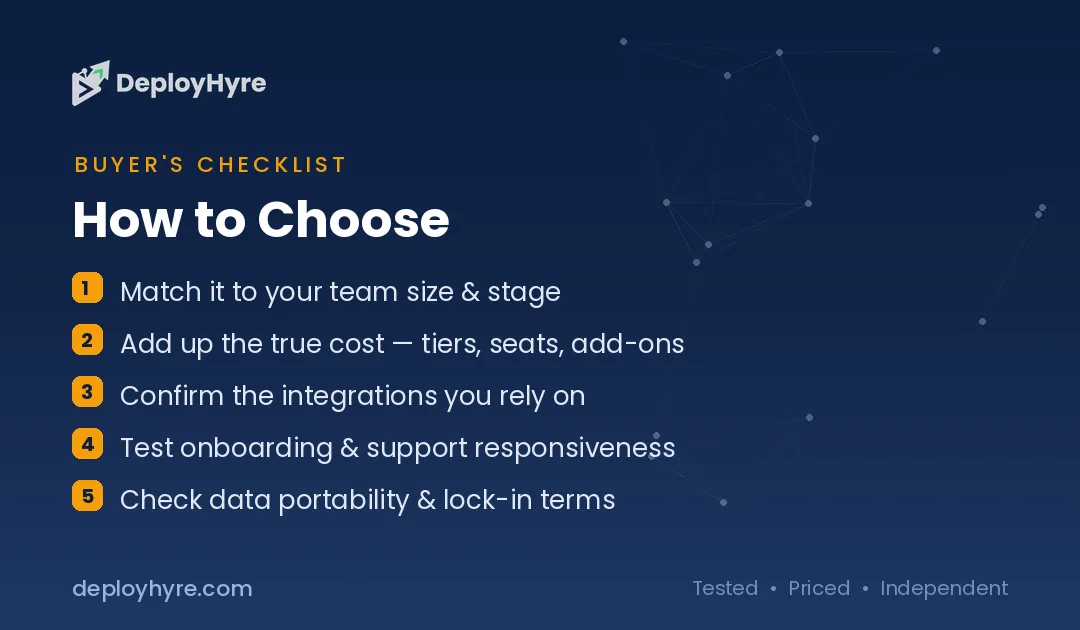
How Should You Choose a WAF?
Decide which market you belong in first. For most websites and SaaS, an integrated CDN+WAF (Cloudflare, Fastly) delivers WAF, CDN, and DDoS together, easily and affordably, at a few hundred to a couple thousand dollars a month. For large, heavily-attacked enterprises needing deep bot defense and detection, a standalone enterprise WAF (Akamai, Imperva, F5) is worth the 10x cost. Single-cloud stacks point to the native AWS or Azure WAF.
Then weight bot management, because it is now the primary differentiator. Sophisticated bots, credential stuffing, scraping, account takeover, are the dominant application-layer threat, so evaluate each candidate’s AI-driven bot detection specifically, not just its rule coverage. Cloudflare and the enterprise leaders differentiate here more than on basic OWASP protection, which everyone handles.
Finally, model traffic-based cost and negotiate quotes. AWS WAF’s per-request pricing and integrated providers’ egress-based tiers both scale with traffic, so project your request and bandwidth volume. And because seven major vendors quote-only with 25-to-40-percent multi-year discounts available, always get competitive quotes and push on price for the enterprise options.
How We Evaluated These Platforms
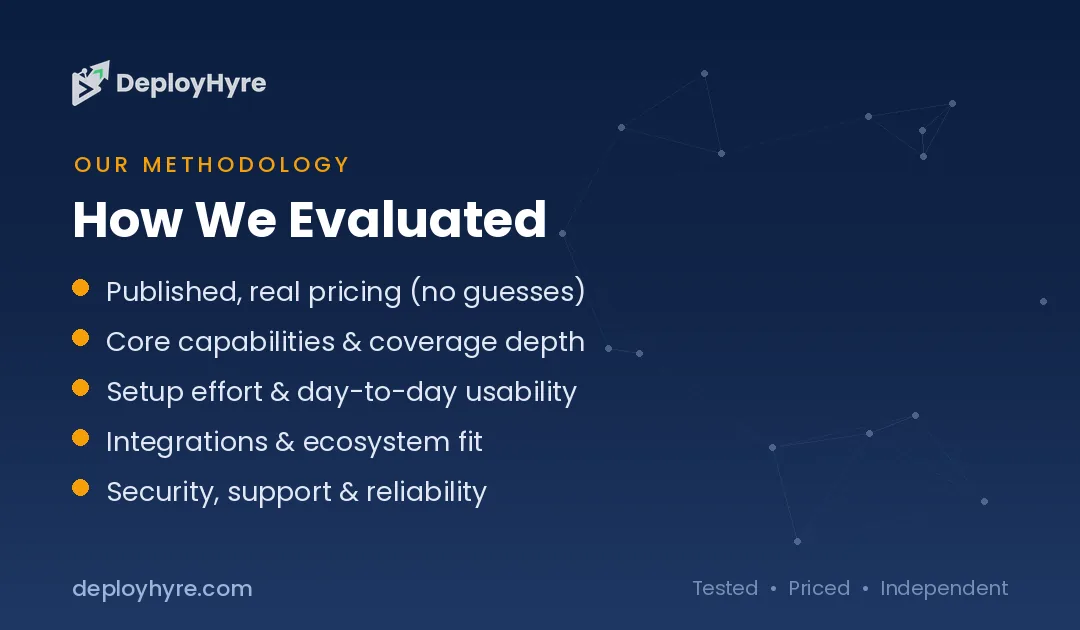
We evaluated each WAF on threat coverage (OWASP and beyond), AI-driven bot management, false-positive rate, integration and delivery model (CDN-integrated, cloud-native, standalone), and pricing transparency. Figures come from vendor pages and comparison sources. Because most enterprise WAFs are quote-only, we present observed bands and stress the integrated-versus-standalone split and its 10x price gap. We accepted no payment for placement; rankings reflect fit for a stated use case.
The Bottom Line
Cloudflare is the best overall WAF for value and ease, bundling WAF, CDN, and DDoS affordably, while Akamai and Imperva lead enterprise depth (scale and bot defense, detection accuracy) at roughly 10x the cost, and AWS WAF or Azure WAF win for single-cloud native stacks. Decide between integrated CDN+WAF and standalone enterprise WAF first, weight AI bot management heavily, and negotiate the quote-only enterprise options, where 25-to-40-percent discounts are common.
Frequently Asked Questions
How much does a web application firewall cost?
Integrated CDN+WAF providers are affordable: Cloudflare is free to $250 a month before enterprise, and AWS WAF is $5 per web ACL plus $0.60 per million requests. Enterprise WAFs cost far more: Akamai from around $3,000 a month and Imperva from roughly $30,000 a year. A mid-sized SaaS typically pays $300 to $2,500 a month on integrated, or $5,000 to $30,000-plus on enterprise.
What is the difference between a WAF and a network firewall?
A network firewall filters traffic by IP address and port at the network layer. A WAF inspects HTTP requests at the application layer, the body, headers, and parameters, to block web attacks like SQL injection, cross-site scripting, and bot abuse that network firewalls cannot see. They are complementary layers, and web applications need both.
What is the best WAF for a small business or SaaS?
Cloudflare is the best choice for most small businesses and SaaS applications, bundling WAF, CDN, and DDoS protection on one platform with a free tier and affordable paid plans ($25 Pro, $200 to $250 Business). Its ease of setup and transparent pricing make it the pragmatic default before you need enterprise-grade depth.
Why do WAF vendors like Akamai and Imperva hide their prices?
Seven major WAF vendors (Akamai, Imperva, F5, Fastly, Barracuda, Radware, Wallarm) publish no list pricing, quoting per deployment based on traffic, hostnames, and features. Akamai and Imperva typically discount 25 to 40 percent off first quotes on multi-year commitments, so competitive quotes and negotiation are essential for the enterprise options.
Does AI actually improve a WAF?
Yes, meaningfully. AI baselines normal traffic to detect anomalies, distinguishes real users from sophisticated bots (the dominant modern threat), and reduces false positives that otherwise cause teams to run WAFs in ineffective detect-only mode. AI-driven bot management is now a primary differentiator between providers, beyond the basic OWASP protection everyone offers.
Related Articles

David Austin is a technology writer and software analyst at DeployHyre, where he covers AI tools, SaaS platforms, cloud hosting, and business automation. He focuses on hands-on comparisons of pricing, features, and real-world performance so teams can pick the right software with confidence.