TL;DR: Deel wins for most teams. It offers the broadest country coverage, an all-in-one HR and payroll suite, and cheaper volume pricing. Choose Remote if you hire full-time staff and want ironclad IP protection through 100% owned entities. Both charge around $599 per employee monthly for EOR, so the decision comes down to your workforce mix, not price alone.
Hiring across borders is now normal, not rare. In 2026, 78% of companies hire internationally for remote positions, and more than half use global payroll services to pay those workers.
That shift created a booming market. The global Employer of Record market is valued at $7.45 billion in 2026 and is projected to reach $15.89 billion by 2035.
Deel and Remote are two of the biggest names in that space. They solve the same core problem in different ways. This guide breaks down what each platform costs, where it excels, and which one fits your company. For a wider view of the category, see our guide to the best AI tools for HR.
Quick Comparison: Deel vs Remote
| Feature | Deel | Remote |
|---|---|---|
| EOR price (per employee/mo) | From $599 | From $599 (annual), $699 (monthly) |
| Contractor management (per mo) | $49 | $29 |
| Country coverage | 150+ countries | 80+ countries (EOR) |
| Owned entities | 250+ entities | 100% owned in every EOR country |
| Payroll | Managed payroll from $29/mo | Included; flat-rate model |
| Benefits admin | Yes, all-in-one suite | Yes, high-quality local benefits |
| Integrations | Broad ecosystem (HR, IT, equity) | Core HR and payroll stack |
| Best for | Contractor-heavy, all-in-one HR | Full-time teams, IP protection |
What Do Deel and Remote Actually Do?
Deel and Remote are both Employer of Record platforms. They legally employ workers in countries where you have no legal entity. That lets you hire talent anywhere without opening a foreign branch office yourself.
An EOR handles the hard parts of foreign employment. It runs local payroll, withholds taxes, and manages statutory benefits. It also keeps you compliant with each country’s labor laws.
Both platforms also manage contractors. You can onboard, pay, and offboard freelancers in one dashboard. This matters because misclassifying a contractor as an employee triggers heavy fines in many countries.
The difference sits in their strategy. Deel became an all-in-one workforce platform covering HR, payroll, IT, and equity. Remote doubled down on compliance depth and IP protection instead.
How Much Do Deel and Remote Cost?
Both platforms charge around $599 per employee per month for EOR. Deel starts its standard EOR at $599 per employee per month. Remote matches that at $599 per employee monthly on an annual plan, rising to $699 if you pay month to month.
Contractor pricing is where they split. Deel charges $49 per contractor per month. Remote is cheaper at $29 per active contractor per month.
Watch the hidden costs on EOR. The core $599 fee excludes employer taxes and currency spreads that can add 30% to 50% to your invoice. These extras are not fees Deel or Remote invent. They are real statutory contributions in each country.
Volume changes the math. Deel’s negotiated rates often drop to $400 to $500 at 20 or more hires. Remote discounts less aggressively, with floors near $500 even at higher headcount.
How Many Countries Does Each Platform Cover?
Deel covers more countries than Remote. Deel supports EOR across 150+ countries using owned entities plus in-country partners. Remote covers 80+ countries for EOR but through a different model.
Deel operates 250+ owned legal entities and fills gaps with vetted local partners. That hybrid approach gives it the widest reach in the industry.
Remote takes the opposite path. It runs 100% owned legal entities in every EOR country with no third-party partners in the chain. This narrows its country list but tightens its control.
The trade-off is clear. Pick Deel if you need to hire in obscure markets fast. Pick Remote if you value a direct, partner-free compliance chain in fewer countries.
Which Platform Has Stronger Compliance and IP Protection?
Remote leads on IP protection. Its owned-entity model means client companies retain 100% of intellectual property rights under local law. No outside partner ever sits between your company and the worker’s contract.
Remote backs this with a feature called IP Guard. The tool assigns IP rights from the employee to Remote’s local entity, then to the client. Remote also provides an indemnity that covers you if a transfer goes wrong.
Both platforms meet high security standards. Remote maintains SOC 2 Type II, GDPR, and ISO 27001 compliance. Deel holds similar certifications across its suite.
The gap matters for engineering and product teams. If your global hires build patents or source code, Remote’s direct chain reduces risk. Deel’s partner network is compliant but adds an extra link in some countries.
How Do Payroll and Payments Compare?
Both platforms run compliant local payroll in every country they serve. Deel offers a separate managed payroll product starting at $29 per employee per month for teams that already have entities. Remote bundles payroll into its EOR flat rate.
Deel runs in-house payroll teams in 130+ countries. That depth speeds up complex payments like bonuses, equity, and expense reimbursements. Deel also lets contractors withdraw pay in multiple currencies and methods.
Remote keeps its payroll model simple and transparent. It advertises flat rates with no surprise platform or setup fees. Reviewers praise this clarity, especially teams tired of complex invoices.
If you run a mixed workforce, Deel’s payment flexibility helps. If you want predictable, clean billing, Remote’s flat model is easier to forecast. Explore the wider category in our roundup of AI payroll software.
How Good Is Benefits Administration?
Both platforms manage localized benefits for your global hires. Deel bundles benefits admin into its all-in-one suite alongside HR, IT, and equity tools. That makes it a single dashboard for the whole employee lifecycle.
Remote focuses on benefits quality over breadth. Reviewers note Remote is recommended for teams that prioritize high-quality local benefits and compliance over raw onboarding speed.
The practical difference is scope. Deel wants to replace your entire HR stack. Remote wants to be the best employer of record for full-time staff.
Choose based on your goal. If you want one tool for everything, Deel fits. If you want deep, country-tuned benefits packages, Remote delivers.
How Do the Platforms and Integrations Stack Up?
Deel offers a broader integration ecosystem. It connects HR, IT asset management, equity, and immigration tools inside one platform. This appeals to companies that want to consolidate vendors.
Remote keeps a tighter, focused stack. It integrates core HR and payroll tools without trying to own every workflow. That simplicity suits teams that prefer best-in-class point tools.
Deel’s breadth is a genuine advantage for scaling startups. You can add IT provisioning or equity management without buying another vendor. Remote users often pair it with dedicated recruiting or HR software instead.
Your existing tech stack should guide this. If you want fewer logins, Deel wins. If you already run strong point tools, Remote plays nicely. Pair either one with the right AI recruiting software to complete your hiring pipeline.
Which Platform Has Better Customer Support?
Deel offers more support channels than Remote. Deel provides 24/7 support via live chat, email, and phone. Remote relies mainly on chat and email support.
Reviews for both are strong. Deel holds a 4.8-star rating from over 14,000 G2 reviews, and users praise its responsive support staff. Remote earns high marks for clear pricing and compliance control.
Deel has one common complaint. Chatbot routing sits in front of human agents, and response times stretch during peak payroll periods. Remote users report fewer channels but consistent quality.
The winner depends on your needs. If you want phone access and round-the-clock coverage, Deel edges ahead. If you value simple, reliable email and chat, Remote is enough.
Deel vs Remote: Which Should You Choose?
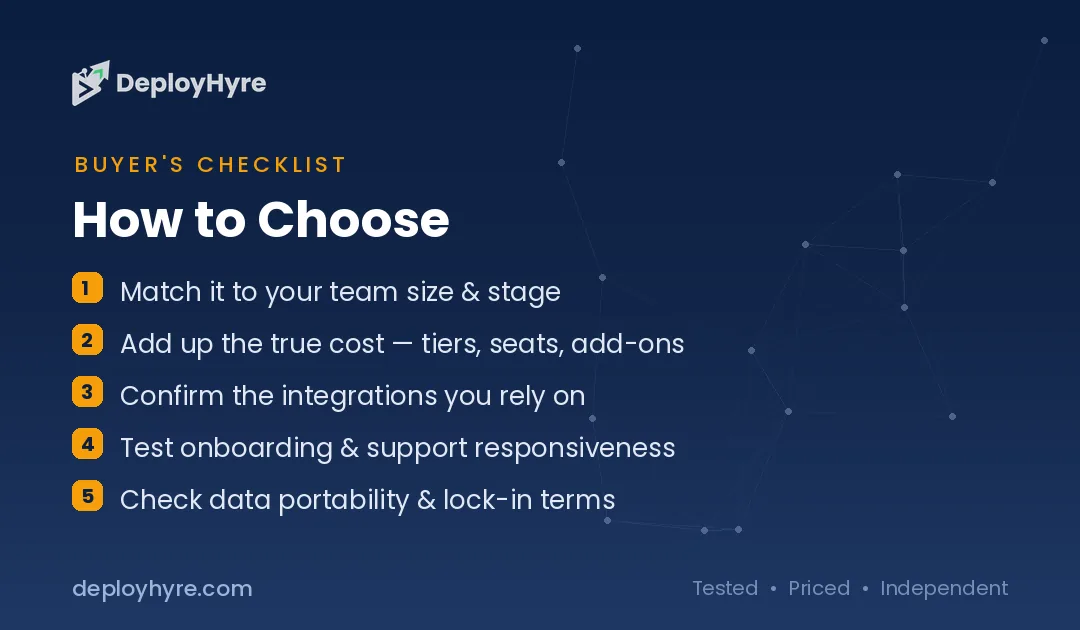
Your workforce mix decides the winner. The two platforms serve different types of companies well. Match your situation to the right tool below.
Choose Deel if you are contractor-heavy. Its lower contractor tooling, wider country list, and all-in-one suite fit agencies and startups scaling fast. Deel also wins for teams that want HR, payroll, and IT in one place.
Choose Remote if you hire full-time global employees. Its owned-entity model and IP Guard protect source code, patents, and product work. This matters most for engineering and product-led companies.
Startups often lean Deel for flexibility and volume discounts. Enterprises with sensitive IP often lean Remote for compliance control. Neither choice is wrong. The best pick depends on whether you optimize for reach and breadth or for depth and protection.
The Bottom Line
Deel is the better default for most teams in 2026. It offers the widest country coverage, the deepest feature set, and stronger volume pricing. For contractor-heavy or fast-scaling companies, it is hard to beat.
Remote is the smarter pick for a specific need. If you hire full-time staff and cannot risk IP leakage, its 100% owned-entity model is worth the tighter country list. Both platforms are compliant, well-reviewed, and priced similarly at the entry level.
Test the one that matches your workforce. Most companies know within a single hiring cycle whether reach or control matters more.
Frequently Asked Questions
Is Deel or Remote cheaper?
Their EOR prices are nearly identical, both starting around $599 per employee per month. Deel is cheaper for volume EOR hiring, often dropping to $400 to $500 at 20 or more employees. Remote is cheaper for contractors at $29 per month versus Deel’s $49.
What is the main difference between Deel and Remote?
Deel is an all-in-one platform covering HR, payroll, IT, and equity across 150+ countries. Remote focuses on compliance and IP protection through 100% owned legal entities in every EOR country. Deel favors breadth and reach, while Remote favors depth and control.
Which platform is better for IP protection?
Remote is stronger for IP protection. Its owned-entity model lets client companies retain 100% of intellectual property rights under local law, with no third-party partners in the chain. Its IP Guard feature adds indemnity coverage, which suits engineering and product teams handling sensitive work.
Does Deel or Remote cover more countries?
Deel covers more countries. It supports EOR in 150+ countries using 250+ owned entities plus in-country partners. Remote covers 80+ countries for EOR but operates only through its own legal entities, trading wider reach for a partner-free compliance chain.
Are there hidden fees with Deel or Remote?
The advertised EOR fee covers service charges only. Your actual invoice also includes employer taxes, statutory benefits, and currency conversion spreads. These can add 30% to 50% on top of the base fee. They are legitimate country-specific costs, not fees invented by either platform.
Know AI, SaaS, or cloud tools inside out? Pitch a guest post and get in front of thousands of buyers researching their next tool.
Related Articles

David Austin is a technology writer and software analyst at DeployHyre, where he covers AI tools, SaaS platforms, cloud hosting, and business automation. He focuses on hands-on comparisons of pricing, features, and real-world performance so teams can pick the right software with confidence.