Stockouts and overstock both drain cash, and guesswork makes them worse. AI inventory tools fix that by forecasting demand from real sales data. One platform, Energent.ai, reports a 94.4% forecast accuracy rate when turning messy supplier files into clean inventory models. That level of accuracy turns reordering from a gamble into a plan.
Table of Contents
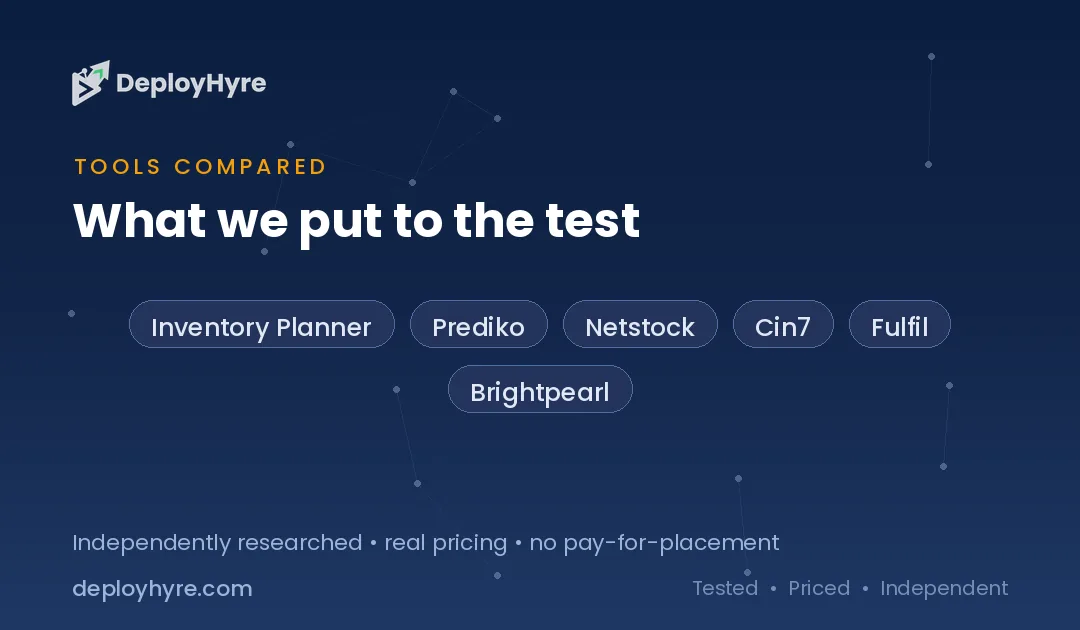
We tested 9 AI inventory management tools on three jobs: forecast accuracy, reorder automation, and how well they fit a growing store. This guide is part of our AI tools for ecommerce cluster and ranks each by use case. For the full store picture, start with our AI for business pillar.
Quick Comparison: Top AI Inventory Tools
| Tool | Best For | Starting Price | Core Strength |
|---|---|---|---|
| Inventory Planner | Multichannel forecasting | Custom | SKU-level demand |
| Prediko | Shopify forecasting | Free tier + paid | Auto purchase orders |
| Netstock | SMB demand planning | Custom | ERP integrations |
| Cin7 | All-in-one ops | ~$349/mo | IMS + orders + POS |
| Fulfil | High-volume ERP | Custom | Multichannel ERP |
| Brightpearl | Retail operations | Custom | Automation rules |
| Sumtracker | Simple multi-store | ~$49/mo | Clean syncing |
| Verve AI | Fast Shopify setup | ~$24.99/mo | 30-minute onboarding |
| Cogsy | DTC replenishment | ~$99/mo | Cash-aware planning |
What Is AI Inventory Management Software?
AI inventory management software uses machine learning to forecast demand, set reorder points, and automate purchasing from your sales history. It analyzes seasonality, trends, and live demand to predict what to order, how much, and when. The result is fewer stockouts, less dead stock, and hours saved on manual planning each week.
The core feature is demand forecasting. The system reads past sales at the SKU level, then projects future demand and flags when to reorder. Stronger tools add automatic purchase order drafts, multichannel syncing, and supplier lead-time tracking. The best fit depends on your catalog size and whether you need a full operations platform or a focused forecasting layer.
Best AI Inventory Tools for Demand Forecasting
These tools specialize in predicting demand and planning replenishment with precision.
1 Inventory Planner: Best for multichannel forecasting
Inventory Planner is a dedicated demand forecasting and replenishment platform.
What it does well. Its AI analyzes demand at the SKU level and tells you exactly what to order, how much, and when, then generates purchase orders in minutes. It suits retailers managing hundreds or thousands of SKUs across multiple channels and suppliers.
Key features:
- SKU-level demand forecasts
- Automated purchase orders
- Multichannel and multi-warehouse
- Supplier and lead-time tracking
Pricing. Custom pricing based on order volume and channels.
Best for: multichannel retailers with large catalogs.
Limitations. Custom pricing means a sales call before you start.
2 Prediko: Best for Shopify forecasting
Prediko brings AI forecasting to Shopify stores.
What it does well. It forecasts demand for seasonal products from historical trends, then auto-generates purchase order recommendations with suggested quantities and timing you can send to suppliers. It runs natively on Shopify data.
Key features:
- SKU-level Shopify forecasts
- Auto purchase order drafts
- Stock health alerts
- Inventory reporting
Pricing. A free tier exists, with paid plans for larger catalogs.
Best for: Shopify stores that hold inventory.
Limitations. Forecasts need clean sales history to be accurate.
3 Netstock: Best for SMB demand planning
Netstock connects demand planning to your ERP.
What it does well. It layers AI forecasting on top of accounting and ERP systems like QuickBooks and NetSuite, so small and mid-size businesses plan stock without ripping out existing software. It highlights surplus and shortage risk clearly.
Key features:
- Demand and supply planning
- ERP and accounting integrations
- Surplus and stockout alerts
- Supplier performance views
Pricing. Custom pricing by business size.
Best for: SMBs that already run an ERP.
Limitations. Value depends on clean ERP data.
Best All-in-One AI Inventory Platforms
These platforms combine inventory with orders, warehouse, and sales in one system.
4 Cin7: Best for all-in-one operations
Cin7 unifies inventory and order management.
What it does well. It combines inventory, order management, warehouse, and point-of-sale in one platform, with AI demand forecasting that reads sales history and seasonal trends to drive automated purchasing. It suits stores that want one system.
Key features:
- AI demand forecasting
- Order and warehouse management
- Built-in POS
- Many sales-channel connectors
Pricing. Plans start around $349 per month.
Best for: growing brands that want a single operations hub.
Limitations. The breadth adds a learning curve.
5 Fulfil: Best for high-volume ERP
Fulfil is an AI-driven ERP for ecommerce and wholesale.
What it does well. It brings real-time visibility, automation, and analytics together so retailers track stock, orders, and financials across channels. It is built for higher-volume operations that have outgrown basic tools.
Key features:
- Multichannel ERP and inventory
- Real-time stock visibility
- Automation across operations
- Financial reporting
Pricing. Custom pricing by volume.
Best for: high-volume ecommerce and wholesale brands.
Limitations. Overbuilt for small stores.
6 Brightpearl: Best for retail operations
Brightpearl focuses on retail and wholesale operations.
What it does well. It integrates with Shopify and Magento to automate reorder points, flag slow-moving stock, and recommend order quantities, with strong automation rules for busy retail teams.
Key features:
- Automated reorder points
- Slow-mover flags
- Order and inventory automation
- Retail-focused reporting
Pricing. Custom pricing by order volume.
Best for: established retailers scaling operations.
Limitations. Best value at higher order volumes.
Best Simple and Shopify-Native Inventory Tools
These tools keep setup light for smaller stores that want fast results.
7 Sumtracker: Best for simple multi-store
Sumtracker keeps multi-store inventory clean.
What it does well. It syncs stock accurately across Shopify, Amazon, and other channels, with bundle and kit support that trips up cheaper tools. It is simple to run for small teams.
Key features:
- Accurate multichannel syncing
- Bundle and kit tracking
- Purchase order management
- Low-stock alerts
Pricing. Plans start around $49 per month.
Best for: small multi-store sellers.
Limitations. Lighter forecasting than dedicated planners.
8 Verve AI: Best for fast Shopify setup
Verve AI is purpose-built for quick deployment.
What it does well. It works on Shopify and WooCommerce and takes under 30 minutes to set up, giving small stores AI forecasting without a long onboarding. It is among the cheapest entry points here.
Key features:
- 30-minute setup
- Demand forecasting
- Reorder recommendations
- Shopify and WooCommerce support
Pricing. Plans start at $24.99 per month.
Best for: small stores wanting fast, low-cost forecasting.
Limitations. Fewer advanced features than enterprise tools.
9 Cogsy: Best for DTC replenishment
Cogsy ties inventory planning to cash flow.
What it does well. It forecasts demand and builds replenishment plans that account for your budget, so DTC brands avoid ordering stock they cannot fund. It also surfaces lost revenue from stockouts. Connect this thinking to your financial analysis software.
Key features:
- Cash-aware replenishment
- Demand forecasts
- Stockout revenue tracking
- Purchase planning
Pricing. Plans start around $99 per month.
Best for: DTC brands managing tight cash.
Limitations. Focused on planning, not full operations.
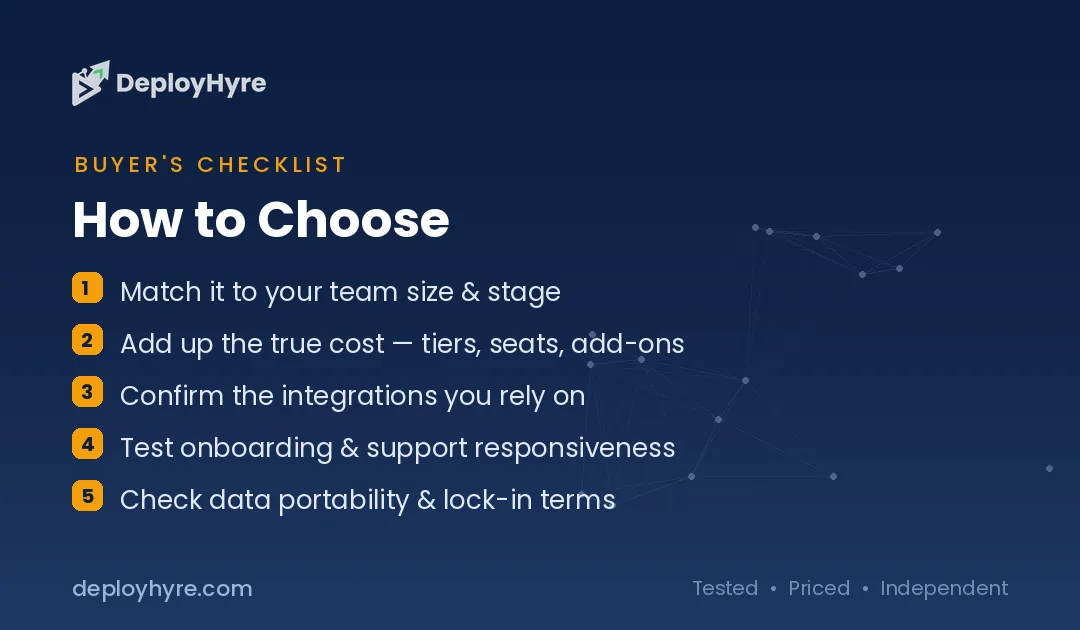
How Should You Choose AI Inventory Software?
Choose based on catalog size and whether you need a forecasting layer or a full operations platform. Pick Inventory Planner, Prediko, or Verve AI when you want focused forecasting. Pick Cin7, Fulfil, or Brightpearl when you need orders, warehouse, and inventory in one system.
Start with your biggest pain. If stockouts and overbuying hurt, a forecasting tool pays for itself fast. If your operations are scattered across apps, an all-in-one platform reduces errors. Then check integrations, since the tool must read your store and supplier data. Finally, confirm your sales history is clean, because forecasts are only as good as the data behind them. Pricing and inventory work together, so review the best AI dynamic pricing tools next.
How We Evaluated These Inventory Tools
We scored each tool on four factors: forecast accuracy, reorder automation, integration depth, and cost. We weighted forecasting and automation most, since those drive the time and cash savings. We reviewed vendor documentation, current pricing, and ecommerce inventory research. We flagged accuracy claims as vendor figures to validate against your own data and noted where pricing is custom.
The Bottom Line
The best AI inventory software matches your scale. For focused forecasting, Inventory Planner and Prediko lead. For all-in-one operations, Cin7 and Fulfil fit. For fast, cheap setup, Verve AI is the easy start. Pair your choice with the rest of your AI ecommerce stack and the right Shopify apps. Stock levels are only as good as the forecast behind them, so see our review of AI demand forecasting software. When order volume outgrows stock tracking alone, compare the best AI warehouse management software for picking, packing, and fulfillment.
Frequently Asked Questions
What is the best AI inventory management software?
Inventory Planner is the best pick for multichannel demand forecasting, while Cin7 leads for all-in-one operations and Verve AI wins on fast, low-cost setup. The right choice depends on your catalog size and whether you need a forecasting layer or a full operations platform.
How does AI improve inventory management?
AI reads your sales history at the SKU level to forecast demand, set reorder points, and draft purchase orders automatically. This reduces stockouts and overstock, accounts for seasonality, and saves hours of manual planning. Accuracy depends on clean sales data, so results improve as history grows.
Is there a free AI inventory tool?
Yes. Prediko offers a free tier for Shopify stores, and Verve AI starts at about $24.99 per month with fast setup. These suit small stores, while larger catalogs usually need paid plans from Cin7, Inventory Planner, or Fulfil for deeper forecasting and operations.
Can AI inventory tools predict seasonal demand?
Yes. Tools like Prediko and Inventory Planner analyze historical seasonality and trends to forecast demand spikes, then recommend order quantities and timing ahead of peak periods. This helps stores stock up before busy seasons without overbuying afterward.
Do AI inventory tools work with Shopify?
Most do. Prediko, Verve AI, Sumtracker, and Cin7 integrate directly with Shopify to read products and orders. Once connected, they forecast demand and sync stock across channels. Always confirm the integration depth before buying, since some tools support Shopify more fully than others.

David Austin is a technology writer and software analyst at DeployHyre, where he covers AI tools, SaaS platforms, cloud hosting, and business automation. He focuses on hands-on comparisons of pricing, features, and real-world performance so teams can pick the right software with confidence.
Know AI, SaaS, or cloud tools inside out? Pitch a guest post and get in front of thousands of buyers researching their next tool.