Price is the fastest lever on profit, yet most stores still set it by hand. AI dynamic pricing tools change that by adjusting prices from live competitor data and demand. The market splits into two camps: reactive tools that trigger rule-based changes and prescriptive tools that model demand elasticity before you move a price. Choosing the right camp matters as much as the tool.
Table of Contents
We tested 9 AI dynamic pricing tools on three jobs: competitor data quality, repricing logic, and fit by store size. This guide is part of our AI tools for ecommerce cluster. For the wider stack, see our AI for business pillar.
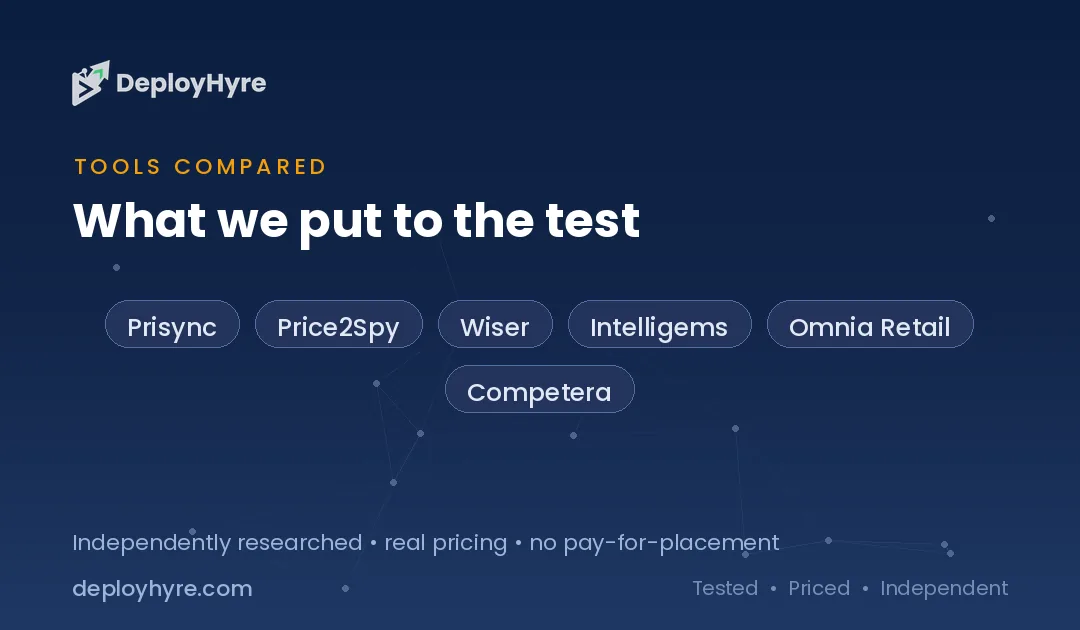
Quick Comparison: Top AI Dynamic Pricing Tools
| Tool | Best For | Starting Price | Approach |
|---|---|---|---|
| Prisync | SMB competitor pricing | $99/mo | Reactive |
| Price2Spy | Price monitoring | ~$30/mo | Reactive |
| Wiser | Retail price intelligence | Custom | Reactive |
| Intelligems | DTC price testing | ~$500/mo | A/B testing |
| Omnia Retail | Rule-based repricing | ~EUR399/mo | Reactive |
| Competera | Demand elasticity | Custom | Prescriptive |
| Pricefx | Enterprise pricing | Custom | Prescriptive |
| Quicklizard | Real-time repricing | Custom | Prescriptive |
| Hypersonix | Profit-focused AI | Custom | Prescriptive |
What Are AI Dynamic Pricing Tools?
AI dynamic pricing tools automatically set and adjust product prices using competitor data, demand signals, and your own rules. They monitor the market in real time, then either trigger rule-based changes or recommend prices that balance sales and margin. The goal is to stay competitive without racing to the bottom or leaving profit on the table.
Reactive tools like Prisync and Omnia ingest competitor prices and adjust based on your rules. Prescriptive tools like Competera model how demand reacts to price, then simulate the impact before you change anything. Reactive suits stores that mainly need to track rivals, while prescriptive suits larger retailers that want to optimize profit, not just match the market.
Best AI Dynamic Pricing Tools for Small and Mid-Size Stores
These tools focus on competitor tracking and rule-based repricing at an accessible price.
1 Prisync: Best for SMB competitor pricing
Prisync is the go-to reactive tool for smaller stores.
What it does well. It tracks competitor and market prices, then applies dynamic pricing rules and MAP monitoring. It integrates with Shopify without technical work, which suits stores under a few thousand SKUs.
Key features:
- Competitor price tracking
- Rule-based dynamic pricing
- MAP monitoring
- Shopify integration
Pricing. Professional is $99 per month for up to 100 products, Premium $199 for up to 1,000 with dynamic pricing, and Platinum $399 for up to 5,000.
Best for: SMB stores that need competitor-based pricing.
Limitations. Rule-based logic without demand modeling.
2 Price2Spy: Best for price monitoring
Price2Spy focuses on accurate price tracking.
What it does well. It monitors competitor prices across many sites with reliable matching and alerts, then supports repricing rules. It is a budget-friendly entry for stores that mainly need visibility.
Key features:
- Broad competitor monitoring
- Price-change alerts
- Repricing rules
- Reports and dashboards
Pricing. Plans start around $30 per month by product count.
Best for: stores that want monitoring first.
Limitations. Lighter automation than full repricing platforms.
3 Wiser: Best for retail price intelligence
Wiser combines price intelligence with execution.
What it does well. It gathers competitor and in-store pricing data, then feeds rules that adjust prices across channels. It suits retailers that sell online and offline.
Key features:
- Online and in-store data
- Repricing rules
- Market analytics
- Channel coverage
Pricing. Custom pricing by scope.
Best for: omnichannel retailers.
Limitations. Custom pricing and setup time.
Best AI Pricing Tools for DTC Testing
These tools test prices on real shoppers to find the most profitable point.
4 Intelligems: Best for DTC price testing
Intelligems runs true price A/B tests on your store.
What it does well. It splits live traffic across price points and measures the impact on conversion and profit, so DTC brands find the best price with evidence, not guesswork. It is built for Shopify.
Key features:
- A/B price testing on live traffic
- Profit and conversion analysis
- Content and shipping tests
- Shopify-native setup
Pricing. Plans start around $500 per month.
Best for: DTC brands from $2M to $10M in sales.
Limitations. Needs enough traffic for valid tests.
5 Omnia Retail: Best for rule-based repricing
Omnia Retail automates pricing at scale.
What it does well. It ingests competitor and market data and applies dynamic pricing strategies across large catalogs, with strong rule controls. It suits mid-market European and global retailers.
Key features:
- Dynamic pricing strategies
- Competitor data feeds
- Pricing rule engine
- Channel and feed management
Pricing. Starts around EUR 399 per month for single-shop use, scaling to custom enterprise plans.
Best for: mid-market retailers with large catalogs.
Limitations. More rules-driven than demand-driven.
Best Enterprise AI Pricing Platforms
These platforms model demand and optimize profit for larger retailers.
6 Competera: Best for demand elasticity
Competera models how demand reacts to price.
What it does well. It uses machine learning to model demand elasticity and simulate the downstream impact before you change prices, so large retailers optimize profit rather than just match rivals. Its ML depth is a standout.
Key features:
- Demand elasticity modeling
- Price simulation
- Portfolio-level optimization
- Competitor and demand data
Pricing. Custom pricing, aimed at mid-size and enterprise retailers.
Best for: retailers above $10M that want profit optimization.
Limitations. Requires a sales process and data setup.
7 Pricefx: Best for enterprise pricing
Pricefx is a full enterprise pricing suite.
What it does well. It covers price setting, management, and optimization with AI, plus quoting and rebates for complex businesses. It scales across large product and customer bases.
Key features:
- Price optimization and management
- Quoting and rebates
- AI recommendations
- Enterprise integrations
Pricing. Custom enterprise pricing.
Best for: large retailers and B2B sellers.
Limitations. Overkill for small stores.
8 Quicklizard: Best for real-time repricing
Quicklizard repricing runs in real time.
What it does well. It blends competitor data, demand, and rules to update prices continuously across channels, with fast reaction to market shifts. It suits high-velocity retailers.
Key features:
- Real-time price updates
- Multi-source data inputs
- Strategy automation
- Channel coverage
Pricing. Custom pricing by scope.
Best for: fast-moving, high-SKU retailers.
Limitations. Enterprise setup required.
9 Hypersonix: Best for profit-focused AI
Hypersonix ties pricing to profit and inventory.
What it does well. It gives AI pricing and inventory forecasting recommendations together, so stores optimize profit with data-backed dynamic pricing suggestions. It connects pricing decisions to stock. Pair this with the best AI inventory management software.
Key features:
- Profit-focused price suggestions
- Inventory forecasting
- Demand insights
- Retail analytics
Pricing. Custom pricing.
Best for: retailers linking pricing to inventory.
Limitations. Built for larger operations.
How Should You Choose an AI Pricing Tool?
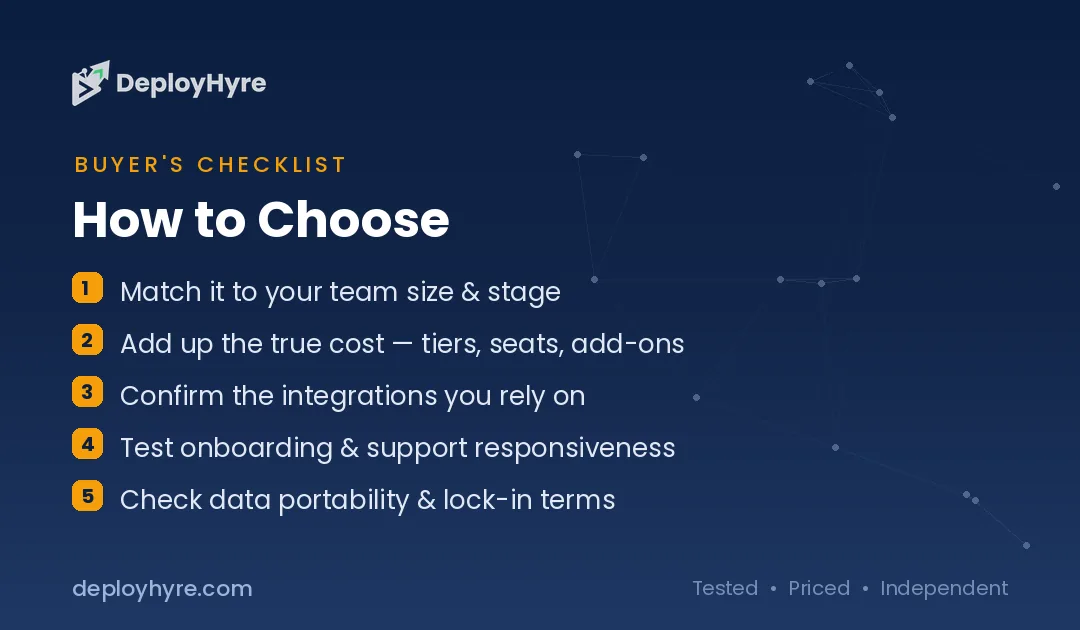
Choose based on revenue and whether you need monitoring, testing, or demand optimization. Pick Prisync or Price2Spy for SMB competitor tracking. Pick Intelligems to test prices on real traffic. Pick Competera or Pricefx when you want demand modeling at scale.
Start with your revenue tier. Stores under 1,000 SKUs do well with Prisync’s published plans, while brands from $2M to $10M benefit from Intelligems testing. Above $10M, Competera or Omnia fit, with Competera stronger on elasticity. Then decide reactive versus prescriptive: matching rivals is reactive, optimizing profit is prescriptive. Sound pricing also depends on stock and demand data, so connect it to your inventory and product recommendation engines.
How We Evaluated These Pricing Tools
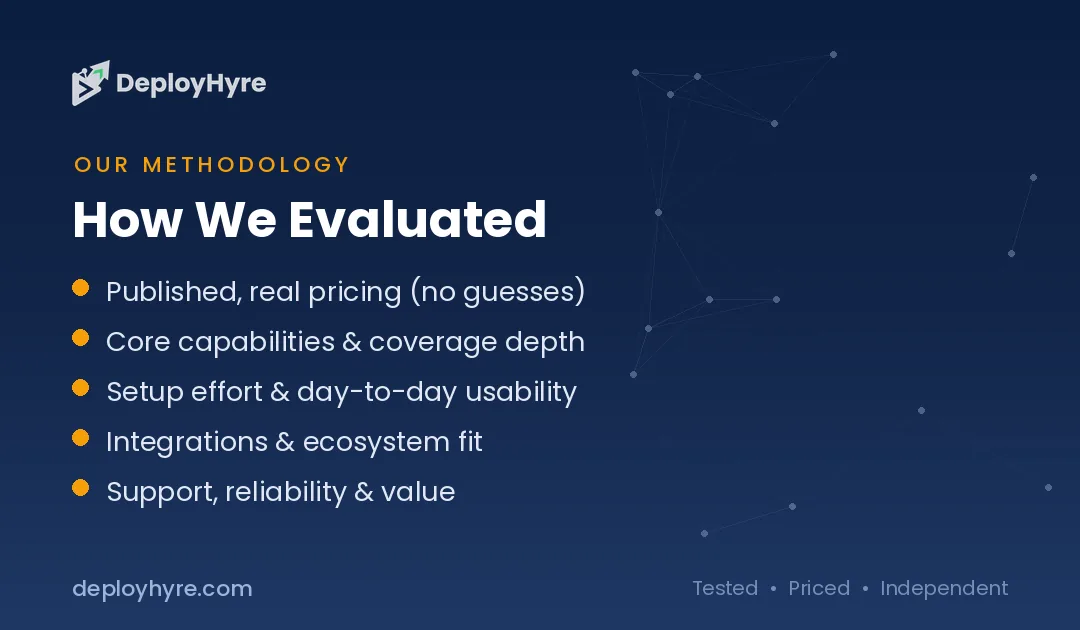
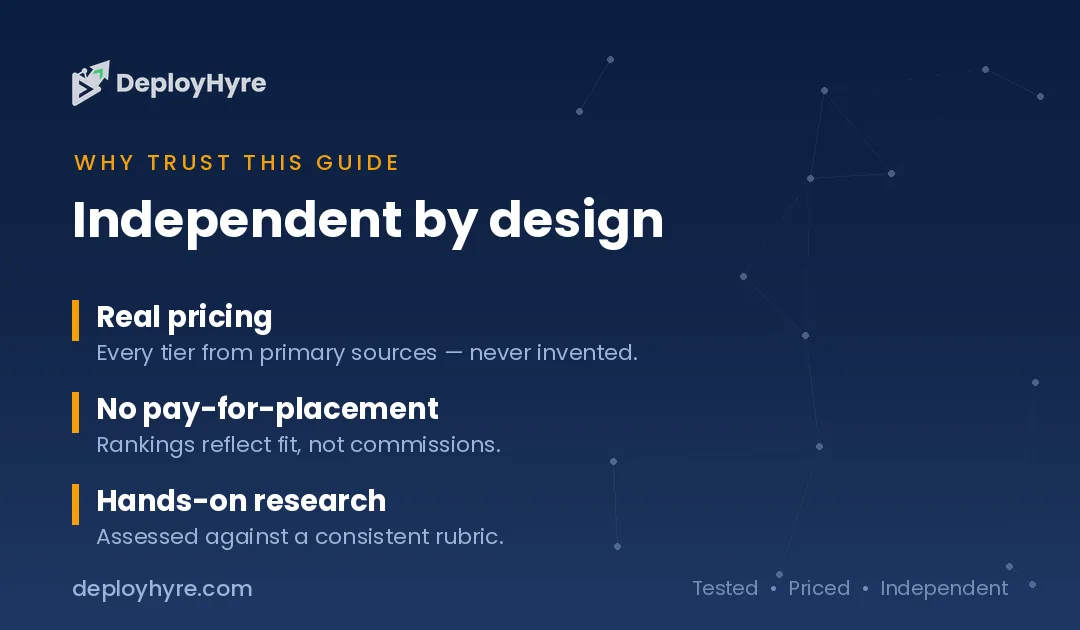
We scored each tool on four factors: data quality, repricing logic, store-size fit, and cost. We weighted data quality and logic most, since bad data leads to bad prices. We reviewed vendor documentation, current pricing pages, and pricing-software research. We flagged custom pricing where vendors require a sales call and noted which tools are reactive versus prescriptive.
The Bottom Line
The best AI dynamic pricing tool fits your scale and goal. For SMB competitor tracking, Prisync leads. For DTC price testing, Intelligems wins. For enterprise demand optimization, Competera and Pricefx stand out. Connect pricing to the rest of your AI ecommerce stack so prices reflect real demand and stock.
Frequently Asked Questions
What is the best AI dynamic pricing tool?
Prisync is the best pick for small and mid-size stores that need competitor-based pricing, while Competera leads for enterprise demand optimization and Intelligems wins for DTC price testing. The right tool depends on your revenue and whether you want to match rivals or optimize profit.
How does AI dynamic pricing work?
AI dynamic pricing monitors competitor prices and demand signals, then either applies rule-based changes or recommends prices that balance sales and margin. Reactive tools adjust to the market, while prescriptive tools model how demand reacts to price and simulate the impact before any change.
Is dynamic pricing legal for ecommerce?
Yes, adjusting your own prices based on demand and competition is legal and common. Tools also support MAP monitoring to respect minimum advertised price agreements. Avoid coordinating prices with competitors, which raises legal issues. Always follow your suppliers’ pricing policies.
How much do AI pricing tools cost?
SMB tools like Prisync start at $99 per month and Price2Spy near $30. DTC testing with Intelligems runs around $500 per month, and Omnia starts near EUR 399. Enterprise platforms like Competera and Pricefx use custom pricing based on catalog size and needs.
Can dynamic pricing hurt my brand?
It can if prices swing too often or undercut your value. Set guardrails like minimum margins and price floors, and use MAP monitoring to stay within supplier rules. Prescriptive tools that model demand help avoid a race to the bottom that erodes both margin and trust.

David Austin is a technology writer and software analyst at DeployHyre, where he covers AI tools, SaaS platforms, cloud hosting, and business automation. He focuses on hands-on comparisons of pricing, features, and real-world performance so teams can pick the right software with confidence.
Know AI, SaaS, or cloud tools inside out? Pitch a guest post and get in front of thousands of buyers researching their next tool.