The best AI video editing software automates captioning, scene detection, reframing, and audio cleanup so you finish edits in a fraction of the time.
Table of Contents
For the full picture, see our complete guide to AI writing tools.
Video editing has changed faster than any other creative task. Virtue Market Research values the AI video editing tools market at $1.6 billion in 2025, growing to $9.3 billion by 2030 at a 42.19 percent compound annual growth rate. The payoff is real: 62 percent of marketers report halving production time with AI video tools.
Demand keeps climbing because video now drives most online attention and feeds every social feed. The right AI editor cuts hours of manual work into minutes, from auto-captions to scene detection to text-based editing.
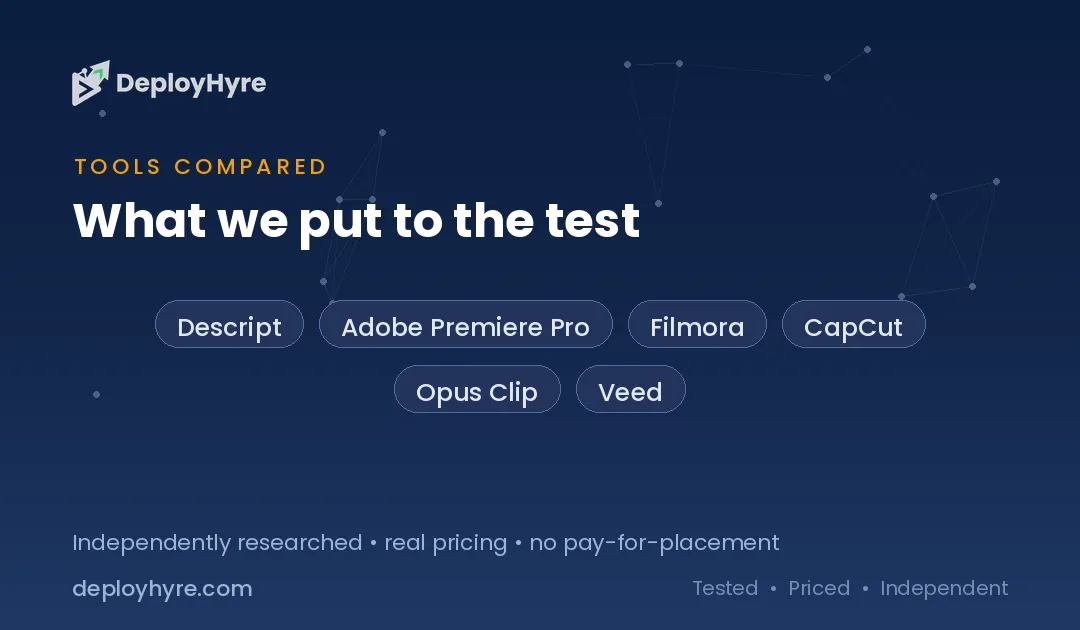
We tested 9 AI video editing tools across editing speed, AI features, output quality, and price. We grouped them by job: all-in-one editors, short-form social tools, and generative or avatar platforms. To caption finished clips, pair your editor with our guide to the best AI subtitle generators.
Quick Comparison: Top AI Video Editing Software
| Tool | Best For | Starting Price | Standout AI Feature |
|---|---|---|---|
| Descript | Podcasts and talking-head video | Free; paid from $16/mo | Text-based editing |
| Adobe Premiere Pro | Pro teams and enterprises | $22.99/mo | Firefly and scene edit detection |
| Filmora | Budget desktop creators | From $49.99/yr | AI text-to-video and 4K export |
| CapCut | Short-form social content | Free; Pro $19.99/mo | Trending effects and auto-captions |
| Opus Clip | Repurposing long video to clips | From $15/mo | AI clip detection and reframing |
| Veed | Browser-based quick edits | From $12/mo | Captions and translation |
| Runway | Generative video and VFX | Free; paid from $15/mo | Text-to-video generation |
| Synthesia | AI avatar and training video | Free; paid plans | AI presenter avatars |
| Pictory | Turning text into video | Paid plans | Script-to-video automation |
What Is AI Video Editing Software?
AI video editing software automates slow editing tasks like captioning, scene detection, reframing, and audio cleanup using machine learning. It lets creators edit by text, generate b-roll, and reformat clips for each platform, cutting production time without requiring deep editing skills.
These tools handle the repetitive work that used to eat hours. AI now transcribes footage, finds the best moments, removes filler words, and resizes a horizontal video into a vertical clip in one click. That speed matters when video drives most internet traffic and brands publish daily.
Best All-in-One AI Video Editors
These tools cover full edits from import to export, with AI built into a complete timeline.
1 Descript: Best for podcasts and talking-head video
Descript lets you edit video by editing text, like a word processor for footage.
What it does well. Descript transcribes your video, then deleting a word in the transcript cuts that moment from the timeline. It removes filler words automatically and clones voices for fixes, making it the easiest editor for non-technical creators.
Key features:
- Text-based editing from transcript
- Filler-word and gap removal
- AI voice cloning for corrections
- Screen recording and podcast tools
Pricing. Descript offers a free plan, with paid tiers at $16, $30, and $50 per month.
Best for: Podcasters and creators of talking-head content.
Limitations. Less suited to cinematic, effects-heavy edits. Complex multi-track projects feel limited.
2 Adobe Premiere Pro: Best for pro teams and enterprises
Premiere Pro remains the industry standard, now with Firefly AI built in.
What it does well. Premiere Pro offers speech-to-text captions in seconds, scene edit detection that places cut points on imported footage, color match across clips, and AI audio cleanup. It fits teams already using Adobe Creative Cloud.
Key features:
- Firefly generative AI integration
- Scene edit detection on long footage
- Auto-transcription and captions
- AI audio enhancement and color match
Pricing. Premiere Pro costs $22.99 per month, with Firefly features included.
Best for: Professional editors and enterprise teams.
Limitations. Steeper learning curve than consumer tools. Subscription cost adds up across a team.
3 Filmora: Best for budget desktop creators
Filmora packs strong AI features into an affordable desktop editor.
What it does well. Filmora includes AI text-to-video, background removal, and 4K export at a low yearly price. Its interface is friendlier than Premiere Pro for hobbyists and small business creators.
Key features:
- AI text-to-video generation
- 4K export and motion tracking
- Large template and effects library
- AI audio and background tools
Pricing. Filmora starts at $49.99 per year for the basic plan.
Best for: Budget-conscious desktop creators.
Limitations. Less powerful than pro tools for advanced work. Some AI features need credits.
Best AI Video Editors for Short-Form Social
These tools specialize in vertical clips, captions, and fast social output. They pair well with our guide to the best AI tools for social media video.
4 CapCut: Best for short-form social content
CapCut is the dominant mobile and web editor for social clips.
What it does well. CapCut offers a generous free tier, daily-updated trending effects, and auto-captions. Projects sync between phone and desktop, so creators edit anywhere. The Pro plan adds 4K export, background removal, and voice cloning.
Key features:
- Auto-captions and trending effects
- Phone-to-desktop project sync
- Templates for TikTok, Reels, and Shorts
- Background removal and voice cloning on Pro
Pricing. CapCut is free, with a Standard plan at $9.99 per month and Pro at $19.99 per month.
Best for: Short-form social creators.
Limitations. Built for short clips, not long projects. Some features depend on the mobile app.
5 Opus Clip: Best for repurposing long video to clips
Opus Clip turns long videos into ready-to-post short clips automatically.
What it does well. Opus Clip analyzes source video, finds clip-worthy moments, reframes footage to vertical or square, and adds captions. It saves creators hours when repurposing podcasts and webinars into social content.
Key features:
- AI moment detection and scoring
- Auto-reframe to vertical and square
- Animated captions and B-roll
- Bulk clip generation
Pricing. Opus Clip paid plans start at $15 per month for Starter and $29 per month for Pro.
Best for: Creators repurposing long video into clips.
Limitations. Narrow focus on clipping, not full editing. Clip quality varies by source.
6 Veed: Best for browser-based quick edits
Veed is a browser editor that handles captions, translation, and quick fixes.
What it does well. Veed runs entirely in the browser with no install, making it a strong finishing tool for captions, translations, and fast trims. It suits teams that need quick edits without heavy software.
Key features:
- Auto-subtitles and translation
- Browser-based, no install needed
- Templates and brand kits
- AI audio cleanup and avatars
Pricing. Veed paid plans start at $12 per month.
Best for: Teams wanting quick browser edits.
Limitations. Less suited to long, complex timelines. Heavier projects can lag in-browser.
Best Generative and Avatar AI Video Tools
These tools create video from text or AI presenters rather than editing recorded footage.
7 Runway: Best for generative video and VFX
Runway leads in generative video and visual effects.
What it does well. Runway turns text prompts into video clips and powers AI VFX like object removal and motion effects. It gives creators tools that once required a full effects studio.
Key features:
- Text-to-video and image-to-video generation
- AI VFX and object removal
- Motion brush and camera controls
- Green-screen and inpainting tools
Pricing. Runway offers a free plan, with paid tiers at $15, $35, and $95 per month.
Best for: Creators needing generative video and VFX.
Limitations. Generation can take minutes per clip. Output still needs review for accuracy.
8 Synthesia: Best for AI avatar and training video
Synthesia creates videos with AI presenter avatars from a script.
What it does well. Synthesia turns text into a video of an AI avatar speaking, with support for many languages. Fortune 500 companies use it widely for training and marketing video at scale.
Key features:
- AI avatars in many languages
- Script-to-video generation
- Custom avatar and brand options
- Templates for training content
Pricing. Synthesia offers a free plan plus paid tiers, with Enterprise quoted custom.
Best for: Teams making training and explainer video.
Limitations. Avatars suit explainer video, not live-action storytelling. Custom avatars cost more.
9 Pictory: Best for turning text into video
Pictory converts scripts and articles into short videos automatically.
What it does well. Pictory turns text and blog posts into narrated video with stock footage, captions, and voiceover. It helps marketers repurpose written content into video fast.
Key features:
- Script and article to video
- Auto captions and voiceover
- Stock footage and music library
- Highlight-reel creation from long video
Pricing. Pictory lists paid plans on its site, billed monthly or yearly.
Best for: Marketers repurposing text into video.
Limitations. Output leans on stock footage. Less control than a full editor.
How Should You Choose AI Video Editing Software?
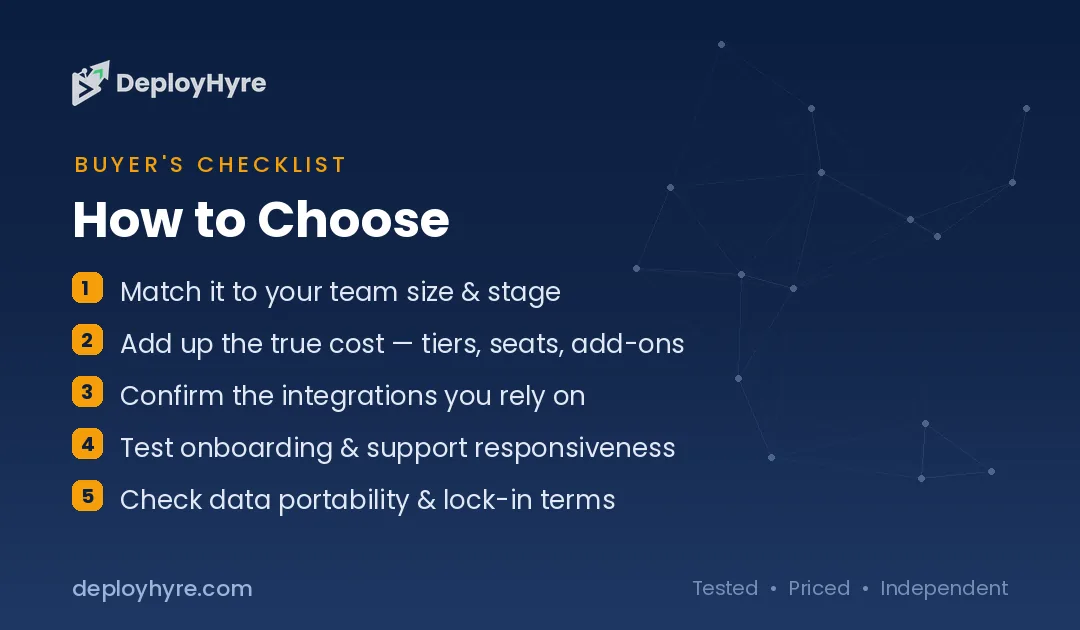
Match the tool to your main video job. Pick Descript for podcasts, Premiere Pro for pro edits, CapCut or Opus Clip for social clips, and Runway or Synthesia for generated video. The best editor is the one built for your most common task.
Start with your output. If you publish daily short clips, a social tool saves the most time. If you produce polished brand films, a full editor earns its cost. Generative tools fit teams that need footage they cannot film.
Check your budget and skill level next. Free tiers from CapCut, Descript, and Runway let you test before paying. Filmora and Veed offer low entry prices, while Premiere Pro suits teams ready for pro features.
Finally, test the AI on a real project. Run a true edit, not a demo. Strong tools save hours. Weak ones add cleanup work that cancels the time saved.
How We Evaluated These Tools
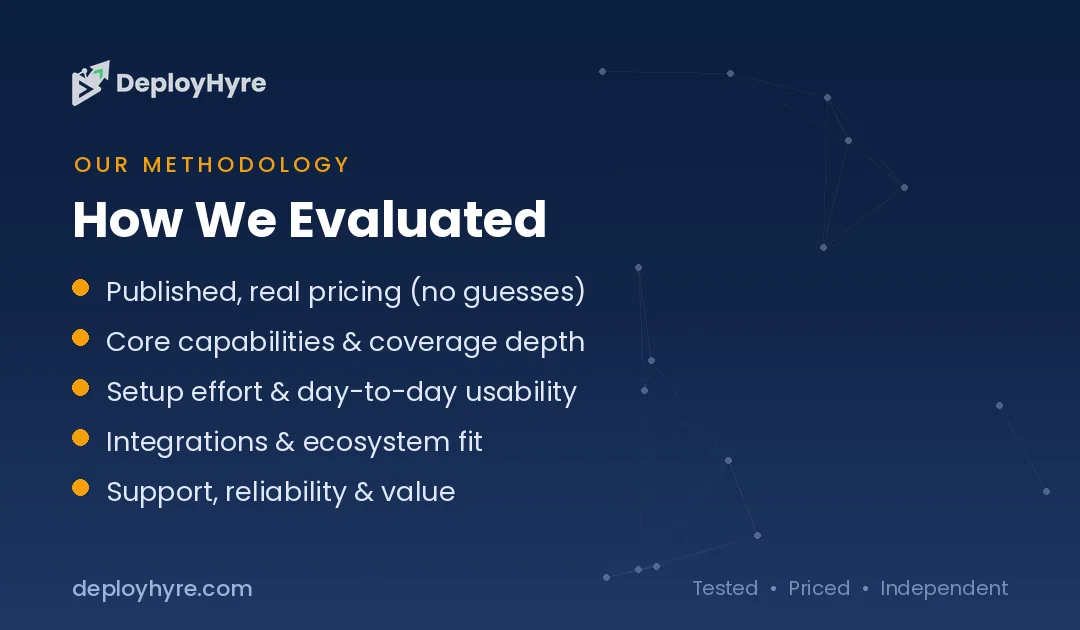
We assessed each tool on five factors: editing speed, AI feature depth, output quality, ease of use, and price. We used vendor documentation, current 2026 pricing pages, hands-on social and long-form workflows, and independent reviews from Venture Harbour and ToolChase.
We did not crown one overall winner because video jobs differ. A podcaster, a TikTok creator, and a corporate trainer need different tools. We grouped editors by use case so you can shortlist faster. For text-heavy content workflows, see our guide to the best free AI tools for marketing.
The Bottom Line
AI video editing has gone mainstream as video drives most online attention and the market grows past 42 percent a year. The best pick depends on what you make, not a single ranking.
Social creators should start with CapCut or Opus Clip. Podcasters should test Descript. Pro teams should stay with Premiere Pro, and anyone needing generated footage should try Runway or Synthesia. To turn raw recordings into clean transcripts first, pair your editor with our roundup of the best AI transcription software, and see how AI reshapes operations in our overview of AI for business.
Frequently Asked Questions
What is the best AI video editing software?
The best tool depends on your work. Descript leads for podcasts, Premiere Pro for pro edits, CapCut and Opus Clip for social clips, and Runway and Synthesia for generated video.
Is there a free AI video editor?
Yes. CapCut, Descript, and Runway all offer free plans. CapCut’s free tier is especially generous for short-form social content, though paid plans unlock 4K export and advanced AI features.
Can AI video editing software replace a human editor?
Not fully. AI automates captioning, reframing, and rough cuts, but humans still handle creative direction and final polish. AI tools speed up the work rather than remove the editor’s judgment.
Which AI video tool is best for social media clips?
CapCut and Opus Clip lead for social. CapCut excels at trending effects and captions, while Opus Clip turns long videos into ready-to-post vertical clips with AI moment detection.
How much does AI video editing software cost?
Prices range from free to about $95 per month. CapCut Pro is $19.99, Premiere Pro is $22.99, Descript runs $16 to $50, and Filmora starts at $49.99 per year.

David Austin is a technology writer and software analyst at DeployHyre, where he covers AI tools, SaaS platforms, cloud hosting, and business automation. He focuses on hands-on comparisons of pricing, features, and real-world performance so teams can pick the right software with confidence.
Know AI, SaaS, or cloud tools inside out? Pitch a guest post and get in front of thousands of buyers researching their next tool.