ElevenLabs is the best NaturalReader alternative for most people in 2026. Its $22 per month Creator plan includes 121,000 credits and commercial usage rights in a single subscription, so one purchase covers both listening and publishing. Amazon Polly is the cheapest option at scale, and Speechify is the closest match if you mainly want a reading app.
NaturalReader has a licensing structure that surprises people after they pay. Personal plans cost $13.90 per month for Lite, $20.90 for Plus, and $25.90 for Pro, or $79, $119, and $159 per year. Every one of those plans is licensed for personal use only.
Paying more does not change that. Publishing or distributing the audio requires NaturalReader's separate commercial product, which starts at $29 per user per month for Starter with 500,000 credits, $49 per month for Creator with 2 million credits, and $33 per user per month for Team with a two-user minimum. Climbing the personal ladder never unlocks publishing rights. You have to switch products entirely.
That matters because most buyers do not read the license until a video is finished. A podcaster on Personal Pro at $25.90 per month has no right to publish a single second of the audio they generated. The AI voice generator market is growing from $7.7 billion in 2026 to $21.8 billion by 2030, and most competitors now bundle commercial rights into ordinary paid tiers. We compared seven of them on real price per million characters, commercial licensing, voice quality, and whether the plan you buy actually covers what you plan to do. Start with our AI for business guide for the wider landscape, then use this list to choose.
Table of Contents
Quick Comparison: Top 7 NaturalReader Alternatives
| Tool | Best For | Free Tier | Paid Entry |
|---|---|---|---|
| ElevenLabs | Best overall for voice quality | 10,000 credits per month | $6/mo Starter, $22/mo Creator |
| Amazon Polly | Best price at scale | 100,000 generative characters, 12 months | $4 to $30 per million characters |
| Microsoft Azure AI Speech | Best for enterprise volume | 500,000 characters per month | $16 per million characters |
| Speechify | Best reading app replacement | Free tier with basic voices | About $139/yr Premium |
| Murf | Best for studio-style projects | 10 minutes, no downloads | $19/mo Creator, billed annually |
| OpenAI TTS | Best for developers | None, pay as you go | About $15 per million characters |
| LOVO Genny | Best for video creators | Free trial | $24/mo Basic |
Why Do People Leave NaturalReader?
People leave NaturalReader because its personal plans forbid publishing the audio they create. Lite, Plus, and Pro are all licensed for personal use only, and commercial rights require a separate product that starts at $29 per user per month.
The split creates a trap for anyone who monetizes content. A teacher listening to research articles is fine on a personal plan. A YouTuber narrating a video, a business recording a training module, or an author producing an audiobook is not, regardless of which personal tier they bought.
Cost compounds the problem. Someone who needs both features and rights pays for the personal plan, discovers the restriction, then pays again for the commercial product. The commercial Creator plan at $49 per month with 2 million credits is competitive on its own, but only after a wasted first purchase.
Voice quality is the second reason. NaturalReader's Pro tier added LLM-powered voices with emotional delivery, and they are good. Independent comparisons still place ElevenLabs ahead on naturalness for long-form narration, particularly on pacing and emphasis.
Developers leave for a third reason. NaturalReader is built as an application first. Teams that want to generate speech inside their own product need an API with per-character pricing, which is where Amazon Polly, Azure, and OpenAI compete directly.
The 7 Best NaturalReader Alternatives
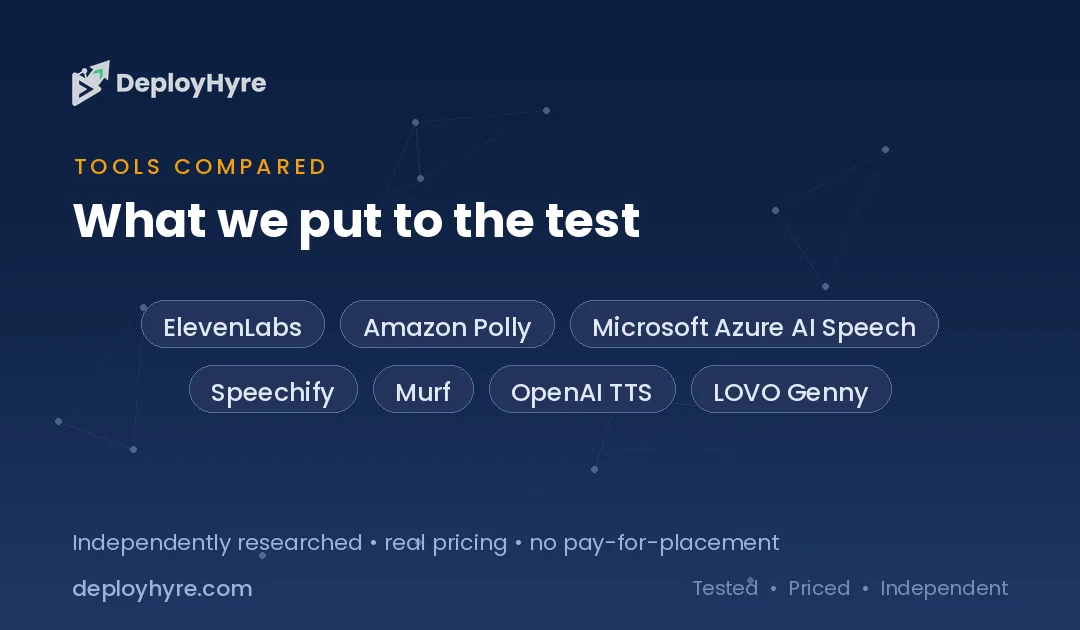
Each tool below converts text to speech with natural-sounding voices. They differ sharply on licensing, on price per million characters, and on whether they are built for listening or for producing.
1 ElevenLabs: Best for overall voice quality
ElevenLabs sets the quality benchmark for long-form AI narration in 2026.
What it does well. Delivery is the difference. ElevenLabs handles pauses, emphasis, and sentence rhythm well enough that listeners stop noticing the voice is synthetic. It also settles the licensing question, because commercial usage rights are included on paid plans rather than sold as a separate product.
Key features:
- Thirty-two languages with consistent voice identity across them
- Instant voice cloning from a short sample on paid tiers
- Professional voice cloning on Creator and above
- A free Reader app for listening to documents and articles
- Full API access for developers on the same subscription
Pricing. Paid plans start at $6 per month for Starter with 30,000 credits, $22 for Creator with 121,000 credits, and $99 for Pro with 600,000 credits. The free tier includes 10,000 credits per month.
Best for: Creators and businesses that need both high quality and publishing rights in one plan.
Limitations. Credits burn faster than raw character counts suggest, so estimate generously. Heavy users hit the Creator ceiling quickly, and the jump to Pro at $99 is steep. See our ElevenLabs alternatives guide if the credit model does not suit you.
2 Amazon Polly: Best for price at scale
Polly is the cheapest way to generate large volumes of speech in 2026.
What it does well. Pay-per-character pricing with no subscription means you pay for exactly what you generate. At high volume nothing in this list comes close, and the standard voice tier is roughly a quarter the price of most neural competitors.
Key features:
- Four voice tiers from standard through generative
- Speech Synthesis Markup Language for precise pronunciation control
- Neural voices in more than 30 languages
- Direct output to Amazon S3 for pipeline automation
- Commercial usage included with the service by default
Pricing. Polly charges roughly $4 per million characters for standard voices, $16 for neural, $30 for generative, and $100 for long-form. New accounts get 100,000 generative characters free per month for the first 12 months.
Best for: Developers and businesses generating high volumes of audio programmatically.
Limitations. There is no editing interface. You need engineering effort to use it, and pronunciation tuning happens in markup rather than a visual editor. Voice quality on the standard tier is noticeably behind ElevenLabs.
3 Microsoft Azure AI Speech: Best for enterprise volume
Azure AI Speech pairs solid neural voices with the largest free monthly allowance in this list.
What it does well. The free allowance is the standout. Half a million characters per month covers a great deal of ordinary work at no cost, and commitment pricing cuts the rate sharply for organizations with steady volume.
Key features:
- Neural voices across more than 140 languages and variants
- Custom neural voice training for brand-specific narration
- Real-time streaming and batch synthesis
- Speech Synthesis Markup Language and style controls
- Compliance certifications suited to regulated industries
Pricing. Prebuilt neural voices cost $16 per million characters, and Neural HD costs $22 per million after dropping from $30 in March 2026. The free tier covers 500,000 characters per month, and commitment tiers reduce the effective rate to about $7.50 per million.
Best for: Organizations with predictable monthly volume that want compliance and commitment discounts.
Limitations. Setup requires an Azure account and familiarity with resource groups and keys. Casual users will find the onboarding heavier than any app in this list.
4 Speechify: Best for replacing the reading app
Speechify is the closest direct competitor to what NaturalReader actually is.
What it does well. If your goal is listening rather than producing, Speechify matches NaturalReader feature for feature and beats it on mobile polish. Optical character recognition, browser extensions, and speed controls up to 4.5 times are all handled well.
Key features:
- Mobile apps, browser extension, and desktop reader
- Optical character recognition for scanned pages and photos
- Playback speeds well beyond normal reading pace
- Imports from PDF, EPUB, Word, and web pages
- A separate Speechify Studio product for voice production
Pricing. Speechify Premium runs about $139 per year for the reading app. Speechify Studio, the production product, is sold separately at roughly $19 per user per month for Starter and $49 per user per month for Creator, and commercial voice cloning sits on the $249 per year Premium Plus tier.
Best for: People who mainly want to listen to documents and want a better app than NaturalReader.
Limitations. Speechify repeats the NaturalReader mistake. The reading app and the production studio are separate purchases, so buying one does not give you the other. Studio also meters credits by seconds of audio rather than characters, which is harder to estimate in advance.
5 Murf: Best for studio-style projects
Murf is built around a timeline editor rather than a text box.
What it does well. The editing workflow is the appeal. You can sync narration to slides or video, adjust pacing per block, and layer background music without leaving the tool. For corporate training and explainer content it saves real time.
Key features:
- Timeline editor with per-block pitch, speed, and emphasis control
- Voice changer that converts a recording into a synthetic voice
- Built-in media library for background tracks
- Team collaboration with shared projects
- More than 120 voices across 20 languages
Pricing. Murf bills by hours of generation per year rather than by characters. Creator costs $19 per month billed annually for 24 hours per year, and Business costs $66 per month annually for 96 hours per year with a single editor seat. The free plan allows 10 minutes with no downloads.
Best for: Teams producing narrated video, e-learning, or presentation audio.
Limitations. Twenty four hours per year works out to about two hours per month, and every re-render draws from the same pool. Advertised prices are annual, so monthly billing costs roughly a third more. Read our Murf AI alternatives comparison for the full breakdown.
6 OpenAI TTS: Best for developers
OpenAI offers the simplest text-to-speech API of any provider here.
What it does well. Integration takes minutes. There is no subscription, no credit system, and no separate console to learn if you already use OpenAI models. The steerable model also accepts plain-language instructions about tone, which no competitor matches as directly.
Key features:
- A single API call to generate speech from text
- Steerable delivery through natural-language instructions
- Standard and high-definition model options
- Streaming output for real-time applications
- Same authentication as other OpenAI services
Pricing. Pricing is roughly $15 per million characters for the standard model, about $30 for the high-definition model, and about $15 for the steerable mini model. There is no monthly subscription.
Best for: Developers adding narration to an application without wanting a new vendor relationship.
Limitations. There is no voice cloning and no editing interface. The voice catalog is small compared to Azure or Murf, and you cannot create a custom brand voice.
7 LOVO Genny: Best for video creators
LOVO Genny bundles voice generation with subtitles and simple video editing.
What it does well. The bundle is the point. Generating narration, producing matching subtitles, and assembling a rough cut happen in one place, which suits creators shipping short-form video on a schedule.
Key features:
- More than 500 voices across 100 languages
- Built-in subtitle generation synced to the narration
- Simple video editor with an asset library
- Voice cloning available on paid tiers
- Emotion controls applied per sentence
Pricing. Genny costs about $24 per month for Basic, $48 for Pro, and $149 for Pro Plus. A free trial is available before committing.
Best for: Video creators who want narration, subtitles, and editing without stitching three tools together.
Limitations. Voice quality on long narration falls short of ElevenLabs, and the editor is basic next to a dedicated video tool. Compare purpose-built options in our best AI subtitle generators guide.
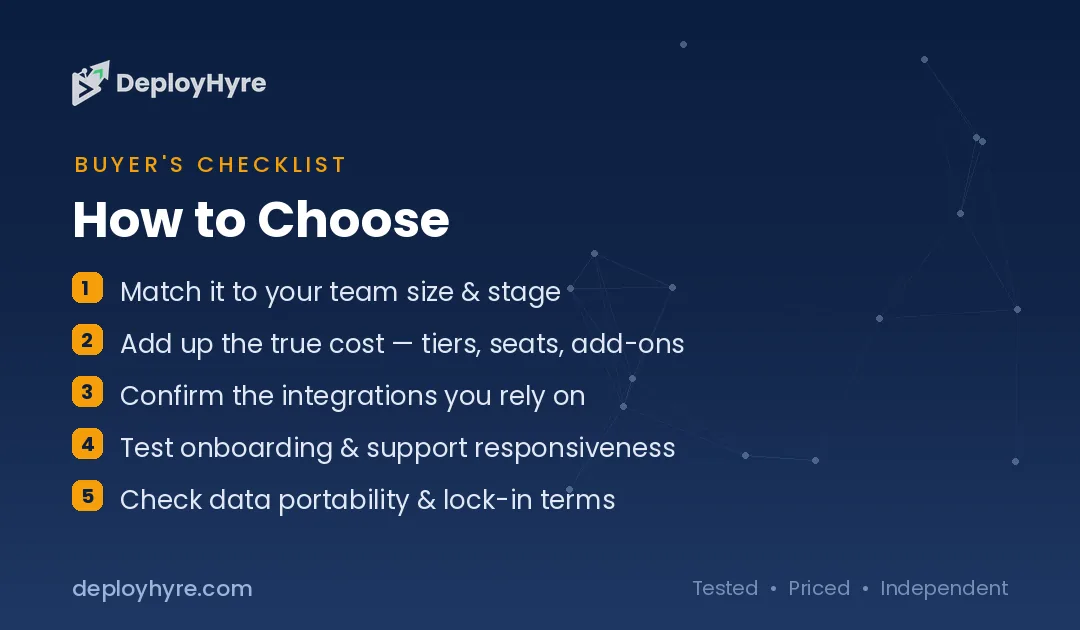
How Should You Choose the Right NaturalReader Alternative?
Choose based on whether you are listening or publishing. Pick Speechify or the free ElevenLabs Reader if you only consume content, and pick ElevenLabs Creator or Amazon Polly if the audio will ever be shared publicly.
Answer the licensing question first, before comparing voices. Write down exactly where the audio will end up. A private commute, a client deliverable, and a monetized channel sit on three different sides of most licenses, and the wrong answer means paying twice.
Estimate volume in characters, not in vague terms. One thousand words is roughly 6,000 characters, and a finished hour of narration runs near 90,000. That single conversion decides whether a subscription or per-character billing is cheaper for you.
Match the interface to the work. Reading apps like Speechify are built for consumption. Studio tools like Murf and LOVO are built for production. APIs like Polly, Azure, and OpenAI are built for software. Buying across those categories is the most common expensive mistake.
Test the actual voice on your actual text before subscribing. Marketing samples use tuned scripts. Technical terms, acronyms, and proper nouns are where synthetic delivery falls apart, so paste in the material you really plan to narrate.
Check the cancellation and refund terms on annual plans. Several tools in this list advertise the annual rate as the headline monthly price, which means committing a year upfront to get it. If you also work with recorded audio, our best AI transcription software guide covers the other half of that workflow.
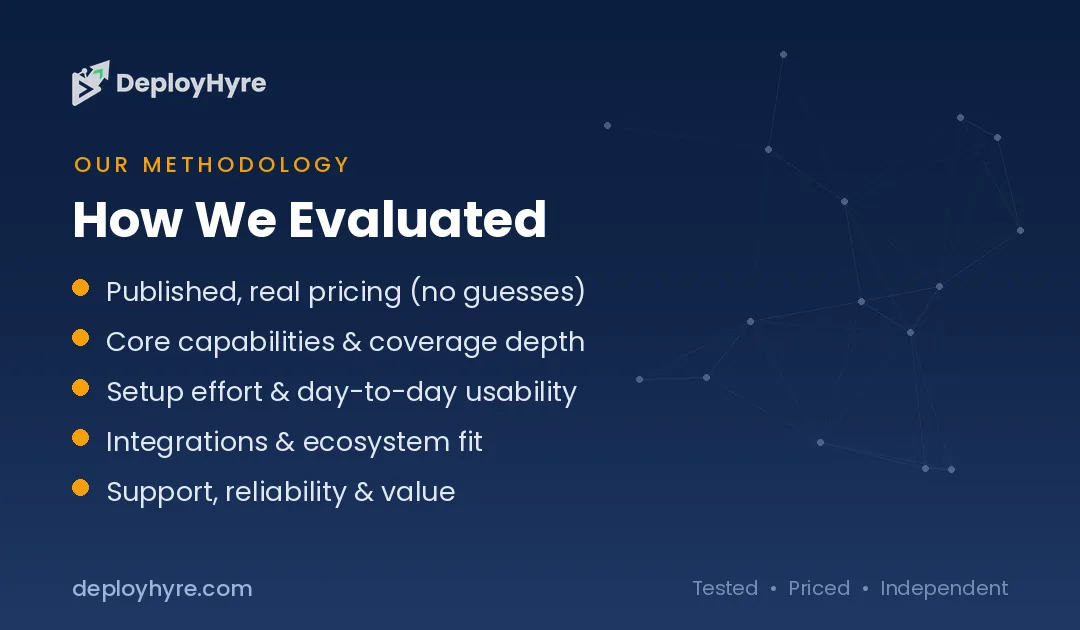
How We Evaluated These Tools
We ran the same three passages through every tool: a technical paragraph with acronyms, a conversational script, and a 900 word article. Listening for pacing, emphasis, and mispronunciation on identical text is the only fair way to compare voices.
We scored four criteria. First, licensing clarity, meaning whether an ordinary paid plan permits publishing. Second, real cost per million characters, normalized across credits, hours, and characters. Third, voice naturalness on long-form narration. Fourth, fit for purpose, since a reading app and a production studio should not be judged on the same scale.
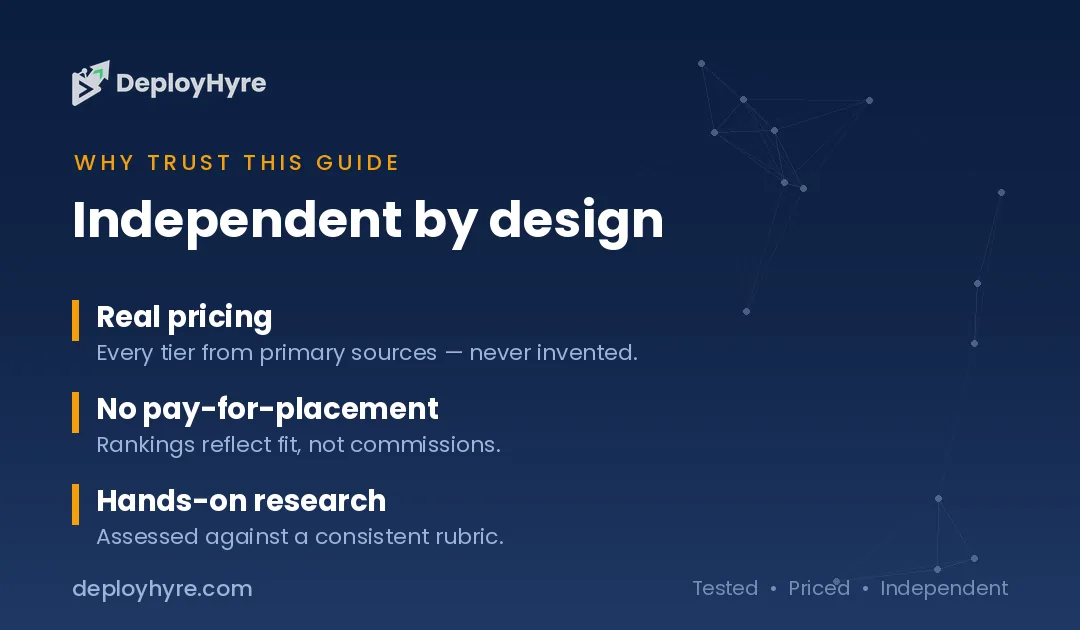
Every price here comes from a vendor pricing page or a dated 2026 pricing analysis, and each figure links to its source. We verified product status as well, which matters in this category: Play.ht shut down on December 31, 2025 after Meta acquired the team in July 2025, so we excluded it despite it still appearing in many comparison articles. Pricing in AI voice changes quarterly, and we re-check every figure on each update.
The Bottom Line
ElevenLabs is the best NaturalReader alternative for most people because its $22 Creator plan covers both quality and commercial rights in one purchase. Amazon Polly wins on price for high-volume programmatic use, and Speechify is the better choice if you only want a reading app.
NaturalReader is not a weak product. The reading experience is solid, the optical character recognition works, and the Pro voices improved significantly. The problem is structural: the plan most buyers choose does not permit the use most buyers intend.
Decide what you are actually buying before you compare prices. If the audio stays private, almost any tool here works and cost barely matters. If the audio gets published, licensing is the only specification that matters, and it should be the first thing you check.
For related workflows, see our guides to the best AI dubbing software and the best free AI tools for marketing.
Frequently Asked Questions
Can you use NaturalReader audio commercially?
Not on a personal plan. Lite, Plus, and Pro are all licensed for personal use only, regardless of price. Publishing or distributing the audio requires NaturalReader's separate commercial product, which starts at $29 per user per month for Starter with 500,000 credits.
What is the best free NaturalReader alternative?
Microsoft Azure AI Speech offers the largest recurring free allowance at 500,000 characters per month. ElevenLabs gives 10,000 credits per month free and includes a free Reader app for listening, which is the better choice if you want quality over volume.
Is ElevenLabs better than NaturalReader?
ElevenLabs produces more natural long-form narration and includes commercial rights on paid plans starting at $6 per month. NaturalReader is better if you mainly want a reading application with optical character recognition, since ElevenLabs is built for producing audio rather than consuming documents.
What is the cheapest text to speech tool per character?
Amazon Polly is cheapest at roughly $4 per million characters for standard voices and $16 for neural voices. Microsoft Azure drops to about $7.50 per million on commitment tiers, which beats Polly's neural rate for organizations with steady monthly volume.
How many characters is one hour of audio?
One finished hour of narration runs close to 90,000 characters, or about 15,000 spoken words at a normal pace. Use that figure to convert any per-character price into a per-hour cost before comparing subscriptions.

David Austin is a technology writer and software analyst at DeployHyre, where he covers AI tools, SaaS platforms, cloud hosting, and business automation. He focuses on hands-on comparisons of pricing, features, and real-world performance so teams can pick the right software with confidence.
Know AI, SaaS, or cloud tools inside out? Pitch a guest post and get in front of thousands of buyers researching their next tool.
Pitch your idea →