Short-form video now leads social media. HubSpot reports that 93% of marketers see strong ROI from video, the highest share since tracking began, and short-form clips deliver the top ROI of any format. The problem is speed. Brands need clips daily, and manual editing cannot keep up.
For the full picture, see our complete guide to AI marketing tools.
Table of Contents
For the full picture, see our complete guide to AI writing tools.
AI tools for social media video close that gap. They turn a script, a blog post, or a long recording into ready-to-post clips with captions, voiceovers, and music. Some clip your existing footage. Others build a full video from a text prompt. The right choice depends on what you already have.
We tested 8 leading platforms across output quality, speed, captions, pricing, and ease of use. This guide ranks them by use case, from repurposing long videos into shorts to creating avatar videos without a camera. Each pick fits a clear job so you stop wasting time on the wrong tool.
Quick Comparison: Top 8 AI Video Tools
| Tool | Best For | Starting Price | Core AI Feature |
|---|---|---|---|
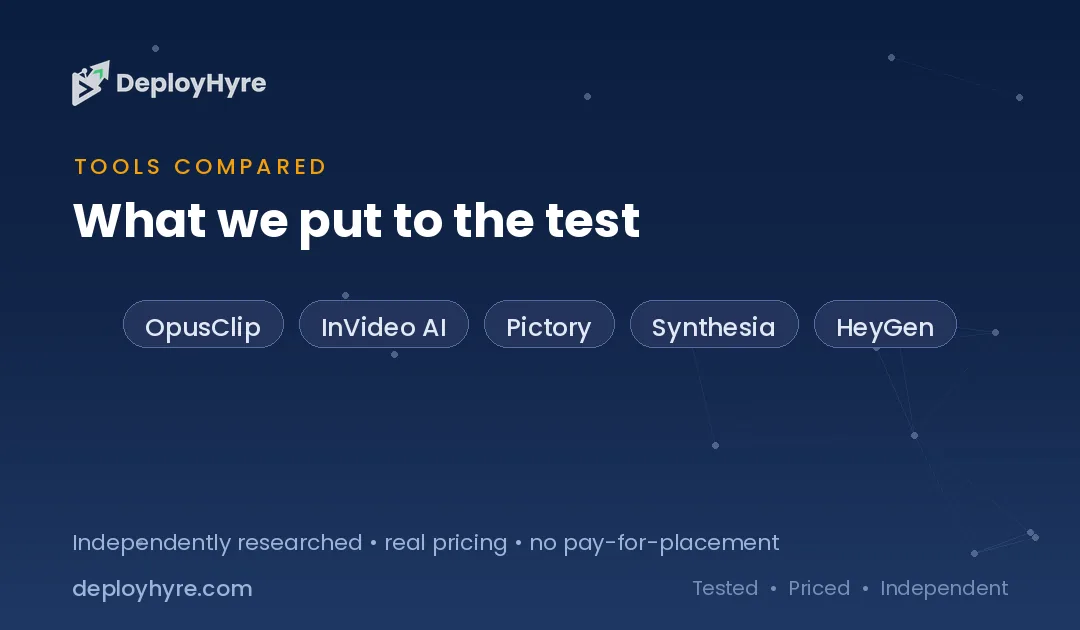
| OpusClip | Turning long videos into shorts | Free, then $15/mo | AI clip selection with virality score |
| InVideo AI | Text-to-video from a prompt | Free, then $30/mo | Full video from one text prompt |
| Pictory | Blog posts into video | Free, then $29/mo | Article-to-video with stock matching |
| Synthesia | Avatar and training videos | $29/mo | AI avatars in 140-plus languages |
| HeyGen | Avatar videos and localization | Free, then ~$29/mo | Avatar cloning and video translation |
| Descript | Podcast and talking-head edits | Free, then $24/mo | Edit video by editing the transcript |
| Canva | All-in-one social teams | Free, then $15/mo | Magic video and brand templates |
| Veed.io | Subtitles and social clips | Free, then ~$25/mo | Auto subtitles and AI editing |
What Do AI Social Media Video Tools Do?
AI social media video tools create and edit clips with little manual work. They turn text, blog posts, or long recordings into short videos with captions, voiceovers, music, and on-brand styling. Some clip existing footage into shorts, while others generate a full video from a single prompt.
The category splits into three jobs. First, repurposing: tools like OpusClip cut long videos into many shorts. Second, generation: tools like InVideo and Pictory build new videos from text. Third, avatars: tools like Synthesia and HeyGen produce talking-head videos with no camera.
Most tools add captions automatically, since YouTube Shorts averages over 70 billion daily views and many viewers watch on mute. Strong tools also export in vertical formats for TikTok, Reels, and Shorts, and keep your fonts and colors consistent.
Best AI Tools for Repurposing Long Video
1. OpusClip: Best for turning long videos into shorts
OpusClip is built for creators, podcasters, and agencies who produce long content and want more clips from it.
What it does well. OpusClip scans a long video, finds the strongest moments, and cuts them into vertical shorts. It adds animated captions, reframes the speaker, and gives each clip a virality score so you post the best ones first. Over 16 million creators use the platform, per OpusClip.
Key features:
- AI clip selection from long videos
- Virality score for each clip
- Auto captions and speaker reframing
- Brand templates and scheduling
Pricing. OpusClip offers a free plan with 60 credits per month at 1080p with a watermark. The Starter plan at $15 per month raises credits and removes the watermark.
Best for: Creators and podcasters repurposing long content into many shorts.
Limitations. OpusClip needs existing footage. It clips video, it does not create it.
2. Descript: Best for podcast and talking-head edits
Descript edits video the way you edit a document, which suits podcasters and solo creators.
What it does well. Descript transcribes your recording, then lets you edit the video by editing the text. Delete a sentence and the footage trims with it. AI removes filler words, fixes audio, and creates clips for social. The transcript workflow makes long edits fast and simple.
Key features:
- Edit video by editing the transcript
- Filler-word and pause removal
- AI clip creation for social
- Studio Sound audio cleanup
Pricing. Descript has a free tier. Paid plans start near $24 per month with more transcription hours and exports.
Best for: Podcasters and talking-head creators who want text-based editing.
Limitations. It is less suited to heavy motion graphics or fully generated video.
Best AI Tools for Generating Video From Text
3. InVideo AI: Best for text-to-video from a prompt
InVideo AI handles the full production from one prompt, which fits fast social output.
What it does well. InVideo AI takes a single prompt and writes a script, selects visuals from a large library, adds voiceovers in many languages, and edits the clip together. You refine it with text commands. For speed from idea to draft, InVideo leads. It pairs well with a steady marketing content workflow.
Key features:
- Full video from one text prompt
- Script generation and stock visuals
- Voiceovers in 50-plus languages
- Text-command editing
Pricing. The free plan includes 10 minutes of video with a watermark. Paid plans start near $30 per month to remove the watermark and add minutes.
Best for: Marketers who want fast social videos from a prompt.
Limitations. Stock-based visuals can look generic without manual tweaks.
4. Pictory: Best for turning blog posts into video
Pictory specializes in repurposing written content into short videos.
What it does well. Pictory takes a blog post or script, pulls the key points, matches them with stock visuals, and adds captions and music. Paste a 1,000-word article and it builds a shareable clip in minutes. Content teams use it to give old posts a second life as video.
Key features:
- Article-to-video conversion
- Auto highlight extraction
- Stock visual and music matching
- Auto captions for social
Pricing. Pictory has a free tier. The Starter plan is $29 per month, Professional is $59 per month, and Team is $199 per month, per Pictory.
Best for: Bloggers and content teams repurposing articles into video.
Limitations. Output leans on stock footage, so it suits informational clips more than branded storytelling.
Best AI Tools for Avatar and Faceless Video
5. Synthesia: Best for avatar and training videos
Synthesia creates polished talking-head videos without a camera or studio.
What it does well. Synthesia turns a script into a video led by a realistic AI avatar. It supports 140-plus languages and custom backgrounds, which suits training, explainers, and corporate social content. Teams produce consistent videos at scale without filming, then share them across channels.
Key features:
- AI avatars in 140-plus languages
- Script-to-video generation
- Custom backgrounds and branding
- Team collaboration and templates
Pricing. Plans start near $29 per month for the Starter tier, with a Creator tier around $89 per month for more minutes, per Synthesia.
Best for: Teams making training, explainer, and corporate social videos.
Limitations. Avatar delivery suits informational content more than high-energy social clips.
6. HeyGen: Best for avatar videos and localization
HeyGen focuses on avatar creation and translating videos into many languages.
What it does well. HeyGen clones an avatar quickly and generates videos from a script. Its standout is video translation, which dubs and lip-syncs your clip into other languages. Brands reaching global audiences localize one video into many markets in minutes, which expands reach without reshoots.
Key features:
- Fast avatar cloning
- Script-to-video generation
- Video translation with lip-sync
- Team collaboration
Pricing. HeyGen offers a free plan. Paid plans start near $29 per month, with higher tiers for more video minutes.
Best for: Brands localizing videos for global social audiences.
Limitations. Realistic custom avatars require setup time and clear source footage.
Best All-in-One AI Tools for Social Teams
7. Canva: Best for all-in-one social teams
Canva folds AI video into the design platform many social teams already use.
What it does well. Canva’s Magic features generate short videos, add captions, and apply brand kits across formats. Teams design posts, stories, and videos in one place with shared templates. For small teams that want video, images, and graphics together, Canva removes tool sprawl.
Key features:
- Magic video generation
- Brand kit and templates
- Auto captions and resizing
- Built-in stock and design tools
Pricing. Canva is free with limited AI video. Canva Pro starts near $15 per month and unlocks more AI minutes and brand tools.
Best for: Small social teams that want design and video in one tool.
Limitations. Advanced AI generation is lighter than dedicated video platforms.
8. Veed.io: Best for subtitles and quick social clips
Veed.io is a browser editor strong on captions and fast social edits.
What it does well. Veed.io adds accurate auto subtitles, cleans audio, and edits clips for vertical platforms. Its AI tools cut filler, generate captions, and resize for TikTok and Reels. Creators who post often value the speed and the polished subtitle styles that lift watch time on mute.
Key features:
- Accurate auto subtitles
- AI editing and audio cleanup
- Vertical resizing for social
- Templates for fast clips
Pricing. Veed.io has a free plan with watermarks. Paid plans start near $25 per month for more exports and features.
Best for: Creators who need strong subtitles and quick social edits.
Limitations. It is more an editor than a from-scratch video generator.
How Should You Choose the Right AI Video Tool?
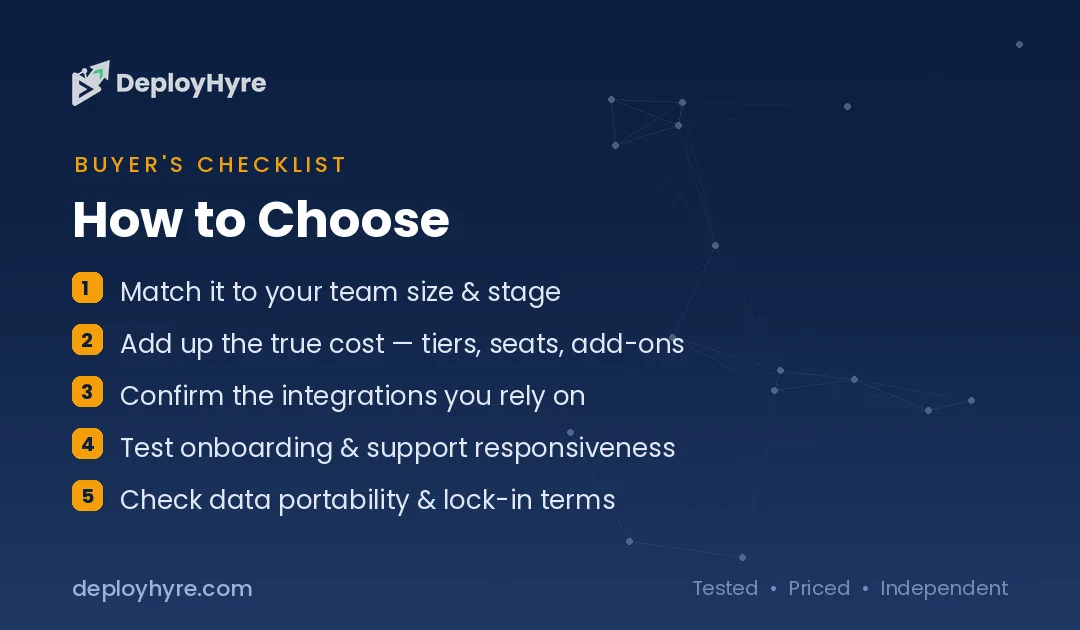
Choose by what you already have. With long videos to repurpose, pick OpusClip or Descript. Starting from text or a blog post, pick InVideo AI or Pictory. Needing on-camera presence without filming, pick Synthesia or HeyGen. Wanting one tool for a small team, pick Canva.
Name your starting point first. Existing footage points to clipping tools. A script or article points to generation tools. No camera points to avatar tools. Buying for your real input prevents paying for features you will not use.
Check captions and vertical export next, since most social views happen on mobile and on mute. Confirm the tool exports in 9:16 and styles captions well. Test the free tier before you pay, and watch for watermarks and minute limits that slow a real posting schedule. Strong video also supports sales outreach, so consider how clips fit your wider funnel.
How We Tested These AI Video Tools
We evaluated each tool on six factors: output quality, speed, caption accuracy, format support, ease of use, and value. We tested each on its core job, such as clipping long video for OpusClip and article-to-video for Pictory, since no single tool wins every task.
We confirmed current pricing from vendor pages and recent reviews, then matched each tool to a clear user. We did not score tools on feature count alone. A focused tool often beats a crowded one for a specific job. Video performance data came from HubSpot’s video marketing research.
Can AI video tools post directly to TikTok and Instagram?
Many do. Tools like OpusClip, Canva, and Veed.io export vertical 9:16 video and connect to TikTok, Reels, and Shorts for scheduling. Others export files you upload manually. Check native publishing before you buy.
Is AI-generated video good enough for brand marketing?
Yes, for most social content. AI handles clips, captions, and avatars at a quality that fits feeds and ads. High-stakes brand films still need human editing. Pair AI speed with a human review for tone and accuracy.
What is the cheapest way to make AI social videos?
Free tiers cover basic needs. OpusClip, Canva, InVideo AI, and Veed.io offer free plans with watermarks and limits. They suit testing and low volume. Paid plans near $15 to $30 remove watermarks for regular posting.
The Bottom Line
The best AI tool for social media video depends on your input. OpusClip and Descript win for repurposing long content. InVideo AI and Pictory turn text and articles into clips. Synthesia and HeyGen create avatar videos without a camera, and Canva suits small teams that want everything in one place.
Test the free tiers, check captions and vertical export, then commit to the tool that matches your workflow. To plan a wider content engine, explore free AI tools for marketing and the broader role of AI for business.
Frequently Asked Questions
What is the best AI tool for social media video?
The best tool depends on your input. OpusClip leads for cutting long videos into shorts. InVideo AI and Pictory generate video from text or blog posts. Synthesia and HeyGen create avatar videos without a camera. Canva suits small teams that want design and video in one place.
Can AI create a video without any footage?
Yes. Text-to-video tools like InVideo AI and Pictory build a full video from a prompt or article using stock visuals, voiceovers, and music. Avatar tools like Synthesia and HeyGen create talking-head videos from a script. You need no camera or recorded footage to start.
Are there free AI video tools for social media?
Yes. OpusClip, InVideo AI, Pictory, HeyGen, Canva, and Veed.io all offer free plans. Free tiers usually add a watermark and limit minutes or exports. They work well for testing, but a paid plan removes watermarks and supports a steady posting schedule.
Do AI video tools add captions automatically?
Most do. OpusClip, Veed.io, Pictory, and Canva generate captions automatically and style them for social. Captions matter because many social viewers watch on mute. Always review auto captions for names and technical terms, since AI can mishear them and a quick edit keeps your clip accurate.
Which AI video tool is best for businesses?
For business content, Synthesia and HeyGen lead with avatar and multilingual videos for training and global reach. InVideo AI and Pictory suit fast marketing clips, and Canva fits small teams. Choose based on whether you need on-camera presence, text-to-video speed, or an all-in-one design tool.

David Austin is a technology writer and software analyst at DeployHyre, where he covers AI tools, SaaS platforms, cloud hosting, and business automation. He focuses on hands-on comparisons of pricing, features, and real-world performance so teams can pick the right software with confidence.
Know AI, SaaS, or cloud tools inside out? Pitch a guest post and get in front of thousands of buyers researching their next tool.