TL;DR: Rippling wins for small and midmarket companies that want fast setup, one system for HR, payroll, and IT, and modern pricing near $8 per user plus modules. Workday wins for large and global enterprises that need deep analytics, financial planning, and proven scale. Choose Rippling for agility. Choose Workday for enterprise depth. Your headcount and complexity decide the answer.
More than 11,500 organizations, including over 65% of the Fortune 500, run Workday today. That scale shapes how the platform works. Workday was built for the enterprise from day one.
Rippling took a different path. It ships HR, payroll, and IT in one system and starts near $8 per user per month before add-ons. Setup is fast. The interface feels modern.
So which one fits your company in 2026? The honest answer depends on your size, your complexity, and how much you value speed versus depth. This guide breaks it down. If you want a wider view first, see our roundup of the best AI tools for HR.
Quick Comparison: Rippling vs Workday
| Feature | Rippling | Workday |
|---|---|---|
| Target company size | SMB to midmarket, scales up | Large and global enterprise |
| Pricing model | ~$8/user/mo base + per-module fees | Custom quote, no public pricing |
| Core HRIS | Yes, unified employee record | Yes, deep enterprise HCM |
| Payroll | Built-in, US and global | Built-in, strong global compliance |
| IT / device management | Yes, native MDM and app control | Limited, needs partners |
| Analytics / planning | Solid reporting, growing | Deep analytics and workforce planning |
| Implementation time | Days to weeks | 6 to 12 months typical |
| Best for | Speed and all-in-one simplicity | Scale, governance, and financial depth |
What Is the Core Difference Between Rippling and Workday?
Rippling is a unified workforce platform for growing companies, while Workday is an enterprise HCM and financials suite for large organizations. One favors speed and simplicity. The other favors depth and scale.
Rippling connects HR, IT, and Finance to a single employee record. When you hire someone, payroll, benefits, and their laptop all provision at once. This design suits companies that want fewer tools and less manual work.
Workday sits at the top of the market. It handles complex org structures, global compliance, and heavy analytics. More than half of Workday HCM customers are large organizations with 1,000 or more employees.
The split is clear. Rippling reaches down into small and midmarket teams. Workday starts where enterprise complexity begins.
How Do Rippling and Workday Compare on Pricing and Modules?
Rippling publishes a starting price near $8 per user per month and charges for modules, while Workday keeps pricing private and quotes each deal. Transparency versus negotiation defines the gap.
Rippling’s base platform starts around $8 per user per month. You then add modules like payroll, benefits, and IT. Most companies land in the $20 to $35 per employee range once they add what they need.
Workday does not list prices. Every contract is custom quoted by sales. Third-party benchmarks estimate roughly $14 to $40 per employee per month, depending on headcount and modules. Treat these as estimates, not official figures.
Workday also carries implementation fees that often match a full year of software cost. Rippling’s setup fees are far smaller. For payroll buyers weighing both, our guide to AI payroll software helps you compare options.
Which Platform Has Stronger Core HR and Payroll?
Both handle core HR and payroll well, but Rippling wins on speed and Workday wins on global compliance depth. Your team size tips the balance.
Rippling gives you one employee record that drives everything. Hiring, onboarding, time off, and payroll run from the same data. Payroll covers US and global pay, and updates flow automatically when roles change.
Workday’s HR and payroll engine is built for scale. It manages complex pay rules, multi-country compliance, and large workforces without strain. Enterprises trust it to run payroll for tens of thousands of people.
For SMB and midmarket teams, Rippling feels faster and simpler. For global enterprises with heavy compliance needs, Workday’s depth earns its keep. Also see how Rippling stacks up against a smaller HRIS in our BambooHR vs Rippling comparison.
Does Rippling Beat Workday on IT and Device Management?
Yes. Rippling includes native IT and device management, while Workday relies on outside partners for this. This is Rippling’s clearest advantage.
Rippling manages devices across macOS, Windows, iOS, and iPadOS from one console. It ships laptops pre-configured, enrolls them automatically, and enforces security policies the moment a device turns on.
The link to HR is the key. When you hire someone, Rippling provisions their apps, access, and hardware in one flow. When they leave, it revokes everything. IT and HR act as one system.
Workday does not do this. It focuses on HCM and finance, so device management needs a separate MDM tool. If you want HR and IT under one roof, Rippling stands alone here. Compare Rippling’s breadth to a global-first rival in our Deel vs Rippling breakdown.
Which Wins on Analytics, Planning, and Financials?
Workday wins decisively on analytics, workforce planning, and financial management. This is the enterprise moat.
Workday pairs HCM with a full financial management suite. It supports workforce planning, budgeting, and scenario modeling at scale. Large finance teams use it to align people plans with company budgets.
Its analytics run deep. Workday surfaces trends across huge datasets and supports governance and audit needs that big enterprises require. This depth is why so many Fortune 500 firms choose it.
Rippling offers solid reporting and a growing finance suite with spend management, bill pay, and corporate cards. It serves growing companies well. But for heavy planning and enterprise financials, Workday leads.
How Do Implementation and Time-to-Value Compare?
Rippling goes live in days to weeks, while Workday implementations typically run 6 to 12 months. Speed is Rippling’s edge.
Rippling’s setup is largely self-service. Many companies configure HR and payroll quickly and start running within weeks. Small implementation fees keep the barrier low.
Workday is different. Deployments usually take six to twelve months and require a systems integrator. The process is thorough but slow, and it demands internal resources and change management.
The trade-off is real. Rippling gets you value fast. Workday takes longer but delivers a system tuned to complex enterprise needs.
Which Platform Scales Better for Large Global Enterprises?
Workday scales better for large and global enterprises with complex structures. This is what it was built to do.
Workday runs the workforces of the world’s biggest companies. Nearly 30% of its HCM customers have 10,000 or more employees. It handles multi-entity, multi-country operations with strong governance.
Rippling scales up too. It serves companies at many stages of growth, not just small teams. But at the very top of the market, Workday’s maturity and reach remain hard to match.
If you are a global enterprise scaling further, Workday is the safer bet. If you are a fast-growing company that may reach enterprise size later, Rippling can grow with you for a long time.
Which Is Easier to Use, and How Is Support?
Rippling is easier to use, with reviewers praising its modern interface, while Workday draws mixed feedback on usability. Simplicity favors Rippling.
Rippling gets consistent praise for intuitive navigation and a clean design. New admins and employees find it approachable. The all-in-one layout reduces the number of tools people must learn.
Workday is powerful but denser. Some users find the interface less intuitive, and mastering it takes training. That trade is common with enterprise software built for depth.
Support quality varies by contract for both. Workday’s support tier is often priced as a share of the total deal. Rippling bundles support into its plans, which suits smaller teams.
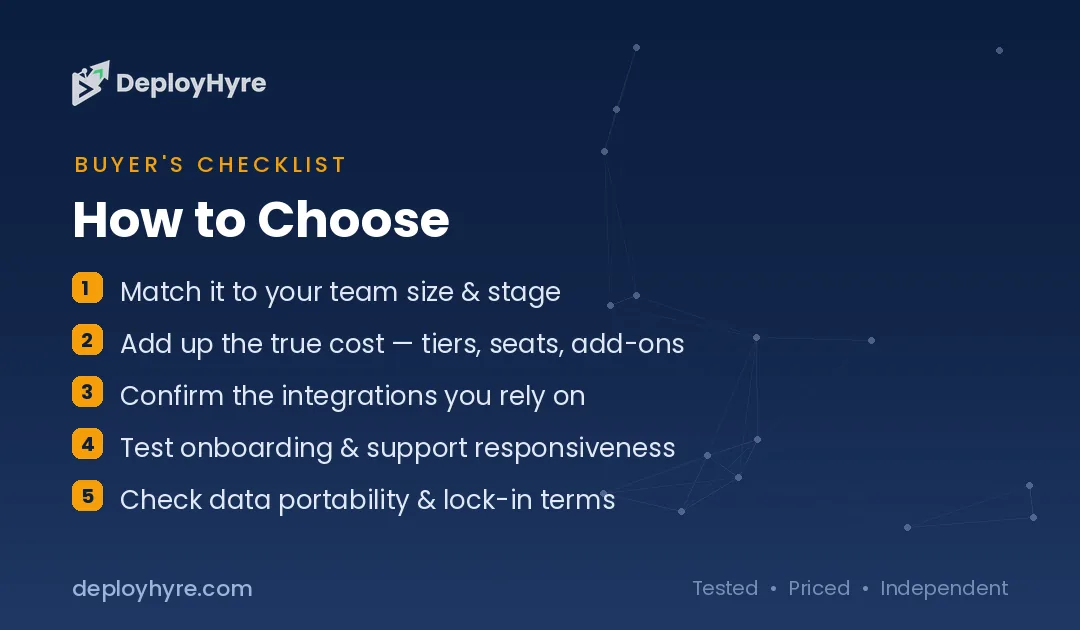
Rippling vs Workday: Which Should You Choose?
Your company size and goals decide the winner. Here is a simple guide.
Choose Rippling if you are an SMB or midmarket company. You want fast setup, one system for HR, payroll, and IT, and transparent pricing. You value speed and simplicity over deep enterprise features. Rippling also fits fast-growing teams that want room to scale.
Choose Workday if you are a large or global enterprise. You need deep analytics, workforce planning, financial management, and strong governance. You can invest six to twelve months in implementation. You manage thousands of employees across many countries.
The middle ground is real. A growing midmarket firm can thrive on Rippling and only outgrow it at true enterprise scale. A large company with heavy finance needs should lean toward Workday from the start.
The Bottom Line
Rippling and Workday solve different problems. Rippling delivers agility, an all-in-one platform, and fast time-to-value for SMB and midmarket teams. Workday delivers enterprise depth, deep analytics, and proven global scale for large organizations.
Match the tool to your stage. If you want speed and simplicity, Rippling wins. If you want enterprise depth and planning power, Workday wins. Neither is objectively better. The right choice is the one that fits your headcount, budget, and complexity.
Ready to decide? Try each platform against your own needs.
Frequently Asked Questions
Is Rippling cheaper than Workday?
Rippling is usually cheaper for small and midmarket companies. It starts near $8 per user per month plus modules, and most teams pay $20 to $35 per employee. Workday uses custom enterprise quotes with higher implementation costs, so it typically costs more overall.
Is Rippling or Workday better for a small business?
Rippling is better for small businesses. It offers fast setup, transparent pricing, and one system for HR, payroll, and IT. Workday is built for large enterprises and is often too complex and costly for smaller teams.
Can Rippling replace Workday for a large enterprise?
Sometimes, but not always. Rippling scales well and serves growing companies, yet Workday still leads on deep analytics, workforce planning, and financial management for very large global organizations. The largest enterprises often prefer Workday’s maturity.
How long does it take to implement Workday versus Rippling?
Workday implementations typically take six to twelve months and require a systems integrator. Rippling usually goes live in days to weeks with largely self-service setup. Speed to value is one of Rippling’s biggest advantages.
Does Workday offer IT and device management like Rippling?
No. Workday focuses on HCM and financials, so it relies on separate tools for device management. Rippling includes native IT and device management across macOS, Windows, iOS, and iPadOS, tied directly to HR records.
Know AI, SaaS, or cloud tools inside out? Pitch a guest post and get in front of thousands of buyers researching their next tool.
Related Articles

David Austin is a technology writer and software analyst at DeployHyre, where he covers AI tools, SaaS platforms, cloud hosting, and business automation. He focuses on hands-on comparisons of pricing, features, and real-world performance so teams can pick the right software with confidence.