TL;DR: Zapier wins on ease and app coverage. It connects 9,000+ apps and builds linear automations fast, but you pay a premium. Make wins on price and power. Its visual canvas handles complex logic and branching, and it costs far less at scale. Choose Zapier for simple, broad automations. Choose Make for complex workflows on a budget.
The automation market is booming. The workflow automation market is valued at about USD 26 billion in 2026 and climbing. Both Zapier and Make ride that wave, but they take opposite paths to the same goal.
Zapier is the household name. Over 2.2 million businesses use it, and users run over 1.5 billion automated tasks every month. It made “connect your apps” simple for non-coders.
Make, formerly Integromat, took a different route. It gives you a visual canvas where you drag, branch, and loop. This guide compares both honestly so you can pick the right one. New to this space? Start with our AI agents and automation guide for the big picture.
Quick Comparison: Zapier vs Make
| Feature | Zapier | Make |
|---|---|---|
| Free plan | 100 tasks/mo, 2-step Zaps | 1,000 credits/mo, 2 active scenarios |
| Starting price | $29.99/mo (Professional) | $9/mo (Core) |
| Pricing model | Tasks (per action step) | Credits (formerly operations) |
| App integrations | 9,000+ | 3,000+ |
| Builder style | Linear, step-by-step | Visual drag-and-drop canvas |
| AI features | Copilot, Zapier Agents | Maia AI assistant |
| Best for | Simple, broad automations | Complex logic at lower cost |
How Do Zapier and Make Pricing Models Differ?
Zapier bills per task, and Make bills per credit. This is the single biggest cost difference. Zapier counts every action step, so complex Zaps burn through your budget fast. Make counts operations more efficiently, which makes it cheaper at scale.
On Zapier, each successful action step counts as one task. A five-step Zap uses five tasks every time it runs. Zapier’s Professional plan starts at $29.99/mo for 750 tasks.
Make uses credits, a system it switched to from operations in August 2025. Its Core plan starts at $9/mo for 10,000 credits. That gap widens as you scale. At 100,000 operations per month, Make stays under $100 while Zapier can push past $300.
The verdict here is simple. Heavy or multi-step automations cost much less on Make.
One more nuance matters. Zapier does not charge for triggers, filters, or built-in tools like Formatter and Delay. Make counts most module runs. So light, single-action Zaps can stay affordable on Zapier. The cost gap only opens up as your steps multiply.
Which Free Plan Is Better?
Make’s free plan is more generous for real work. It gives you 1,000 credits and the full visual builder. Zapier’s free plan caps you at 100 tasks and only two-step Zaps, so it works best as a trial.
Zapier’s free plan includes 100 tasks per month and single-step Zaps (one trigger, one action). You can test the waters, but you cannot build anything layered.
Make’s free plan includes 1,000 credits per month and up to two active scenarios. You also get routers, filters, and access to its 3,000+ apps. The catch is a 15-minute minimum interval between scheduled runs.
For hands-on learning, Make lets you build more before you pay.
Which Has More App Integrations?
Zapier wins on app coverage by a wide margin. It connects 9,000+ apps versus Make’s 3,000+. If you rely on niche, legacy, or obscure tools, Zapier is far more likely to support them out of the box.
Zapier connects 9,000+ apps, and its developer platform exposes 30,000+ actions. That breadth is its oldest and strongest moat. Chances are your app is already there.
Make offers 3,000+ integrations. That covers the popular SaaS tools most teams use daily. But rarer apps may be missing, which forces you into custom HTTP or webhook modules.
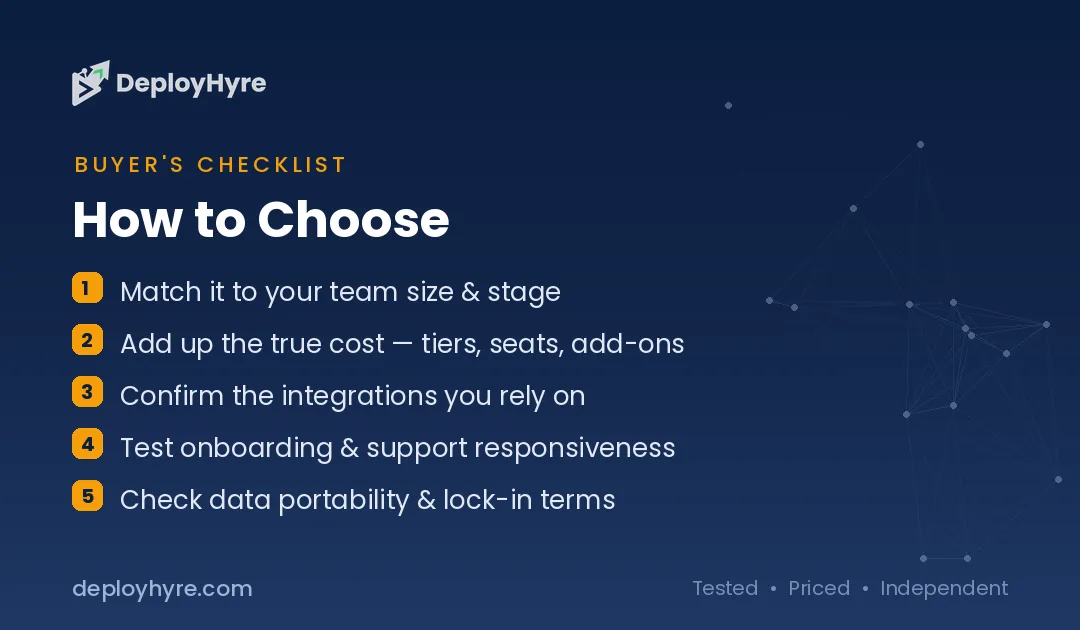
If integration breadth is your top need, Zapier is the safer bet. Both tools also support generic webhooks and HTTP calls, so you can connect almost any API with effort. But native integrations save you that setup work. Zapier simply hands you more of them.
Want a full field? See our roundup of the best AI automation tools.
Which Is Easier to Use?
Zapier is easier for beginners. Its linear, step-by-step builder reads like a to-do list. Make uses a visual canvas that is more powerful but has a steeper learning curve for first-timers.
Zapier walks you through one step at a time. You pick a trigger, then add actions in a straight line. Most people build their first working Zap in minutes.
Make shows your whole workflow as a map of connected modules. You drag, connect, and branch on a single canvas. It reveals more, but it asks more of new users up front.
The trade-off is clear. Zapier feels friendlier on day one. Make rewards you once the workflow gets complicated.
Which Handles Complex Workflows Better?
Make handles complex logic better. Its canvas supports unlimited routing, parallel steps, and deep branching. Zapier works best for straightforward, linear tasks, though it has closed some of the gap with Paths and Looping.
Make lets you splinter one workflow into many routes without limit. It runs steps in parallel and views everything on one screen. For conditional, multi-branch processes, it is the stronger tool.
Zapier has improved with Looping, Sub-Zaps, and better Paths. But its structure stays more rigid. Complex branching feels bolted on rather than native.
If your automations involve heavy logic, Make gives you more room to work. Agencies and power users often land here. They build one scenario that handles many conditions at once, then reuse it across clients. That flexibility is hard to match on Zapier’s linear model.
Which Has Better AI Features?
Zapier has the more mature AI layer today. Its Copilot builds Zaps from plain English, and Zapier Agents run tasks autonomously across thousands of apps. Make’s Maia assistant is newer and still catching up.
Zapier Copilot lets you describe an automation in plain language, and it assembles the Zap for you. Zapier Agents push further by acting on their own across 8,000+ apps. Note that full Agent access requires an add-on package.
Make introduced Maia, an AI assistant that builds scenarios from natural language. It shows promise but arrived later and offers less depth so far.
For AI-first automation right now, Zapier leads. To go deeper on autonomous tools, see our guide to the best AI agents.
Which Is More Reliable?
Make edges ahead on reliability and error handling. It posts higher measured uptime and offers granular error recovery, including error routes and retries that do not stop the whole workflow. Zapier is solid too, with clear logs and retry logic.
Make reports 99.96% uptime, and it lets you handle errors without breaking the entire scenario. You can catch a failure, reroute it, and keep the rest running.
Zapier is reliable after 14 years, with dependable retry logic and detailed logs. But note that Standard and Professional plans carry no formal uptime SLA. Only higher tiers get contractual guarantees.
For mission-critical, fault-tolerant flows, Make’s error tooling is the more robust choice.
Which Has Better Support?
Support depends on your plan on both tools. Free and entry tiers lean on documentation, community forums, and email. Priority and live support unlock on higher-paid plans, and Enterprise tiers add dedicated help.
Zapier offers extensive documentation and a large user community, which helps because so many people use it. Paid plans add faster email support, and Enterprise adds premium care.
Make provides similar tiered support. Higher plans get priority handling, and Enterprise adds 24/7 support with overage protection so you avoid surprise charges.
Neither platform gives strong live support at the free level. Budget for a higher tier if hands-on help matters to you.
Zapier vs Make: Which Should You Choose?
Your best pick depends on who you are and what you automate.
Choose Zapier if you are a beginner or a non-technical team. Its linear builder and 9,000+ apps make simple automations painless. It is ideal when you value speed and coverage over cost.
Choose Make if you run complex, high-volume workflows. Its visual canvas, branching, and per-operation pricing save real money at scale. It suits technical users and agencies building layered scenarios.
Choose Zapier if you want the strongest AI features today. Copilot and Agents are more mature than Make’s Maia.
Choose Make if your priority is error handling and reliability. Its recovery tools and higher uptime win for fault-tolerant processes.
The Bottom Line
Zapier and Make solve the same problem in opposite ways. Zapier is the easy, broad, premium option. Make is the powerful, flexible, budget-friendly option.
Pick Zapier when simplicity and app coverage matter most. Pick Make when complex logic and cost efficiency matter most. Most teams cannot go wrong with either, so match the tool to your actual workflows.
Both offer free plans, so test them with a real automation before you commit.
Frequently Asked Questions
Is Make cheaper than Zapier?
Yes. Make is cheaper, especially at scale. Its Core plan starts at $9/mo versus Zapier’s $29.99/mo Professional plan. Make also bills per operation rather than per action step, so multi-step automations cost far less than they do on Zapier.
Is Make harder to learn than Zapier?
Yes, for most beginners. Make uses a visual canvas that shows your whole workflow at once, which takes time to master. Zapier uses a simple linear builder that walks you through one step at a time, so first-timers usually build faster.
Does Zapier have more integrations than Make?
Yes. Zapier connects 9,000+ apps, while Make connects 3,000+. If you use niche, legacy, or uncommon tools, Zapier is more likely to support them natively without custom webhooks or HTTP modules.
Which is better for complex workflows, Zapier or Make?
Make is better for complex workflows. Its canvas supports unlimited routing, parallel processing, and deep branching. Zapier suits linear, straightforward tasks and has added Paths and Looping, but its structure remains more rigid for heavy logic.
Can Zapier and Make build AI automations?
Yes. Both build AI automations. Zapier offers Copilot for plain-English Zap building and Zapier Agents for autonomous tasks, which are more mature today. Make offers Maia, a newer AI assistant that builds scenarios from natural language.
Know AI, SaaS, or cloud tools inside out? Pitch a guest post and get in front of thousands of buyers researching their next tool.

David Austin is a technology writer and software analyst at DeployHyre, where he covers AI tools, SaaS platforms, cloud hosting, and business automation. He focuses on hands-on comparisons of pricing, features, and real-world performance so teams can pick the right software with confidence.