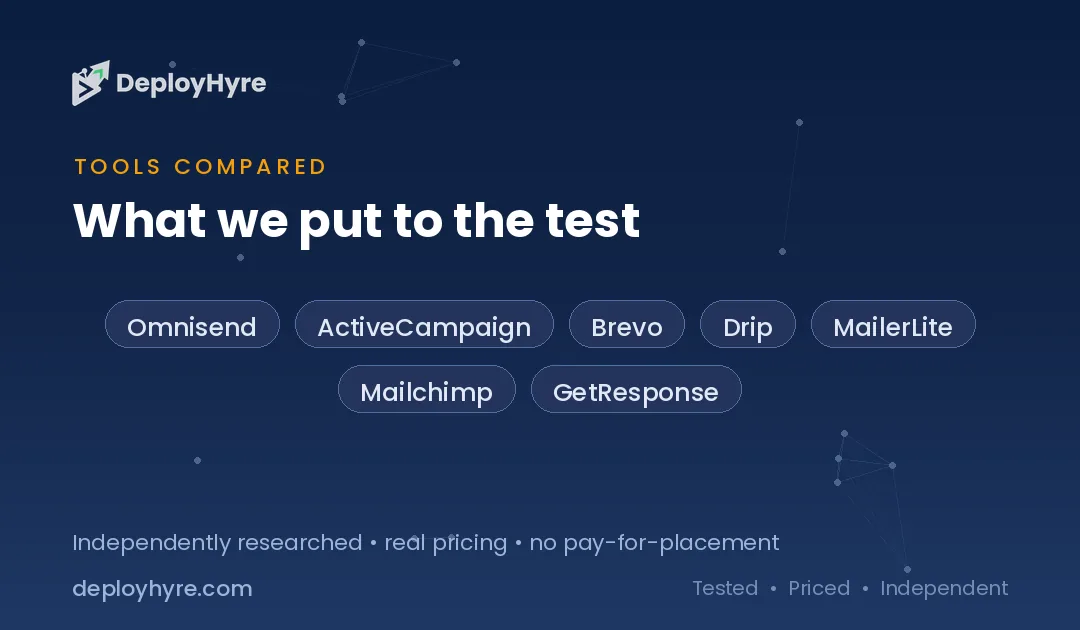
The best Klaviyo alternatives in 2026 are Omnisend, ActiveCampaign, Brevo, Drip, MailerLite, Mailchimp, and GetResponse. Email marketing returns an average of $36 for every $1 spent, the highest ROI of any channel. Klaviyo is a strong platform, but it is also one of the most expensive ways to capture that return.
The pricing pain got worse in 2025. Klaviyo moved from billing on contacts you email to billing on every active profile in your database. Brands now pay for subscribers who never open a message. A 50,000-profile store pays about $720 per month before SMS credits.
We tested seven replacements against Klaviyo on price, automation depth, ecommerce integrations, and migration effort. Each one appears in our complete guide to AI marketing tools. This page ranks them for one specific job: replacing Klaviyo without losing revenue.
Table of Contents
Quick Comparison: 7 Klaviyo Alternatives
| Platform | Best For | Starting Price | Key Advantage Over Klaviyo |
|---|---|---|---|
| Omnisend | Ecommerce email + SMS | $16/mo (500 contacts) | Up to 35% cheaper at the same list size |
| ActiveCampaign | Advanced automation | $15/mo (1,000 contacts) | Deeper cross-channel automation + CRM |
| Brevo | Large or inactive lists | $9/mo, unlimited contacts | Pays per email sent, not per profile stored |
| Drip | Small DTC brands | $39/mo (all features) | Every feature on every plan |
| MailerLite | Budget senders | Free (1,000 subscribers) | Lowest paid entry at $12/mo |
| Mailchimp | Beginners | $20/mo Standard (500 contacts) | Easiest interface, broad app store |
| GetResponse | High-volume senders | $19/mo (1,000 contacts) | Unlimited sends on every tier |
Why Do Brands Switch From Klaviyo?
Brands leave Klaviyo for three reasons: cost, billing model, and feature gating. Klaviyo bills every active profile in the database, charges about $720 per month at 50,000 profiles, and locks SMS behind extra credits. Competitors deliver 80 to 90% of the same automation for 35 to 60% less.
The billing change matters more than the sticker price. Klaviyo counts suppressed-adjacent, rarely engaged profiles toward your bill. Ecommerce lists decay fast: a store that collected 40,000 emails over three years often mails fewer than 15,000 of them. On Klaviyo you pay for all 40,000.
Feature gating adds friction. The free plan caps at 250 profiles and 500 monthly emails. SMS runs on separate credits at roughly $0.009 per US message. Reviewers on G2 praise the segmentation engine and flag the invoice. Every platform below attacks one of those three weaknesses directly.
The 7 Best Klaviyo Alternatives
1 Omnisend: Best overall Klaviyo alternative for ecommerce
Omnisend is the closest like-for-like Klaviyo replacement: an ecommerce-first platform that unifies email, SMS, and push in one automation builder.
What it does well. Omnisend ships the same core playbook as Klaviyo: abandoned cart, browse abandonment, post-purchase, and win-back flows with pre-built templates. Its plans run up to 35% less than Klaviyo at comparable contact tiers. At 10,000 contacts, Omnisend Pro costs $150 per month with unlimited emails and SMS credits matching your bill, while Klaviyo charges more for email alone. Omnisend also includes a free migration service that rebuilds your Klaviyo flows for you.
Key features:
- Pre-built ecommerce automation flows with email, SMS, and push in one workflow
- Segmentation on purchase history, site behavior, and message engagement
- One-click Shopify, WooCommerce, BigCommerce, and Wix integrations
- AI product recommendations and dynamic content on Pro
- 24/7 live support on all plans, including Free
Pricing. Free plan covers 250 contacts and 500 emails per month. Standard starts at $16 per month for 500 contacts ($65 at 5,000, $132 at 10,000). Pro starts at $59 per month for 2,500 contacts with unlimited sends.
Best for: Shopify and WooCommerce stores that want Klaviyo-grade flows at a lower invoice.
Limitations. Reporting is lighter than Klaviyo’s benchmark and cohort analytics. Standard plan caps email sends at 12 times your contact count and excludes SMS.
2 ActiveCampaign: Best for advanced automation
ActiveCampaign pairs a powerful automation engine with a built-in sales CRM, which makes it the strongest pick when your marketing extends past the storefront.
What it does well. The automation builder handles branching logic, lead scoring, and site tracking that outgrow Klaviyo’s flow editor. You get 900+ integrations and native CRM pipelines, so one platform runs both lifecycle marketing and sales follow-up. Our AI email marketing software roundup ranks it first for automation depth.
Key features:
- Visual automation builder with conditional branches, goals, and split testing
- Built-in CRM with deal pipelines and lead scoring
- Predictive sending and AI content generation
- Site and event tracking for behavior-triggered campaigns
Pricing. Starter begins at $15 per month for 1,000 contacts on annual billing. Plus costs $49 and Pro costs $79 per month. Annual billing saves about 15% on every tier.
Best for: Teams that need automation beyond ecommerce flows, especially with a sales pipeline attached.
Limitations. No free plan. Ecommerce-specific reporting trails Omnisend and Klaviyo, and the learning curve is real.
3 Brevo: Best for large or low-engagement lists
Brevo flips the billing model that makes Klaviyo expensive: you pay for emails sent, and every plan includes unlimited contacts.
What it does well. Storing 100,000 profiles costs nothing on Brevo. A 20,000-contact list sending 100,000 emails per month runs about $65 per month, versus $180 or more on contact-based platforms. Brevo also bundles SMS, WhatsApp, transactional email, and a basic CRM, which makes it a compact all-in-one stack for lean teams. Pair it with the best free AI marketing tools and a small brand runs its whole funnel for under $100 per month.
Key features:
- Volume-based pricing with unlimited contact storage
- Email, SMS, WhatsApp, and transactional messaging in one account
- Built-in CRM and meeting scheduling
- Free plan with 300 emails per day
Pricing. Free plan sends 300 emails per day. Starter begins at $9 per month. Costs scale with monthly email volume, not list size.
Best for: Brands with big databases and modest sending frequency, where Klaviyo’s per-profile billing hurts most.
Limitations. Ecommerce automation templates are thinner than Omnisend’s. Deep Shopify revenue attribution requires more setup.
4 Drip: Best for small DTC brands
Drip sells one simple promise: every feature on every plan, starting at $39 per month.
What it does well. There is no feature gating. Segmentation, split testing, onsite popups, and full automation ship at the entry price. Drip’s segments update in real time on purchase and behavior data, and its workflows cover the standard ecommerce scenarios Klaviyo handles. The $39 entry plan covers 2,500 contacts with unlimited email sends.
Key features:
- All features included at every price tier
- Real-time segmentation on store and site behavior
- Onsite forms and popups included
- Shopify, WooCommerce, and BigCommerce integrations
Pricing. Starts at $39 per month for 2,500 contacts with unlimited sends. Price scales with list size only.
Best for: Direct-to-consumer brands under 10,000 contacts that want predictable pricing.
Limitations. No native SMS in most regions, and no free plan beyond the trial. Template library is smaller than Mailchimp’s.
5 MailerLite: Best free plan and lowest paid entry
MailerLite is the budget pick: a permanent free plan for 1,000 subscribers and paid plans from $12 per month.
What it does well. The editor is the cleanest in this group. Automation covers welcome series, abandoned cart (with Shopify or WooCommerce connected), and date-based triggers. Paid plans start at $12 per month (Comfort) and $25 per month (Power), a fraction of Klaviyo’s cost at the same list size.
Key features:
- Free plan with 1,000 subscribers and automation included
- Drag-and-drop editor with landing pages and popups
- Ecommerce blocks for Shopify and WooCommerce products
- Paid plans from $12 per month
Pricing. Free up to 1,000 subscribers. Comfort starts at $12 per month and Power at $25 per month, scaling with subscribers.
Best for: Creators and small stores under 5,000 subscribers that need low cost over deep ecommerce analytics.
Limitations. Segmentation and revenue reporting are basic next to Klaviyo. Approval process for new accounts is strict.
6 Mailchimp: Best for beginners
Mailchimp remains the easiest on-ramp in email marketing, with the largest template library and app marketplace in this group.
What it does well. Setup to first campaign takes minutes. The Customer Journey builder handles standard ecommerce flows, and 300+ integrations connect nearly any stack. Standard starts at $20 per month for 500 contacts, about $65 at 2,500 contacts. Content Optimizer and AI writing tools help small teams ship faster campaigns, a pattern we track across AI social media management tools too.
Key features:
- Customer Journey automation builder
- AI content generation and send-time optimization
- 300+ integrations and a large template library
- Built-in landing pages, forms, and basic websites
Pricing. Standard starts at $20 per month for 500 contacts and reaches $184 per month at 10,000 contacts. Every plan carries a hard monthly send cap.
Best for: First-time email marketers who value ease of use over ecommerce depth.
Limitations. Pricing climbs steeply with list growth, send caps bite at scale, and it bills unsubscribed contacts unless you archive them.
7 GetResponse: Best for unlimited sends
GetResponse offers unlimited email sends on every tier, plus webinars and conversion funnels no other platform here includes.
What it does well. No send caps at any price. Starter begins at $19 per month for 1,000 contacts, and 10,000 contacts on the second tier costs about $93 per month, roughly half of Mailchimp Standard at the same size. Built-in webinars, sales funnels, and a website builder make it a compact growth stack for info-product and service businesses.
Key features:
- Unlimited email sends on every plan
- Marketing automation with scoring and tagging
- Built-in webinars, funnels, and landing pages
- AI campaign and subject line generator
Pricing. Starter at $19 per month for 1,000 contacts. Marketer at $59 per month adds full automation. About $93 per month at 10,000 contacts.
Best for: High-frequency senders and creators who also run webinars.
Limitations. Ecommerce store integrations and revenue attribution trail Omnisend and Klaviyo. The interface feels dated in places.
How Should You Choose the Right Klaviyo Alternative?
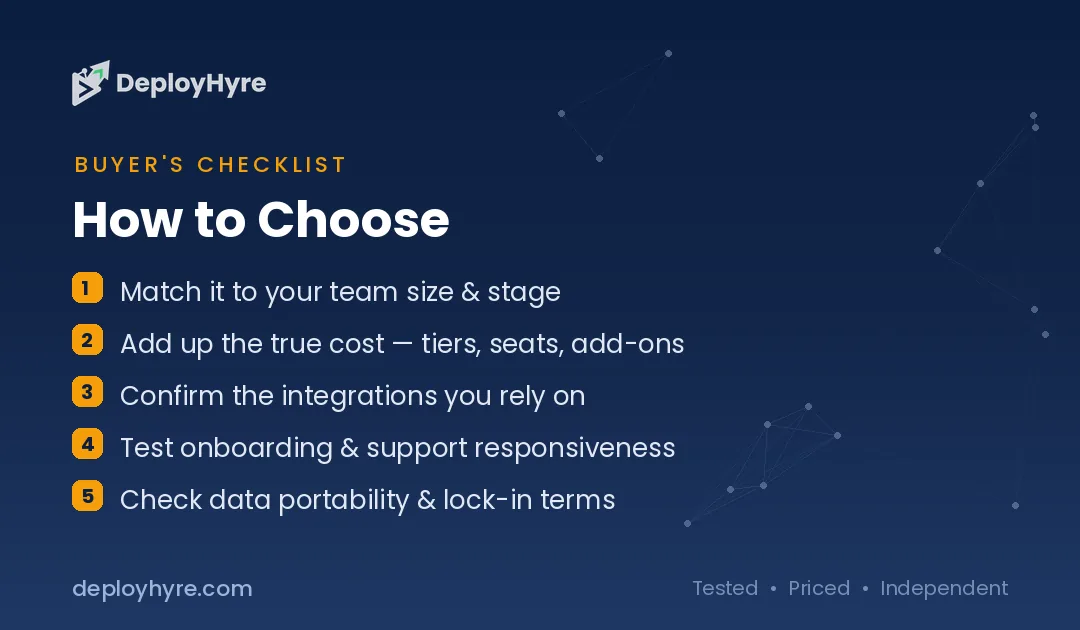
Match the platform to your billing pain. Pick Omnisend for a direct ecommerce swap, Brevo when a large stored list drives your Klaviyo bill, Drip or MailerLite under 10,000 contacts, ActiveCampaign for automation depth, and GetResponse for unlimited sending volume.
Work through four questions in order. First, where does your Klaviyo invoice hurt? Per-profile billing points to Brevo. Raw tier pricing points to Omnisend or MailerLite. Second, what does your automation actually use? Export your flows and count them. Most stores run five to eight flows that every platform here replicates. Third, what channels do you need? Email plus SMS favors Omnisend. Email plus CRM favors ActiveCampaign or Brevo. Fourth, check migration support. Omnisend migrates Klaviyo accounts free, which removes the biggest switching cost.
Run the numbers at your real list size before deciding. Vendors publish calculators, and a 15-minute comparison at 10,000, 25,000, and 50,000 contacts shows the true three-year cost gap.
How We Evaluated These Platforms
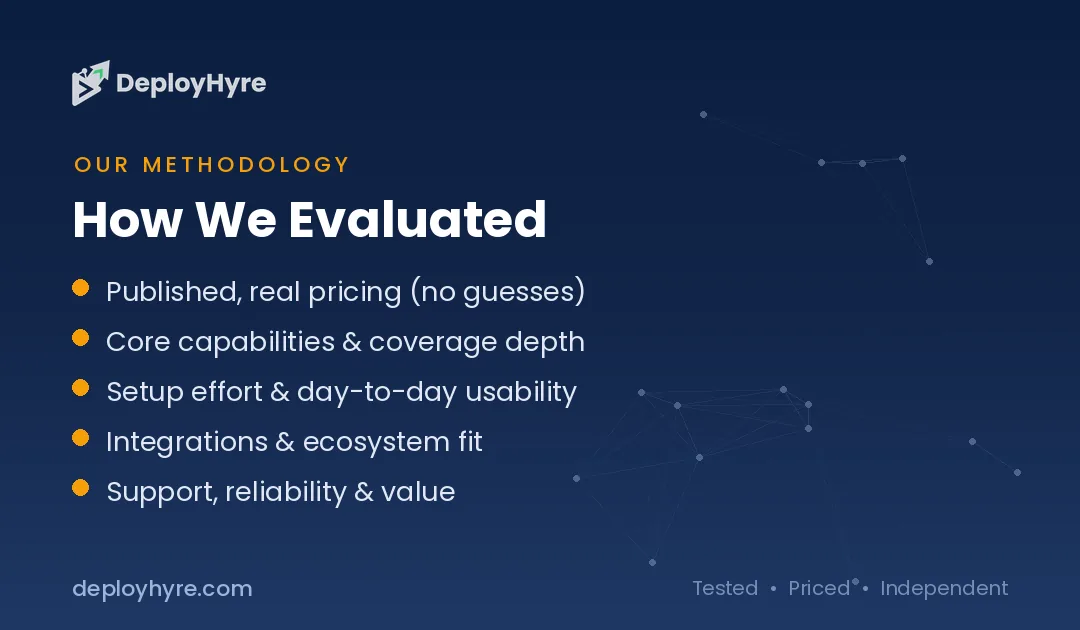
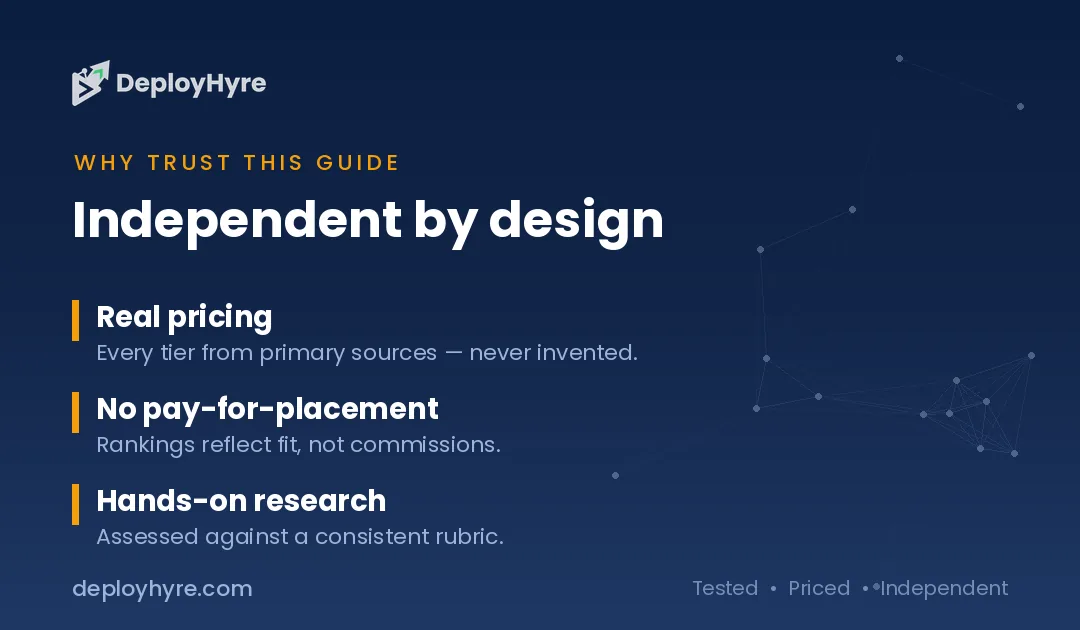
We compared each platform on five weighted criteria: pricing at 1,000, 10,000, and 50,000 contacts (30%), automation depth against Klaviyo’s flow library (25%), ecommerce integrations and revenue reporting (20%), deliverability tooling and support (15%), and migration effort (10%). Pricing came from vendor pricing pages in July 2026. Feature checks used trial accounts, vendor documentation, and verified user reviews on G2 and Capterra. We excluded platforms that lack ecommerce automation entirely.
The Bottom Line
Omnisend is the best Klaviyo alternative for most ecommerce brands: the same core flows, unified email and SMS, and a bill up to 35% lower. Brevo wins when a large stored list inflates per-profile billing. ActiveCampaign wins when automation and CRM depth matter more than store analytics. Drip and MailerLite serve smaller lists with flat, predictable pricing, and GetResponse suits senders who refuse caps.
Klaviyo still earns its price for brands doing heavy predictive analytics on large SMS lists. Everyone else is paying a premium out of inertia. Start with our AI marketing tools guide to see how email fits your wider stack, then run a free trial of your top pick against one month of real campaigns.
Frequently Asked Questions
What is the best Klaviyo alternative for Shopify stores?
Omnisend is the best Klaviyo alternative for Shopify stores. It offers one-click Shopify integration, pre-built cart and browse abandonment flows, unified email and SMS, and pricing up to 35% below Klaviyo at the same contact count, plus a free migration service.
Is there a cheaper Klaviyo alternative that keeps automation?
Yes. MailerLite runs full automation from $12 per month, and Drip includes every feature at $39 per month. Brevo cuts costs a different way: it charges for emails sent instead of profiles stored, so large lists cost far less.
Why did Klaviyo get more expensive?
Klaviyo changed its billing in 2025 to count every active profile in your database instead of only the contacts you email. Stores with large, partially engaged lists saw bills rise without sending more email. SMS credits bill separately at about $0.009 per US message.
Can I migrate my Klaviyo flows to another platform?
Yes. Omnisend rebuilds Klaviyo flows free through its migration service, and ActiveCampaign offers guided migrations on higher tiers. For other platforms, export your lists, segments, and templates, then rebuild your five to eight core flows manually in about a day.
Is Mailchimp better than Klaviyo?
Mailchimp is easier and cheaper to start; Klaviyo is stronger for ecommerce data. Mailchimp suits beginners and content-led brands. Klaviyo and Omnisend beat it on revenue attribution, segmentation depth, and ecommerce flow templates at scale.

David Austin is a technology writer and software analyst at DeployHyre, where he covers AI tools, SaaS platforms, cloud hosting, and business automation. He focuses on hands-on comparisons of pricing, features, and real-world performance so teams can pick the right software with confidence.
Know AI, SaaS, or cloud tools inside out? Pitch a guest post and get in front of thousands of buyers researching their next tool.