The median landing page converts at 6.6%, according to Unbounce’s analysis of 41,000 pages and 464 million visitors. The top quartile reaches 11.4% or higher. That gap is money. An AI landing page builder helps you close it by writing copy, generating layouts, and routing traffic to the version most likely to convert.
For the full picture, see our complete guide to AI marketing tools.
Table of Contents
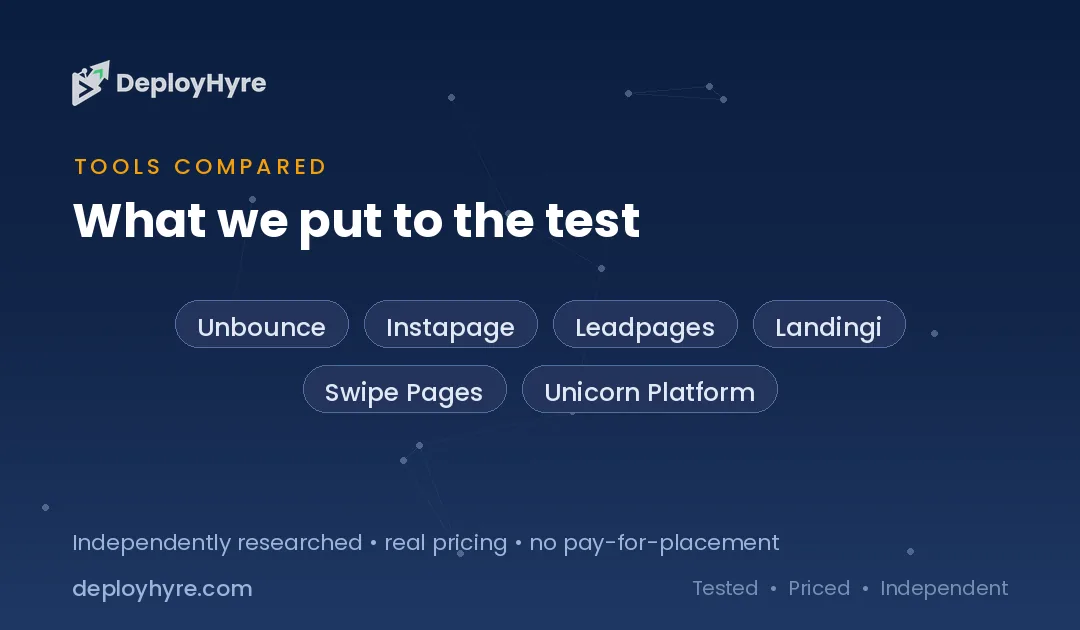
We tested 9 AI landing page builders on three jobs: how fast they draft a page, how well their AI lifts conversion rate, and how much they cost as traffic grows. This guide ranks them by use case so you can match a tool to your team and budget. For the bigger picture on AI in your stack, see our guide to AI for business.
Quick Comparison: Top AI Landing Page Builders
| Tool | Best For | Starting Price | AI Strength |
|---|---|---|---|
| Unbounce | AI conversion optimization | $74/mo | Smart Traffic auto-routing |
| Instapage | Enterprise A/B testing | $79/mo (annual) | Personalization + experiments |
| Leadpages | Small business lead capture | $37/mo (annual) | AI copy + unlimited traffic |
| Landingi | Agencies and white-label | ~$29/mo | AI page and image generation |
| Swipe Pages | Mobile-first speed | ~$29/mo | AMP pages + AI copy |
| Unicorn Platform | SaaS and startups | ~$8/mo | AI page builder, no code |
| Framer | Design-driven pages | Free / ~$10/mo | AI layout + animation |
| Webflow | Scalable design + CMS | ~$14/mo | AI assist on a visual canvas |
| Carrd | Simple one-page sites | ~$19/yr | Fast templates, light AI |
What Makes a Great AI Landing Page Builder?
A great AI landing page builder turns a prompt into a publish-ready page and then improves it with data. It drafts headlines and layout in minutes, runs A/B tests without code, and routes each visitor to the variant most likely to convert. Strong tools also keep page load fast and pricing predictable as traffic grows.
Speed is the first win. The AI writes a first draft so you edit instead of starting from a blank page. The second win is optimization. Tools like Unbounce learn from past conversion data, so the system improves results while you sleep. The third win is cost control. Traffic caps and overage fees can erase your gains, so flat-rate traffic matters for high-volume campaigns.
Best AI Landing Page Builders for Conversion-Focused Marketers
These platforms are built for marketers and agencies who care more about conversion rate than pixel-level design control.
1 Unbounce: Best for AI conversion optimization
Unbounce is the conversion specialist of the group.
What it does well. Its Smart Traffic feature sends each visitor to the page variant most likely to convert them, using signals like device and location. Smart Builder and AI copy draft pages fast. Unbounce trained these features on conversion data from hundreds of thousands of pages, so the optimization is the most mature here.
Key features:
- Smart Traffic visitor routing
- AI copywriting and Smart Builder layouts
- Unlimited A/B testing
- Popups and sticky bars
Pricing. Plans start at $74 per month on annual billing, with Smart Traffic on higher tiers. No free plan, but a 14-day trial is included.
Best for: teams running paid traffic that want automated optimization.
Limitations. Design control is narrower than Framer or Webflow, and the price climbs with traffic.
2 Instapage: Best for enterprise A/B testing
Instapage focuses on post-click optimization for larger teams.
What it does well. It offers the deepest A/B and multivariate testing in this list, plus ad-to-page personalization that matches each visitor to a tailored page. AdMap links ads directly to landing pages, which suits teams running many campaigns at once.
Key features:
- Advanced A/B and multivariate testing
- 1:1 ad personalization and AdMap
- Heatmaps and analytics
- Team collaboration tools
Pricing. The Build plan starts at $79 per month on annual billing, or $99 monthly. Enterprise pricing is custom.
Best for: mid-market and enterprise teams running many simultaneous campaigns.
Limitations. It is the priciest entry point, and small teams will not use all the features.
3 Leadpages: Best for small business lead capture
Leadpages keeps things simple and predictable for smaller budgets.
What it does well. It pairs drag-and-drop design with AI-assisted copy and gives unlimited traffic on every plan, with no visitor caps or overage fees. That makes costs easy to forecast when a campaign takes off.
Key features:
- AI copy and content suggestions
- Unlimited traffic on all plans
- Lead magnet delivery and forms
- Large template library
Pricing. The Standard plan starts at $37 per month on annual billing, with a Pro tier around $74 per month.
Best for: small businesses running basic lead capture where simplicity matters.
Limitations. Testing and personalization are lighter than Unbounce or Instapage.
Best AI Landing Page Builders for Fast Page Generation
These tools generate clean, conversion-ready pages quickly and suit agencies, startups, and mobile-first campaigns.
4 Landingi: Best for agencies and white-label
Landingi balances AI speed with agency features.
What it does well. It generates full pages, copy, and images from a prompt, then supports white-label client accounts and over 300 templates. Built-in A/B testing and integrations cover most agency workflows.
Key features:
- AI page, text, and image generation
- White-label and sub-accounts
- A/B testing and popups
- 170+ integrations
Pricing. Paid plans start around $29 per month, with agency tiers higher. Check the vendor page for current rates.
Best for: agencies managing pages for multiple clients.
Limitations. The interface has a learning curve versus single-purpose tools.
5 Swipe Pages: Best for mobile-first speed
Swipe Pages targets fast, mobile-optimized pages.
What it does well. It builds AMP pages that load near-instantly on phones, which protects conversion rate on paid mobile traffic. AI copy and a clean editor speed up the first draft.
Key features:
- AMP mobile pages for fast load
- AI copywriting
- A/B testing
- Conversion-focused templates
Pricing. Plans start around $29 per month on annual billing.
Best for: advertisers sending heavy mobile traffic from social and search.
Limitations. A smaller template library and fewer integrations than larger rivals.
6 Unicorn Platform: Best for SaaS and startups
Unicorn Platform is a lightweight builder aimed at founders.
What it does well. It spins up a clean SaaS or startup page with AI in minutes, no code needed. Blog and hosting come built in, so a founder can launch a full site from one tool.
Key features:
- AI page builder for SaaS pages
- Built-in blog and hosting
- No-code blocks and templates
- Integrations for analytics and forms
Pricing. Plans start around $8 per month, among the cheapest here.
Best for: early-stage startups that want a fast, low-cost launch.
Limitations. Testing and optimization features are basic.
Best AI Landing Page Builders for Design and Flexibility
These tools give designers more control while adding AI to speed up the build. They double as full website tools, so compare them with our roundup of the best AI website builders.
7 Framer: Best for design-driven pages
Framer brings designer-grade control with AI help.
What it does well. It offers component-based design, custom animations, and granular control over every pixel, with AI that drafts layouts and copy. The result looks polished without a developer.
Key features:
- AI layout and copy generation
- Custom animations and interactions
- Responsive design controls
- CMS for content pages
Pricing. A free plan exists, with paid tiers from about $10 per month per site.
Best for: design-focused marketers who want control and motion.
Limitations. Built-in A/B testing is limited, so pair it with an analytics tool.
8 Webflow: Best for scalable design and CMS
Webflow suits pages that are part of a larger site roadmap.
What it does well. It combines a visual canvas, a powerful CMS, and AI assist, so a landing page can grow into a full website without a rebuild. It is the stronger long-term choice for scaling content.
Key features:
- Visual design canvas with clean code export
- CMS for large content sets
- AI assist for copy and structure
- Strong hosting and SEO controls
Pricing. Paid site plans start around $14 per month, with higher tiers for CMS and business needs.
Best for: teams building a landing page inside a larger site.
Limitations. The learning curve is the steepest in this group.
9 Carrd: Best for simple one-page sites
Carrd is the budget pick for a single page done fast.
What it does well. It builds clean one-page sites in minutes with simple templates and forms. For a link-in-bio, a waitlist, or a simple lead form, it is hard to beat on price.
Key features:
- Fast one-page templates
- Forms and basic integrations
- Custom domains on paid tiers
- Very low cost
Pricing. Pro plans start at about $19 per year, the cheapest option here.
Best for: solo creators and simple lead capture.
Limitations. No A/B testing and limited AI depth.
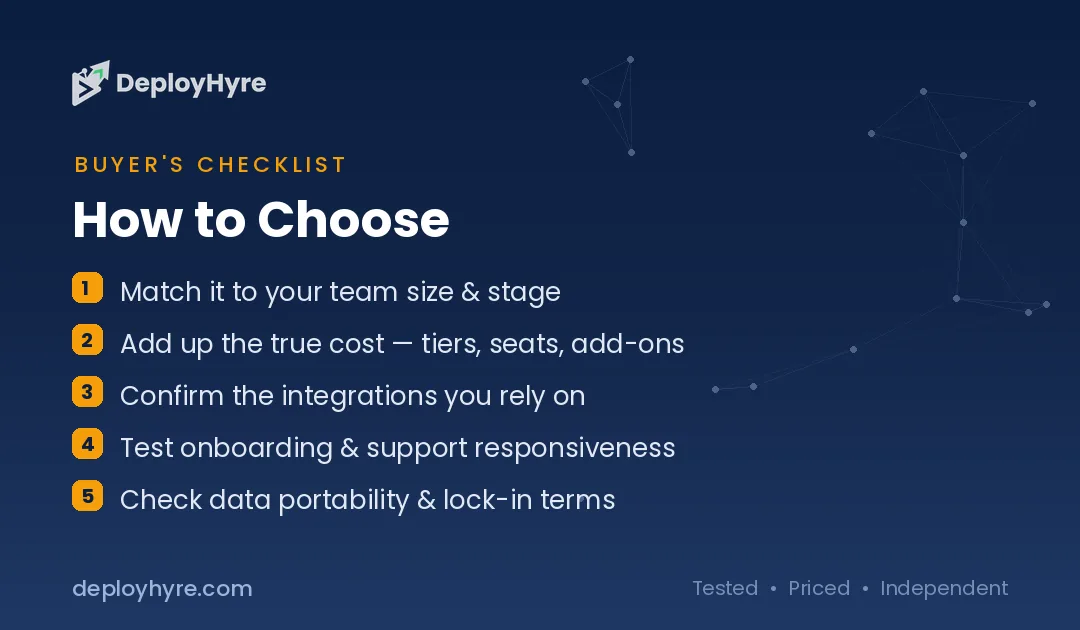
How Should You Choose the Right AI Landing Page Builder?
Choose based on your main goal: optimization, speed, or design control. Pick Unbounce or Instapage when conversion testing drives revenue. Pick Landingi, Swipe Pages, or Unicorn Platform when you need pages fast and cheap. Pick Framer or Webflow when design and scale matter most.
Start with your traffic source. Paid search and paid social punish slow pages, so mobile speed and A/B testing pay for themselves. Then weigh traffic cost. Unbounce and Instapage charge more as visitors grow, while Leadpages and Carrd keep costs flat. Finally, match the tool to your skills. A founder wants Unicorn Platform or Carrd, while a designer wants Framer or Webflow. Driving traffic from email first helps too, since email traffic converts at 19.3% in Unbounce data, the highest of any channel. Our guide to the best AI email marketing software can help you build that list.
How We Evaluated These AI Landing Page Builders
We scored each tool on four factors: build speed, AI quality, conversion features, and total cost at scale. We weighted conversion features and cost most, since a cheap page that does not convert wastes ad spend. We reviewed vendor documentation, current pricing pages, and third-party conversion benchmarks. We did not accept vendor claims at face value and noted where pricing or features should be verified before you buy.
The Bottom Line
The best AI landing page builder is the one that fits your goal and traffic. For automated conversion lift on paid traffic, Unbounce leads. For enterprise testing, choose Instapage. For simple, low-cost lead capture, Leadpages and Carrd win. Whatever you pick, feed it strong traffic and pair it with the rest of your stack, including the best free AI tools for marketing and your social media management tools.
Frequently Asked Questions
What is an AI landing page builder?
An AI landing page builder uses generative AI to write copy, design layouts, and create images for a landing page from a short prompt. Many also run A/B tests and route traffic to the best-performing version, which raises conversion rate with less manual work.
Do AI landing page builders actually improve conversions?
Yes, when they include optimization features. Tools like Unbounce route each visitor to the variant most likely to convert, learning from past data. The AI also speeds up testing, so you find a winning page faster. Results still depend on your offer and traffic quality.
What is the cheapest AI landing page builder?
Carrd is the cheapest at about $19 per year for its Pro plan, and Unicorn Platform starts near $8 per month. These suit simple pages and startups. Marketers who need A/B testing should expect to pay $37 per month or more for tools like Leadpages and Unbounce.
Which AI landing page builder is best for agencies?
Landingi is the strongest agency pick because it offers white-label client accounts, sub-accounts, AI page generation, and A/B testing in one platform. Instapage also suits agencies running many client campaigns, though it costs more per month.
What is a good landing page conversion rate?
The median landing page converts at about 6.6% across industries, per Unbounce data. A good rate starts near 11.4%, the top quartile. Rates vary widely by industry, with events near 12.3% and SaaS near 3.8%, so compare against your own sector.

David Austin is a technology writer and software analyst at DeployHyre, where he covers AI tools, SaaS platforms, cloud hosting, and business automation. He focuses on hands-on comparisons of pricing, features, and real-world performance so teams can pick the right software with confidence.
Know AI, SaaS, or cloud tools inside out? Pitch a guest post and get in front of thousands of buyers researching their next tool.