Security teams face a flood they cannot patch by hand. A record 48,185 CVEs were published in 2025, roughly 131 new flaws every day. Attackers move faster than ever. The Verizon 2025 Data Breach Investigations Report found that vulnerability exploitation jumped 34% to become the second most common breach path, behind only stolen credentials.
AI vulnerability management tools close the gap. They scan assets, score real risk, and tell you which flaws attackers will exploit first. The market reflects the demand. The AI vulnerability scanning market grows from $3.06 billion in 2025 to $3.58 billion in 2026, a 17% annual rate.
We tested 8 platforms across enterprise, cloud, mid-market, and developer use cases. This guide ranks them by accuracy, prioritization, remediation speed, and price. For broader defense, pair these picks with our guide to the best AI cybersecurity tools.
Quick Comparison: Top AI Vulnerability Management Tools
| Tool | Best For | Starting Price | Key Strength |
|---|---|---|---|
| Tenable One | Enterprise risk-based VM | ~$26-38/asset/yr | Exposure scoring across assets |
| Qualys VMDR | Scanning plus patching | ~$17-33/asset/yr | Detect and patch in one flow |
| Wiz | Cloud-native environments | ~$24K-38K/100 workloads | Agentless cloud coverage |
| CrowdStrike Falcon | Endpoint-integrated VM | ~$60-185/device/yr | Real-time agent telemetry |
| Rapid7 InsightVM | Mid-market teams | ~$25-35/asset/yr | Transparent pricing, workflows |
| Microsoft Defender VM | Microsoft-centric shops | Add-on to Defender P2 | Native Windows integration |
| Snyk | Developer-first security | Free tier; paid per contributor | Code and open-source scanning |
| Intruder | Small teams and SMBs | Per-target plans | Continuous automated scanning |
What Is an AI Vulnerability Management Tool?
An AI vulnerability management tool scans your systems for security flaws, then uses machine learning to rank each flaw by real exploit risk. It pulls threat intelligence, asset value, and exploit activity to predict which vulnerabilities attackers will hit first. This lets teams patch the few that matter instead of chasing thousands.
Traditional scanners list every flaw with a static CVSS score. That creates noise. AI tools add context. They weigh whether an exploit exists in the wild, whether the asset faces the internet, and whether the flaw sits on a critical system. The result is a short, ranked fix list that matches how attackers actually operate.
Why Prioritization Matters More Than Scanning
The hardest part of vulnerability management is no longer finding flaws. It is deciding what to fix first. NIST moved its National Vulnerability Database to a triage model in April 2026, enriching only an estimated 15 to 20 percent of incoming CVEs. That leaves defenders with less official scoring data and more raw flaws.
Speed compounds the problem. Mandiant reports that mean time to exploit has collapsed to about five days, and for some edge devices exploitation begins before a patch ships. AI prioritization is the only practical way to keep pace. Roughly 62% of enterprises plan to adopt AI-driven scanning by the end of 2026.
Best AI Vulnerability Management Tools for Enterprise Risk Prioritization
1 Tenable One: Best for risk-based exposure management
Tenable One unifies vulnerability data, asset context, and threat intelligence into a single exposure view.
What it does well. Tenable One scores exposure across IT, cloud, identity, and operational technology assets. Its Vulnerability Priority Rating uses machine learning to predict exploit likelihood, so teams patch the small slice of flaws that attackers target. The platform builds on Nessus, the scanner many security teams already trust.
Key features:
- Vulnerability Priority Rating driven by exploit prediction
- Attack path analysis across hybrid assets
- Asset inventory spanning cloud, IT, and OT
- Prebuilt risk dashboards for executives
Pricing. Tenable VM runs roughly $26 to $38 per asset per year at enterprise scale, per 2026 buyer comparisons. Full Tenable One module coverage costs more.
Best for: Large enterprises that need one exposure score across many asset types.
Limitations. The full platform carries a learning curve, and adding modules raises the price quickly.
2 Qualys VMDR: Best for integrated scanning and patching
Qualys VMDR combines detection, prioritization, and patch deployment in one cloud platform.
What it does well. VMDR stands for Vulnerability Management, Detection, and Response. The platform scans assets, ranks flaws with its TruRisk score, then pushes patches without a separate tool. Its machine learning weighs active exploitation and asset criticality. Bundled patching shortens the path from finding a flaw to fixing it.
Key features:
- TruRisk scoring for real-world risk
- Built-in patch management
- Agent and agentless scanning options
- Continuous cloud asset discovery
Pricing. Qualys VMDR ranges from about $17 to $33 per asset per year with patch management included, according to 2026 pricing comparisons.
Best for: Teams that want to detect and remediate inside one console.
Limitations. The interface feels dense, and reporting setup takes time to tune.
Best AI Vulnerability Management Tools for Cloud-Native Environments
3 Wiz: Best for cloud security and agentless coverage
Wiz scans entire cloud environments without agents and connects flaws to real attack paths.
What it does well. Wiz maps vulnerabilities, misconfigurations, identities, and exposed data into a single graph. Its toxic combination analysis surfaces the chains that lead to a breach, not just isolated flaws. Agentless scanning means coverage starts in minutes across AWS, Azure, and Google Cloud. This focus on cloud risk makes it a leader for cloud-native teams.
Key features:
- Agentless scanning across major clouds
- Attack path graph for toxic combinations
- Container and Kubernetes coverage
- Identity and data exposure mapping
Pricing. Wiz pricing lands near $24,000 to $38,000 per year per 100 cloud workloads, with enterprise deals reported above $450,000 at scale.
Best for: Cloud-first organizations running large workloads across providers.
Limitations. Pricing is sales-led and premium, which prices out smaller teams.
4 CrowdStrike Falcon Exposure Management: Best for endpoint-integrated VM
Falcon Exposure Management adds vulnerability scoring on top of CrowdStrike’s endpoint agent.
What it does well. Falcon uses its existing endpoint sensor to assess vulnerabilities in real time, with no extra scan window. It ranks flaws using ExPRT.AI, which predicts exploit probability from live threat data. Teams already running Falcon for detection get vulnerability context inside the same console. For wider endpoint defense, see our guide to the best AI endpoint security software.
Key features:
- Real-time assessment via the Falcon sensor
- ExPRT.AI exploit prediction ratings
- No separate scan infrastructure
- Unified console with detection and response
Pricing. CrowdStrike Falcon modules run roughly $60 to $185 per device per year depending on bundle, with Exposure Management as an add-on tier.
Best for: Organizations standardized on CrowdStrike for endpoint protection.
Limitations. Coverage centers on endpoints, so network and cloud asset depth trails dedicated scanners.
Best AI Vulnerability Management Tools for Mid-Market Teams
5 Rapid7 InsightVM: Best for transparent pricing and remediation workflows
Rapid7 InsightVM pairs live vulnerability data with built-in remediation tracking.
What it does well. InsightVM scores risk on a 1 to 1000 scale that blends CVSS, exploit data, and exposure. Its remediation projects assign fixes to owners and track progress, which suits teams that need accountability. Rapid7 also publishes the most transparent pricing among the major traditional vendors, easing budget planning.
Key features:
- Real Risk Score from 1 to 1000
- Remediation projects with owner tracking
- Live dashboards and attack surface monitoring
- Integrations with ticketing tools
Pricing. InsightVM runs about $25 to $35 per asset per year, and Rapid7 offers the most transparent published pricing of the traditional vendors.
Best for: Mid-market security teams that want clear pricing and workflow tracking.
Limitations. Cloud-native depth lags pure cloud platforms like Wiz.
6 Microsoft Defender Vulnerability Management: Best for Microsoft-centric organizations
Defender Vulnerability Management brings native scanning to Windows and Microsoft 365 estates.
What it does well. Defender VM discovers and scores vulnerabilities across devices already managed by Microsoft tooling. It ranks flaws with exploit and threat context, then links to Intune for one-click remediation. For shops running Microsoft 365 E5, much of this lives inside the stack they already own. The native fit lowers both cost and setup effort.
Key features:
- Native Windows and Microsoft 365 coverage
- Threat-aware vulnerability scoring
- One-click remediation through Intune
- Included with Defender for Endpoint Plan 2
Pricing. Defender Vulnerability Management is available as a standalone add-on or bundled with Defender for Endpoint Plan 2, keeping costs low for existing Microsoft customers.
Best for: Organizations heavily invested in Microsoft 365 and Windows.
Limitations. Coverage of non-Microsoft and Linux assets is thinner than vendor-neutral tools.
Best AI Vulnerability Management Tools for Developers and SMBs
7 Snyk: Best for developer-first application security
Snyk finds and fixes vulnerabilities in code, open-source packages, and containers.
What it does well. Snyk scans inside the developer workflow, flagging flawed dependencies and code as engineers write. Its AI-powered DeepCode engine suggests fixes and ranks issues by exploit maturity and reachability. This shifts security left, catching flaws before they ship. It complements infrastructure scanners rather than replacing them.
Key features:
- Open-source and dependency scanning
- Code analysis with fix suggestions
- Container and infrastructure-as-code coverage
- IDE and CI/CD integrations
Pricing. Snyk offers a free tier for small projects, with paid Team plans quoted per contributor. Teams that also review code may want our list of the best AI code review tools.
Best for: Engineering teams that want security inside the build pipeline.
Limitations. Snyk centers on application risk, so it does not replace network or asset scanners.
8 Intruder: Best for small teams wanting continuous automated scanning
Intruder runs continuous external and internal scans with minimal setup.
What it does well. Intruder automates scanning and emerging-threat checks, then alerts teams when new flaws appear on their attack surface. It prioritizes results in plain language, which suits small teams without a full security staff. Setup takes minutes, and the dashboard hides scanner noise. This makes it a practical entry point for SMBs.
Key features:
- Continuous attack surface monitoring
- Emerging-threat rapid scans
- Plain-language risk prioritization
- Cloud, web app, and network coverage
Pricing. Intruder uses transparent per-target plans scaled to the number of assets, with tiers aimed at small and growing teams.
Best for: SMBs that want hands-off, continuous scanning.
Limitations. Advanced enterprise features and deep customization trail the larger platforms.
How Should You Choose the Right AI Vulnerability Management Tool?
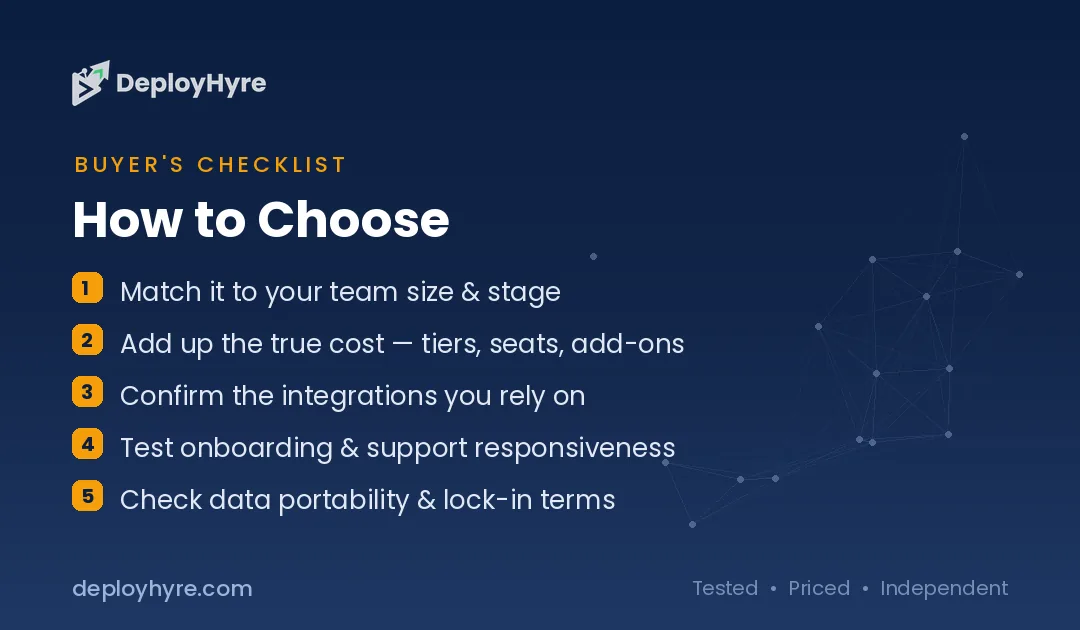
Choose based on your environment, team size, and existing stack. Cloud-first companies gain most from Wiz or CrowdStrike. Microsoft shops save money with Defender. Developers need Snyk. Small teams should start with Intruder or Rapid7. Match the tool to where your assets and risk actually live.
Weigh four factors. First, coverage: confirm the tool scans your asset types, whether cloud, endpoint, or code. Second, prioritization quality: the value sits in accurate ranking, not raw flaw counts. Third, remediation: tools that assign and track fixes shorten exposure. Fourth, total cost: module add-ons and per-asset scaling change the price fast, so model your real asset count before signing.
How We Evaluated These Tools
We assessed each platform across five criteria: scanning coverage, AI-driven prioritization accuracy, remediation workflow, integration breadth, and pricing transparency. We reviewed vendor documentation, 2026 buyer comparisons, and published pricing ranges. We weighted prioritization quality most heavily, since reducing noise is the core job of modern vulnerability management.
We did not run a single tool in isolation as a winner. Each pick leads in a defined use case. This reflects how security teams actually buy, matching a platform to their environment rather than chasing one universal tool. For wider context, see our guides to the best AI penetration testing tools and best AI threat detection tools.
The Bottom Line
AI vulnerability management has shifted from scanning to prioritization. With 48,185 CVEs published in 2025 and exploit windows shrinking to days, teams cannot patch everything. The right tool tells you which flaws to fix first.
For enterprises, Tenable One and Qualys VMDR lead on risk-based scoring. Cloud-native teams should test Wiz or CrowdStrike Falcon. Mid-market buyers will like Rapid7 InsightVM, while developers need Snyk and SMBs can start with Intruder. Map your assets, then pick the platform that scores risk where you actually face it. To build a full program, explore how AI fits broader operations in our AI for business guide.
Frequently Asked Questions
What is the best AI vulnerability management tool?
The best tool depends on your environment. Tenable One and Qualys VMDR lead for enterprise risk-based management. Wiz leads for cloud-native coverage, CrowdStrike Falcon for endpoint-integrated scanning, Rapid7 InsightVM for mid-market teams, and Snyk for developers.
How does AI improve vulnerability management?
AI improves vulnerability management by ranking flaws on real exploit risk instead of static scores. It weighs active exploitation, asset value, and internet exposure to predict which vulnerabilities attackers will target first. This cuts noise so teams patch the few flaws that matter most.
How much do AI vulnerability management tools cost?
Pricing ranges widely. Traditional scanners like Tenable, Qualys, and Rapid7 cost roughly $17 to $38 per asset per year. Cloud platforms like Wiz can reach tens of thousands of dollars annually or more at enterprise scale, while tools like Snyk and Intruder offer lower entry tiers.
Do I still need a scanner if I use an AI tool?
Yes. AI vulnerability tools include scanning as their first step, then add prioritization on top. The AI does not replace scanning; it makes scan results usable by ranking thousands of flaws into a short, ordered fix list based on actual risk.
How is vulnerability management different from penetration testing?
Vulnerability management continuously scans and scores known flaws across your assets. Penetration testing simulates a real attack to find exploitable weaknesses, often once or a few times per year. The two work together: scanning gives ongoing coverage, while pen testing validates real-world exposure.

David Austin is a technology writer and software analyst at DeployHyre, where he covers AI tools, SaaS platforms, cloud hosting, and business automation. He focuses on hands-on comparisons of pricing, features, and real-world performance so teams can pick the right software with confidence.
Table of Contents
Know AI, SaaS, or cloud tools inside out? Pitch a guest post and get in front of thousands of buyers researching their next tool.