Manual code review is a bottleneck and an inconsistent one. AI code review tools read every pull request, flag bugs and risks, and explain them, so human reviewers focus on architecture instead of catching typos.
Table of Contents
The tools differ more than you would expect. In independent benchmarks, Greptile achieved an 82% bug catch rate, well above Qodo’s 60.1% F1 and CodeRabbit’s ~44% catch rate, but higher catch rates come with more false positives. This guide tests the best AI code review tools in 2026 on that trade-off. For writing code, see our roundup of the best AI coding assistants.
What Are AI Code Review Tools?
AI code review tools automatically analyze pull requests to find bugs, security issues, and quality problems, then post explained comments for developers to act on. Unlike a linter that checks style, they reason about logic and context, catching edge-case bugs a human reviewer might miss. They integrate with your code host and run on every PR, speeding reviews and improving consistency.
The key trade-off is catch rate versus noise. Tools that flag more bugs also flag more false positives, so the right pick depends on whether your team prioritizes coverage or signal.
Quick Comparison: 7 Best AI Code Review Tools
| Tool | Best For | Starting Price | Platforms |
|---|---|---|---|
| CodeRabbit | Signal-per-comment, free tier | Free / $24/dev/mo | GitHub, GitLab, Bitbucket, Azure |
| Greptile | Highest bug catch rate | $30/dev/mo | GitHub, GitLab |
| Qodo Merge | Accuracy plus test generation | Free self-host / $19/seat | GitHub, GitLab, Bitbucket, Azure |
| Macroscope | Usage-based pricing | ~$0.95/review | Major hosts |
| Claude Code Review | Deep reasoning (preview) | ~$15-25/review | Team/Enterprise |
| Diamond (Graphite) | Fast inline PR review | Paid | GitHub |
| Bito | Affordable team reviews | Freemium | Major hosts |
What Makes a Great AI Code Review Tool?
A great AI code review tool catches real bugs without drowning developers in false positives, supports your code host, explains each issue clearly, and fits your budget. The best ones balance a high catch rate with high signal, so every comment is worth reading, and integrate seamlessly into your existing pull-request workflow.
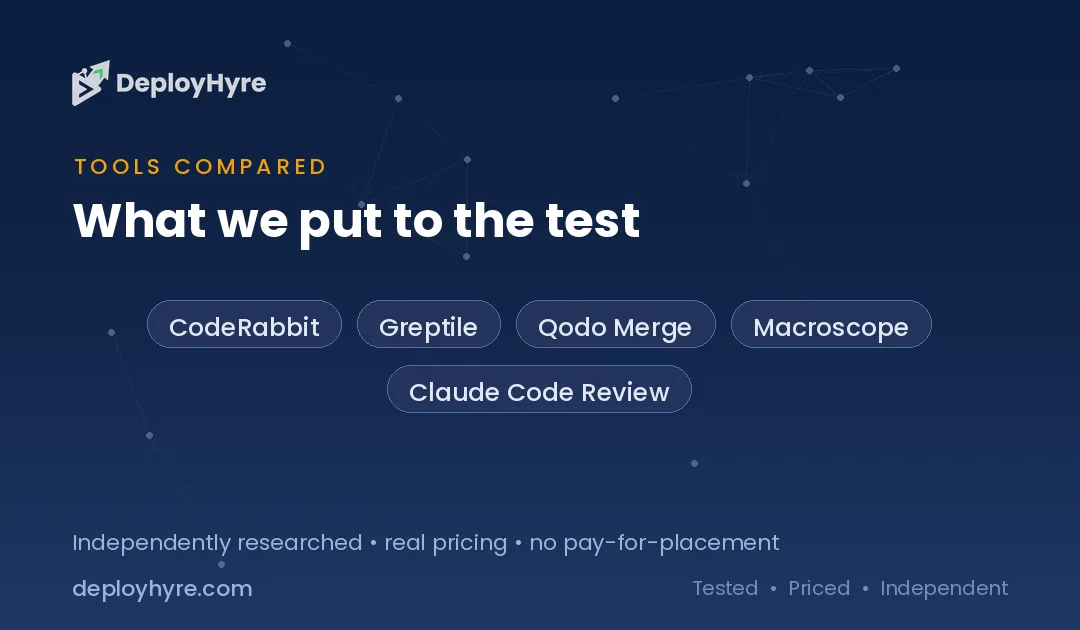
We weighed five things: bug-catch rate, false-positive noise, platform support, extra features like test generation, and price.
Best Overall AI Code Review Tools
1 CodeRabbit: Best for Signal and a Free Tier
CodeRabbit is the best all-round pick, especially for teams that hate noisy reviews.
What it does well. CodeRabbit supports all four major code hosts and its free tier is the only serious free option in the category. It optimizes for signal, producing far fewer false positives (about 2 per run versus Greptile’s 11), so every comment is worth reading.
Key features:
- High signal, low false positives
- Only serious free tier in the category
- Supports GitHub, GitLab, Bitbucket, Azure DevOps
- Clear, actionable comments
Pricing. Free tier; $24/dev/month for Pro.
Best for: Teams that want every review comment to matter.
Limitations. Lower raw catch rate (~44%) than Greptile, so it may miss some edge cases.
2 Greptile: Best for Maximum Bug Catching
Greptile is the choice when missing a bug is unacceptable.
What it does well. Greptile achieved an 82% bug catch rate in benchmarks, significantly higher than competitors, making it the most thorough reviewer.
Key features:
- Highest bug catch rate (82%)
- Deep code reasoning
- Strong for edge-case detection
- GitHub and GitLab support
Pricing. $30/dev/month (per-seat plus usage; 50-review cap, $1 overage).
Best for: Teams that cannot afford to miss bugs and can handle extra noise.
Limitations. More false positives (about 11 per run), only GitHub/GitLab, no free tier, and no test generation.
3 Qodo Merge: Best for Accuracy Plus Test Generation
Qodo balances solid accuracy with extra developer features.
What it does well. Qodo Merge supports all four major code hosts, posts accurate reviews (60.1% F1), and adds test generation, which most rivals lack. It is free self-hosted or low-cost per seat.
Key features:
- Accurate reviews with test generation
- All four major code hosts
- Free self-hosted option
- Developer-friendly workflow
Pricing. Free for self-hosted; $19/seat for managed.
Best for: Teams wanting review plus test generation at low cost.
Limitations. Lower catch rate than Greptile; managed pricing per seat.
Best Specialized and Usage-Based Tools
4 Macroscope and 5 Claude Code Review: Best for Usage-Based and Deep Reasoning
For teams that prefer paying per review or want frontier-model reasoning, two options stand out.
What they do well. Macroscope moved to pure usage-based pricing, averaging about $0.95 per review, which suits variable PR volume. Claude Code Review brings deep reasoning to PRs as a research preview for Team and Enterprise customers, with token-based pricing averaging $15 to 25 per review.
Key features:
- Usage-based pricing (Macroscope)
- Frontier-model reasoning (Claude Code Review)
- Pay for what you use
- Strong on complex logic
Pricing. Macroscope ~$0.95/review; Claude Code Review ~$15-25/review (Team/Enterprise).
Best for: Teams with variable PR volume or that want top-tier reasoning per review.
Limitations. Per-review costs add up at high volume; Claude Code Review is preview and enterprise-gated.
6 Diamond and 7 Bito: Best for Fast, Affordable Reviews
Two more tools round out the list for speed and budget.
What they do well. Diamond (by Graphite) offers fast inline PR review for GitHub teams, while Bito provides affordable AI code review across major hosts with a freemium entry point. Both integrate cleanly into existing PR workflows.
Key features:
- Fast inline review (Diamond)
- Affordable, freemium (Bito)
- PR-workflow integration
- Major host support
Pricing. Diamond paid; Bito freemium.
Best for: Teams wanting fast or budget-friendly AI review.
Limitations. Narrower platform or feature scope than the top three.
How Should You Choose an AI Code Review Tool?
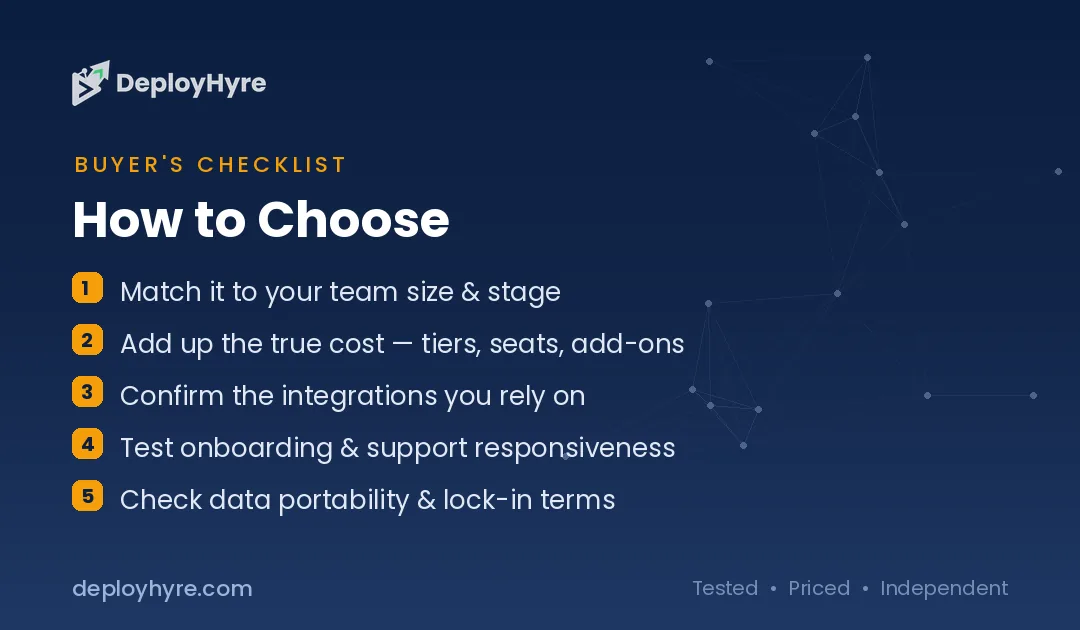
Decide your priority: coverage or signal. If missing a bug is costly and your team tolerates noise, Greptile’s 82% catch rate wins. If you want every comment to matter, CodeRabbit’s high-signal reviews and free tier are best. If you want review plus test generation affordably, choose Qodo.
Then check platform and pricing fit. Confirm support for your code host (CodeRabbit and Qodo cover all four), and pick a pricing model that matches your PR volume, per-seat for steady teams, usage-based for variable load. Trial on real PRs before rolling out.
How We Evaluated These AI Code Review Tools
We assessed each tool on five criteria: bug-catch rate, false-positive noise, platform support, extra features like test generation, and price, drawing on independent 2026 benchmarks and vendor documentation. We prioritized tools with published catch-rate and pricing data. Benchmarks vary by codebase, so validate any tool on your own pull requests before committing.
Can AI code review replace human reviewers?
No. AI code review catches bugs, style issues, and security flaws fast, but humans judge design, intent, and trade-offs. Use AI to filter routine problems, then have engineers review logic with help from AI coding assistants before merging.
What does AI code review catch?
Bugs, vulnerabilities, and style issues. AI review flags security flaws and performance problems, suggests fixes inline, and explains them. It can miss context-specific logic errors, so treat AI findings as a first pass, not the final word.
Does AI code review work with GitHub and GitLab?
Yes. Most AI review tools integrate with GitHub, GitLab, and Bitbucket, commenting directly on pull requests. Setup is usually a quick app install. Confirm support for your platform and CI pipeline before adopting a tool.
Wondering about the future of the role? See whether AI will replace developers.
Beyond code, defend your stack with the best AI cybersecurity tools.
The Bottom Line
The best AI code review tool depends on your trade-off. Greptile catches the most bugs, CodeRabbit gives the cleanest signal and a free tier, and Qodo balances accuracy with test generation. Usage-based options like Macroscope and Claude Code Review fit variable volume.
Pick by coverage versus signal, confirm your code host is supported, and trial on real PRs. AI review will not replace senior reviewers, but it catches what they miss and frees them for architecture.
Next steps: Pair review with writing in our best AI coding assistants guide and our best free AI coding tools roundup.
Frequently Asked Questions
What is the best AI code review tool?
It depends on your priority. Greptile has the highest bug catch rate (82%) but more false positives, CodeRabbit offers the best signal-per-comment plus the only serious free tier, and Qodo balances accuracy with test generation. For variable PR volume, usage-based tools like Macroscope work well. Match the tool to whether you value coverage, signal, or extra features.
How much do AI code review tools cost?
AI code review tools in 2026 range from free to about $30/dev/month. CodeRabbit has a free tier and $24/dev/month Pro, Qodo Merge is free self-hosted or $19/seat, and Greptile is $30/dev/month. Usage-based options include Macroscope at about $0.95/review and Claude Code Review at roughly $15-25/review for Team and Enterprise customers.
Do AI code review tools catch real bugs?
Yes, the best ones catch a high share of bugs. In independent 2026 benchmarks, Greptile caught 82% of bugs, Qodo scored 60.1% F1, and CodeRabbit around 44%. Higher catch rates come with more false positives, so there is a trade-off between coverage and noise. They complement, not replace, human review of architecture and design.
Which AI code review tool has a free tier?
CodeRabbit offers the only serious free tier among dedicated AI code review tools in 2026, making it ideal for developers and small teams before they have a budget. Qodo Merge is also free when self-hosted, and Bito has a freemium plan. Greptile, by contrast, has no free tier.
Do AI code review tools work with GitLab and Bitbucket?
CodeRabbit and Qodo support all four major code hosts natively: GitHub, GitLab, Bitbucket, and Azure DevOps, making them the most platform-flexible. Greptile supports only GitHub and GitLab. Always confirm your specific code host and CI setup are supported before choosing a tool, since platform coverage varies meaningfully across vendors.

David Austin is a technology writer and software analyst at DeployHyre, where he covers AI tools, SaaS platforms, cloud hosting, and business automation. He focuses on hands-on comparisons of pricing, features, and real-world performance so teams can pick the right software with confidence.
Know AI, SaaS, or cloud tools inside out? Pitch a guest post and get in front of thousands of buyers researching their next tool.