
TL;DR: Deel wins for most companies. It bundles EOR, contractor management, and global payroll into one platform with 150+ country coverage and aggressive pricing (contractors from $49/mo, EOR from $599/mo). Papaya Global wins for enterprises that need deep workforce payments, real-time cost analytics, and finance-grade payroll reporting across 160+ countries. Your choice depends on team size and how much analytics you need.
Hiring across borders is no longer a fringe move. Over 55% of multinational companies now use Employer of Record services to manage remote teams, and the global EOR market is projected to reach roughly $7.45 billion in 2026. That growth has crowded the field with strong platforms.
Two names come up again and again: Deel and Papaya Global. Both let you hire and pay workers in dozens of countries without opening a legal entity. But they solve the problem in different ways.
This guide breaks down pricing, coverage, compliance, and analytics for each. If you are shopping the wider category first, start with our roundup of the best AI tools for HR. Otherwise, read on for a clear, honest verdict.
Quick Comparison: Deel vs Papaya Global
| Feature | Deel | Papaya Global |
|---|---|---|
| EOR price | From ~$599/mo per employee (volume discounts to $350–$500) | From ~$650–$770/mo per employee |
| Contractor price | From ~$49/mo per contractor | Contractor payments (custom, enterprise-oriented) |
| Global payroll | Owned infrastructure in 150+ countries | Payroll-only from ~$12/mo per employee; analytics included |
| Country coverage | 150+ countries, 120+ currencies | 160+ countries, 130+ currencies |
| Payments | Deel Card, multi-currency payouts | Workforce payments engine, finance-grade reporting |
| Integrations | 100+ pre-built connectors | NetSuite, SAP, Oracle, Workday, and more (ERP-focused) |
| Best for | All-in-one hiring, contractors, fast growth | Enterprise payroll analytics and finance teams |
What Is the Core Difference Between Deel and Papaya Global?
Deel is an all-in-one global hiring platform, while Papaya Global is a payroll-technology and workforce-payments platform. Deel bundles EOR, contractors, and payroll under one roof. Papaya focuses on running and analyzing global payroll at scale, with finance-team reporting as its headline feature.
Deel spreads wider. It offers EOR, global payroll, contractor management, Contractor of Record, HRIS, IT, immigration, and equity, all in one dashboard. That breadth makes it a natural fit for companies that want fewer vendors.
Papaya goes deeper on the money side. Its four products (EOR, global payroll, contractor payments, and workforce analytics) are built around visibility into what your global workforce actually costs.
How Do Deel and Papaya Global Compare on Pricing?
Deel is the cheaper entry point, especially for contractors and smaller teams. Papaya Global costs more per EOR seat but bundles enterprise analytics into that price. Deel contractor plans start near $49/mo, while Papaya targets larger, payroll-heavy accounts.
Here is how the published rates stack up.
Deel pricing. Deel EOR starts around $599 per employee per month, with volume discounts pulling that to $350–$500 for teams of 20 or more. Contractor management starts near $49 per contractor per month.
Papaya Global pricing. Papaya Global EOR runs about $650–$770 per employee per month, with the higher tier adding dedicated HR support. Its payroll-only service starts near $12 per employee per month and includes the analytics platform.
One note: neither headline price includes salary, employer taxes, or statutory benefits. Those add real cost in every country. Watch FX spreads too, which sit around 1 to 1.5% above mid-market rates on Papaya.
Which Platform Has Better Country and Entity Coverage?
Papaya Global edges ahead on raw country count, but both cover nearly every market a growing company needs. Papaya reaches 160+ countries and 130+ currencies. Deel reaches 150+ countries and 120+ currencies. For most teams, the difference is not decisive.
The bigger contrast is infrastructure. Deel operates its own owned payroll and entity network across 150+ countries. That means fewer third-party handoffs and tighter control.
Papaya leans on a mix of owned capability and external partners for some markets. That model still works well, but it can add a layer between you and local processing in certain countries.
How Do They Handle Global Payroll and Payments?
Papaya Global is built payments-first, with a workforce analytics dashboard that gives finance real-time visibility into spend, taxes, and FX. Deel matches on breadth but not on reporting depth. If your CFO wants live payroll intelligence, Papaya leads here.
Papaya’s dashboard surfaces cost-per-employee by country, predictive cost modeling for new hires, and cross-country benchmarking. It also handles multi-currency payouts across 130+ currencies through a dedicated payments engine.
Deel pays fast and reliably too. It supports 120+ currencies, offers the Deel Card for contractor spending, and runs on owned infrastructure. But its reporting stays lighter than Papaya’s finance-grade views.
Which Is Stronger on Compliance?
Both platforms handle local labor law, tax filing, and statutory benefits in every country they serve, so compliance is a wash for most buyers. Deel and Papaya each maintain in-country legal expertise and keep pace with changing regulations. The difference shows up in how they surface risk.
Deel builds compliance into its all-in-one flow, with contract localization, misclassification checks, and immigration support in the same platform. That keeps everything in one place.
Papaya frames compliance through a finance lens. Its reporting flags tax obligations and payment status so your team can spot issues before payday. Both approaches are solid. Neither has a clear edge.
How Do Deel and Papaya Global Compare on Workforce Analytics?
Papaya Global clearly wins on analytics. Its dashboard delivers real-time cost modeling, termination cost estimates, and payroll benchmarking that Deel does not match. This is Papaya’s strongest differentiator and the main reason enterprises pick it.
For a finance team managing thousands of workers across many countries, that visibility matters. Papaya lets you forecast the cost of a new hire before you make it, then track spend live.
Deel offers solid reporting for HR and operations. It covers headcount, payments, and basic cost views. But it is not built to be a workforce-finance intelligence tool the way Papaya is.
Which Platform Has Better Integrations?
Deel has the broader integration ecosystem with 100+ pre-built connectors, while Papaya Global focuses on deep ERP and finance integrations like NetSuite, SAP, and Oracle. Your winner depends on your existing stack.
Deel connects to a wide range of HR, payroll, and productivity tools. That flexibility suits companies with mixed or evolving software.
Papaya integrates with NetSuite, BambooHR, Workday, HiBob, Expensify, QuickBooks, SAP SuccessFactors, Oracle HCM, and Xero, among others. The focus on ERP reflects its enterprise buyer. If your finance stack runs on one of those systems, Papaya fits neatly.
Who Should Choose Deel vs Papaya Global?
Choose Deel if you want one platform for contractors, EOR, and payroll at aggressive prices. Choose Papaya Global if you are an enterprise that needs deep payroll analytics and finance-grade reporting. Team size and analytics needs decide it.
Deel is the flexible, all-in-one pick. It scales from a single contractor to a global workforce without forcing you to add vendors.
Papaya is the specialist. It rewards larger companies that treat global payroll as a strategic finance function, not just an HR task.
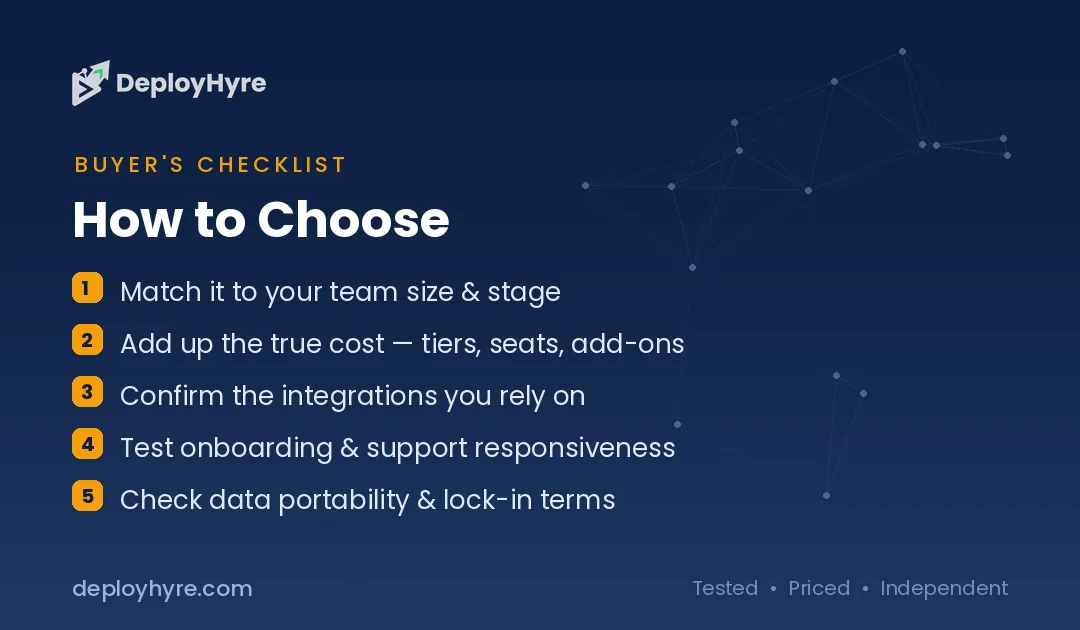
Deel vs Papaya Global: Which Should You Choose?
Startups and SMBs. Go with Deel. The low contractor rate, one-platform simplicity, and volume discounts make it the value leader for smaller and fast-growing teams.
Companies hiring lots of contractors. Deel again. At roughly $49 per contractor per month with the Deel Card and contractor-of-record options, it is purpose-built for this.
Mid-market companies scaling globally. Either works. Pick Deel for breadth and simplicity, or Papaya if finance wants live payroll visibility from day one.
Large enterprises with complex payroll. Lean toward Papaya Global. Its analytics, ERP integrations, and finance reporting are built for scale and CFO oversight.
Teams that want fewer vendors. Deel. Eight products in one dashboard beats stitching tools together.
Want more head-to-head data? Compare Deel vs Remote and Deel vs Rippling to see how Deel stacks up against other leaders.
The Bottom Line
For most companies, Deel is the smarter default. It combines the widest single-vendor toolset, strong country coverage, and the most aggressive pricing in the category. That makes it hard to beat for startups, contractor-heavy teams, and businesses that value simplicity.
Papaya Global earns its place for a specific buyer: the enterprise that needs deep payroll analytics, workforce payments at scale, and finance-grade reporting across 160+ countries. If that is you, the higher price buys real intelligence.
Match the tool to your team. Then hire with confidence.

Frequently Asked Questions
Is Deel cheaper than Papaya Global?
Yes, in most cases. Deel EOR starts around $599 per employee per month versus roughly $650–$770 for Papaya Global. Deel also offers contractor plans from about $49 per contractor per month, which is well below what enterprise-focused Papaya targets. Neither headline price includes salary, taxes, or benefits.
Which has better country coverage, Deel or Papaya Global?
Papaya Global covers 160+ countries and 130+ currencies, slightly ahead of Deel’s 150+ countries and 120+ currencies. For most companies the difference is minor. Deel’s advantage is owned infrastructure in its markets, which reduces third-party handoffs during payroll processing.
Is Papaya Global better for enterprise payroll?
Often yes. Papaya Global is built payments-first, with a workforce analytics dashboard offering real-time cost modeling, benchmarking, and finance-grade reporting. Enterprises that treat global payroll as a strategic finance function tend to prefer it over Deel’s lighter reporting.
Does Deel do more than EOR?
Yes. Deel offers eight products in one platform: EOR, global payroll, contractor management, Contractor of Record, HRIS, IT, immigration, and equity management. That breadth lets companies handle most global hiring needs without adding separate vendors.
Which integrates better with finance systems?
Papaya Global integrates deeply with ERP and finance tools like NetSuite, SAP, Oracle HCM, Workday, and QuickBooks. Deel has a broader ecosystem of 100+ connectors across HR and productivity apps. If your stack centers on a major ERP, Papaya fits best.
Know AI, SaaS, or cloud tools inside out? Pitch a guest post and get in front of thousands of buyers researching their next tool.

David Austin is a technology writer and software analyst at DeployHyre, where he covers AI tools, SaaS platforms, cloud hosting, and business automation. He focuses on hands-on comparisons of pricing, features, and real-world performance so teams can pick the right software with confidence.