TL;DR: Shopify wins for most sellers. It offers the biggest app ecosystem, the easiest setup, and slick multichannel selling, but it charges transaction fees unless you use Shopify Payments. BigCommerce wins for feature-heavy or B2B stores. It charges no platform transaction fee and packs more tools into the core, yet it has a steeper learning curve.
Shopify powers a huge slice of the internet’s stores. It processed more than $300 billion in gross merchandise volume in 2025 and runs millions of active shops worldwide. That scale is why “Shopify vs BigCommerce” is one of the most common questions new merchants ask.
Both platforms let you build a real store fast. Both handle payments, shipping, and taxes. The difference sits in cost structure, feature depth, and how much control you want. We compared pricing, fees, apps, design, SEO, and support to find a clear winner for each type of store.
Before you pick a platform, it helps to line up your whole stack. Start with our guide to the best AI tools for ecommerce so your platform choice fits the tools you plan to run on top of it.
Quick Comparison: Shopify vs BigCommerce
| Feature | Shopify | BigCommerce |
|---|---|---|
| Starting price | $39/mo (Basic), $29/mo billed annually | $39/mo (Core/Standard), $29/mo billed annually |
| Transaction fees | None with Shopify Payments; extra 0.5%-2% with outside gateways | No platform fee; new Open Payment Provider fee applies to some outside gateways |
| Themes | Large paid and free theme library, polished designs | Smaller theme library, fewer premium options |
| App store | ~18,000+ apps, largest in ecommerce | ~1,200+ apps and integrations |
| Built-in features | Lean core, extend with apps | Deep core: B2B, multi-storefront, faceted search |
| Multichannel | Strong: Instagram, Amazon, Google, POS, TikTok | Strong: marketplaces plus native B2B and wholesale |
| Best for | Speed, ease, and app-driven growth | Feature depth, B2B, and fee-free scaling |
How Much Do Shopify and BigCommerce Cost?
Both platforms start at $39 per month, or $29 per month billed annually. Shopify Basic costs $39 monthly, and BigCommerce’s entry plan matches that price. Higher tiers unlock lower card rates and more features.
Shopify climbs to $105 per month for the Shopify plan and $399 per month for Advanced. BigCommerce climbs to $105 for Growth and $399 for Scale.
BigCommerce ties each plan to a yearly sales cap. Cross the cap and you move up a tier automatically. Shopify has no revenue cap on its standard plans, so a busy small store can stay on Basic longer.
Which Platform Charges Transaction Fees?
Shopify charges a transaction fee unless you use Shopify Payments. BigCommerce charges no platform transaction fee, though a new Open Payment Provider fee now applies to some outside gateways. This is the biggest cost gap between them.
On Shopify, using an outside gateway adds an extra 0.5% to 2% surcharge per sale on top of your processor’s rates. Switch to Shopify Payments and that surcharge disappears.
BigCommerce dropped its own transaction fee years ago. Its 2026 update added an Open Payment Provider fee of up to 2% for orders that do not settle through an embedded provider. Use a supported provider and you avoid it.
The takeaway: run Shopify Payments and Shopify costs about the same as BigCommerce on fees. Insist on a niche gateway and BigCommerce often wins on cost.
Which Is Easier to Set Up and Use?
Shopify is easier to set up and run. Its dashboard is clean, the onboarding walks you through each step, and non-technical founders launch a store in a day. BigCommerce is more powerful out of the box but takes longer to learn.
Shopify hides technical work behind simple menus. You add products, pick a theme, and connect a payment method without touching code.
BigCommerce shows more settings up front. That depth helps advanced sellers but overwhelms beginners. Expect a steeper climb before your first sale.
If you want a fast launch with little training, Shopify wins here. If you have a team and complex needs, BigCommerce’s extra controls pay off.
Which Has Better Themes and Design?
Shopify has the stronger theme library. It offers a larger set of polished free and paid themes, and its designs look modern out of the box. BigCommerce has fewer themes, though its templates are clean and mobile-ready.
Shopify themes range from free options to premium designs that cost a one-time fee. The Shopify Theme Store gives you dozens of professional starting points.
BigCommerce ships a smaller catalog. You can still build an attractive store, but you have fewer premium looks to choose from. Heavy customization on either platform may need a developer.
You can pair either builder with AI design help. Our roundup of AI tools for Shopify covers apps that speed up store design and copy.
Which Has More Apps and Extensions?
Shopify wins decisively on apps. Its app store holds roughly 18,000 apps, the largest ecosystem in ecommerce. BigCommerce offers about 1,200 apps and integrations, which is smaller but still covers the essentials.
Shopify’s size means almost any feature you need already exists as an app. Reviews, upsells, loyalty, and email all plug in fast.
BigCommerce leans on built-in features instead of apps. You may not need a marketplace add-on because the core already handles the job. Still, for niche tools, Shopify’s catalog is far deeper.
One popular add-on category is customer support. See our picks for AI ecommerce chatbots that work with both platforms.
Which Has Better Built-In Features and SEO?
BigCommerce packs more into the core, and it gives you finer SEO control. It includes B2B tools, multi-storefront selling, and faceted search natively. Shopify keeps its core lean and clean, then leans on apps to add depth.
BigCommerce natively provides automatic URL rewrites, customizable robots.txt, and rich snippets. That granular control appeals to technical SEO teams.
Shopify handles SEO basics well and automates SSL and sitemaps. Its workflow is simpler, so non-technical owners optimize titles and meta tags in seconds. It gives less control over URL structure.
For built-in depth and pro-level SEO, BigCommerce wins. For a clean, hands-off SEO setup, Shopify is enough for most stores.
Which Scales Better Across Channels?
Both scale well, but they lead in different ways. Shopify shines at multichannel retail, connecting to Instagram, TikTok, Amazon, Google, and in-person POS from one dashboard. BigCommerce shines at B2B and wholesale channels built into the platform.
Shopify unifies inventory and orders across social and marketplace channels. That makes it ideal for brands selling everywhere at once.
BigCommerce adds native B2B pricing, quotes, and multi-storefront tools. Large or wholesale sellers scale without stacking extra apps. Both platforms serve high-volume stores reliably.
Pick Shopify for social and retail reach. Pick BigCommerce for B2B and complex catalogs.
Which Offers Better Support?
Both offer 24/7 support, and both perform well. Shopify provides round-the-clock chat and email, plus a huge community and help center. BigCommerce provides 24/7 phone, chat, and email, with strong onboarding for larger accounts.
Shopify’s massive user base means tutorials and forum answers for nearly every question. Self-serve help is excellent.
BigCommerce leans on direct support channels, including phone access that many merchants value. For a store owner who wants to talk to a person, that phone line is a plus.
Support quality is close. Shopify wins on community depth; BigCommerce wins on hands-on account help.
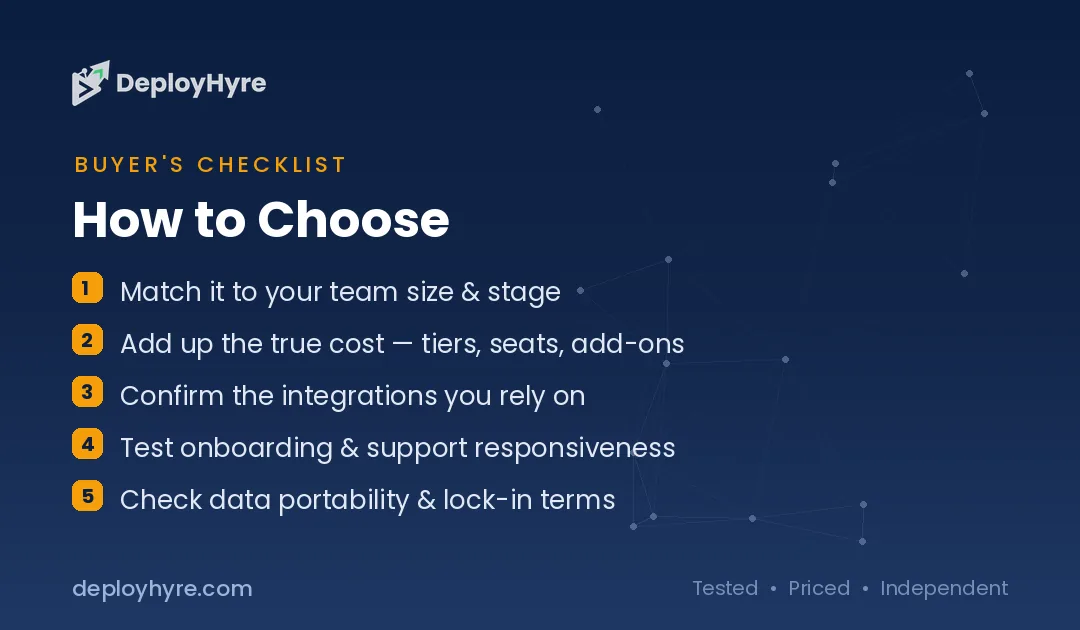
Shopify vs BigCommerce: Which Should You Choose?
Match the platform to your store type. The right pick depends on your budget, your technical skill, and how you sell.
Choose Shopify if you are:
-
A new or small store that wants the fastest launch
-
A brand selling across Instagram, TikTok, Amazon, and retail
-
A seller who wants the widest app ecosystem
-
Happy to use Shopify Payments to skip transaction fees
Choose BigCommerce if you are:
-
A store that wants deep features without stacking apps
-
A B2B, wholesale, or multi-storefront seller
-
A team that needs granular, technical SEO control
-
Committed to a specific outside payment gateway
Most small and mid-size direct-to-consumer brands land on Shopify for its ease and reach. Feature-heavy and B2B sellers often land on BigCommerce for its built-in depth.
The Bottom Line
Shopify is the better default for most sellers, and BigCommerce is the smarter pick for feature-heavy or B2B stores. Shopify’s app store, ease of use, and multichannel tools make growth simple, as long as you use Shopify Payments to avoid transaction fees. BigCommerce rewards sellers who want more built in and no platform transaction fee, in exchange for a steeper learning curve.
Both start at the same $39 price, so cost is rarely the deciding factor. Your channels, your team, and your feature needs are. Try each free trial with your real products before you commit.
Frequently Asked Questions
Is Shopify or BigCommerce cheaper?
Both start at $39 per month, or $29 billed annually, so base pricing is a tie. The real cost gap is fees. Shopify adds a transaction fee unless you use Shopify Payments, while BigCommerce charges no platform transaction fee. If you use a niche gateway, BigCommerce is often cheaper.
Does BigCommerce charge transaction fees?
BigCommerce charges no platform transaction fee on any plan. You still pay your payment processor’s standard card rates. Its 2026 update added an Open Payment Provider fee of up to 2% for orders that do not settle through a supported provider, which you avoid by using one.
Is Shopify easier to use than BigCommerce?
Yes. Shopify is easier to set up and run. Its clean dashboard and guided onboarding let non-technical founders launch in a day. BigCommerce offers more built-in features but shows more settings up front, so it takes longer to learn.
Which platform is better for SEO?
BigCommerce gives finer SEO control with native URL rewrites, customizable robots.txt, and rich snippets. Shopify handles SEO basics well and automates SSL and sitemaps, but offers less URL control. Technical teams prefer BigCommerce; most non-technical owners find Shopify’s SEO more than enough.
Which is better for a small business?
Shopify is usually the better fit for small businesses. It has the easiest setup, the largest app store, and strong multichannel selling. BigCommerce suits small stores that need heavy built-in features or B2B tools without adding many apps.
Know AI, SaaS, or cloud tools inside out? Pitch a guest post and get in front of thousands of buyers researching their next tool.
Related Articles

David Austin is a technology writer and software analyst at DeployHyre, where he covers AI tools, SaaS platforms, cloud hosting, and business automation. He focuses on hands-on comparisons of pricing, features, and real-world performance so teams can pick the right software with confidence.