Node.js powers a huge share of modern web backends, and choosing the right cloud hosting provider shapes your deploy speed, scaling, and monthly bill. The landscape shifted in 2026: Heroku entered sustaining-engineering mode with no new features, while modern platforms like Railway and Render reshaped how developers ship JavaScript apps.
Table of Contents
We tested and ranked the best Node.js hosting platforms for 2026 on deployment experience, pricing, scaling, and developer tools. Whether you are launching a side project or a production API, there is a right fit below.
Best Node.js Hosting: Quick Comparison
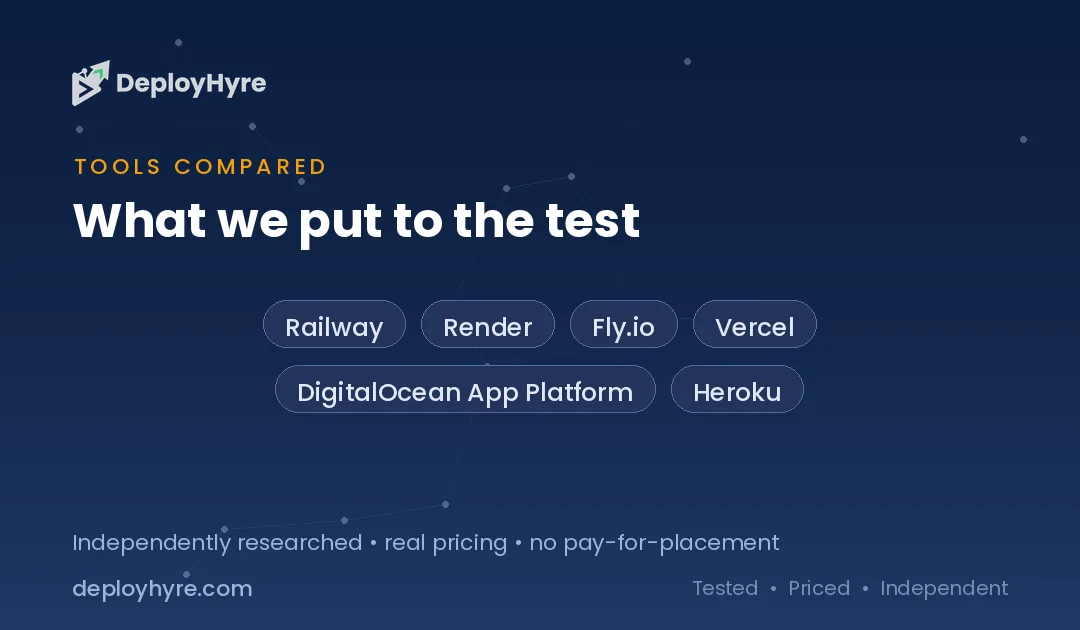
| Platform | Starting Price | Pricing Model | Best For |
|---|---|---|---|
| Railway | ~$5/mo + usage | Usage-based | Fastest deploys, side projects |
| Render | Free / $7/mo | Fixed | Predictable always-on apps |
| Fly.io | Pay-as-you-go | Usage-based | Global edge APIs |
| Vercel | Free / $20/mo | Tiered + usage | Next.js and frontends |
| DigitalOcean App Platform | $5/mo | Fixed | Value and simplicity |
| Heroku | $5-7/mo | Fixed dynos | Legacy apps, simplicity |
| Northflank | Free / usage | Usage-based | Production teams and CI/CD |
What Makes a Great Node.js Host?
Pricing models matter as much as features. Usage-based platforms like Railway and Fly.io are cheaper for variable or low-traffic apps that can scale to zero. Fixed platforms like Render are cheaper for steady, always-on workloads. For broader infrastructure, see our best cloud hosting guide.
The 7 Best Node.js Hosting Platforms
1. Railway: Best Overall for Node.js
Railway delivers the fastest path from Git push to live app, with a polished developer experience.
What it does well. One-click Postgres, Redis, and MySQL, the best environment variable management in the category, and instant deploys. Usage-based pricing means you do not pay for idle resources, ideal for side projects and variable workloads.
Pricing. Hobby plan around $5/mo including usage credit, then pay for what you use.
Best for: Indie developers, side projects, and fast iteration.
Limitations. Usage billing can climb for heavy always-on apps.
2. Render: Best for Predictable Pricing
Render offers a clean platform with fixed monthly pricing and a generous free tier.
What it does well. Predictable costs, static site hosting, managed Postgres, multi-region deploys, and auto-deploys from Git. The free tier is great for prototyping, and fixed pricing suits steady production apps.
Pricing. Free tier available, paid web services from $7/mo.
Best for: Always-on apps that want predictable bills.
Limitations. Free tier services spin down when idle.
3. Fly.io: Best for Global Edge APIs
Fly.io runs your Node.js app in micro-VMs near your users for low global latency.
What it does well. Deploys containers to edge locations worldwide using Firecracker micro-VMs, with Postgres run as an app. Excellent for APIs that need to be fast everywhere.
Pricing. Pay-as-you-go based on resources used.
Best for: Globally distributed APIs and latency-sensitive apps.
Limitations. More configuration than Railway or Render.
4. Vercel: Best for Next.js and Frontends
Vercel offers unmatched integration for Next.js and frontend-heavy Node.js apps.
What it does well. Instant global CDN, serverless functions, preview deployments, and first-class Next.js support. It is the default choice for React and Next.js projects.
Pricing. Free hobby tier, Pro from $20/mo per user plus usage.
Best for: Next.js apps, frontends, and serverless functions.
Limitations. Less suited to long-running backend processes.
5. DigitalOcean App Platform: Best Value
DigitalOcean’s App Platform gives you a managed deploy experience at a low fixed price.
What it does well. Git-based deploys, managed databases, and predictable pricing on DigitalOcean’s reliable infrastructure. A $5/mo VPS option offers the most resources per dollar if you want to manage the server yourself.
Pricing. App Platform from $5/mo; basic droplets from $4/mo.
Best for: Value-focused developers who want simple managed deploys.
Limitations. Fewer convenience features than Railway.
6. Heroku: Best for Legacy Simplicity
Heroku pioneered easy app deploys and still suits teams running existing Heroku apps.
What it does well. Simple dyno-based deploys, a mature add-on marketplace, and a familiar workflow. It remains stable for legacy apps even in sustaining-engineering mode.
Pricing. Eco dynos from $5/mo, Basic from $7/mo.
Best for: Existing Heroku apps and teams that value simplicity.
Limitations. As of 2026 it gets no new features, so it is not ideal for new projects.
7. Northflank: Best for Production Teams
Northflank is a developer platform built for teams that want CI/CD and production-grade control.
What it does well. Combines build pipelines, deployments, managed databases, and preview environments in one platform, with strong support for microservices and Kubernetes-grade scaling.
Pricing. Free tier available, then usage-based.
Best for: Production teams that need integrated CI/CD.
Limitations. More features than a solo side project needs.
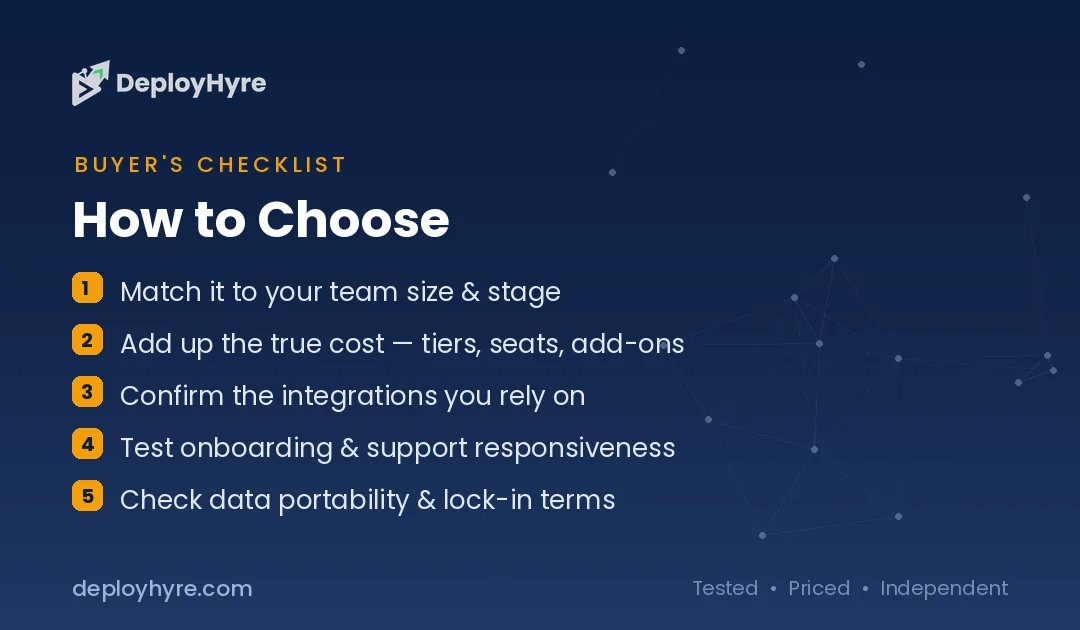
How Should You Choose a Node.js Host?
Watch your scaling pattern: setups that cost $30 per month in 2025 are landing at $80 to $100 in 2026, so model your traffic before committing. For frontend-heavy stacks, pair Vercel with a database host. See our cloud hosting roundup for managed options.
How We Tested These Platforms
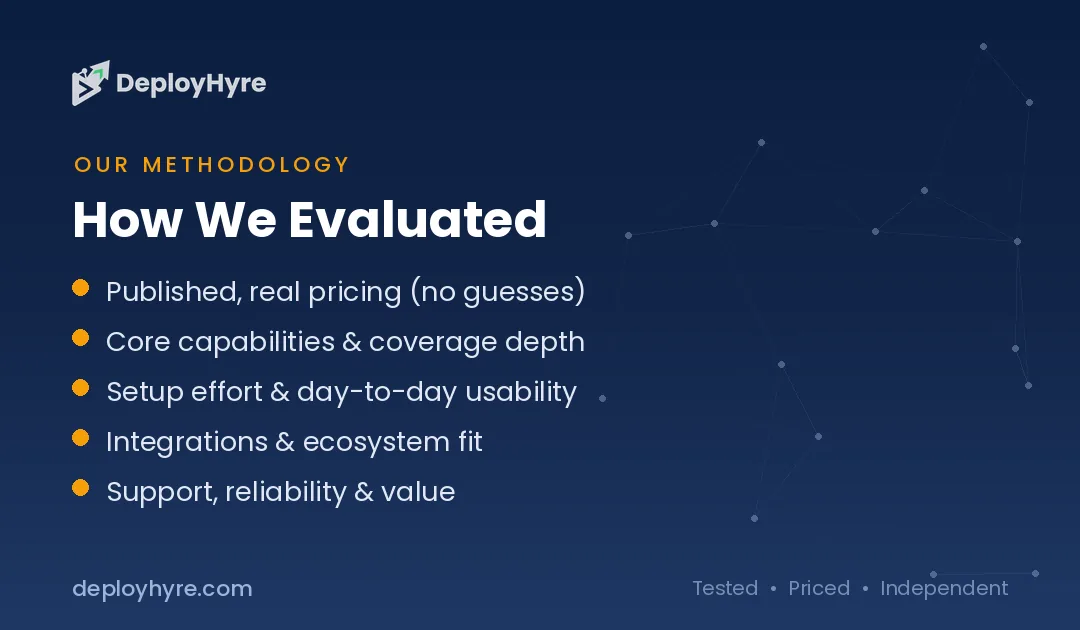
We evaluated each platform on deployment speed, pricing model, scaling behavior, database options, and developer experience, drawing on published pricing and independent developer testing. We weighted real-world workflow and total cost across both variable and always-on workloads. Pricing reflects rates published as of June 2026 and may change.
The Bottom Line
Railway is the best Node.js host for most developers in 2026, thanks to fast deploys and fair usage-based pricing. Render wins for predictable always-on apps, Fly.io for global APIs, and Vercel for Next.js. Match the platform to your traffic pattern and you will keep both performance and cost in check.
Next, explore our best cloud hosting guide or read about Cloudways alternatives for managed server options.

Frequently Asked Questions
What is the best hosting for Node.js?
Railway is the best Node.js hosting for most developers in 2026. It offers the fastest Git-based deploys, the cleanest environment variable management, one-click databases, and usage-based pricing that scales to zero, so you avoid paying for idle resources on side projects.
What replaced Heroku for Node.js hosting?
Railway and Render are the most popular Heroku replacements for Node.js. Heroku entered sustaining-engineering mode in 2026 with no new features, so developers moved to Railway for usage-based simplicity and Render for fixed, predictable pricing with a free tier.
Is Railway cheaper than Render?
It depends on your traffic. Railway’s usage-based pricing is cheaper for low-traffic or variable apps that scale to zero, while Render’s fixed pricing is often cheaper for steady, always-on apps that run continuously. Model your expected traffic before choosing.
Can I host a Node.js API for free?
Yes. Render and Northflank offer free tiers suitable for prototyping Node.js APIs, and Vercel has a free hobby tier for serverless functions. Free services usually spin down when idle, so they suit testing rather than production traffic.
Which Node.js host is best for global low latency?
Fly.io is the best Node.js host for global low latency. It runs your app in Firecracker micro-VMs deployed to edge locations worldwide, placing your API close to users everywhere, which reduces response times for globally distributed traffic.

David Austin is a technology writer and software analyst at DeployHyre, where he covers AI tools, SaaS platforms, cloud hosting, and business automation. He focuses on hands-on comparisons of pricing, features, and real-world performance so teams can pick the right software with confidence.
Know AI, SaaS, or cloud tools inside out? Pitch a guest post and get in front of thousands of buyers researching their next tool.