Table of Contents
The best SOAR tool for most teams is Tines or Torq for modern no-code automation, Palo Alto Cortex XSOAR for maximum enterprise integration, and Microsoft Sentinel SOAR for Microsoft 365 organizations that get it bundled. SOAR platforms, security orchestration, automation, and response, turn the repetitive manual work of a security operations center into automated playbooks: enriching alerts, quarantining endpoints, and resetting credentials without a human doing each step.
The market shift worth knowing: a wave of no-code newcomers with free tiers is undercutting the six-figure enterprise incumbents. Tines offers a genuinely free Community Edition and Torq starts around $24,000 a year, while a full Palo Alto stack can run into the millions and enterprise SOARs broadly cost $50,000 to $300,000-plus. The automation that once required a massive platform and professional services is now available to mid-market SOCs, which has reshaped the category.
Every price below is a recent observed figure from vendor pages and analysis. Because enterprise SOAR scales with analyst count and automation volume, treat each as a band.
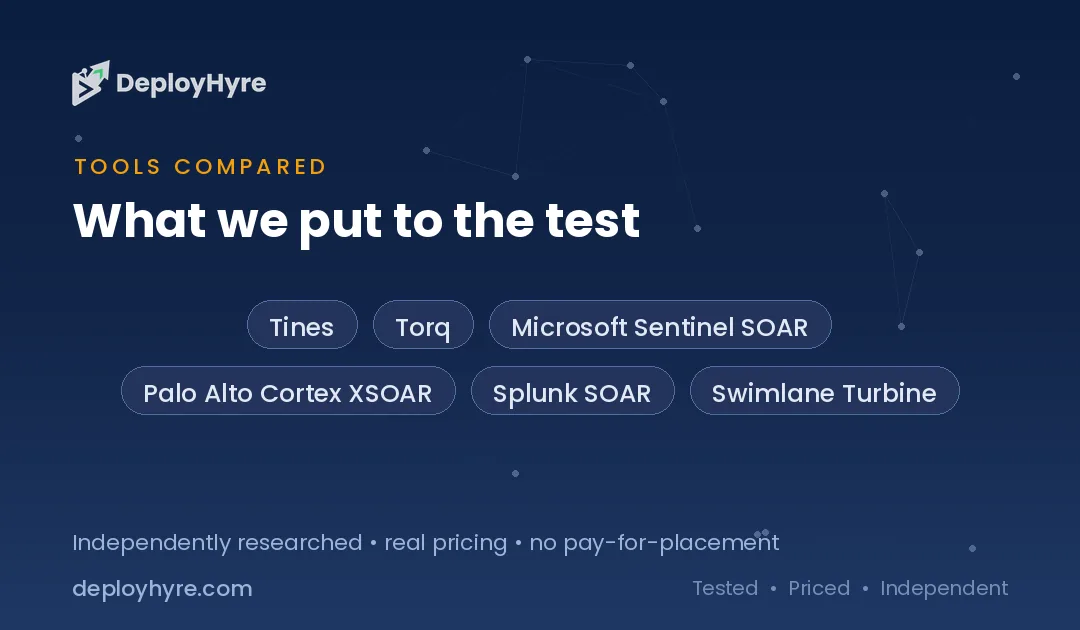
Quick Comparison: SOAR Platforms at a Glance
| Platform | Best For | Observed Price | Note |
|---|---|---|---|
| Tines | No-code automation, free start | Free Community; Starter $500/mo; Ent. $50K+/yr | Top user ratings |
| Torq | AI-generated workflows | From ~$24,000/yr | Fastest-growing |
| Microsoft Sentinel SOAR | Microsoft 365 organizations | Included with Sentinel | Best value in Microsoft estates |
| Palo Alto Cortex XSOAR | Maximum integration coverage | Enterprise; part of £200K–£1M+ stacks | 750+ integrations |
| Splunk SOAR | Splunk-native SOC | ~$50,000–$300,000+/yr | Tight Splunk ES integration |
| Swimlane Turbine | High-volume SOC automation | Enterprise quote | Scale and throughput |
What SOAR Tools Do
A security operations center handles a flood of alerts, and most of the work is repetitive: look up an IP’s reputation, check whether a user clicked a phishing link, isolate a suspicious endpoint, reset a compromised password. SOAR automates these sequences as playbooks. When an alert fires, the playbook enriches it with context, decides based on rules or analyst input, and executes the response across your security tools, all in seconds instead of the minutes or hours a human takes.
The three parts are orchestration (connecting your security tools so they act together), automation (running the response steps without manual work), and response (the actual containment and remediation). The AI layer now generates playbooks from plain-language descriptions, suggests the next action in an investigation, and triages which alerts warrant automation, which is Torq’s headline capability and increasingly table stakes. The payoff is a SOC that handles far more volume with the same headcount and far less analyst burnout.
SOAR sits downstream of detection, acting on the alerts your SIEM and other tools generate. It pairs directly with the platforms in our best AI SIEM tools guide and routes serious events into the workflows in our best AI incident management software guide.
No-Code Newcomers Are Undercutting the Enterprise Giants
Tines and Torq rebuilt SOAR around no-code, accessible pricing and free tiers, which has broken the old assumption that security automation requires a six-figure platform and a services engagement. Tines’ Community Edition is free for a single builder with three flows and unlimited runs, and Torq starts around $24,000 a year, both a fraction of what Cortex XSOAR or Splunk SOAR command. For mid-market SOCs that could never justify an enterprise SOAR, this put real automation within reach.
The enterprise incumbents still win on integration depth and scale, XSOAR’s 750-plus connectors and Splunk SOAR’s native tie to Splunk Enterprise Security are things the newcomers cannot fully match, but the value equation flipped for most teams. Independent analysis put XSIAM alone in the £200,000 to £1M-plus range and a full Palo Alto stack at £1.5M to £4M for a 2,000-employee enterprise, which makes the case for starting with a modern no-code tool and only reaching for the enterprise platform when integration breadth genuinely demands it.
Best Modern No-Code Automation
Tines is the standout modern SOAR, earning top user ratings for a no-code builder that lets analysts automate complex workflows without writing code, with a free Community Edition and paid tiers from $500 a month rising to $50,000-plus for enterprise. Its appeal is that a security analyst, not just a developer, can build and maintain playbooks, and the free tier lets teams prove value before spending. For most SOCs adopting automation for the first time, Tines is the lowest-friction entry point with genuine enterprise headroom.
Torq is the fastest-growing challenger, distinguished by AI-generated workflows that build playbooks from plain-language descriptions, starting around $24,000 a year. It earned among the highest ratings of the leaders and suits teams that want AI doing more of the automation-building work. Both represent the modern, accessible end of SOAR, and for mid-market and growing SOCs they usually deliver the best value, connecting the detection in our best AI SIEM tools guide to automated response.
Best Enterprise SOAR
Palo Alto Cortex XSOAR is the enterprise choice when integration breadth is paramount, with 750-plus connectors and content packs that let it orchestrate virtually any security tool in a large, heterogeneous stack. It is priced as part of Palo Alto’s enterprise platform, with independent analysis placing the broader XSIAM and stack costs from £200,000 into the millions for large enterprises. For organizations with sprawling security toolchains that need one automation layer connecting everything, XSOAR’s integration library is the deepest available, and the price reflects that positioning.
Swimlane Turbine is the specialist for high-volume SOC automation, engineered for throughput at scale, and is the pick for the largest security operations processing enormous alert volumes. Both are enterprise-grade platforms sold on quotes and justified by scale and integration needs that the no-code newcomers cannot fully meet. Choose them when your environment’s complexity, not just your budget, demands enterprise depth.
Best Bundled With Your SIEM
Microsoft Sentinel SOAR is the best-value choice for organizations already using Microsoft Sentinel, because the automation capability is included with the SIEM rather than sold as a separate platform. For Microsoft 365 estates running Sentinel, this delivers real orchestration and automated response at no additional platform cost, tightly integrated with the detection already happening in Sentinel. It is the obvious starting point for Microsoft-centric SOCs, since the marginal cost of turning on automation is minimal.
Splunk SOAR plays the equivalent role for Splunk shops, providing native integration with Splunk Enterprise Security that creates a unified detection-to-response workflow no third-party SOAR fully replicates, priced roughly $50,000 to $300,000-plus a year. The lesson in both cases is to check what your existing SIEM already offers before buying standalone SOAR, because the bundled or natively-integrated option often wins on both cost and workflow coherence. See our best AI SIEM tools guide for the detection layer these extend.
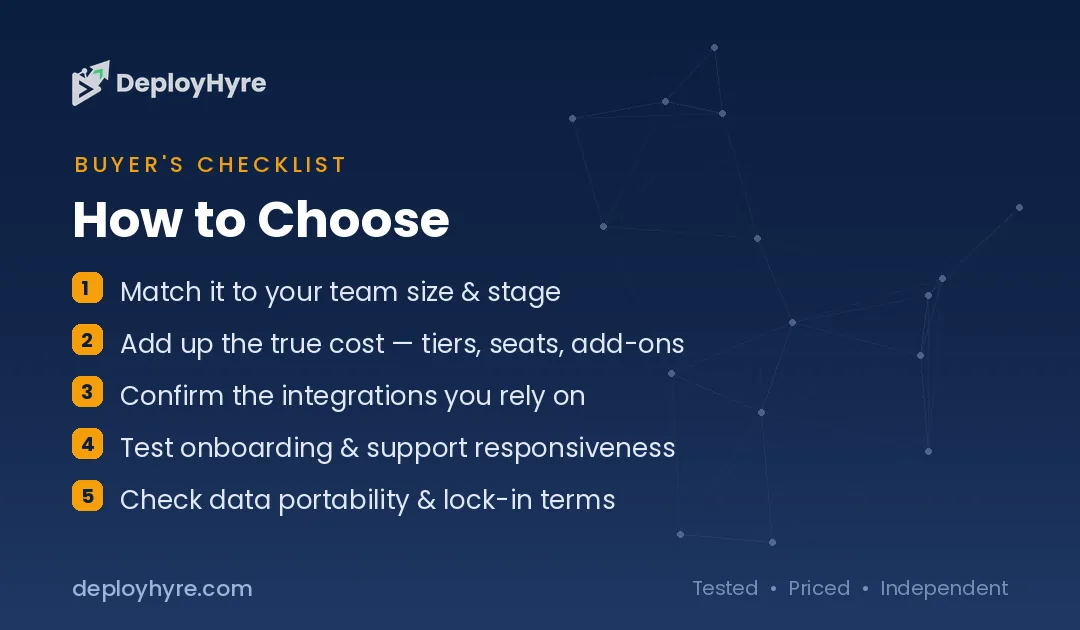
How Should You Choose a SOAR Platform?
Check your SIEM first. If you run Microsoft Sentinel, its included SOAR is likely your best-value starting point; if you run Splunk, Splunk SOAR’s native integration is hard to beat for workflow coherence. The bundled option often wins before you evaluate anything standalone.
If standalone is the right path, weigh accessibility against integration depth. Mid-market and first-time-automation teams get the best value from Tines’ free-to-enterprise range or Torq’s AI-built workflows. Large enterprises with sprawling toolchains that need 750-plus integrations point to Cortex XSOAR, and the highest-volume SOCs to Swimlane.
Finally, factor in who builds the playbooks. No-code tools like Tines let analysts own automation, while heavier platforms may need engineering support. Match the tool to your team’s skills and start with a free tier where one exists, because proving value on real playbooks before committing budget is now entirely possible.
How We Evaluated These Platforms
We evaluated each platform on automation and orchestration capability, integration breadth, no-code accessibility, AI-driven playbook generation, SIEM integration, and pricing. Figures come from vendor pages and independent analysis. Because enterprise SOAR scales with analyst count and automation volume and several are quote-based, we present observed bands and note where a tool is bundled or free. We accepted no payment for placement; rankings reflect fit for a stated use case.
The Bottom Line
Tines and Torq lead the modern no-code tier and usually offer the best value for mid-market SOCs, with Tines’ free edition the easiest way to start. Cortex XSOAR wins on enterprise integration breadth and Swimlane on high-volume scale, while Sentinel SOAR and Splunk SOAR are the best choices when you already run their SIEM. Check what your SIEM includes first, then, for standalone, weigh no-code accessibility against the integration depth only the enterprise platforms provide.
Frequently Asked Questions
How much do SOAR platforms cost?
The range is wide. Tines has a free Community Edition and paid tiers from $500 a month to $50,000-plus a year, and Torq starts around $24,000. Enterprise platforms like Splunk SOAR run $50,000 to $300,000-plus, and Palo Alto’s broader stack can reach the millions for large enterprises. Microsoft Sentinel SOAR is included with Sentinel.
What is the difference between SIEM and SOAR?
A SIEM detects threats by collecting and analyzing security data to generate alerts. SOAR acts on those alerts, automating the response with playbooks that enrich, decide, and remediate across your tools. SIEM answers “what happened?”; SOAR answers “now do something about it automatically.” Many modern platforms combine both.
Do I need a separate SOAR if I have a SIEM?
Not always. Microsoft Sentinel includes SOAR capability, and Splunk SOAR integrates natively with Splunk Enterprise Security. Check what your SIEM already offers before buying standalone, since the bundled or natively-integrated option often wins on both cost and workflow. Teams with multi-vendor stacks needing broad orchestration are the ones that most benefit from a dedicated SOAR.
What is a no-code SOAR platform?
A no-code SOAR lets security analysts build automation playbooks through a visual interface instead of writing code. Tools like Tines and Torq pioneered this, which lets analysts rather than developers own automation and dramatically lowers the barrier to adopting SOAR. It is a major reason security automation has become accessible to mid-market teams.
What does AI add to SOAR?
AI generates playbooks from plain-language descriptions, suggests the next step in an investigation, and triages which alerts warrant automation. Torq’s AI-generated workflows are a headline example. This reduces the effort of building and maintaining automation, which historically was SOAR’s biggest adoption barrier alongside cost.

David Austin is a technology writer and software analyst at DeployHyre, where he covers AI tools, SaaS platforms, cloud hosting, and business automation. He focuses on hands-on comparisons of pricing, features, and real-world performance so teams can pick the right software with confidence.