Table of Contents
The best AI sales engagement platform for most teams is Apollo for transparent all-in-one value, Outreach or Salesloft for enterprise sales orgs, and HubSpot Sales for teams already in HubSpot. These platforms run the outbound motion, automating email and call sequences, multichannel cadences, dialers, and analytics, so reps reach more prospects consistently and managers see what is working.
The market context that matters: the category consolidated, and the leaders still hide their prices. Salesloft merged into Clari, which already owned Groove, concentrating the market, and none of the big three, Outreach, Salesloft, Groove, publishes a rate card. Standalone engagement seats cluster between $75 and $180 per user a month, but you only learn your real number after negotiation. Apollo is the transparency outlier, publishing prices and bundling a prospecting database, which reshapes the value math for many teams.
Every price below is a recent observed figure. Because the enterprise platforms quote per deployment, treat each as a band.
Quick Comparison: Sales Engagement Platforms at a Glance
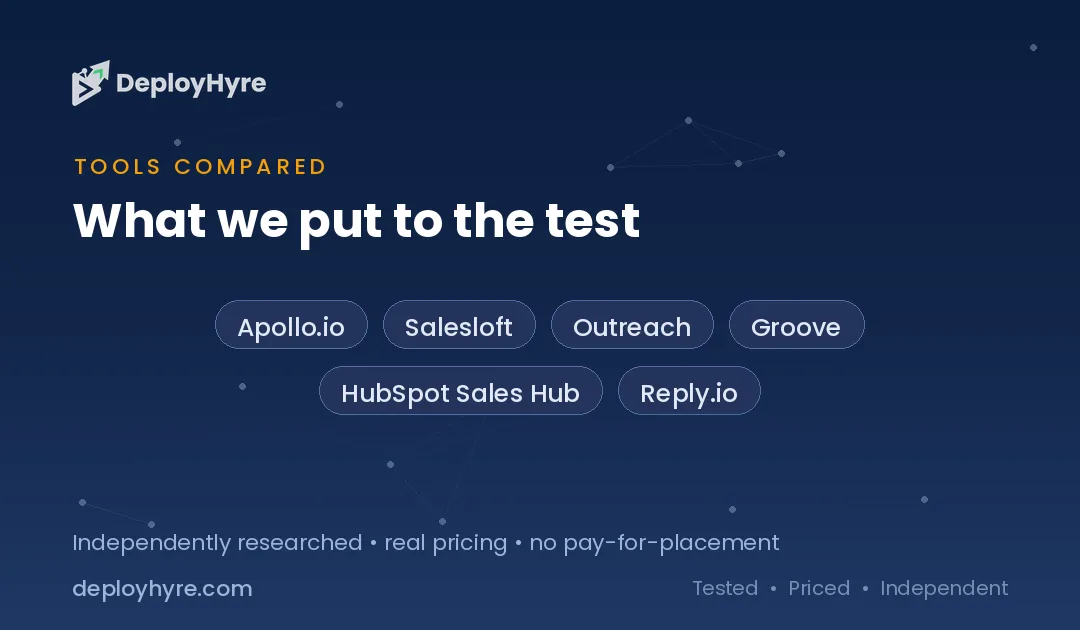
| Platform | Best For | Observed Price | Note |
|---|---|---|---|
| Apollo.io | Transparent all-in-one value | Free; $49 / $79 / $119 per user/mo | Bundles prospecting database |
| Salesloft | Enterprise sales orgs | ~$75–$165/user/mo (quote) | Merged into Clari |
| Outreach | Enterprise cadence depth | ~$100–$175/user/mo (quote) | No published rate card |
| Groove (Clari) | Salesforce-native engagement | Quote only | Clari-owned |
| HubSpot Sales Hub | HubSpot CRM users | Included/tiered in HubSpot | Native CRM integration |
| Reply.io | SMB multichannel outreach | Accessible per-user tiers | Transparent |
What AI Sales Engagement Platforms Do
A sales engagement platform automates and orchestrates outbound selling. Reps build sequences, ordered steps of emails, calls, LinkedIn touches, and tasks, and the platform executes them at scale, ensuring every prospect gets consistent follow-up without a rep manually tracking who is due for what. It includes a dialer for calls, templates for emails, and analytics that show which sequences, messages, and reps convert. The point is to make outbound reliable and measurable rather than ad hoc.
The AI layer is now central. It drafts and personalizes emails at scale, recommends the best time and channel to reach each prospect, scores which leads to prioritize, and increasingly summarizes prospect interactions so reps prepare faster. This automation is what lets a small team run the outbound volume that once required a much larger one, and it is why sales engagement became a distinct category from the CRM it plugs into.
Sales engagement sits on top of your CRM and next to conversation intelligence. It complements the broader tooling in our best AI tools for sales guide, plugs into the systems in our best AI CRM software guide, and pairs with the call analysis in our best AI conversation intelligence software guide.
The Category Consolidated, and Prices Stayed Hidden
The sales engagement market concentrated sharply, Salesloft merged into Clari and Clari already owned Groove, and the surviving leaders still refuse to publish pricing. Outreach, Salesloft, and Groove all require a sales conversation, and five of ten platforms in the category publish no rate at all. Standalone seats cluster between $75 and $180 per user a month, with enterprise quotes landing closer to $100 to $185, but without a rate card you cannot benchmark a quote or budget confidently.
This opacity makes Apollo’s transparency a genuine competitive lever. Apollo publishes free, $49, $79, and $119 per-user tiers and bundles a large prospecting database into the same platform, so a team gets contact data and engagement in one transparent bill rather than paying separately for a data provider plus an opaque engagement seat. For teams weary of the enterprise sales cycle and the stacked cost of data-plus-engagement, that combination changed the default, especially for SMB and mid-market.
Best Transparent and All-in-One Value
Apollo.io is the best value for most teams, publishing transparent pricing (free, then $49, $79, and $119 per user a month) and bundling a prospecting database with the engagement platform, so you get contact data and outbound in one tool. This all-in-one model is the differentiator: teams that would otherwise pay for a data provider plus a separate engagement seat get both from Apollo at a published price. It is the natural default for SMB and mid-market sales teams that want capable outbound without an enterprise contract or a stacked data bill.
Reply.io rounds out the value tier for smaller teams focused on multichannel outreach, with accessible, transparent per-user pricing and strong sequence automation. Both are the pragmatic picks for teams that want to run real outbound without negotiating against a hidden rate card. For teams whose priority is getting reps sending consistent, personalized sequences affordably, Apollo’s data-plus-engagement bundle and Reply’s focused outreach are the standouts, feeding the pipeline covered in our best AI tools for sales guide.
Best Enterprise Platforms
Outreach is the enterprise standard for cadence depth and sales-execution rigor, with the most sophisticated sequence logic, analytics, and workflow controls, priced around $100 to $175 per user a month on a quote. It is built for large, mature sales organizations that run complex, multi-touch motions and need granular control and reporting, which is why big revenue teams standardize on it despite the opaque pricing. If your outbound is a serious, heavily-managed operation with many reps and strict process, Outreach’s depth justifies the enterprise cost.
Salesloft, now part of Clari, is the other enterprise leader, comparable in capability at roughly $75 to $165 per user a month, and its Clari ownership increasingly ties engagement to revenue forecasting and intelligence. Groove, also Clari-owned, is the Salesforce-native option for teams that want engagement living deep inside Salesforce. All three are enterprise-grade and quote-based; Outreach for cadence depth, Salesloft for the Clari revenue platform, Groove for Salesforce-native workflows. Budget for a negotiation and stacked data costs, not a price list.
Best Integrated With Your CRM
HubSpot Sales Hub is the natural choice for teams already using HubSpot, building sequences, templates, and engagement tracking directly into the CRM so there is no separate tool or sync to manage. For organizations centered on HubSpot, keeping engagement native means reps work in one system, and the data flows automatically between CRM and outbound. It is tiered within HubSpot’s pricing, so the cost depends on your HubSpot plan, but the integration advantage, no separate platform, no sync gaps, is real for HubSpot-committed teams.
The broader lesson is that CRM-native engagement often beats a best-of-breed standalone when your team lives in one CRM, because it removes integration friction and consolidates the bill. Salesforce shops get similar native benefits from Groove, and HubSpot shops from Sales Hub. Weigh this native convenience against the deeper cadence capability of a dedicated platform like Outreach, and choose based on whether integration simplicity or engagement depth matters more, as covered in our best AI CRM software guide.
How Should You Choose a Sales Engagement Platform?
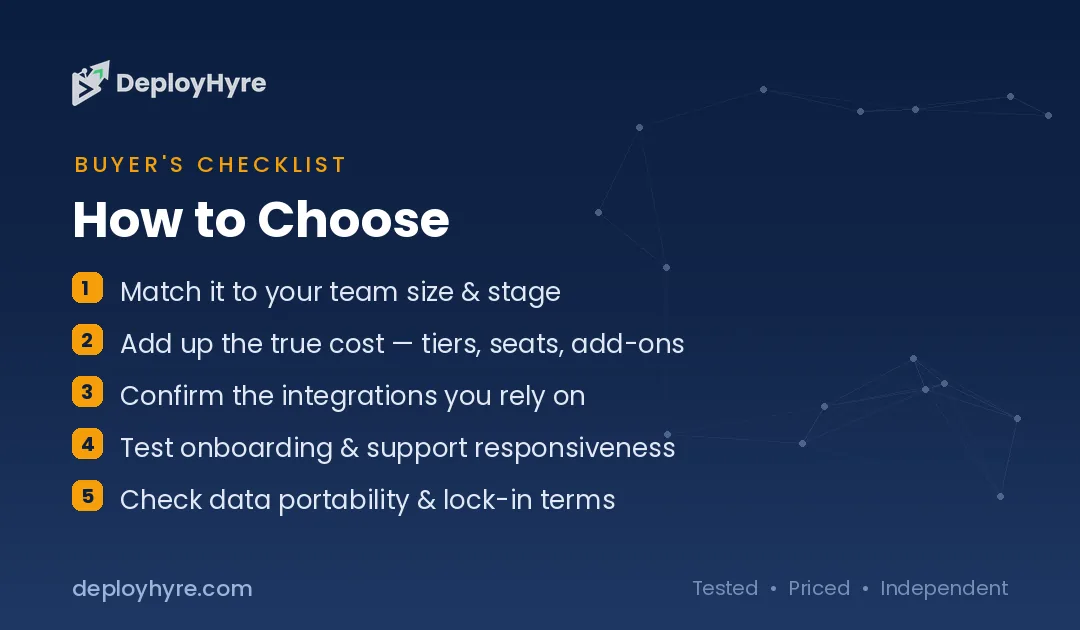
Weigh transparency and bundling first. If you want published pricing and a bundled prospecting database, Apollo is the standout and often the best value for SMB and mid-market. If you need enterprise cadence depth and will run a procurement cycle, Outreach or Salesloft are the leaders, but budget for negotiation and separate data costs.
Then follow your CRM. HubSpot teams get native engagement from Sales Hub, and Salesforce teams from Groove, removing integration friction. If CRM-native simplicity matters more than best-of-breed cadence features, the native option usually wins; if you need the deepest sequence logic, a dedicated platform does.
Finally, account for the full stack cost. Enterprise engagement seats often sit on top of a separate data provider and sometimes a separate dialer, so compare Apollo’s all-in-one bill against the stacked total of an opaque engagement seat plus data plus dialer. The transparent, bundled option frequently wins on true total cost, so run that math before signing.
How We Evaluated These Platforms
We evaluated each platform on sequence and multichannel capability, AI personalization and prioritization, dialer and analytics, CRM integration, bundled data, and pricing transparency. Figures come from vendor pages and comparison sources. Because the enterprise leaders publish no rate card, we present observed bands and highlight the transparency and bundling differences that drive true cost. We accepted no payment for placement; rankings reflect fit for a stated use case.
The Bottom Line
Apollo is the best value for most teams with transparent pricing and a bundled prospecting database, while Outreach and Salesloft are the enterprise leaders for cadence depth (both quote-only after the Clari consolidation). HubSpot Sales Hub and Groove win for CRM-native integration, and Reply.io for SMB outreach. Weigh transparency and all-in-one bundling against enterprise depth, and compare Apollo’s single bill to the stacked cost of engagement-plus-data before you commit.
Frequently Asked Questions
How much do sales engagement platforms cost?
Standalone seats cluster between $75 and $180 per user a month. Apollo is transparent at free, $49, $79, and $119 per user, and bundles prospecting data. Salesloft runs roughly $75 to $165 and Outreach $100 to $175, but neither publishes a rate card, so enterprise pricing requires negotiation.
What is the difference between a CRM and a sales engagement platform?
A CRM stores your contacts, deals, and pipeline. A sales engagement platform automates the outbound motion on top of it, executing multichannel sequences, dialing, and tracking to reach prospects consistently. They work together: the CRM is the system of record, and engagement drives and measures the outreach. Some CRMs like HubSpot include engagement natively.
Why is Apollo cheaper than Outreach or Salesloft?
Apollo publishes transparent per-user pricing (up to $119) and bundles a prospecting database, so you avoid paying separately for data and an opaque engagement seat. Outreach and Salesloft are enterprise platforms with deeper cadence capability, no published rates, and typically a separate data provider, which raises the true stacked cost.
Did Salesloft and Outreach merge?
Salesloft merged into Clari, which already owned Groove, consolidating much of the market. Outreach remains independent. This concentration is part of why the leaders continue to withhold public pricing, and why buyers should benchmark quotes carefully against Apollo’s transparent rates.
Do sales engagement platforms include a dialer?
Most include or integrate a dialer for outbound calls as part of multichannel sequences. However, some conversation-intelligence and engagement tools require a separate dialer at extra cost, so confirm whether calling is included or an add-on when comparing total cost of ownership.

David Austin is a technology writer and software analyst at DeployHyre, where he covers AI tools, SaaS platforms, cloud hosting, and business automation. He focuses on hands-on comparisons of pricing, features, and real-world performance so teams can pick the right software with confidence.