Cash flow decides whether a business survives. The Federal Reserve Small Business Credit Survey found that 44% of US small businesses hit a cash flow problem severe enough to stop them paying expenses on time in a single year. A widely cited US Bank study links cash flow problems to 82% of business failures.
For the full picture, see our complete guide to AI for finance.
Table of Contents
AI cash flow forecasting software fixes the root cause: slow, manual projections. These tools pull live data from your accounting system, learn your payment patterns, and rebuild the forecast every day. We compared 8 platforms on accuracy, integrations, automation, and price.
This guide ranks the best options for solo founders, growing SMBs, and finance teams. Each pick connects to the wider money stack, including your AI bookkeeping software and AI invoicing tools, so the forecast stays current without extra data entry.
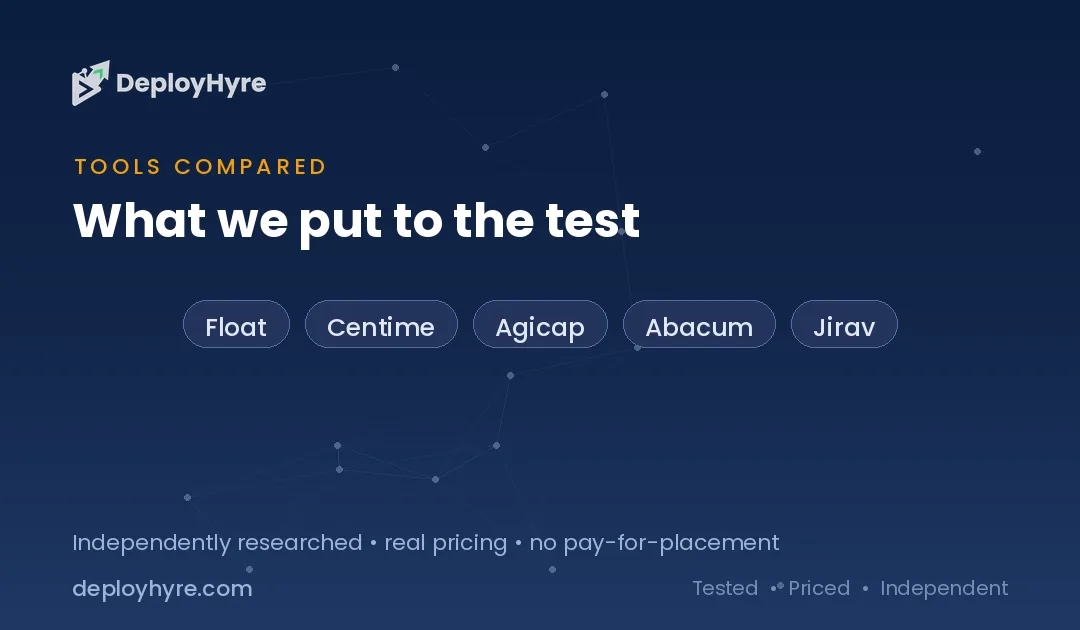
Quick Comparison: Top 8 AI Cash Flow Forecasting Tools
| Tool | Best For | Starting Price | Key Strength |
|---|---|---|---|
| Float | QuickBooks and Xero SMBs | $49/month | Visual, scenario-based forecasts |
| Centime | Embedded 13-week forecasts | Custom quote | AP, AR, and cash in one platform |
| Agicap | Mid-market, multi-entity | Custom quote | Group-level liquidity view |
| Abacum | FP&A teams | Custom quote | Real-time data and collaboration |
| Jirav | All-in-one FP&A | From ~$10,000/year | Forecast, budget, and report together |
| Cube | Spreadsheet-native finance | Custom quote | Works inside Excel and Google Sheets |
| Fathom | Reporting plus forecasting | Pay-as-you-go monthly | 3-way forecasts and KPI dashboards |
| Tesorio | AR-driven cash forecasting | Custom quote | Predicts customer payment timing |
What Is AI Cash Flow Forecasting Software?
AI cash flow forecasting software predicts future cash position by analyzing live accounting data, invoice timing, and historical payment patterns. It updates projections automatically, models multiple scenarios, and flags shortfalls early, replacing static spreadsheets that go stale within days.
Traditional forecasts rely on one person updating a spreadsheet by hand. The numbers age fast. AI tools connect to your ledger, detect seasonality, and adjust the forecast as money moves. The result is a rolling view of cash that reflects reality, not last month.
Best AI Cash Flow Forecasting Software for Small Businesses
1 Float: Best for QuickBooks and Xero Users
Float turns your accounting data into a clear, visual cash flow forecast that small teams actually use.
What it does well. Float syncs directly with QuickBooks Online, Xero, and FreeAgent, then builds a daily, weekly, or monthly forecast from your real bills and invoices. Drag-and-drop scenarios let you model a new hire or a delayed payment in seconds.
Key features:
- Live two-way sync with QuickBooks and Xero
- Scenario planning for best, worst, and expected cases
- Budget-versus-actual tracking on cash
- Visual runway and burn charts
Pricing. Float lists three plans at $49, $99, and $199 per month, billed by feature depth and user count.
Best for: Founders and bookkeepers who already run QuickBooks or Xero and want a forecast without spreadsheets.
Limitations. Float focuses on cash, so it lacks full FP&A budgeting and revenue modeling. Large finance teams will outgrow it.
2 Centime: Best for Embedded 13-Week Forecasts
Centime combines forecasting with accounts payable, accounts receivable, and banking in one connected platform.
What it does well. Centime builds a rolling 13-week cash forecast using AI-driven predictions from your historical patterns. Because it also runs AP and AR, the forecast reflects bills you are about to pay and invoices you are about to collect.
Key features:
- Rolling 13-week AI forecast with cash runway tracking
- Built-in AP and AR automation
- Integrations with NetSuite, Sage Intacct, and QuickBooks
- Scenario modeling and variance alerts
Pricing. Centime uses custom, quote-based pricing tied to modules and company size.
Best for: Growing companies on NetSuite, Sage Intacct, or QuickBooks that want forecasting tied to live payables and receivables.
Limitations. The all-in-one scope means you adopt Centime for AP and AR too, which is more change than a forecast-only buyer wants.
3 Agicap: Best for Mid-Market and Multi-Entity Businesses
Agicap gives finance leaders a single liquidity view across many bank accounts and legal entities.
What it does well. Agicap connects to banks, ERPs, and billing tools to centralize cash across entities. It builds short-term and long-term forecasts and shows group-level liquidity in real time, which matters for companies with several subsidiaries.
Key features:
- Multi-bank and multi-entity consolidation
- Short-term and medium-term forecasting
- Scenario planning and category-level drill-down
- ERP and accounting integrations
Pricing. Agicap uses quote-based pricing scaled to entity count and feature needs.
Best for: Mid-market CFOs managing cash across multiple accounts and countries.
Limitations. The platform is heavier than a solo founder needs, and onboarding takes longer than plug-in SMB tools.
Best AI Cash Flow Forecasting Software for Finance Teams
4 Abacum: Best for Collaborative FP&A
Abacum pairs real-time data with a workspace where finance and department heads plan together.
What it does well. Abacum centralizes data from your ERP, CRM, and HR systems, then layers forecasting, budgeting, and reporting on top. Its collaboration tools let non-finance managers submit inputs, so the cash forecast reflects the whole company.
Key features:
- Real-time integrations across finance and operations data
- Driver-based forecasting and scenario analysis
- Collaborative workflows for budget owners
- Automated reporting and dashboards
Pricing. Abacum uses custom pricing based on team size and modules.
Best for: Scaling startups with a dedicated FP&A function that needs cross-team input.
Limitations. The collaboration depth is overkill for a one-person finance team, and it carries a mid-market price.
5 Jirav: Best All-in-One FP&A Platform
Jirav bundles cash flow forecasting, budgeting, reporting, and analytics in a single tool.
What it does well. Jirav connects to QuickBooks, Xero, and NetSuite, then builds a connected three-statement model that links your profit and loss, balance sheet, and cash forecast. Driver-based planning makes hiring and revenue scenarios fast.
Key features:
- Three-statement, driver-based modeling
- Cash flow forecasting plus full budgeting
- Dashboards and board-ready reports
- QuickBooks, Xero, and NetSuite integrations
Pricing. Jirav uses custom pricing that, per third-party reviews, starts near $10,000 per year depending on modules.
Best for: SMBs and accounting firms that want forecasting and budgeting in one place.
Limitations. The price and setup put it out of reach for very small businesses that only need a cash view.
6 Cube: Best for Spreadsheet-Native Teams
Cube layers FP&A automation directly onto Excel and Google Sheets.
What it does well. Cube lets finance teams keep working in spreadsheets while it handles data syncing, version control, and consolidation behind the scenes. The forecast pulls from your source systems, so the numbers stay current without manual exports.
Key features:
- Native Excel and Google Sheets integration
- Automated data consolidation and refresh
- Scenario planning and multi-currency support
- Drill-down from summary to transaction
Pricing. Cube uses custom pricing based on entities and seats.
Best for: Teams that refuse to leave spreadsheets but want automation and control.
Limitations. If you want to move off spreadsheets entirely, a dedicated modeling interface fits better.
7 Fathom: Best for Reporting Plus Forecasting
Fathom blends financial analysis, KPI dashboards, and three-way forecasting in one affordable tool.
What it does well. Fathom takes your accounting data and produces clear management reports plus a three-way forecast that links profit, cash, and balance sheet. It suits advisors who report to clients and owners who track KPIs monthly.
Key features:
- Three-way cash flow forecasting
- KPI tracking and benchmarking
- Customizable management reports
- QuickBooks, Xero, and MYOB integrations
Pricing. Fathom runs as a month-to-month, pay-as-you-go service with no long contract, priced by company count.
Best for: Accountants and owners who want reporting and forecasting bundled.
Limitations. Forecasting is one feature among many, so dedicated cash tools offer deeper scenario controls.
8 Tesorio: Best for AR-Driven Cash Forecasting
Tesorio predicts when customers will actually pay, which sharpens the cash side of your forecast.
What it does well. Tesorio uses AI to learn each customer’s payment behavior, then forecasts collections by date. It combines this with accounts receivable automation, so chasing invoices and forecasting cash happen in the same place. Strong receivables data ties back to your expense and spend controls for a full cash picture.
Key features:
- AI prediction of customer payment timing
- Receivables automation and dunning
- Cash forecasting at the account level
- ERP integrations including NetSuite
Pricing. Tesorio uses custom, quote-based pricing for mid-market and enterprise teams.
Best for: B2B companies where slow receivables drive cash uncertainty.
Limitations. The receivables focus means it is less suited to forecasting payroll-heavy or product cost outflows alone.
Why Use AI Instead of Spreadsheets for Cash Flow?
AI forecasting removes the manual updates that make spreadsheets unreliable. A spreadsheet forecast reflects the day someone last touched it. AI tools refresh from live data, catch patterns a person misses, and model scenarios in seconds instead of hours.
Three differences matter most. First, AI pulls live data, so the forecast never goes stale. Second, it learns payment behavior, predicting that a customer who always pays late will pay late again. Third, it runs many scenarios at once, so you see the cash impact of a hire, a price change, or a slow month without rebuilding formulas. For owners juggling growth, that speed turns cash planning from a monthly chore into a daily signal.
How Should You Choose the Right Cash Flow Forecasting Tool?
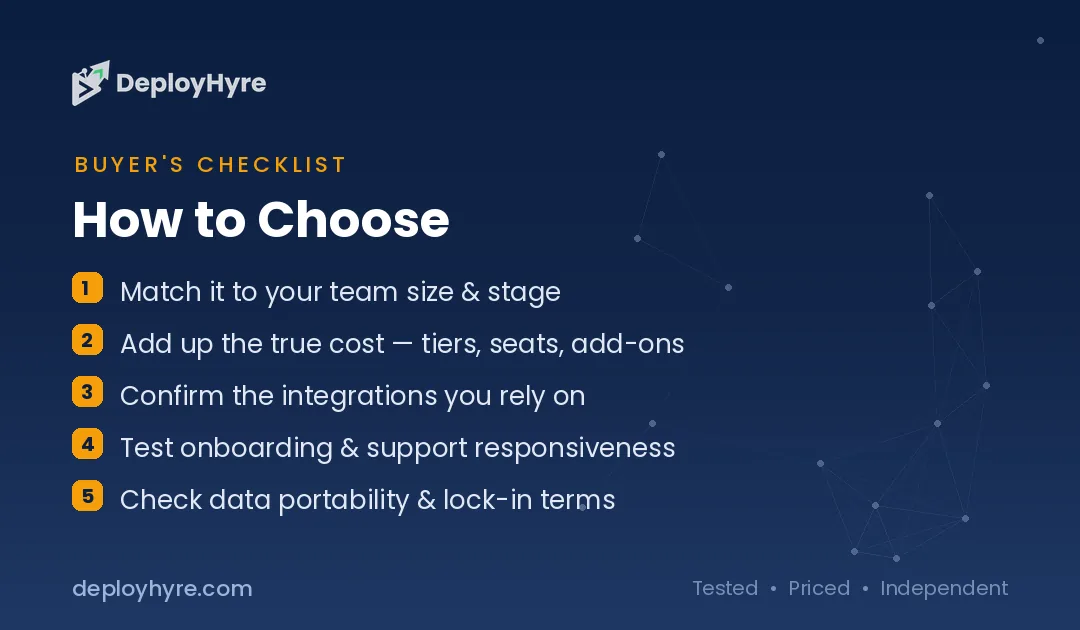
Choose based on your accounting stack, business size, and how much planning you need beyond cash. Solo founders on QuickBooks should start with a plug-in tool like Float. Mid-market and FP&A teams need consolidation and driver-based modeling from platforms like Agicap, Abacum, or Jirav.
Check these factors before you buy:
- Integrations. The tool must sync with your ledger, such as QuickBooks, Xero, or NetSuite, or the forecast will lag.
- Forecast horizon. Match the tool to your need, whether that is a 13-week cash view or a multi-year model.
- Scenario depth. Confirm you can model hires, price changes, and late payments easily.
- Team size. Solo tools cost less, while FP&A platforms add collaboration you may not need.
- Total cost. Weigh monthly SMB pricing against annual enterprise contracts.
How We Evaluated These Tools
We assessed each platform on five weighted criteria: forecast accuracy and automation, native accounting integrations, scenario planning depth, ease of setup, and pricing transparency. We reviewed vendor documentation, third-party pricing data, and user reviews on G2 and Research.com. We prioritized tools that pull live data and rebuild forecasts automatically, since manual updates are the main reason forecasts fail. Pricing reflects publicly listed figures at the time of writing, and custom-quote vendors are noted as such.
The Bottom Line
Float is the best starting point for most small businesses, while Jirav and Agicap suit finance teams that need full FP&A. The right tool keeps your forecast current automatically, so you see shortfalls weeks ahead instead of days late.
Pair your forecast with strong source data. Connect it to your AI accounting platform and your bookkeeping software so projections stay accurate. For the wider strategy, see our complete guide to AI for business.
Frequently Asked Questions
What is the most accurate AI cash flow forecasting software?
Accuracy depends on data quality more than brand. Tools that sync live with your ledger, like Float, Centime, and Jirav, produce the most reliable forecasts because they rebuild projections from real invoices and bills rather than manual estimates.
Can AI predict cash flow for a small business?
Yes. AI tools learn your historical payment patterns, detect seasonality, and project future cash position automatically. They update the forecast as money moves, giving small businesses a rolling view that manual spreadsheets cannot match.
How much does cash flow forecasting software cost?
SMB tools start around $49 per month, with Float listing plans at $49, $99, and $199. FP&A platforms like Jirav can start near $10,000 per year. Mid-market tools such as Agicap and Centime use custom quotes.
Does cash flow forecasting software integrate with QuickBooks?
Most do. Float, Centime, Jirav, Fathom, and Cube all sync with QuickBooks Online. Many also connect to Xero and NetSuite, which keeps the forecast current without manual data entry.
What is a 13-week cash flow forecast?
A 13-week forecast projects cash inflows and outflows over the next quarter, week by week. It is a standard tool for spotting short-term shortfalls. Centime automates this rolling view using AI predictions from your historical data.

David Austin is a technology writer and software analyst at DeployHyre, where he covers AI tools, SaaS platforms, cloud hosting, and business automation. He focuses on hands-on comparisons of pricing, features, and real-world performance so teams can pick the right software with confidence.
Know AI, SaaS, or cloud tools inside out? Pitch a guest post and get in front of thousands of buyers researching their next tool.