Manual pentests take weeks and cost a fortune. The penetration testing market reached about $2.74 billion in 2025 because demand keeps outpacing the supply of skilled testers. AI penetration testing tools close that gap. They run continuous attacks, chain exploits on their own, and hand you remediation-ready findings in days instead of weeks.
Table of Contents
The payoff is speed and coverage. The IBM 2025 Cost of a Data Breach Report found that organizations using AI and automation extensively identified and contained breaches 80 days faster and spent $1.9 million less per breach. Autonomous pentest agents feed that defense by finding the holes attackers would use first.
We compared 8 AI penetration testing platforms on autonomy, exploit accuracy, reporting, and price. This guide ranks the best picks for enterprises, SMBs, and security teams, and connects to our wider AI cybersecurity tools coverage so your testing and defense stay aligned.
Quick Comparison: Top 8 AI Penetration Testing Tools
| Tool | Best For | Starting Price | Key Strength |
|---|---|---|---|
| Horizon3.ai NodeZero | Autonomous internal and external pentest | Custom quote | Safe, self-running attack chains |
| Pentera | Enterprise security validation | From ~$35,000/year | Full kill-chain emulation |
| Astra Pentest | SMBs and continuous testing | $1,999/year per target | Scans plus human pentest |
| Cobalt | Pentest as a service | Credit-based quote | Vetted human testers on demand |
| Cymulate | Breach and attack simulation | Custom quote | Continuous control validation |
| Picus Security | Security validation at scale | Custom quote | Threat library plus mitigation |
| Synack (Sara) | Agentic red teaming | Custom quote | AI agents plus researcher network |
| PentestGPT | Free, LLM-guided manual testing | Free (open source) | Step-by-step testing assistant |
What Are AI Penetration Testing Tools?
AI penetration testing tools are platforms that use machine learning and autonomous agents to find, exploit, and report security weaknesses without a human driving every step. They emulate real attacker behavior, chain vulnerabilities into full attack paths, and produce prioritized fixes, running far more often than a yearly manual test.
A traditional pentest is a snapshot. A consultant tests your systems once, writes a report, and leaves. AI tools turn that snapshot into a movie. They retest after every change, learn from each run, and flag new exposure the moment it appears. Autonomous red-team agents now cut test duration from weeks to days, which is why security teams pair them with manual experts instead of replacing one with the other.
Best AI Penetration Testing Tools for Autonomous Enterprise Testing
1 Horizon3.ai NodeZero: Best for Self-Running Attack Chains
NodeZero runs fully autonomous internal, external, and cloud penetration tests with no agents to install on every host.
What it does well. NodeZero safely chains real exploits the way an attacker would, moving from a weak password to domain admin and showing the exact path. Horizon3.ai reports that NodeZero has run more than 170,000 tests in production environments, and it validates exposure to emerging threats using CISA Known Exploited Vulnerabilities data.
Key features:
- Autonomous internal, external, and cloud pentests
- Active Directory password audits and phishing impact tests
- Proof-based findings with reproducible attack paths
- Retesting to confirm fixes actually work
Pricing. Horizon3.ai uses custom, quote-based pricing tied to asset count, so you contact sales for a number.
Best for: Mid-market and enterprise teams that want continuous, proof-based testing without booking a consultant.
Limitations. No public price list makes budgeting harder, and the depth can overwhelm very small teams.
Aikido Security: Best for AI-Powered Application Security Testing
Aikido Security combines automated vulnerability scanning, code security, cloud monitoring, and penetration testing workflows in one developer-friendly platform.
What it does well. Aikido helps teams continuously discover and prioritize security risks across their applications, dependencies, infrastructure, and codebases. Its AI-powered security engine analyzes vulnerabilities, reduces false positives, and highlights the issues that pose the biggest real-world risks. By combining multiple security checks in a single platform, Aikido helps engineering teams find and fix problems earlier without slowing development.
Key features:
- AI-powered vulnerability detection and risk prioritization
- SAST, DAST, dependency, and cloud security scanning
- Automated security monitoring across the development lifecycle
- Developer-friendly remediation insights and workflows
- Compliance support for modern SaaS and engineering teams
Pricing. Aikido Security offers subscription-based pricing with plans designed for startups, growing teams, and larger organizations.
Best for: SaaS companies and development teams that want continuous application security testing without managing multiple security tools.
Limitations. Aikido focuses on automated application and infrastructure security, so organizations requiring highly specialized red-team engagements may still need dedicated penetration testing services.
2 Pentera: Best for Enterprise Security Validation
Pentera automates penetration testing across internal networks, external attack surfaces, cloud, and identity.
What it does well. Pentera emulates full kill-chain attacks, including credential cracking, lateral movement, and ransomware simulation, against live systems. The October 2025 acquisition of DevOcean added Pentera Resolve, which routes validated findings through Jira and ServiceNow with SLA tracking so fixes do not stall.
Key features:
- Automated kill-chain emulation across the full attack surface
- Credential exposure and lateral movement testing
- Ransomware readiness simulation
- Remediation workflows with ticket routing
Pricing. Pentera is quote-based, with third-party listings starting around $35,000 per year, scaled by environment size.
Best for: Large security teams that need to validate controls continuously across many environments.
Limitations. The enterprise price puts it out of reach for most small businesses.
Best AI Penetration Testing Tools for SMBs and Continuous Testing
3 Astra Pentest: Best for Small and Mid-Sized Businesses
Astra Pentest combines an AI-driven vulnerability scanner with human-led penetration testing in one dashboard.
What it does well. Astra runs more than 11,000 automated tests, then layers manual pentesting on top to catch business-logic flaws that scanners miss. It maps findings to compliance frameworks like SOC 2, ISO 27001, and PCI-DSS, which helps teams that test for audits.
Key features:
- Continuous automated vulnerability scanning
- Manual pentest by certified testers
- Compliance-ready reporting and audit support
- CI/CD and developer workflow integrations
Pricing. Astra lists its Scanner plan at $1,999 per year per target and its full Pentest plan at $5,999 per year per target.
Best for: SMBs and SaaS teams that want scans plus a human pentest at a transparent price.
Limitations. Manual tests are scheduled, so the deepest testing is not instant on demand.
4 Cobalt: Best for Pentest as a Service
Cobalt delivers on-demand penetration testing through a managed platform and a network of vetted testers.
What it does well. Cobalt pairs a structured platform with human pentesters you can launch within days, not weeks. AI assists with scoping, triage, and reporting, while findings flow straight into Jira, GitHub, and Slack so developers fix issues inside their normal tools.
Key features:
- On-demand pentests from a vetted tester pool
- Real-time findings and collaboration
- Developer tool integrations for fast remediation
- Retesting included to verify fixes
Pricing. Cobalt uses a flexible, credit-based model with custom quotes based on scope and asset count.
Best for: Product and engineering teams that need human pentests on a fast, repeatable schedule.
Limitations. Credit-based pricing is harder to predict than a flat annual plan.
Best AI Penetration Testing Tools for Breach and Attack Simulation
5 Cymulate: Best for Continuous Control Validation
Cymulate runs breach and attack simulations that test whether your existing defenses actually stop real techniques.
What it does well. Cymulate safely launches simulated attacks across email, web, endpoint, and network, then scores how well your controls block them. It maps results to the MITRE ATT&CK framework, so teams see exactly which techniques get through and where to tune detection.
Key features:
- Breach and attack simulation across multiple vectors
- MITRE ATT&CK mapping and scoring
- Continuous security posture trending
- Guided remediation steps
Pricing. Cymulate uses custom, quote-based pricing tied to modules and environment size.
Best for: Security operations teams that want to prove their defenses work, not just find new bugs.
Limitations. Simulation tests control effectiveness, so it complements rather than replaces deep exploit testing.
6 Picus Security: Best for Security Validation at Scale
Picus Security validates defenses with a large threat library and built-in mitigation guidance.
What it does well. Picus continuously runs real-world attack scenarios against your stack and tells you which detections fired and which failed. It then provides vendor-specific signatures and prevention rules, so your SIEM and firewall teams can close gaps the same day.
Key features:
- Threat-driven attack simulation library
- Detection and prevention gap analysis
- Ready-to-apply mitigation content
- Integration with major SIEM and EDR tools
Pricing. Picus is quote-based, scaled by modules and the size of your environment.
Best for: Teams that want to measure and improve detection coverage continuously.
Limitations. The value depends on having detection tools already in place to validate.
Best AI Penetration Testing Tools for Agentic and Open-Source Testing
7 Synack (Sara): Best for Agentic Red Teaming
Synack blends AI agents with a global network of vetted security researchers for hybrid red teaming.
What it does well. In November 2025, Synack introduced Sara, an agentic AI pentesting solution built on its Synack Autonomous Red Agent architecture. Sara handles broad, repeatable testing at machine speed, then human researchers chase the complex, creative attack paths AI still misses.
Key features:
- Agentic AI testing plus human researchers
- Continuous attack-surface coverage
- Verified findings with low false positives
- Compliance and audit-ready reporting
Pricing. Synack uses custom enterprise pricing based on scope and coverage.
Best for: Enterprises that want autonomous scale plus elite human creativity in one engagement.
Limitations. The managed, enterprise model is more than small teams need or can fund.
8 PentestGPT: Best for Free, LLM-Guided Manual Testing
PentestGPT is an open-source assistant that guides human testers through an engagement step by step.
What it does well. PentestGPT was the original LLM-guided pentesting project, and it still works as an interactive helper for manual testing. It plans tasks, suggests the next move during an engagement, and generates payloads, which helps junior testers learn and work faster.
Key features:
- Task planning and next-step guidance
- Payload and command generation
- Free and open source
- Works alongside standard pentest tools
Pricing. PentestGPT is free and open source, though you supply your own LLM API access.
Best for: Students, solo testers, and small teams learning offensive security on a budget.
Limitations. It assists a human tester and does not run autonomous attacks on its own.
How Should You Choose an AI Penetration Testing Tool?
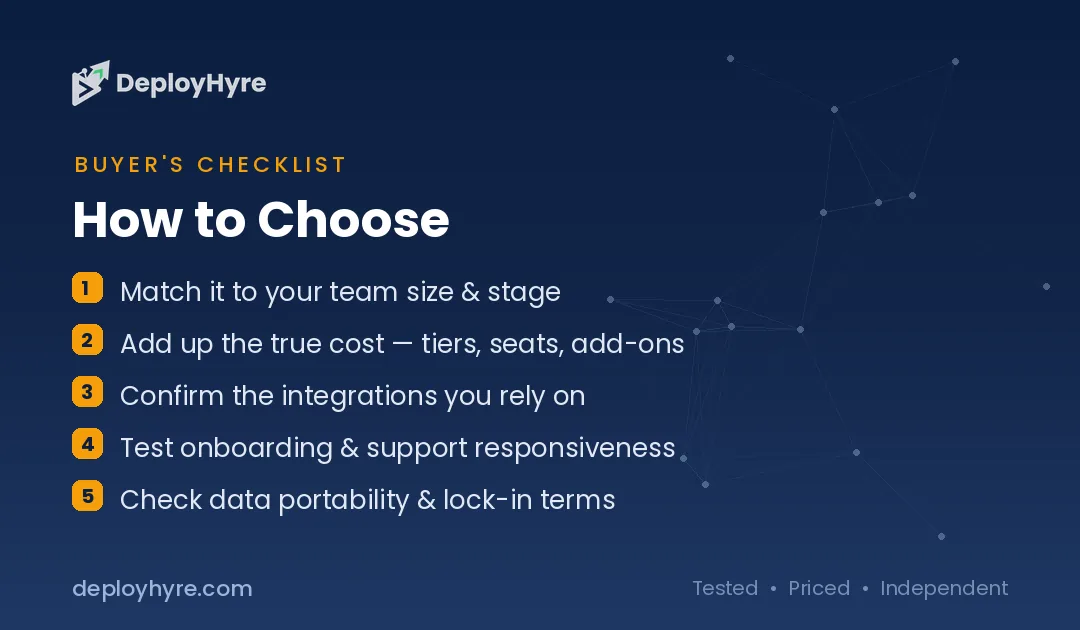
Match the tool to your team size, your testing goal, and your compliance needs. Enterprises with large attack surfaces gain most from autonomous platforms, while SMBs do better with scan-plus-pentest services that publish clear prices.
Check these factors before you buy:
- Autonomy level. Decide if you need fully autonomous attacks, like NodeZero, or AI-assisted manual testing, like PentestGPT.
- Scope. Confirm the tool covers your real estate, whether that is internal networks, cloud, web apps, or identity.
- Compliance. If you test for SOC 2 or PCI-DSS, pick a tool that produces audit-ready reports.
- Remediation. Look for ticket routing into Jira or ServiceNow so fixes do not get lost.
- Pricing model. Weigh transparent annual plans against quote-based enterprise contracts.
Pair your testing program with secure development. Catch flaws earlier with AI code review tools, and govern how you deploy these systems using our AI governance guide.
How We Evaluated These Tools
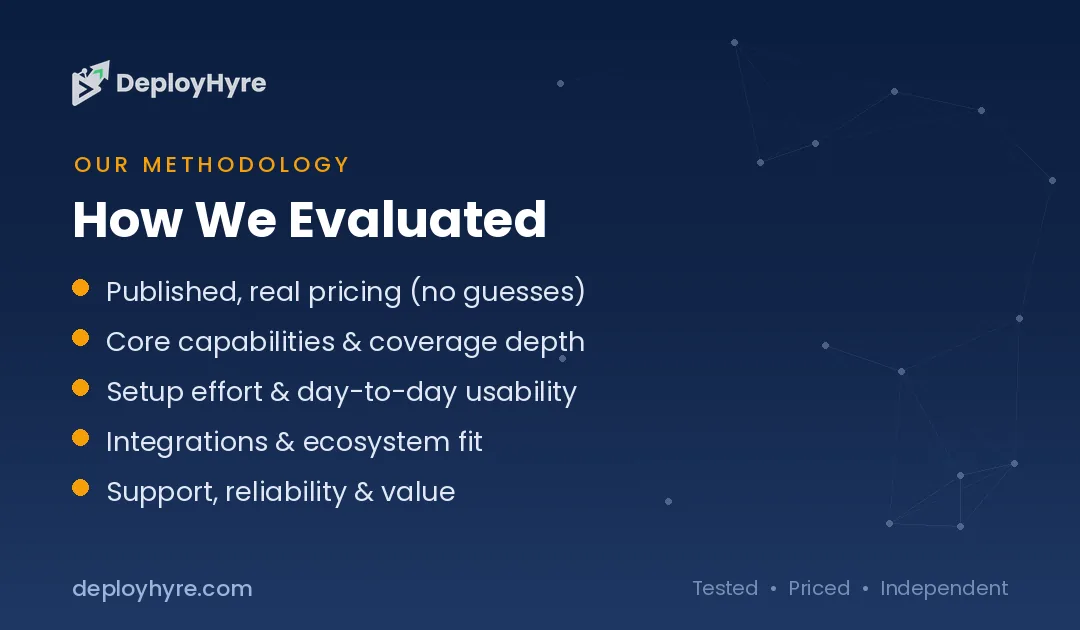
We assessed each platform on five weighted criteria: autonomy and exploit accuracy, attack-surface coverage, reporting and remediation, compliance support, and pricing transparency. We reviewed vendor documentation, third-party pricing data, and analyst coverage, and we prioritized tools that chain real exploits and produce reproducible findings rather than raw vulnerability lists. Pricing reflects publicly listed figures at the time of writing, and quote-based vendors are noted as such. Many programs combine automated and human testing, and our groupings reflect each tool’s core strength.
The Bottom Line
Horizon3.ai NodeZero and Pentera lead for autonomous enterprise testing, while Astra Pentest and Cobalt give SMBs the best mix of price and human expertise. The right tool tests continuously, so you find exposure before attackers do instead of once a year.
Treat pentesting as one layer of a wider defense. Combine it with strong AI cybersecurity tools and continuous AI threat detection tools, and align the program with your broader AI for business strategy.
Frequently Asked Questions
What is the best AI penetration testing tool?
Horizon3.ai NodeZero leads for autonomous testing because it safely chains real exploits and has run more than 170,000 tests in production. For SMBs, Astra Pentest offers the best balance, pairing automated scans with a human pentest at a published price of $1,999 per year per target.
Can AI replace human penetration testers?
No. AI tools handle broad, repeatable testing at machine speed, but human testers still find creative, business-logic flaws that agents miss. The strongest programs, like Synack and Cobalt, pair autonomous AI testing with vetted human researchers rather than choosing one.
How much do AI penetration testing tools cost?
SMB tools start around $1,999 per year per target with Astra Pentest. Enterprise platforms like Pentera start near $35,000 per year, while NodeZero, Cymulate, and Picus use custom quotes based on asset count. PentestGPT is free and open source.
Are AI penetration testing tools safe to run on production systems?
Yes, when built for it. Platforms like NodeZero and Cymulate are designed to test safely against live systems without causing outages. They emulate attacker behavior with guardrails, though you should still scope tests carefully and coordinate with your operations team.
What is the difference between automated pentesting and breach and attack simulation?
Automated pentesting finds and exploits new weaknesses to show real attack paths. Breach and attack simulation, like Cymulate and Picus, tests whether your existing defenses stop known techniques. Many teams run both, since one finds gaps and the other proves controls work.

David Austin is a technology writer and software analyst at DeployHyre, where he covers AI tools, SaaS platforms, cloud hosting, and business automation. He focuses on hands-on comparisons of pricing, features, and real-world performance so teams can pick the right software with confidence.
Know AI, SaaS, or cloud tools inside out? Pitch a guest post and get in front of thousands of buyers researching their next tool.