Table of Contents
The best AI DDoS protection for most teams is Cloudflare for bundled value, AWS Shield for AWS-native infrastructure, and Akamai Prolexic for enterprises needing a guaranteed mitigation SLA. DDoS protection absorbs and filters the floods of malicious traffic, from simple volumetric attacks to sophisticated application-layer assaults, that try to overwhelm your site or service and take it offline, keeping you available when someone tries to knock you down.
The cost cliff to understand: the jump from free, bundled protection to guaranteed-SLA scrubbing is where the money lives. Cloudflare’s free tier and AWS Shield Standard cover most sites at no cost, but the step up to AWS Shield Advanced ($3,000 a month) or Akamai Prolexic ($10,000-plus a month) buys a contractual mitigation SLA and a dedicated scrubbing team on the phone during an attack. Protection ranges from free to $100,000-plus a year, and knowing which side of that cliff your risk profile sits on is the decision.
Every price below is a recent observed figure. Because enterprise scrubbing is quote-based, treat each as a band.
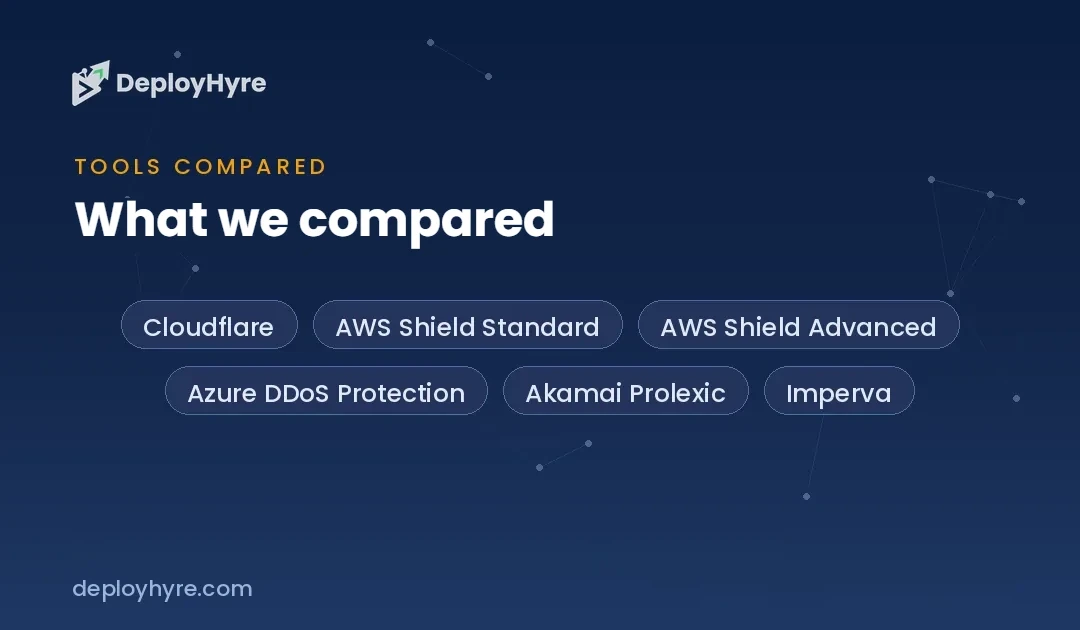
Quick Comparison: DDoS Protection Services at a Glance
| Service | Best For | Observed Price | Note |
|---|---|---|---|
| Cloudflare | Bundled value, startups | Free; Pro from $20/mo | DDoS + CDN + WAF on one dashboard |
| AWS Shield Standard | Basic AWS protection | Free (L3/L4 for AWS) | Included with AWS |
| AWS Shield Advanced | AWS with SLA + cost protection | $3,000/mo | Dedicated response team |
| Azure DDoS Protection | Azure infrastructure | ~$2,944/mo (up to 100 IPs) | Azure-native |
| Akamai Prolexic | Enterprise guaranteed SLA | $10,000/mo+ (quote) | Dedicated scrubbing centers |
| Imperva | App + infrastructure DDoS | $368 to $638/site/mo (Pro/Business) | Infra DDoS priced separately |
What AI DDoS Protection Does
A distributed denial-of-service (DDoS) attack floods your infrastructure with traffic from many sources at once, aiming to exhaust your bandwidth, servers, or application so legitimate users cannot get through. DDoS protection services detect these floods and filter the malicious traffic out, absorbing the attack across a large network (scrubbing) so clean traffic still reaches you. Attacks come in layers: volumetric (raw bandwidth), protocol (L3/L4, exhausting network resources), and application-layer (L7, mimicking real requests), and good protection covers all three.
The AI layer is essential because modern attacks are adaptive. Machine learning distinguishes attack traffic from legitimate surges (a product launch versus an assault), detects the low-and-slow application-layer attacks that hide in normal-looking requests, and adapts mitigation in real time as attackers change tactics. Automatic, always-on mitigation, reacting in seconds without human intervention, is what separates capable services, since a DDoS attack can take you down before a human can respond.
DDoS protection is a frontline availability control, usually paired with a WAF. It complements the application defense in our best AI web application firewall guide, the broader security in our best AI cybersecurity tools guide, and the infrastructure in our best cloud hosting guide.
The Jump From Free to Guaranteed-SLA Scrubbing
The defining cost decision is whether you need free, best-effort protection or a paid, contractually-guaranteed mitigation SLA, because that jump is where the price goes from $0 to thousands a month. Cloudflare’s free tier and AWS Shield Standard provide genuinely capable protection at no cost, and they cover the majority of websites and applications. But they are best-effort, no contractual guarantee, no dedicated team. Stepping up to AWS Shield Advanced ($3,000 a month), Azure DDoS Protection (~$2,944 a month for up to 100 IPs), or Akamai Prolexic ($10,000-plus a month) buys a mitigation SLA, cost protection against attack-driven scaling bills, and a scrubbing team you can call mid-attack.
The decision hinges on what downtime costs you. For a startup or content site, free protection is fine, an attack is disruptive but survivable. For a bank, an e-commerce platform at scale, or a gaming company, where minutes of downtime mean large losses and attacks are frequent and sophisticated, the guaranteed SLA and dedicated response of Shield Advanced or Prolexic are worth the five-figure cost. Match your spend to your downtime cost and threat frequency, not to a feature list.
Best Bundled and Value Protection
Cloudflare is the best DDoS protection for general web workloads and startups, bundling always-on DDoS mitigation with a CDN and WAF on one dashboard, starting free and with Pro from $20 a month. Its enormous network absorbs volumetric attacks easily, its protection is always-on and automatic, and getting it is as simple as routing your traffic through Cloudflare, which also gives you caching and application firewalling. For the vast majority of sites and applications, Cloudflare’s free-to-affordable, integrated protection is all they need, and the single-dashboard consolidation of DDoS, CDN, and WAF is a real operational advantage.
Cloudflare’s value proposition, capable DDoS protection bundled with CDN and WAF, starting free, is why it is the default recommendation for anyone who does not have a specific enterprise-SLA requirement. Imperva is a strong alternative that combines application and infrastructure DDoS protection with its WAF, at $368 (Pro) to $638 (Business) per site a month plus separately-priced infrastructure DDoS. Both bundle DDoS with application security; Cloudflare for value and ubiquity, Imperva for integrated app-plus-infrastructure protection. Pair either with the WAF in our best AI web application firewall guide.
Best for Single-Cloud Infrastructure
AWS Shield is the natural choice for infrastructure on AWS: Shield Standard is free and automatically protects all AWS resources against common L3/L4 attacks, while Shield Advanced ($3,000 a month) adds an SLA, cost protection, and a dedicated response team. For AWS-native applications, Shield protects your resources where they live, integrated with CloudFront, Route 53, and ELB, with no separate vendor. The free Standard tier covers basic protection for everyone on AWS; Advanced is the upgrade for AWS workloads that need guaranteed mitigation and protection against the surprise scaling bills a DDoS attack can trigger.
Azure DDoS Protection plays the equivalent role for Azure, at roughly $2,944 a month covering up to 100 IPs, natively integrated with Azure networking. Both cloud-native services are the low-friction choice when your infrastructure lives in a single cloud and you want protection integrated with it rather than a separate provider. Shield Advanced’s cost protection, absorbing the scaling charges an attack causes, is a distinctive benefit for AWS teams, since a volumetric attack can otherwise spike your cloud bill. Choose the native option when single-cloud integration matters, per our best cloud hosting guide.
Best Enterprise Guaranteed Mitigation
Akamai Prolexic is the enterprise standard for guaranteed DDoS mitigation, offering dedicated scrubbing centers, a contractual SLA, and a security operations team you can reach during an attack, from around $10,000 a month. For large enterprises, banks, and gaming and financial-services companies, organizations that are frequent, high-value targets and cannot tolerate downtime, Prolexic’s dedicated scrubbing capacity and guaranteed response are worth the premium. When a sophisticated, sustained attack hits, having a contractually-obligated team and massive dedicated scrubbing capacity on the line is the difference between staying up and going dark.
The enterprise tier is fundamentally about guarantees and human response, not just automated filtering. Prolexic and similar services (including Netscout/Arbor for on-premises hardware scrubbing) exist for organizations where the risk and cost of downtime justify a five-or-six-figure annual commitment for certainty. For most organizations this is overkill, but for the highest-value targets it is essential. Choose enterprise scrubbing when a guaranteed SLA and dedicated attack response are non-negotiable, complementing the broader posture in our best AI cloud security tools guide.
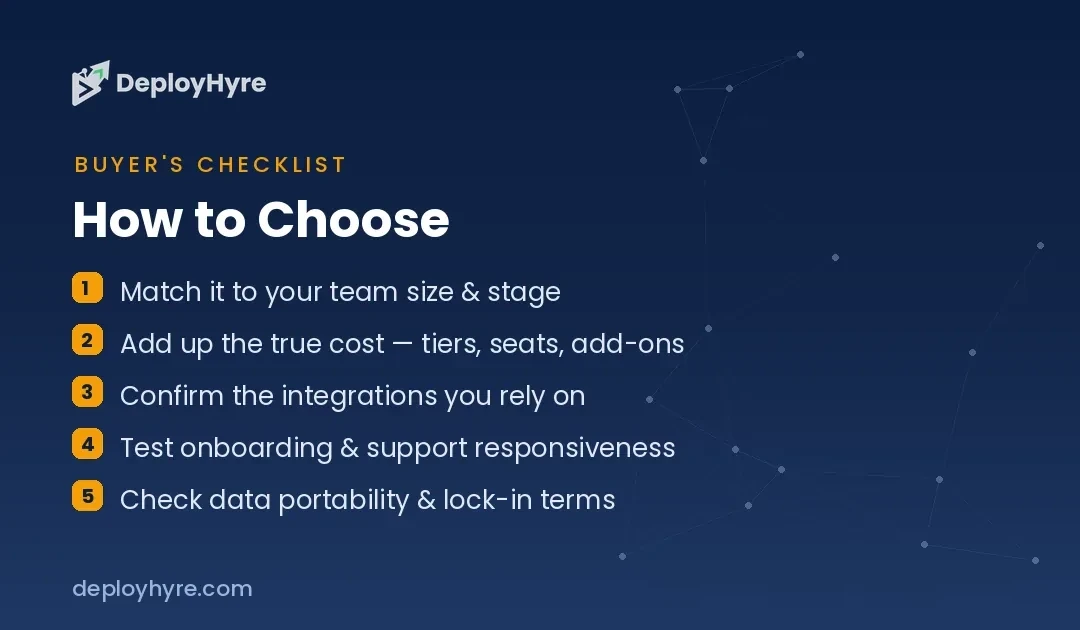
How Should You Choose DDoS Protection?
Start from what downtime costs you, because it determines whether free protection suffices or you need a paid SLA. For most sites and startups, Cloudflare’s free tier or AWS Shield Standard is genuinely capable and enough. For organizations where minutes of downtime mean large losses, and that are frequent attack targets, the guaranteed SLA of Shield Advanced or Akamai Prolexic is worth thousands a month.
Then follow your infrastructure and bundling preference. AWS-native workloads get integrated protection and cost protection from Shield; Azure workloads from Azure DDoS Protection. Teams wanting DDoS bundled with CDN and WAF on one dashboard point to Cloudflare or Imperva. Match the delivery model to where your infrastructure lives and whether you want consolidated protection.
Finally, weigh guaranteed mitigation and cost protection for higher tiers. AWS Shield Advanced’s protection against attack-driven scaling bills, and Prolexic’s contractual SLA and dedicated team, are the specific benefits that justify the enterprise cost. If a sustained, sophisticated attack would be catastrophic for you, prioritize the guarantee and human response over raw automated capacity, which all the major providers have.
How We Evaluated These Services
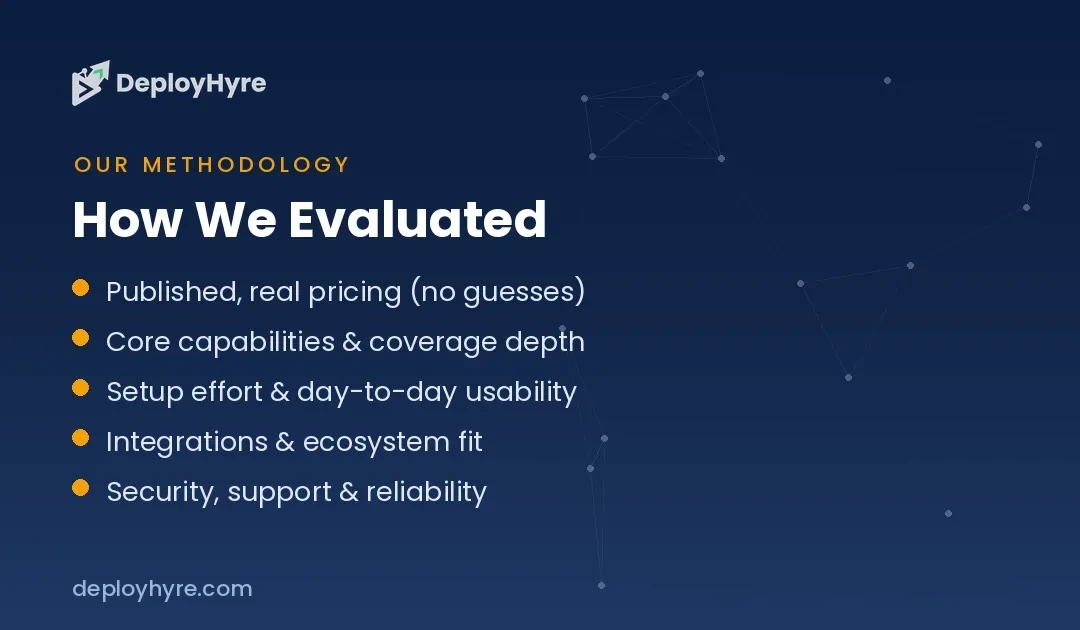
We evaluated each service on attack-layer coverage (volumetric, protocol, application), always-on automatic mitigation, AI-driven detection, SLA and dedicated response, cost protection, and pricing. Figures come from vendor pages and comparison sources. Because enterprise scrubbing is quote-based, we present observed bands and stress the free-versus-guaranteed-SLA cost cliff. Rankings reflect fit for a stated use case.
The Bottom Line
Cloudflare is the best bundled value, covering most sites free with DDoS, CDN, and WAF together, while AWS Shield (Standard free, Advanced $3,000/mo) is the AWS-native pick with cost protection, and Akamai Prolexic the enterprise choice for guaranteed-SLA scrubbing from $10,000/mo. Azure DDoS and Imperva round out the field. Decide by what downtime costs you, since the jump from free protection to a guaranteed mitigation SLA is where the real money and the enterprise guarantee live.
Frequently Asked Questions
How much does DDoS protection cost?
It ranges from free to over $100,000 a year. Cloudflare’s free tier and AWS Shield Standard cost nothing, Cloudflare Pro starts at $20 a month, and paid enterprise protection jumps to $3,000 a month (AWS Shield Advanced), roughly $2,944 (Azure DDoS), and $10,000-plus (Akamai Prolexic). The jump reflects moving from best-effort to a guaranteed mitigation SLA.
Is free DDoS protection good enough?
For most websites and startups, yes. Cloudflare’s free tier and AWS Shield Standard provide genuinely capable, always-on protection covering common attacks. They are best-effort with no contractual SLA, so organizations where downtime causes large losses, or that are frequent high-value targets, need paid protection with a guaranteed SLA and dedicated response.
What is the difference between AWS Shield Standard and Advanced?
Shield Standard is free and automatically protects AWS resources against common L3/L4 attacks. Shield Advanced costs $3,000 a month and adds a mitigation SLA, a dedicated response team, protection against larger application-layer attacks, and cost protection that absorbs the scaling charges an attack can trigger on your AWS bill.
What is DDoS scrubbing?
Scrubbing is filtering attack traffic out while letting legitimate traffic through, typically by routing your traffic through large scrubbing centers that absorb the flood. Enterprise services like Akamai Prolexic provide dedicated scrubbing capacity and a team that manages it during an attack, which is why they command $10,000-plus a month for high-value targets.
Do I need DDoS protection and a WAF?
They address different threats: DDoS protection keeps you available under traffic floods, while a WAF blocks application-layer attacks like SQL injection and bot abuse. Many providers bundle both, Cloudflare and Imperva offer DDoS, CDN, and WAF together, which is why an integrated provider is often the simplest way to get both layers on one platform.
Related Articles

The DeployHyre Editorial Team writes buyer guides on AI tools, SaaS, cloud hosting and proxies. We compare tools using published pricing, official documentation and third-party reviews. All content is for educational and informational purposes only.