Table of Contents
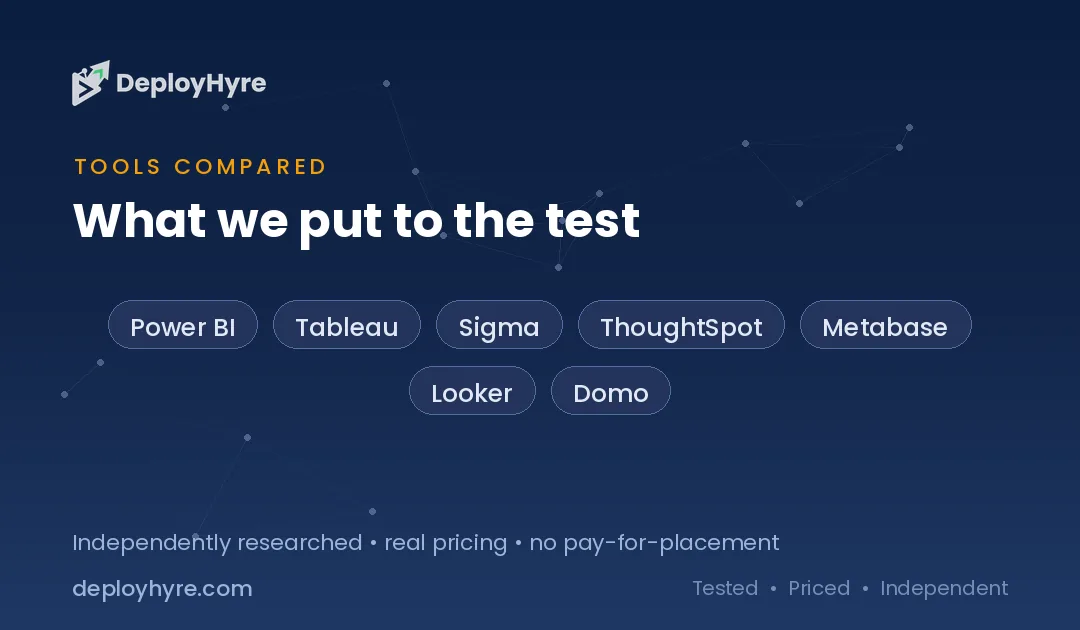
The best AI business intelligence tool for most teams is Power BI for the cheapest full-featured self-service, Tableau for polished visualization, ThoughtSpot for natural-language analytics, and Sigma for warehouse-native BI, while Looker suits teams wanting governed metrics inside Google Cloud. BI tools turn the data in your warehouse into dashboards, reports, and answers that business users can explore themselves, and they let people ask questions in plain language and get charts back.
The structure to understand before shopping: BI pricing splits cleanly into two worlds. Transparent self-service platforms, Power BI, Tableau, Sigma, ThoughtSpot, publish price lists you can budget from. Enterprise quote-only platforms, Looker, Domo, Sisense, reveal their real cost only through negotiation, and it is usually six figures. Knowing which world a tool lives in, and which one your organization belongs in, saves weeks of evaluation and prevents sticker shock.
Every price below is a recent observed figure. Because enterprise platforms quote per deployment and AI features are often gated behind premium tiers, treat each as a band.
Quick Comparison: Business Intelligence Tools at a Glance
| Tool | Best For | Observed Price | Pricing World |
|---|---|---|---|
| Power BI | Cheapest full BI platform | Pro $14/user/mo | Transparent |
| Tableau | Polished visualization | $15–$115/user/mo by role | Transparent |
| Sigma | Warehouse-native BI | From ~$300/mo | Transparent |
| ThoughtSpot | Natural-language analytics | ~$140K/yr average | Mostly quote |
| Metabase | Open-source, small teams | Open-source + low paid tiers | Transparent |
| Looker | Governed metrics in Google Cloud | ~$150K/yr average (quote) | Quote-only |
| Domo | End-to-end enterprise BI | Enterprise quote | Quote-only |
What AI Business Intelligence Tools Do
Business intelligence tools connect to your data, warehouses, databases, spreadsheets, and let people turn it into insight without writing code. They build dashboards that track KPIs, reports that summarize performance, and interactive visualizations that let business users slice data by region, product, or time. The goal is self-service: instead of every question routing through a data analyst, the marketing lead or finance manager explores the data themselves.
The AI layer centers on natural-language analytics and augmented insights. You can type “why did revenue drop in the Northeast last quarter?” and get an answer with a chart, rather than building the query yourself. Tools auto-surface anomalies and trends, generate narrative summaries of dashboards, and suggest relevant visualizations. ThoughtSpot pioneered search-driven analytics, and Power BI’s Copilot and Tableau’s AI bundle bring similar capability, though often gated behind premium tiers.
BI sits on top of your data stack, consuming what your warehouse and pipelines deliver. It pairs with the warehouses in our best cloud data warehouses guide, the broader analytics in our best AI data analytics tools guide, and the trust layer in our best AI data catalog tools guide.
Two Worlds: Transparent vs Quote-Only
BI splits into transparent, self-service platforms you can budget from a price list and enterprise platforms whose real cost only emerges through a sales negotiation, and knowing which world you belong in shapes the whole evaluation. Power BI, Tableau, Sigma, and ThoughtSpot publish enough for a reasonably accurate budget. Looker, Domo, and Sisense do not publish pricing, and the numbers, Looker and ThoughtSpot both average around $140,000 to $150,000 a year, only appear after negotiation. A team that could run on transparent per-seat BI can waste months in enterprise sales cycles it never needed.
The other pricing trap is AI-feature gating. The headline seat price often excludes the AI capabilities that sold you on the tool. Power BI’s Copilot requires Fabric or Premium capacity, Tableau’s full AI needs the Tableau+ bundle, and ThoughtSpot limits AI queries on lower tiers, unlocking its full agent only on higher plans. Confirm which tier includes the AI you actually want before comparing headline seat prices, because the AI upcharge can double the effective cost.
Best Transparent Self-Service Platforms
Power BI is the cheapest full-featured BI platform at $14 per user a month for Pro, which makes a 10-person team just $140 a month and explains its dominance, especially in Microsoft-centric organizations. It covers dashboarding, reporting, and self-service analytics comprehensively, integrates natively with the Microsoft stack, and its per-seat transparency makes budgeting trivial. The caveat is that Copilot AI features require Fabric or Premium capacity, so factor that in if AI-driven analysis is a priority. For most teams wanting capable, affordable BI, Power BI is the default.
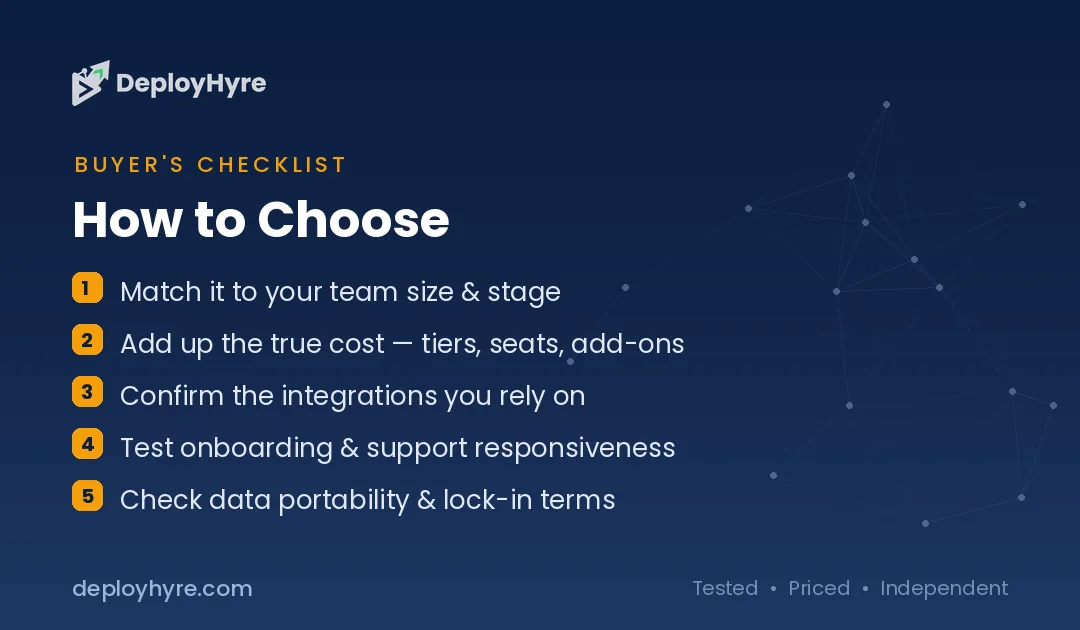
Tableau is the choice when visualization quality and analytical depth matter most, priced by role from $15 a month (Viewer) to $115 (Creator), so a realistic 50-person mix lands around $2,655 a month. Its visualizations and exploratory analysis remain best-in-class, though full AI needs the Tableau+ bundle. Both are transparent, self-service leaders; Power BI wins on price and Microsoft integration, Tableau on visualization polish and depth. For smaller teams, Metabase offers open-source and low-cost paid tiers as an accessible entry point.
Best AI-Native and Warehouse-Native Options
ThoughtSpot is the leader for natural-language, search-driven analytics, letting business users ask questions in plain language and get answers, with its full Spotter agent unlocked on higher tiers and an average deployment around $140,000 a year. It pioneered the search-first BI model, and for organizations that want genuinely self-service analytics where non-technical users query data conversationally, it is the specialist. The cost and the AI-tier gating mean it suits larger teams committed to the natural-language paradigm rather than dashboard-first BI.
Sigma is the standout warehouse-native platform, running analysis directly on your cloud data warehouse with a spreadsheet-like interface, starting around $300 a month. It appeals to teams that keep their data in Snowflake, BigQuery, or Redshift and want BI that queries the warehouse live without extracts, and its familiar spreadsheet UX lowers the barrier for business users. Both represent the modern end of BI, ThoughtSpot on natural language, Sigma on warehouse-native analysis, and both fit teams building on a cloud data warehouse, as covered in our best cloud data warehouses guide.
Best Enterprise Quote-Based Platforms
Looker is the enterprise choice for governed, consistent metrics, especially inside Google Cloud, defining business logic once in its modeling layer so every dashboard uses the same definitions, at an average cost around $150,000 a year on a quote. Its strength is governance: when “revenue” or “active user” must mean exactly one thing across the whole organization, Looker’s semantic model enforces it. It does not publish pricing, so budgeting requires a sales conversation, but for large data-driven organizations that need metric consistency, that governance justifies the enterprise cost.
Domo is the other major quote-only platform, positioned as end-to-end BI that bundles data integration, preparation, and visualization for enterprises wanting one platform across the stack. Both are enterprise-grade, quote-based, and aimed at organizations where governance, breadth, or scale outweigh the convenience of transparent per-seat pricing. Choose them when metric governance (Looker) or an all-in-one enterprise platform (Domo) is the driver, and budget for a negotiation rather than a price list.
How Should You Choose a BI Tool?
Decide which pricing world fits you first. If you want to budget from a price list and run self-service BI, Power BI, Tableau, Sigma, or Metabase are transparent and quick to adopt. If you need enterprise governance or an all-in-one platform and can run a procurement cycle, Looker or Domo are the quote-based options. This split prevents you from evaluating tools built for a different scale than yours.
Then match the tool to your priority. Lowest cost and Microsoft integration point to Power BI. Visualization depth points to Tableau. Natural-language, search-driven analytics point to ThoughtSpot. Warehouse-native analysis points to Sigma. Governed, consistent metrics point to Looker. Match the strength to what your users actually need.
Finally, confirm the AI tier. The headline seat price usually excludes the AI features, Power BI’s Copilot needs Fabric, Tableau’s needs Tableau+, ThoughtSpot gates its agent on higher plans. Check which tier includes the AI you want before comparing prices, because the AI upcharge can be the largest line in the real cost.
How We Evaluated These Platforms
We evaluated each tool on visualization and dashboarding, self-service ease, natural-language and AI capabilities, warehouse integration, governance, and pricing transparency. Figures come from vendor pages and comparison sources. Because BI splits into transparent and quote-only pricing and AI features are often gated, we present published rates and observed enterprise averages and flag where AI requires a premium tier. We accepted no payment for placement; rankings reflect fit for a stated use case.
The Bottom Line
Power BI is the cheapest full BI platform and the Microsoft default, Tableau the visualization leader, ThoughtSpot the natural-language specialist, and Sigma the warehouse-native pick, while Looker and Domo serve enterprises needing governance at quote-based cost. Decide which pricing world you belong in first, match the tool to your users’ real need, and always confirm which tier includes the AI features, because that upcharge often dominates the true cost.
Frequently Asked Questions
How much do business intelligence tools cost?
Transparent platforms publish rates: Power BI Pro is $14 per user a month, Tableau ranges $15 to $115 by role, and Sigma starts around $300 a month. Enterprise quote-only platforms like Looker and ThoughtSpot average roughly $140,000 to $150,000 a year. AI features are often gated behind premium tiers, which can raise the effective cost significantly.
What is the cheapest BI tool?
Among full-featured platforms, Power BI Pro is the cheapest at $14 per user a month, making a 10-person team just $140 a month. Metabase offers an open-source option and low-cost paid tiers for smaller teams. Both keep budgeting simple, though Power BI’s Copilot AI features require higher-cost Fabric or Premium capacity.
Which BI tool is best for natural-language questions?
ThoughtSpot pioneered search-driven analytics and is the leader for asking questions in plain language and getting answers. Power BI’s Copilot and Tableau’s AI bundle offer similar capability, though often on premium tiers. If conversational, self-service analytics for non-technical users is the priority, ThoughtSpot is the specialist.
What is warehouse-native BI?
Warehouse-native BI runs analysis directly on your cloud data warehouse (Snowflake, BigQuery, Redshift) instead of extracting data into the BI tool. Sigma is the leading example. The benefit is querying live warehouse data without a second copy, which improves freshness and governance, and it suits teams that have centralized their data in a warehouse.
Why don’t Looker and Domo publish prices?
They are enterprise platforms that price per deployment based on users, modules, and scale, so their real cost only emerges through a sales negotiation, averaging around $150,000 a year for Looker. This contrasts with transparent platforms like Power BI and Tableau, where you can build an accurate budget from the published price list.

David Austin is a technology writer and software analyst at DeployHyre, where he covers AI tools, SaaS platforms, cloud hosting, and business automation. He focuses on hands-on comparisons of pricing, features, and real-world performance so teams can pick the right software with confidence.