TL;DR: TriNet is an industry-tailored PEO with deep benefits and a dedicated support team, priced by custom quote and built for growing mid-size firms. Justworks is a transparent, flat per-employee PEO that is simpler and cheaper. Choose TriNet for vertical expertise and rich coverage. Choose Justworks for clear pricing and startup-friendly ease.
Picking a PEO is a big decision. You are handing over payroll, benefits, and compliance to one partner. Get it right and your team runs smoothly. Get it wrong and you inherit hidden fees and slow support.
The stakes explain why so many companies outsource this work. PEOs now serve more than 230,000 small and mid-size businesses employing over 4.5 million people, according to the National Association of Professional Employer Organizations. Businesses that use a PEO were also more likely to report growth in 2025 (80% vs. 67%) than those that did not.
TriNet and Justworks are two of the most recognized names in that market. But they serve different companies. This guide compares them on pricing, benefits, compliance, and support so you can choose with confidence. For a wider view of the category, see our roundup of the best AI tools for HR.
Quick Comparison: TriNet vs Justworks
| Feature | TriNet | Justworks |
|---|---|---|
| Pricing model | Custom quote, per-employee (PEPM) | Flat per-employee PEO fee |
| Per-employee price | Quote-based, estimated $100 to $150 per month | $79 (Basic) to $109 (Plus) per month |
| PEO / co-employment | Yes, true co-employment | Yes, true co-employment |
| Benefits | Deep, large-group plans plus vertical options | Large-group health plans via PEO pool |
| Payroll | Included, automated, multi-state | Included, automated |
| HR support | Dedicated team of specialists | Included support, self-service tools |
| Integrations | Broad HR platform ecosystem | Solid, accounting and time tools |
| Best for | Growing mid-size and industry-specific teams | Startups and lean SMBs |
How Do TriNet and Justworks Pricing Models Compare?
Justworks publishes clear flat per-employee pricing, while TriNet quotes each customer individually. That single difference sets the tone for both platforms. Justworks is predictable. TriNet is tailored but harder to compare upfront.
Justworks lists two PEO tiers in public. PEO Basic runs $79 per employee per month, and PEO Plus runs $109 per employee per month. Basic covers payroll, 401(k), and workers’ compensation. Plus adds health insurance administration and family benefits.
TriNet takes the opposite approach. It does not publish standard list pricing and quotes every contract based on company size, industry, and services. Third-party sources estimate its cost in the range of $100 to $150 per employee per month. Treat that as a rough estimate, not a locked rate.
The tradeoff is clarity versus fit. Justworks lets you budget in minutes. TriNet shapes a plan around your exact needs but asks you to talk to sales first.
Explore Justworks pricing plans
Are TriNet and Justworks Both Real PEOs?
Yes, both TriNet and Justworks are true PEOs that co-employ your team through a shared employer structure. This is where they agree. Both become the employer of record for tax and benefits purposes while you run your business day to day.
Co-employment is the core of the PEO model. Your workers join a shared employer arrangement. The PEO handles payroll tax filings, benefits administration, and much of your compliance burden under its own structure.
That shared setup is what unlocks big-company benefits for small teams. It also shifts real risk off your plate. Both providers deliver this. The difference is scale and depth, not the model itself.
So the choice is not PEO versus non-PEO. It is which PEO fits your size, industry, and appetite for hands-on service.
Does TriNet Offer Better Benefits Than Justworks?
TriNet generally offers deeper benefits and more plan variety, while Justworks delivers strong large-group coverage in a simpler package. Both pool clients to unlock better rates. TriNet layers on more options and vertical-specific choices.
TriNet aggregates thousands of businesses to access competitive plans. It offers health, dental, vision, retirement, wellness, commuter, and marketplace discount benefits, plus tailored options by industry. This breadth suits companies that want a rich, customizable package.
Justworks keeps benefits focused and effective. Its PEO Plus tier adds health insurance administration, HSA and FSA accounts, mental health, and fertility benefits. Workers’ compensation is built in. The plan set is simpler but covers what most small teams need.
For maximum choice and depth, TriNet holds the edge. For clean, comprehensive coverage without complexity, Justworks does the job well. If benefits drive your decision, compare Justworks vs Gusto too.
Which Platform Handles Payroll and Taxes Better?
Both platforms automate payroll and file taxes under their PEO structure, but TriNet leans stronger for complex, multi-state teams. As true PEOs, both file payroll taxes as the employer of record. This removes a heavy load from small teams.
Justworks automates payroll and tax filing inside its PEO package. Because Justworks is the employer of record, it handles federal, state, and local filings under its own structure. The experience is clean and largely hands-off.
TriNet automates the same core work and adds depth for scale. It supports complex payroll needs, multi-state operations, and detailed reporting for larger teams. This suits companies that have outgrown a simple setup.
For a lean team, Justworks makes payroll effortless. For a growing company with many states and edge cases, TriNet’s depth pays off. Either way, tax filing moves off your desk.
How Do TriNet and Justworks Compare on HR Support and Compliance?
TriNet assigns a dedicated team of specialists, while Justworks bundles solid support with strong self-service tools. Both share compliance liability through co-employment. TriNet goes further on hands-on, strategic guidance.
TriNet is known for high-touch service. Each client gets a dedicated support team of payroll specialists, HR experts, benefits advisors, and risk consultants. It also offers strategic HR consulting, not just transactional help.
Justworks delivers included support with a modern, approachable platform. Its tools make routine HR tasks easy to run yourself. The service is reliable, though more transactional than TriNet’s white-glove model.
Both PEOs share your compliance risk, which protects founders without an in-house HR team. For deep, proactive HR advice, TriNet leads. For efficient support plus easy self-service, Justworks is plenty. Compare Justworks vs Rippling for another support angle.
Why Is TriNet Known for Industry Specialization?
TriNet builds its service around industry-specific teams, which is its biggest advantage over the more generalist Justworks. This vertical focus is the reason many mid-size firms choose TriNet. Justworks stays broad and simple by design.
TriNet organizes support around verticals like technology, life sciences, financial services, and other industries. Each vertical brings benefits, compliance help, and HR guidance tuned to that field. A biotech firm and a financial startup get different, relevant expertise.
Justworks takes a generalist path. It serves a wide range of small businesses with one clean, consistent experience. It does not tailor its service by industry the way TriNet does. For many SMBs, that simplicity is a feature, not a gap.
If your industry carries unique compliance or benefits needs, TriNet’s specialization is a real edge. If your needs are standard, Justworks keeps things fast and simple.
How Do TriNet and Justworks Compare on Integrations?
TriNet offers a broad HR platform ecosystem, while Justworks covers the core integrations most small teams need. Both connect to common business tools. TriNet’s platform reaches wider for growing companies.
TriNet provides a full HR technology platform with integrations across payroll, benefits, and workforce tools. This supports companies that run a larger, more connected software stack as they scale.
Justworks integrates with the essentials, including accounting and time-tracking apps. Its list is shorter but hits the tools most small teams actually use. Because the PEO bundles many services, teams often need fewer outside tools anyway.
If you depend on many connected systems, TriNet’s ecosystem has the advantage. If you want fewer moving parts, Justworks reduces the number of integrations you have to manage.
Who Is Each Platform Best For?
TriNet is best for growing mid-size and industry-specific companies, while Justworks is best for startups and lean SMBs that value simplicity. Size and industry are the clearest deciders here. Match the tool to your stage.
TriNet fits companies that want vertical expertise, deep benefits, and hands-on HR guidance. It typically serves small and mid-size businesses with fewer than 250 employees and requires a small minimum headcount. The custom quote suits teams with specific, complex needs.
Justworks fits startups and small teams that want clear pricing and fast onboarding. It works well for companies from a handful of employees up to a couple hundred. The transparent flat fee makes budgeting simple and switching low-risk.
Neither is a wrong choice. TriNet rewards complexity and scale. Justworks rewards simplicity and speed.
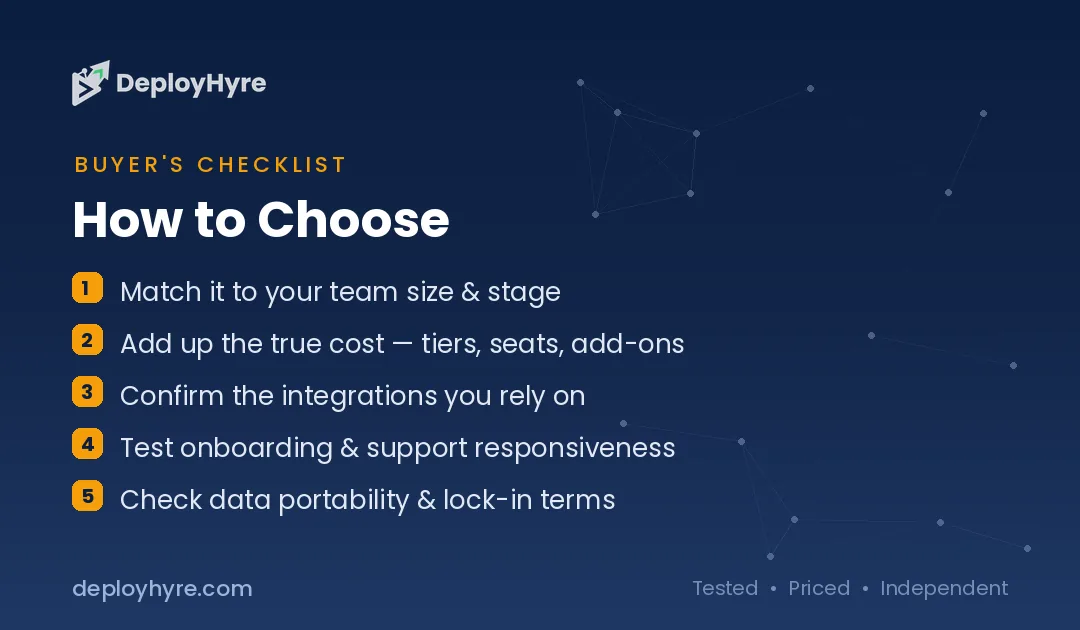
TriNet vs Justworks: Which Should You Choose?
Your best fit depends on your company type and how much service you want.
Choose TriNet if you are a growing mid-size company or operate in a specialized industry. The vertical teams, deep benefits, and dedicated specialists deliver real value when your needs are complex. The quote-based pricing shapes a plan around your business, though you will need to talk to sales to see your rate. This suits firms that want a strategic HR partner, not just a platform.
Choose Justworks if you are a startup or lean SMB that wants clarity and speed. The flat $79 to $109 per employee pricing is easy to budget, and onboarding is fast. You still get true co-employment, large-group benefits, and shared compliance risk, just in a simpler package. This fits teams that value transparency over customization.
Company stage often makes the call. Early-stage and mid-market teams on tight budgets lean Justworks. Established firms with vertical needs and larger headcounts lean TriNet.
The Bottom Line
TriNet and Justworks are both true PEOs, so both co-employ your team, unlock big-group benefits, and share your compliance risk. The difference is depth versus simplicity. TriNet is an industry-tailored PEO with rich benefits and dedicated specialists, priced by custom quote for growing mid-size firms. Justworks is a transparent, flat per-employee PEO that is simpler and cheaper.
Pick TriNet if vertical expertise, deep benefits, and hands-on support matter most. Pick Justworks if transparent pricing and startup-friendly ease are the priority. The right answer depends on your size, your industry, and how much you want your PEO to carry.
Start by mapping your headcount, your industry needs, and your benefits goals, then match them to the model that fits.
Frequently Asked Questions
Are TriNet and Justworks both PEOs?
Yes. TriNet and Justworks are both Professional Employer Organizations that co-employ your team through a shared employer structure. Both become the employer of record for tax and benefits purposes, file payroll taxes, and share your compliance liability while you run your business day to day.
Which is cheaper, TriNet or Justworks?
Justworks is usually more predictable and often cheaper for small teams. Justworks charges a flat $79 to $109 per employee per month. TriNet uses custom quote-based pricing, estimated by third parties at roughly $100 to $150 per employee per month, but your exact rate depends on your company and services.
Why do companies choose TriNet over Justworks?
Companies choose TriNet for industry specialization and deep benefits. TriNet organizes support around verticals like technology, life sciences, and financial services, and assigns a dedicated team of specialists. That tailored expertise and rich benefits set suit growing mid-size firms with complex or industry-specific needs.
Is Justworks good for small businesses and startups?
Yes. Justworks is popular with startups and lean SMBs because of its transparent flat pricing, fast onboarding, and simple platform. It still delivers true co-employment, large-group health plans, and built-in workers’ compensation, but in a package that is easy to budget and quick to set up.
Does TriNet publish its pricing?
No. TriNet does not publish standard list pricing and quotes every contract based on company size, industry, and services needed. Third-party sources estimate its cost around $100 to $150 per employee per month, but treat that as an estimate and request a custom quote for your exact rate.
Know AI, SaaS, or cloud tools inside out? Pitch a guest post and get in front of thousands of buyers researching their next tool.

David Austin is a technology writer and software analyst at DeployHyre, where he covers AI tools, SaaS platforms, cloud hosting, and business automation. He focuses on hands-on comparisons of pricing, features, and real-world performance so teams can pick the right software with confidence.