The best local SEO tools in 2026 are BrightLocal for most small businesses and agencies, Local Falcon for map grid rank tracking, Whitespark for citations, and Semrush Local for teams that already use Semrush. Moz Local, Localo, and Synup suit budget listing work. Yext and Birdeye fit multi location brands that need listings, reviews, and reporting in one contract. Prices run from $1 per location to custom quotes.
Table of Contents
Reviews now shape local buying more than ever. In BrightLocal’s 2026 Local Consumer Review Survey, 41% of people said they read reviews every time they browse for a local business, up from 29% a year earlier, according to PinMeTo’s summary of the report. The same survey found 31% will only use businesses rated 4.5 stars or higher.
That is why local SEO is no longer just about a Google Business Profile. You need accurate listings, steady reviews, and rank data for each part of your service area. Local SEO tools handle that work so you do not have to check Google Maps by hand from every zip code.
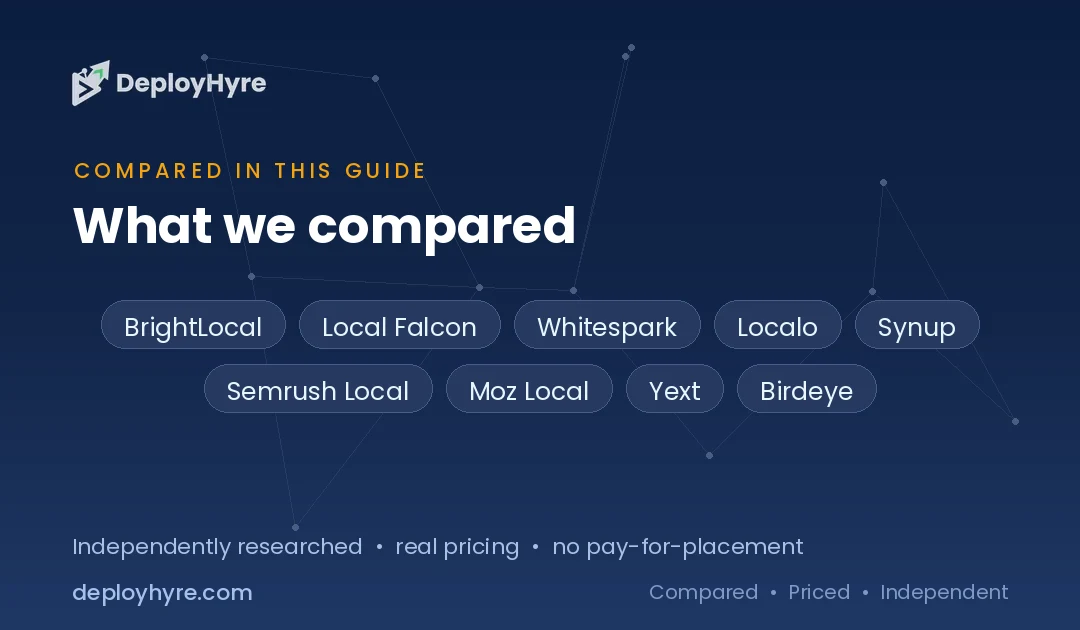
This guide compares nine tools by job and company size. It is part of our wider guide to the best AI SEO tools, which covers keyword research and content tools for national search.
Quick Comparison: Best Local SEO Tools in 2026
| Tool | Best For | Starting Price | Key Strength |
|---|---|---|---|
| BrightLocal | Small businesses and agencies | $41/mo monthly, $369/yr annual | Rank tracking, audits, citations, reviews |
| Local Falcon | Map grid rank tracking | $24.99/mo | Geo grid scans with credit rollover |
| Whitespark | Citation building | $1 per location/mo | Citation Finder and listing services |
| Semrush Local | Existing Semrush users | Check the current price | Listings plus full SEO suite |
| Moz Local | Simple listing sync | Check the current price | Low cost listing distribution |
| Localo | Owners who want guided tasks | $49/mo monthly, $39/mo annual | AI task lists for Google profiles |
| Synup | Agencies needing white label | $49/mo for 1 location | All features on every plan |
| Yext | Enterprise listings | Custom quote | Large publisher network |
| Birdeye | Multi location brands | Custom quote | Listings, reviews, and messaging together |
What Makes Great Local SEO Tools?
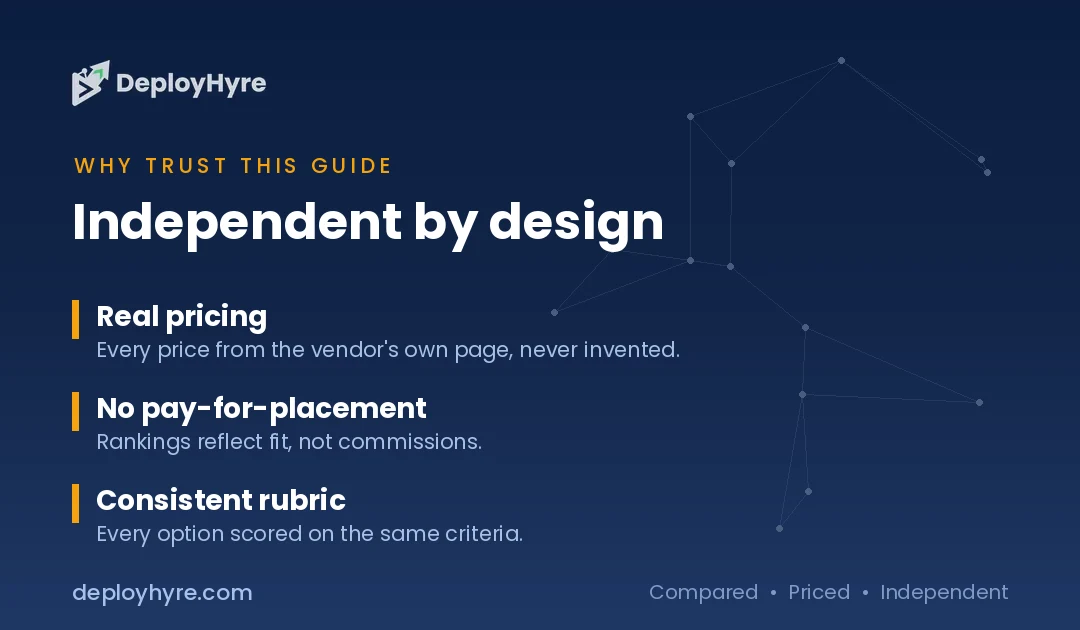
Great local SEO tools show where you rank on the map, not just in one spot. They keep your name, address, and phone number the same across directories. They track and request reviews, audit your Google Business Profile, and report results by location. The best ones also price fairly as you add locations, so growth does not wreck your budget.
Most top ranking guides agree on five core jobs. These are local rank tracking, citation and listing management, review monitoring, Google Business Profile work, and reporting. A newer sixth job is AI search visibility. BrightLocal, for example, now bundles a Local AI Visibility Tracker into its Track plan.
No single tool does all six jobs best. Many teams pair a map grid tracker with a listings tool. That is often cheaper than one big platform.
Who Needs Local SEO Tools?
Any business that serves people in a set area can use these tools. That includes dentists, law firms, plumbers, restaurants, gyms, and retail stores. Service area businesses with no storefront need them too, since their rank changes block by block.
Agencies are the second big group. They need white label reports, many client accounts, and bulk tools. Multi location brands are the third group. They need central control over hundreds of listings and review feeds.
Best Local SEO Tools for Small Businesses and Agencies
1. BrightLocal: Best for all round local SEO
BrightLocal is a full local SEO suite built for single businesses and the agencies that serve them.
What it does well. It covers rank tracking, local audits, citation monitoring, listing sync, and review tools in one login. Plans scale by location count, so you can start with one site and grow. Its research team also publishes the yearly Local Consumer Review Survey, which many marketers cite.
Key features:
- Local rank tracker for up to 100 keywords and four competitors on Track
- Geo grid map for up to five keywords
- Local AI Visibility Tracker included on Track
- Listing sync and scheduled Google Business Profile posts on Manage
- Review requests by email, SMS, and in store on Grow
Pricing. Per BrightLocal’s pricing page in November 2026, one location costs $41/mo for Track, $54/mo for Manage, and $65/mo for Grow on monthly billing. Annual billing drops those to $369, $485, and $584 per year. Citation Builder is pay as you go, from about $2 per citation. A 14 day free trial needs no card.
Best for: Small businesses and agencies that want one tool for most local tasks.
Limitations. Citation building costs extra. Plans stop at 100 locations, after which you need a custom quote.
2. Local Falcon: Best for map grid rank tracking
Local Falcon shows how your Google Maps rank changes across a grid of points around your business.
What it does well. A normal rank tracker checks one location. Local Falcon checks many points at once and colors each one by rank. That shows where you are strong and where rivals beat you. It runs on credits, so you pay for the scans you use.
Key features:
- Geo grid scans on Google Maps
- Falcon Agent included on all paid plans
- Data API from the Starter plan
- Looker Studio and Zapier links from the Basic plan
- Annual credits roll over
Pricing. Local Falcon’s pricing page lists Starter at $24.99/mo with 7,500 credits, Basic at $49.99/mo, Pro at $99.99/mo, and Premium at $199.99/mo. Annual billing costs the same per month but gives more credits that roll over. Pay as you go credits cost $0.05 each.
Best for: Service area businesses and agencies that need proof of map rank by neighborhood.
Limitations. It is a tracker, not a listings or review tool. Credit math can confuse new users.
3. Whitespark: Best for citation building
Whitespark is a Canadian local SEO company known for its Local Citation Finder and hands on listing services.
What it does well. It finds the directories where your rivals are listed and you are not. You can then build those citations yourself or pay its team to do it. Its founder, Darren Shaw, also runs the yearly Local Search Ranking Factors study.
Key features:
- Local Citation Finder
- Local Rank Tracker and Local Ranking Grids
- Reputation Builder for review requests
- Done for you listings and SEO services
- A one time Yext replacement service
Pricing. Whitespark’s pricing page lists its Local Platform at $1 per location per month. Ranking Grids start at $10/mo. The Local Rank Tracker runs $14 to $200/mo, and Citation Finder runs $33 to $149/mo. All are monthly prices.
Best for: Businesses that want to grow citations with care, not by blasting directories.
Limitations. Products are sold apart, so the full stack can add up. The interface feels more like a toolkit than a single dashboard.
4. Localo: Best for owners who want guided tasks
Localo turns Google Business Profile work into a simple to do list for busy owners.
What it does well. It tells you what to post, which photos to add, and how you compare with nearby rivals. That suits owners who have no SEO training. It also tracks rank on a map grid.
Key features:
- AI task lists for profile updates
- Map rank tracking
- Competitor checks
- Post scheduling for Google profiles
- 14 day trial and 30 day money back promise
Pricing. Localo’s pricing page lists Single Business at $49/mo monthly or $39/mo billed annually. Pro costs $169/mo monthly or $149/mo annually and covers many profiles. Prices exclude VAT.
Best for: Single location owners who want clear next steps.
Limitations. It is focused on Google profiles, so listing sync on other sites is lighter. The pricing page gives mixed figures for the annual discount, so confirm at checkout.
5. Synup: Best for agencies that need white label
Synup is a listings, reviews, and reporting platform priced by location band.
What it does well. Every plan includes every feature. Plans differ only in locations, credits, and agent chats. White label branding starts on the Premium plan, which suits agencies.
Key features:
- Listing management and sync
- Review monitoring and replies
- AI agent chats for routine tasks
- White label reports from Premium
- Credit based usage
Pricing. Synup’s pricing page lists Solo at $49/mo for one location, Premium at $299/mo for up to 10, Pro at $499/mo for up to 25, and Scale at $899/mo for up to 50. These are monthly rates, and the page offers 20% off on annual billing.
Best for: Agencies with 10 to 50 client locations.
Limitations. Only Solo has a free trial. Credit limits take some planning.
Best Local SEO Tools for Teams Already Using an SEO Suite
6. Semrush Local: Best for existing Semrush users
Semrush Local adds listing, review, and map rank tools to the Semrush SEO suite.
What it does well. You can track national keywords, local map rank, and backlinks in one account. Semrush lists Listing Management, Review Management, GBP Optimization, a GBP AI Agent, and a Map Rank Tracker under Local. If you also study rivals’ ad and keyword data, compare our list of SpyFu alternatives.
Key features:
- Listing Management
- Map Rank Tracker
- Review Management
- GBP Optimization and GBP AI Agent
- Full Semrush keyword and audit tools
Pricing. Semrush Local plans sit on a separate page, so check the current price. For context, Semrush’s main pricing page lists its SEO plan at $139/mo monthly or $117.33/mo billed annually.
Best for: Marketing teams that already pay for Semrush.
Limitations. Local is a paid add on to an already costly suite. It is a weaker fit for owners who only need listings.
7. Moz Local: Best for simple listing sync
Moz Local pushes your business data to major directories and watches for errors.
What it does well. It keeps setup short. You add your details once and it sends them to its partner network. It flags duplicates and lets you post updates to Google and Facebook. It comes from Moz, a long standing SEO brand.
Key features:
- Listing distribution to partner sites
- Duplicate listing alerts
- Review monitoring
- Profile posts and updates
- Location level reports
Pricing. Moz’s pricing page did not load for us, so check the current price on the Moz Local pricing page. Moz has long sold Lite, Preferred, and Elite tiers per location.
Best for: Businesses that want accurate listings with little effort.
Limitations. Rank tracking is light compared with BrightLocal or Local Falcon. Review requests are not its focus.
Best Local SEO Tools for Multi Location Brands
8. Yext: Best for enterprise listings
Yext is an enterprise platform that manages brand facts across listings, pages, and search.
What it does well. It syncs listings to a large publisher network from one central data store. It also offers location pages, reviews, and search tools for big brands. Yext is a public company, which some buyers value for vendor stability.
Key features:
- Central knowledge graph for brand data
- Listing sync to many publishers
- Review monitoring and replies
- Location landing pages
- Analytics across locations
Pricing. Yext’s pricing page did not load in our checks, and it sells mostly through sales, so check the current price. Many buyers note that listings can revert when a Yext contract ends. If cost or lock in is a worry, see our list of Yext alternatives.
Best for: Brands with hundreds of locations and a central marketing team.
Limitations. Custom pricing and annual contracts. Overkill for one or two locations.
9. Birdeye: Best for listings, reviews, and messaging together
Birdeye is a customer experience platform that bundles listings, reviews, and messaging for local brands.
What it does well. It puts reviews, listings, chat, and surveys in one inbox. Birdeye says its AI agents can draft review replies and suggest profile fixes. That is a vendor claim, so ask for a demo on your own data.
Key features:
- Listings management
- Review requests and AI replies
- Web chat and text messaging
- Surveys and insights
- Multi location dashboards
Pricing. Birdeye’s pricing page shows custom pricing only. You share your location count to get a quote.
Best for: Healthcare, home services, and retail brands with many locations.
Limitations. No public prices. Its own blog ranks Birdeye first, so treat that list with care.
How Should You Choose the Right Local SEO Tool?
Start with your biggest gap, not the longest feature list. If you do not know where you rank, buy a map grid tracker first. If your listings are wrong, fix citations first. If reviews are thin, pick a tool with strong review requests.
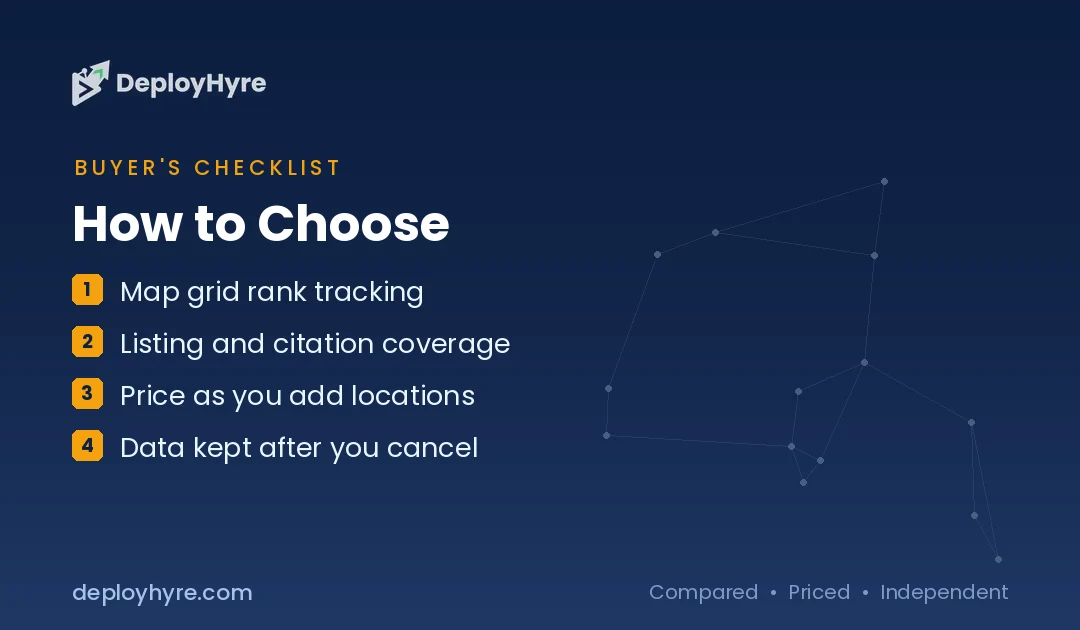
- Count your locations. Per location pricing adds up fast past 10 sites.
- Check rank tracking style. Single point trackers miss how rank shifts across a city.
- Ask what happens on cancel. Some listing networks revert data when you stop paying.
- Look for white label reports if you are an agency.
- Use the free trial on one real location before you commit.
For Google profile tasks alone, our guide to AI tools for Google Business Profile optimization goes deeper.
How We Evaluated These Tools
We started by reading the top ranking local SEO tool guides, including those from Birdeye, Guideflow, Localo, Webtonic, and BloggersPassion. We listed every tool named on three or more of them. Nine made our final list. We dropped tools whose current pricing or product status we could not confirm.
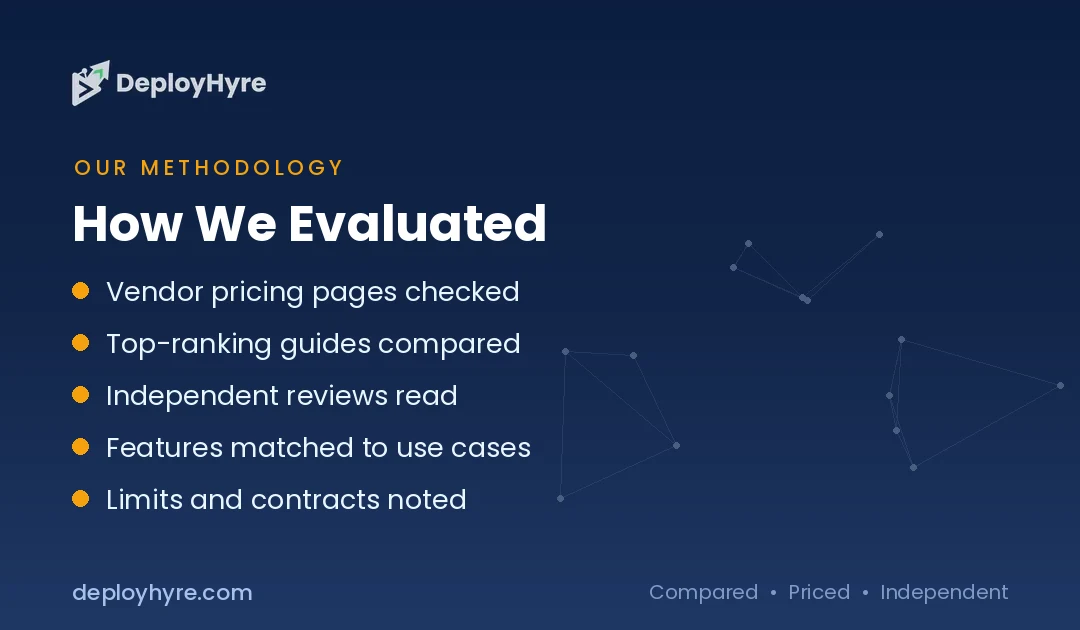
Next, we opened each vendor’s own pricing page in November 2026 and noted plan names, limits, and billing terms. Where a page did not load or showed no prices, we say so. We also checked independent listings on Capterra’s local SEO category for context on how buyers group these tools.
We did not run hands on tests or ranking experiments. We compared published features, pricing, and plan limits. Feature claims marked as vendor claims come from the vendor.
The Bottom Line
For most small businesses and agencies, BrightLocal is the safest pick. It covers tracking, audits, listings, and reviews at a fair price, with clear location tiers. Add Local Falcon if you need detailed map grid data, since it is the most focused tracker here. Pick Whitespark when citations are your weak spot. Choose Semrush Local only if you already pay for Semrush.
Larger brands should compare Yext and Birdeye side by side, and ask hard questions about contract length and data on exit. Our Yext alternatives guide can help with that. For the rest of your search stack, see our best AI SEO tools roundup.
Frequently Asked Questions
What is the difference between local SEO tools and regular SEO tools?
Regular SEO tools track national rankings, backlinks, and site health. Local SEO tools focus on Google Maps rank, business listings, reviews, and Google Business Profile tasks. They also track rank by location, since results change from one street to the next. Many teams use one of each, or a suite like Semrush with its Local add on.
Do local SEO tools improve Google Maps rankings?
Not on their own. They show where you rank and what to fix, such as wrong listings, few reviews, or a thin profile. You still need to act on that data. Fixing listings, earning fresh reviews, and posting updates are steps Google’s own guidance links to local prominence and relevance.
Are free local SEO tools enough?
For one location, free tools can cover basics. Google Business Profile itself is free, and some vendors give trial credits. Free options rarely offer map grid tracking, citation audits, or review requests at scale. Once you manage several locations or clients, a paid plan usually saves more time than it costs.
Which local SEO tool is best for multi location brands?
Yext and Birdeye are built for large brands with central teams. BrightLocal and Synup also scale well into the dozens of locations at public prices. Pick based on how many locations you have, whether you need reviews and messaging bundled, and how strict you want contract terms to be.
How much do local SEO tools cost?
Prices range widely. Whitespark’s Local Platform starts at $1 per location per month, and Local Falcon starts at $24.99/mo. BrightLocal starts at $41/mo on monthly billing for one location. Enterprise tools like Yext and Birdeye use custom quotes. Always check how costs change as you add locations.
Related Articles

The DeployHyre Editorial Team writes buyer guides on AI tools, SaaS, cloud hosting and proxies. We compare tools using published pricing, official documentation and third-party reviews. All content is for educational and informational purposes only.