Zendesk is the better choice for large teams that run high-volume, multichannel ticketing and need deep workflow and reporting control, while Intercom is the stronger pick for product-led and messaging-first teams that want an AI agent doing the heavy lifting on day one. Both platforms now sell “AI-first” support, but they bill for it very differently, and that difference decides which one is actually cheaper for your volume. Zendesk anchors on a per-agent seat license; Intercom pairs a lower seat price with per-resolution charges for its Fin AI agent. The right answer depends on your ticket mix, your automation appetite, and how much of your support you expect a bot to close.
Pricing and features below are drawn from Zendesk’s and Intercom’s official pricing pages as of publication. Vendors change pricing and packaging often; treat exact figures as bands and confirm on the vendor’s site before you buy. Prices reflect annual billing unless noted.
Quick Comparison: Zendesk vs Intercom at a Glance
| Factor | Zendesk | Intercom |
|---|---|---|
| Core identity | Omnichannel ticketing & help desk | Messaging-first, AI-native support |
| Entry plan | Suite Team, $55/agent/mo | Essential, $29/seat/mo |
| Mid tier | Suite Growth ~$89; Suite Professional $115/agent/mo | Advanced, $85/seat/mo |
| Top tier | Suite Enterprise, custom quote (~$169+) | Expert, $132/seat/mo |
| AI agent pricing | Zendesk AI / agentic add-on, billed per automated resolution (contact sales); AI add-on historically ~$50/agent/mo | Fin AI Agent from $0.99 per resolution, included in all plans |
| Best-fit team | Enterprise & scaling support orgs | SaaS, ecommerce, product-led teams |
| Standout strength | Ticketing depth, routing, reporting, app marketplace | In-app Messenger, Fin resolution rate, fast setup |
| Free trial | Yes | Yes |
What a Customer Support Platform Actually Does
A modern customer support platform is the system of record for every customer conversation. It captures requests from email, live chat, phone, social, and messaging apps; turns them into trackable tickets or threads; routes each one to the right agent or team; and gives managers the reporting to see where things break. On top of that foundation, the current generation layers AI: a knowledge base that feeds an AI agent, a copilot that drafts replies for human agents, and automation that closes simple tickets without anyone touching them.
Zendesk and Intercom sit at two ends of the same market. Zendesk grew up as a ticketing company and still thinks in tickets, queues, SLAs, and macros. Intercom grew up as an in-app messenger and thinks in conversations, bots, and proactive outreach. Both have bolted on the other’s strengths, but their defaults still reflect their origins. If you want a broader field before narrowing to these two, our roundup of the best AI customer service software maps where each tool fits.
Ticketing vs Conversational: Where the AI Bill Lands
The single most important thing to understand before comparing quotes is that Zendesk and Intercom charge for AI on different meters, and that changes which platform is cheaper as your automation improves.
Intercom’s model is transparent and usage-based: every plan includes the Fin AI Agent, and you pay from $0.99 for each conversation Fin resolves on its own. You only pay when the bot actually closes a ticket, so the cost scales with results, not with traffic. The trade-off is that a high-volume, high-automation operation can run up a meaningful monthly Fin bill on top of seats.
Zendesk’s newer agentic AI is also moving toward outcome-based pricing (billed per automated resolution, quoted by sales), while its classic “Advanced AI” capability has historically been sold as a per-agent add-on. The practical effect: Zendesk tends to front-load cost into higher seat licenses, and Intercom tends to keep seats cheaper while metering the automation. Model both against your real ticket volume before signing.
| Dimension | Zendesk | Intercom |
|---|---|---|
| Primary paradigm | Tickets & queues | Conversations & Messenger |
| AI agent | Zendesk AI agents (agentic, resolution-based) | Fin AI Agent (from $0.99/resolution) |
| Agent copilot | Agent Copilot (AI add-on) | Copilot, $29/agent/mo (limited free tier) |
| How AI is billed | Seat add-on and/or per resolution (quote) | Per Fin resolution, on top of seats |
| Channels | Email, chat, voice, social, messaging | Messenger, email, chat, social, voice (usage) |
| Cheaper when… | Automation is low and you need deep routing | Fin resolves a high share of tickets well |
Best for Enterprise Ticketing & Scale
Winner: Zendesk. If you run a large support organization with multiple teams, strict SLAs, complex routing, and a demand for granular reporting, Zendesk is built for you. Its ticketing engine, skills-based routing, custom objects, and one of the deepest app marketplaces in the category make it the default for enterprises standardizing hundreds or thousands of agents on one system.
Pricing scales with that depth. Suite Team starts at $55/agent/month, Suite Growth runs about $89, and Suite Professional is $115/agent/month (annual billing). Suite Enterprise, which unlocks the most advanced routing, sandboxing, and governance, is a custom quote that typically lands north of $169/agent/month. Zendesk also sells a barebones Support-only Team plan from around $19/agent/month if you want ticketing without the full Suite.
For teams that handle voice as a core channel, Zendesk’s native telephony and call routing are more mature out of the box; if voice automation is your priority, weigh it against dedicated AI voice agents too. Verdict: for enterprise ticketing breadth, integration depth, and reporting, Zendesk wins clearly, provided you can absorb the higher per-seat cost.
Best for AI-First & Messaging
Winner: Intercom. Intercom is the platform to beat when AI resolution and in-product messaging are the point. Fin, its AI agent, is included on every plan and is designed to resolve conversations end to end across chat, email, and more, with the vendor publishing resolution-rate case studies as its headline proof. The in-app Messenger, proactive tours, and outbound campaigns make it a natural fit for SaaS and product-led teams that support users inside the product.
Seats are comparatively affordable: Essential is $29/seat/month, Advanced is $85, and Expert is $132/seat/month (annual). The variable cost is Fin, billed from $0.99 per resolution, plus optional add-ons like Copilot at $29/agent/month and the Pro add-on from $99/month. Because Fin is metered on outcomes, a team with strong knowledge-base content can deflect a large share of tickets and only pay when it works.
Intercom also plays well alongside your revenue stack; if you’re aligning support with sales data, pair it with one of the best AI CRM software platforms so Fin can act on customer context. For a wider set of AI-first help desks beyond these two, our guide to the best AI customer service software is the companion read. Verdict: for AI-led deflection, messaging, and speed to value, Intercom wins.
Best for Budget & Startups
Winner: Intercom (with a caveat). On raw seat price, Intercom’s $29/seat/month Essential undercuts Zendesk’s $55/agent/month Suite Team by a wide margin, and every Intercom plan ships with Fin, so a two- or three-person startup gets an AI agent without a separate line item. Intercom also runs an Early Stage program offering eligible startups up to 93% off, which can make the first year nearly free.
The caveat is usage. Intercom’s low seat price can climb once Fin resolutions and pay-as-you-go channels (SMS, WhatsApp, phone) accumulate, so a high-volume startup should model the metered costs, not just the sticker price. Zendesk’s cheaper Support-only Team plan (from ~$19/agent/month) can be the budget pick if you want predictable, flat per-seat billing and don’t yet need heavy AI.
Startups scaling fast should also think about the adjacent stack early, from CRM to voice, so support tooling doesn’t become a silo. Verdict: for most small and product-led startups, Intercom offers the best value because the AI agent is bundled; for lean teams that want flat, predictable ticketing, Zendesk’s entry Support plan is the safer budget bet.
How Should You Choose Between Zendesk and Intercom?
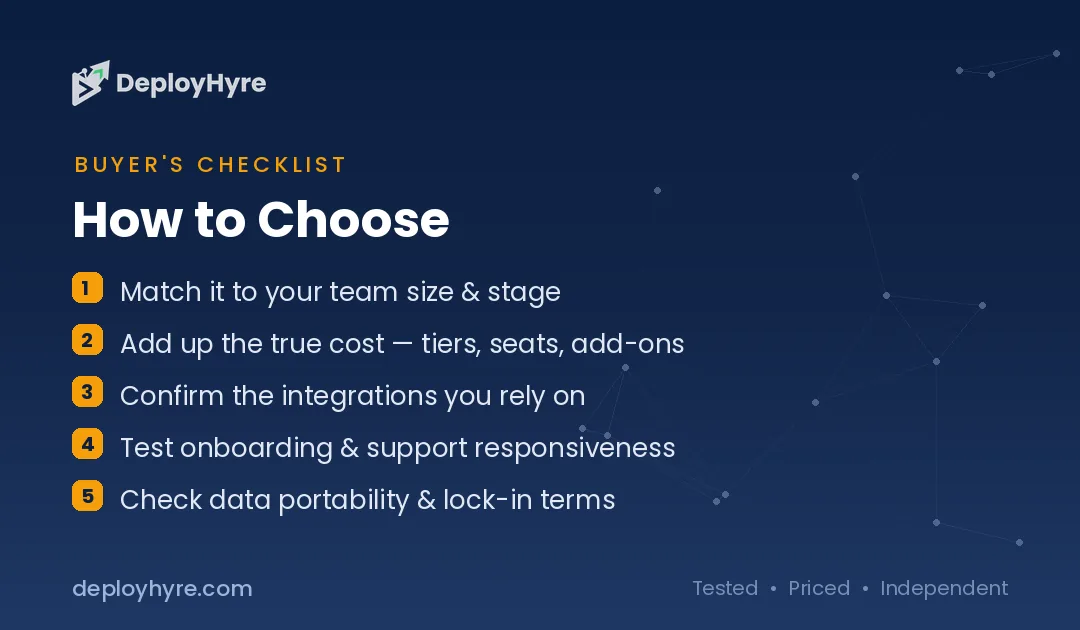
Start with your channel mix and ticket volume. If most of your support arrives as email and phone and you need airtight routing, SLAs, and reporting across a big team, Zendesk’s ticketing DNA will feel native and its higher seat cost buys real control. If most of your support happens in-app or over chat and you want a bot resolving conversations from week one, Intercom’s Messenger and Fin are the more natural home.
Next, model the AI bill against results. Intercom’s $0.99-per-resolution Fin only charges when it closes a ticket, which rewards teams with strong help-center content; Zendesk’s automation leans on seat licenses plus quoted resolution pricing. Run both against your actual monthly volume and expected deflection rate, not a vendor’s best-case demo, because the cheaper platform flips depending on how much your bot actually resolves.
Finally, weigh switching cost and ecosystem. Zendesk’s marketplace and enterprise governance make it easier to standardize a large, tool-heavy org; Intercom’s faster setup and bundled AI make it easier for a smaller team to get value quickly. Both offer free trials, so pilot each with a slice of real tickets before committing annually.
How We Evaluated Zendesk and Intercom
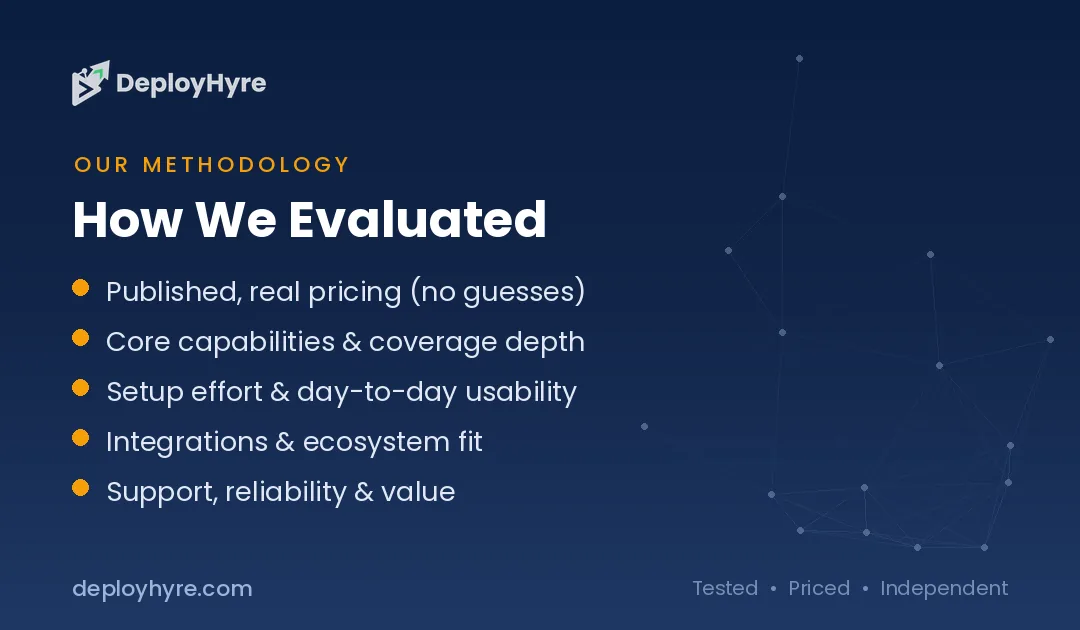
We compared Zendesk and Intercom on the criteria that matter to buyers spending real money: entry and mid-tier seat pricing, AI agent pricing and billing model, channel coverage, automation and routing depth, reporting, ecosystem and integrations, and speed to value for different team sizes. Pricing and plan details were taken from each vendor’s official pricing pages at the time of writing (Zendesk’s Suite and Support plans; Intercom’s Essential, Advanced, and Expert plans plus Fin AI Agent pricing). We did not conduct hands-on lab testing, and we have not independently verified vendor-published resolution-rate claims. Because both vendors revise pricing and packaging frequently, every figure here should be treated as a band and reconfirmed on the vendor site before purchase. Where a plan is sold only by custom quote, we note it rather than estimate a precise number.
The Bottom Line
Zendesk and Intercom are both excellent, but they win different buyers. Choose Zendesk if you are an enterprise or scaling support org that lives in tickets, needs deep routing and reporting, and can justify $55/agent/month and up for that control. Choose Intercom if you are a SaaS, ecommerce, or product-led team that wants messaging plus an included AI agent, lower seats starting at $29/seat/month, and outcome-based Fin pricing that only charges when the bot resolves a conversation. The deciding factor is almost always your AI automation rate: the more of your volume a well-fed bot can close, the more Intercom’s per-resolution model works in your favor, while low-automation, high-complexity operations get more value from Zendesk’s seat-based depth. Pilot both on real tickets before you sign.
Frequently Asked Questions
Is Zendesk or Intercom cheaper?
On entry seat price, Intercom is cheaper: its Essential plan is $29/seat/month versus Zendesk’s Suite Team at $55/agent/month (annual billing). But Intercom adds usage costs, chiefly Fin AI resolutions from $0.99 each, so a high-automation team can spend more overall. Model both against your ticket volume before deciding which is truly cheaper for you.
How is Intercom’s Fin AI agent priced?
Fin AI Agent is billed from $0.99 per resolution, meaning you pay only when Fin closes a conversation on its own. Fin is included on all three Intercom plans (Essential, Advanced, Expert), and you can also run Fin on an existing help desk without buying Intercom seats. Actual per-resolution cost can vary, so confirm current rates on Intercom’s pricing page.
What is Zendesk best for?
Zendesk is best for enterprise and scaling support teams that need robust omnichannel ticketing, skills-based routing, strict SLAs, granular reporting, and a large integration marketplace. Its ticketing engine and governance features make it a strong fit for large organizations standardizing many agents on one system, with plans ranging from Suite Team at $55/agent/month to custom-quoted Suite Enterprise.
What is Intercom best for?
Intercom is best for SaaS, ecommerce, and product-led teams that support customers inside the product and want AI-first deflection. Its in-app Messenger, proactive outreach, and bundled Fin AI Agent make it quick to deploy and effective at resolving conversations automatically. Seats start at $29/month on Essential, making it accessible for startups while still scaling to larger teams on Advanced and Expert.
Can I use both Zendesk and Intercom together?
Yes. Some teams run Zendesk as the ticketing backbone and add Intercom’s Fin AI Agent on top, since Fin can be deployed on an existing help desk without Intercom seats. This lets you keep Zendesk’s routing and reporting while using Fin for AI resolution. Check current integration support and Fin-on-third-party-helpdesk pricing on Intercom’s site before combining them.
Related Articles

The DeployHyre Editorial Team writes buyer guides on AI tools, SaaS, cloud hosting and proxies. We compare tools using published pricing, official documentation and third-party reviews. All content is for educational and informational purposes only.