Security teams drown in alerts. The 2025 SANS Detection and Response Survey found that 73% of security teams name false positives as their top detection challenge, and most organizations now receive thousands of alerts every day. Analysts cannot triage them all by hand, so real threats slip through.
Table of Contents
AI threat detection tools fix that overload. They learn normal behavior, score anomalies in real time, and surface the few alerts that matter. The payoff is measurable. The IBM 2025 Cost of a Data Breach Report found that organizations using AI and automation extensively identified and contained breaches 80 days faster and spent $1.9 million less per breach.
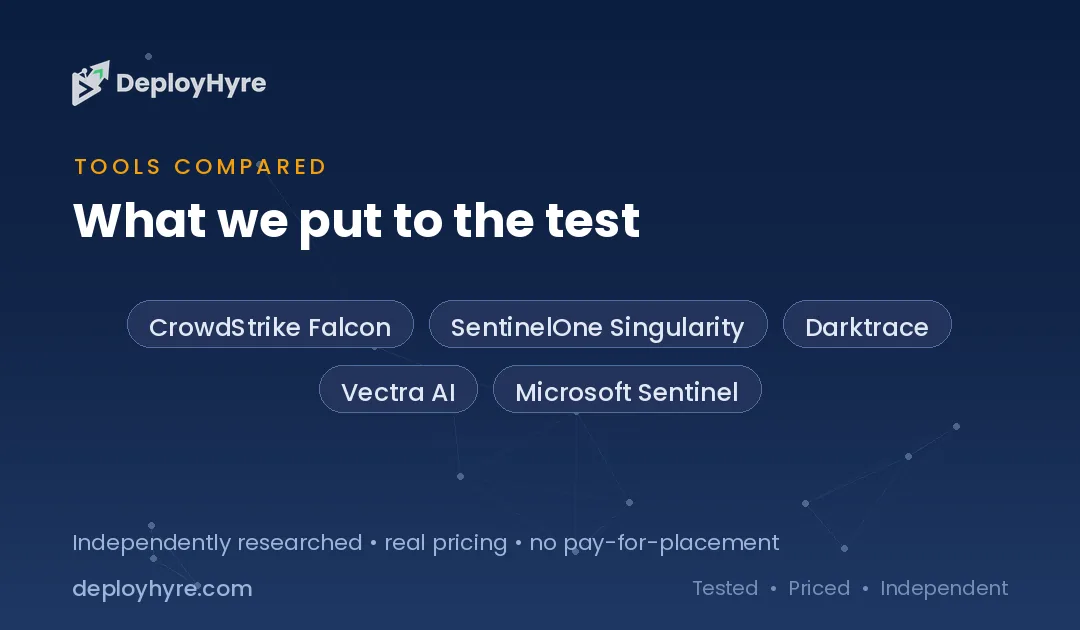
We compared 8 AI threat detection platforms on detection accuracy, response speed, coverage, and price. This guide ranks the best options for endpoints, networks, and the SOC, and connects to our wider AI cybersecurity tools coverage so detection and testing work together.
Quick Comparison: Top 8 AI Threat Detection Tools
| Tool | Best For | Starting Price | Key Strength |
|---|---|---|---|
| CrowdStrike Falcon | Endpoint and identity protection | $59.99/device/year | Cloud-native EDR with Charlotte AI |
| SentinelOne Singularity | SMB endpoint security | $69.99/endpoint | Autonomous response and rollback |
| Darktrace | Self-learning network defense | From ~$30,000/year | Autonomous response across domains |
| Vectra AI | Network detection and response | From ~$30,000/year | Identity and network blind spots |
| Microsoft Sentinel | Cloud-native SIEM | $2.46/GB/day | Scalable analytics and automation |
| Exabeam | Behavioral analytics (UEBA) | Custom quote | User and entity anomaly detection |
| Microsoft Defender for Endpoint | Budget endpoint protection | $3/user/month | Strong value inside Microsoft 365 |
| Dropzone AI | Autonomous alert triage | Custom quote | AI SOC analyst for investigations |
What Are AI Threat Detection Tools?
AI threat detection tools are security platforms that use machine learning to spot, score, and respond to threats by learning what normal looks like and flagging deviations in real time. They cut false positives, connect related signals into one incident, and often respond automatically, which shrinks the time an attacker stays hidden.
Older tools relied on fixed rules and known signatures. They missed new attacks and buried analysts in noise. AI tools build a behavior baseline for every user, device, and network flow, then flag the odd login or data transfer that breaks the pattern. Because they correlate signals, they turn thousands of raw alerts into a handful of real incidents a human can act on.
Best AI Threat Detection Tools for Endpoint Security
1 CrowdStrike Falcon: Best for Endpoint and Identity Protection
CrowdStrike Falcon is a cloud-native platform that uses AI to protect endpoints, identities, and cloud workloads.
What it does well. Falcon detects threats with behavioral AI and a lightweight agent, then stops them before they spread. Its Charlotte AI assistant answers investigation questions in plain language, so analysts move faster. The platform unifies endpoint, identity, and cloud signals in one console.
Key features:
- Behavioral endpoint detection and response
- Charlotte AI for natural-language investigations
- Identity threat protection
- Threat intelligence built into the platform
Pricing. CrowdStrike publishes tiered pricing from $59.99 to $184.99 per device per year, with Falcon Go aimed at small business.
Best for: Mid-market and enterprise teams that want a unified endpoint and identity platform.
Limitations. Add-on modules raise the real cost, so the entry price rarely reflects the full bill.
2 SentinelOne Singularity: Best for SMB Endpoint Security
SentinelOne Singularity delivers autonomous endpoint protection with one-click rollback after an attack.
What it does well. Singularity detects and stops threats on the device itself, even when offline, and can roll an infected machine back to a clean state after ransomware. Its Purple AI assistant turns plain-language questions into threat hunts, which lowers the skill barrier for smaller teams.
Key features:
- Autonomous, on-device threat prevention
- One-click ransomware rollback
- Purple AI for guided threat hunting
- Lightweight agents and easy setup
Pricing. SentinelOne Singularity starts at about $69.99 per endpoint, which suits small and mid-sized businesses.
Best for: SMBs that want strong, low-maintenance endpoint security with fast recovery.
Limitations. Advanced features like full XDR and managed hunting cost extra.
Best AI Threat Detection Tools for Network Detection and Response
3 Darktrace: Best for Self-Learning Network Defense
Darktrace uses self-learning AI to model normal behavior across network, cloud, email, and operational technology.
What it does well. Darktrace learns your environment without rules or signatures, then spots subtle deviations a static tool would miss. Its autonomous response can neutralize threats in fully autonomous, guided, or constrained modes, so it acts even when no analyst is watching at 3 a.m.
Key features:
- Self-learning behavioral AI
- Autonomous response across multiple domains
- Coverage for network, cloud, email, and OT
- Attack visualization and threat replay
Pricing. Darktrace uses custom pricing, with third-party estimates starting around $30,000 per year.
Best for: Organizations with complex hybrid environments that want autonomous response.
Limitations. The self-learning model needs tuning early on, and pricing is opaque.
4 Vectra AI: Best for Network and Identity Blind Spots
Vectra AI focuses on network detection and response, with strong coverage of identity-based attacks.
What it does well. Vectra watches network and identity traffic for attacker behaviors like lateral movement and privilege abuse, catching threats that endpoint tools miss. It works alongside CrowdStrike, SentinelOne, and Microsoft Defender as a complementary detection layer rather than a replacement.
Key features:
- AI-driven network detection and response
- Identity and cloud attack coverage
- Prioritized, scored detections
- Integrations with major EDR platforms
Pricing. Vectra NDR is quote-based, with listings ranging from $30,000 to $150,000 per year by size.
Best for: Endpoint-heavy teams that need network and identity visibility to close blind spots.
Limitations. It is a detection layer, so you still need endpoint and SIEM tools around it.
Best AI Threat Detection Tools for SIEM and Security Analytics
5 Microsoft Sentinel: Best for Cloud-Native SIEM
Microsoft Sentinel is a cloud-native SIEM that adds AI analytics and automation across your whole estate.
What it does well. Sentinel collects logs from cloud and on-premises sources, then applies machine learning to detect anomalies and reduce alert noise. Built-in automation playbooks respond to common incidents on their own, and it connects natively to the Microsoft Defender stack.
Key features:
- Cloud-scale log collection and analytics
- Machine-learning anomaly detection
- Automated response playbooks (SOAR)
- Deep Microsoft 365 and Azure integration
Pricing. Microsoft Sentinel uses pay-as-you-go pricing at $2.46 per GB per day, with commitment tiers for volume discounts.
Best for: Microsoft-centric teams that want a scalable SIEM with built-in automation.
Limitations. Data-volume pricing can rise fast, so log filtering matters for cost control.
6 Exabeam: Best for Behavioral Analytics
Exabeam adds user and entity behavior analytics to detection, catching threats that hide as normal activity.
What it does well. Exabeam builds behavior baselines for every user and device, then scores risky deviations like unusual logins or data access. It stitches related events into a single timeline, which cuts the manual work of piecing an incident together by hand.
Key features:
- User and entity behavior analytics (UEBA)
- Automated incident timelines
- Risk scoring for faster triage
- SIEM and detection integrations
Pricing. Exabeam uses custom, quote-based pricing tied to data volume and modules.
Best for: SOC teams that need to catch insider threats and compromised accounts.
Limitations. It works best layered on existing log sources, so it is not a standalone fix.
Best AI Threat Detection Tools for Budget and Autonomous SOC
7 Microsoft Defender for Endpoint: Best for Value Inside Microsoft 365
Microsoft Defender for Endpoint delivers solid AI-driven protection at a price built for tight budgets.
What it does well. Defender uses cloud-powered behavioral detection to block malware and risky activity, and it integrates tightly with Windows and Microsoft 365. For teams already paying for Microsoft licensing, it adds enterprise-grade detection without a separate vendor contract.
Key features:
- Behavioral, cloud-powered endpoint detection
- Native Windows and Microsoft 365 integration
- Automated investigation and remediation
- Threat and vulnerability management
Pricing. Defender for Endpoint costs $3 to $5.20 per user per month, with each license covering up to five devices.
Best for: SMBs and Microsoft-centric teams that want strong detection at the lowest cost.
Limitations. It works best in Windows and Microsoft environments, with weaker fit elsewhere.
8 Dropzone AI: Best for Autonomous Alert Triage
Dropzone AI acts as an autonomous SOC analyst that investigates every alert without human prompting.
What it does well. Dropzone automatically investigates alerts from your existing tools, gathers context, and writes a clear verdict and report. It targets the alert-fatigue problem head on, handling the routine triage that burns out analysts so the team focuses on real incidents.
Key features:
- Autonomous investigation of every alert
- Plain-language findings and reports
- Integration with existing SIEM and EDR tools
- No playbooks to build or maintain
Pricing. Dropzone AI uses custom, quote-based pricing tied to alert volume and integrations.
Best for: Lean SOC teams overwhelmed by alert volume that need automated triage.
Limitations. It triages and investigates rather than blocking threats, so it layers on top of detection tools.
How Should You Choose an AI Threat Detection Tool?
Start with your biggest blind spot, then match the tool to your stack and budget. Endpoint-heavy teams should lead with EDR like CrowdStrike or SentinelOne, while teams buried in alerts gain most from a SIEM or an autonomous triage layer.
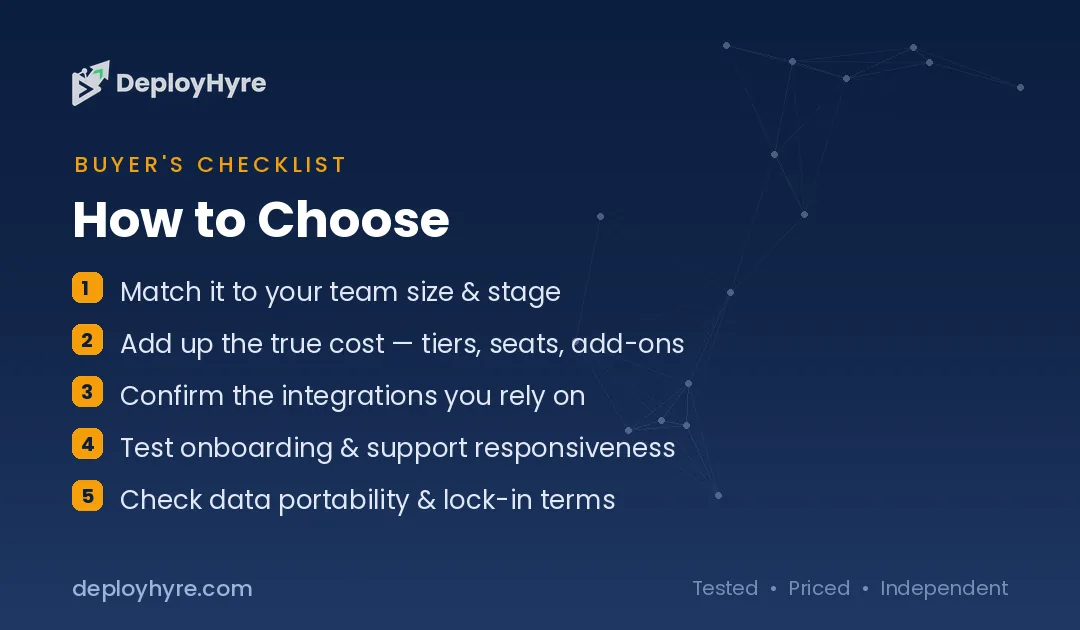
Check these factors before you buy:
- Coverage. Map the tool to your gap, whether that is endpoint, network, identity, or cloud.
- Response. Decide if you need autonomous blocking, like Darktrace, or guided investigation.
- Integration. Confirm it fits your existing stack, especially if you run Microsoft 365.
- Alert quality. Favor tools that correlate signals and cut false positives, not raise them.
- Total cost. Watch data-volume pricing in SIEM tools and add-on modules in EDR.
Detection is stronger when you test your defenses too. Validate controls with AI penetration testing tools, and govern your deployments with our AI governance guide.
How We Evaluated These Tools
We assessed each platform on five weighted criteria: detection accuracy, response speed and automation, coverage across endpoint, network, and cloud, integration depth, and pricing transparency. We reviewed vendor documentation, third-party pricing data, and analyst surveys, and we prioritized tools that correlate signals into real incidents rather than flooding teams with raw alerts. Pricing reflects publicly listed figures at the time of writing, and quote-based vendors are noted as such. Many tools span several categories, and our groupings reflect each tool's core strength.
The Bottom Line
CrowdStrike Falcon and SentinelOne lead for endpoint detection, Darktrace and Vectra cover network and identity blind spots, and Dropzone AI tackles the alert overload behind analyst burnout. The right tool detects faster and responds sooner, which directly lowers breach cost and dwell time.
No single tool covers everything. Layer detection with testing using AI penetration testing tools and the broader AI cybersecurity toolkit, and tie it to your wider AI for business strategy.
Frequently Asked Questions
What is the best AI threat detection tool?
CrowdStrike Falcon leads for unified endpoint and identity detection, with transparent pricing from $59.99 per device per year. For network and identity blind spots, Darktrace and Vectra AI are strongest, while Dropzone AI is the best pick for teams overwhelmed by alert volume.
How does AI improve threat detection?
AI learns normal behavior for every user, device, and network flow, then flags deviations in real time. It correlates related signals into single incidents, which cuts false positives. IBM found that organizations using AI extensively contained breaches 80 days faster and spent $1.9 million less per breach.
How much do AI threat detection tools cost?
Endpoint tools start low, with Microsoft Defender at $3 per user per month and CrowdStrike Falcon at $59.99 per device per year. Network platforms like Darktrace and Vectra start near $30,000 per year, while Microsoft Sentinel charges $2.46 per GB per day.
Can AI threat detection replace a security analyst?
No. AI handles the routine triage and investigation that overwhelms analysts, but humans still make final calls on complex incidents and response. Tools like Dropzone AI act as an autonomous first responder, freeing analysts to focus on the threats that need judgment.
What is the difference between EDR and NDR?
EDR, like CrowdStrike and SentinelOne, watches activity on endpoints such as laptops and servers. NDR, like Darktrace and Vectra, watches network and identity traffic for attacker behavior. Many teams run both, since endpoints and the network reveal different stages of an attack.
Best AI tools for blog writing

David Austin is a technology writer and software analyst at DeployHyre, where he covers AI tools, SaaS platforms, cloud hosting, and business automation. He focuses on hands-on comparisons of pricing, features, and real-world performance so teams can pick the right software with confidence.
Know AI, SaaS, or cloud tools inside out? Pitch a guest post and get in front of thousands of buyers researching their next tool.
Pitch your idea →