Traditional SEO tools track Google rankings. They can’t tell you whether ChatGPT, Perplexity, or Gemini cite your brand when users ask about your industry. AI search visibility tools fill that gap by monitoring mentions, citations, and sentiment across every major AI engine. We compared 10 platforms and ranked them by coverage, actionability, and price. Your brand is either getting recommended by AI or getting ignored. These tools show you which one.
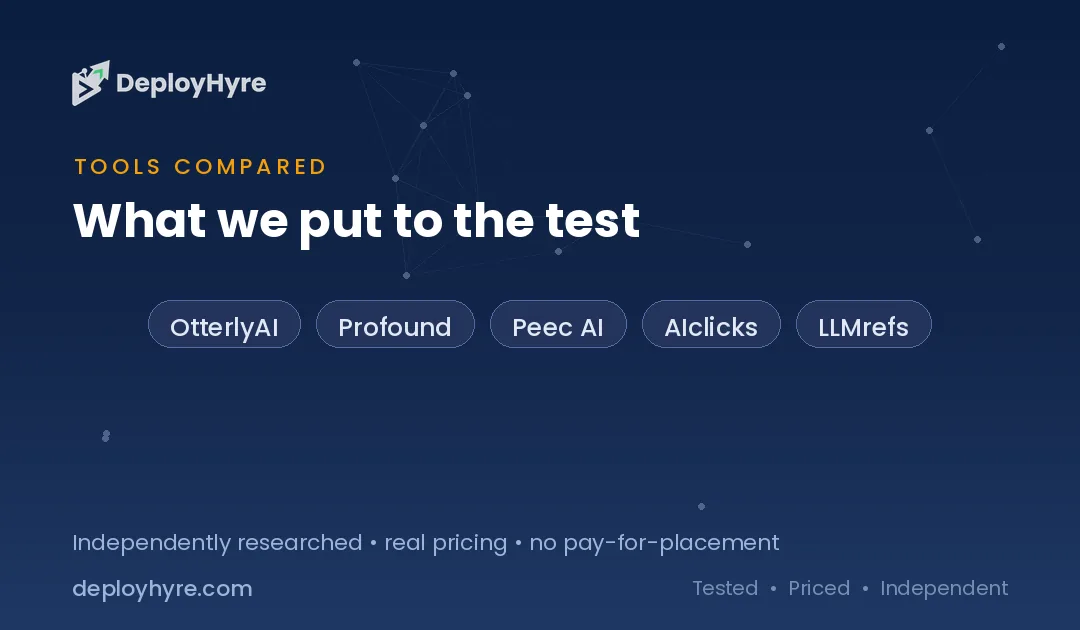
Table of Contents
For the full picture, see our complete guide to AI for SEO.
Gartner projects traditional search volume will drop 25% by 2026 due to AI assistants answering queries directly. ChatGPT now has over 800 million weekly active users. Perplexity processes millions of searches daily. Google AI Overviews appear on a growing percentage of search results.
Your customers are no longer clicking through 10 blue links. They’re asking AI engines what to buy, who to trust, and which brands to consider. The answers are synthesized, opinionated, and cite only a handful of sources. If your brand isn’t one of those cited sources, you’re invisible to a rapidly growing segment of your audience.
The best AI search visibility tools solve this by tracking where your brand appears (and where it doesn’t) across ChatGPT, Gemini, Perplexity, Claude, Copilot, and Google AI Overviews. They show your share of voice, which competitors are getting cited instead of you, and what content you need to create or optimize to win those citations back.
This is the fastest-growing category in marketing technology. There are now 18+ tools claiming to track AI visibility, and the marketing copy across all of them sounds nearly identical. This guide cuts through the noise.
What Is AI Search Visibility and Why Does It Matter?
AI search visibility measures how often, how accurately, and how positively AI engines mention your brand when users ask questions related to your industry. It’s the new metric that complements (but doesn’t replace) traditional search rankings.
Traditional SEO tracks your position in Google’s blue links. AI visibility tracking measures something different: whether ChatGPT recommends your product when a user asks “what’s the best CRM for startups?” or whether Perplexity cites your article when someone researches your industry.
This matters because roughly 60% of searches now result in no click, with AI Overviews answering the query directly on the results page. The traffic you’re losing from traditional search is going to AI-generated answers. If those answers don’t mention you, that traffic goes to whoever AI recommends instead.
The practice of optimizing for AI-generated search results has two names: AEO (Answer Engine Optimization) focuses on getting featured in AI-generated answers. GEO (Generative Engine Optimization) focuses on making your content the kind that AI systems want to cite. Both start with measurement, which is where these tools come in.
Quick Comparison: 10 Best AI Search Visibility Tools
1 OtterlyAI: Best for Action-Oriented Marketing Teams
If you want both measurement and clear “what should we do next” recommendations, OtterlyAI is the strongest choice for teams of 2 to 10 people.
What it does well. OtterlyAI was recognized as a Gartner Cool Vendor in AI for Marketing in 2025 and is used by over 20,000 marketing professionals. It tracks citations across six AI platforms (ChatGPT, Gemini, Perplexity, Claude, Copilot, AI Overviews) with competitive benchmarking, sentiment scoring, and actionable recommendations. The recommendation feature is the key differentiator: instead of just showing you data, it tells you which pages to optimize and which third-party sites to pursue for coverage.
Key features:
- Brand visibility tracking across 6 major AI engines
- Share of AI Voice (your citation percentage vs. competitors)
- Link citation tracking (which URLs AI engines reference)
- Brand sentiment analysis (positive, neutral, or negative)
- GEO crawlability audits (is your content being crawled by AI?)
- Automated GEO recommendations for improving visibility
- Competitive benchmarking
Pricing. Lite starting at $29/month. Team plans scale up from there. Free trial available.
Best for: Marketing teams of 2 to 10 people who want both measurement and actionable optimization recommendations. One team reported 10.6 million Google impressions in 12 months by pairing OtterlyAI tracking with content optimization.
Limitations. Plans scale up faster than smaller teams need. Strongest at diagnosing visibility gaps but you’ll still need an internal workflow (or a content tool) to execute the fixes.
2 Profound: Best for Enterprise AI Visibility and Competitive Intelligence
Profound goes deeper than any other tool on AI search volume data, showing not just whether your brand appears, but how many users are asking the questions that trigger those appearances.
What it does well. Profound tracks across 10+ AI platforms including ChatGPT Shopping, DeepSeek, and Grok, and offers a unique feature no other platform matches: Prompt Volumes. Instead of just showing whether your brand appears for a given query, Profound shows how many users are asking that query across AI platforms. This turns visibility tracking into search demand intelligence. The platform is SOC 2 Type II compliant with AWS and Cloudflare integrations.
Key features:
- Prompt Volume data (AI search demand intelligence)
- Conversation Explorer for real-time AI search insights
- Citation source analysis across 10+ engines
- Enterprise-grade competitive benchmarking
- SOC 2 Type II compliance
- API integrations
Pricing. Custom enterprise pricing. Typically a four-figure monthly commitment. G2 Winter 2026 named Profound the Leader in the AEO category.
Best for: Enterprise marketing teams (50+ employees) with dedicated competitive intelligence functions and budget for serious measurement. Clients include MongoDB, Indeed, Figma, Zapier, Ramp, and Docusign.
Limitations. Enterprise pricing puts it out of reach for SMBs. Procurement and onboarding effort is higher than self-serve tools. Overkill if you haven’t built a disciplined prompt set yet.
3 Peec AI: Best for Simple, Fast Prompt Tracking
Peec AI strips away complexity and focuses on the core question: does AI mention your brand when users ask about your category?
What it does well. Peec AI runs prompts daily across your selected AI models, tracks both brand mentions (when AI names your brand) and source citations (when your URL is referenced), and offers Google Looker Studio integration for custom reporting. Setup takes minutes. The interface is deliberately simple, avoiding the feature overload that plagues larger platforms.
Key features:
- Daily prompt monitoring across major AI models
- Brand mention and source citation tracking
- Segment by model, country, and audience persona
- Google Looker Studio connector for custom dashboards
- Competitor benchmarking
Pricing. Custom pricing. Contact for details.
Best for: Marketing teams that want fast, clean AI visibility data without a steep learning curve. One user reported blog posts ranking for targeted ChatGPT prompts within 24 hours of implementing Peec AI insights.
Limitations. Fewer engines tracked compared to OtterlyAI or Profound. No built-in content optimization or recommendation engine. Primarily a tracking tool.
4 AIclicks: Best Dedicated ChatGPT Rank Tracker
AIclicks specializes in one thing: tracking exactly how your brand appears inside ChatGPT responses.
What it does well. AIclicks analyzes prompt-level responses, showing which prompts trigger mentions, whether your website is cited, and which sources influence ChatGPT’s recommendations. It also groups prompts into clusters and tracks share of voice over time. Beyond ChatGPT, it monitors Perplexity, Gemini, Google AI Overviews, and Claude.
Key features:
- Prompt-level ChatGPT visibility analysis
- Citation source identification (which sites influence AI answers)
- Content gap detection for prompt coverage
- Competitor benchmarking and share of voice
- Prompt clustering by topic
Pricing. Starts at $59/month.
Best for: Brands and agencies that want dedicated ChatGPT visibility tracking with actionable insights they can connect to content optimization and traffic attribution.
Limitations. Newer platform with a smaller community than OtterlyAI. Less enterprise infrastructure than Profound.
5 LLMrefs: Best for Multi-Language and Multi-Country Tracking
LLMrefs takes a keyword-based approach (instead of prompt-based), making it easier for SEO teams to transition from traditional rank tracking to AI visibility monitoring.
What it does well. LLMrefs tracks across all major AI models with geo-targeting across 20+ countries and 10+ languages. Import your existing SEO keyword lists and view LLM visibility instantly. The platform automatically generates fan-out prompts based on real conversations users are having with AI chatbots. Trusted by over 10,000 marketers.
Key features:
- Keyword-based tracking (not just prompt-based)
- 20+ country and 10+ language coverage
- Auto-generated fan-out prompts
- Citation and content gap analysis
- Coverage across ChatGPT, Gemini, Perplexity, Claude, Grok, AI Overviews
Pricing. Starting at $29/month. Free tools available.
Best for: International brands and agencies managing visibility across multiple markets and languages. The strongest multi-language coverage of any tool on this list.
Limitations. Primarily a tracking tool without content creation workflows. Less well known than SEO incumbents, so community resources are limited.
More Tools Worth Considering
#6 Omnia converts tracking into a prioritized action backlog, prescribing which content to create, where to publish, and which gaps to fix. Best for scaleups that want measurement plus execution in one platform.
#7 Scrunch AI is built for enterprise-grade compliance, with monitoring across 6+ engines. Best for regulated industries needing audit trails.
#8 PromptMonitor offers broad model coverage at a low entry price. Best for SMBs and agencies needing multi-client tracking without enterprise spend.
#9 Surfer AI Tracker adds AI visibility tracking to Surfer SEO’s existing content platform. Best for teams already using Surfer for content optimization.
#10 SE Ranking AI Visibility adds ChatGPT and AI Overview tracking to the existing SE Ranking platform. Best for SEO teams that want to extend their current toolset.
How Can You Optimize Your Content to Get Cited by AI?
Tracking visibility is step one. Improving it is where the money is. Here’s a five-step process based on what we’ve seen work across the tools in this guide.
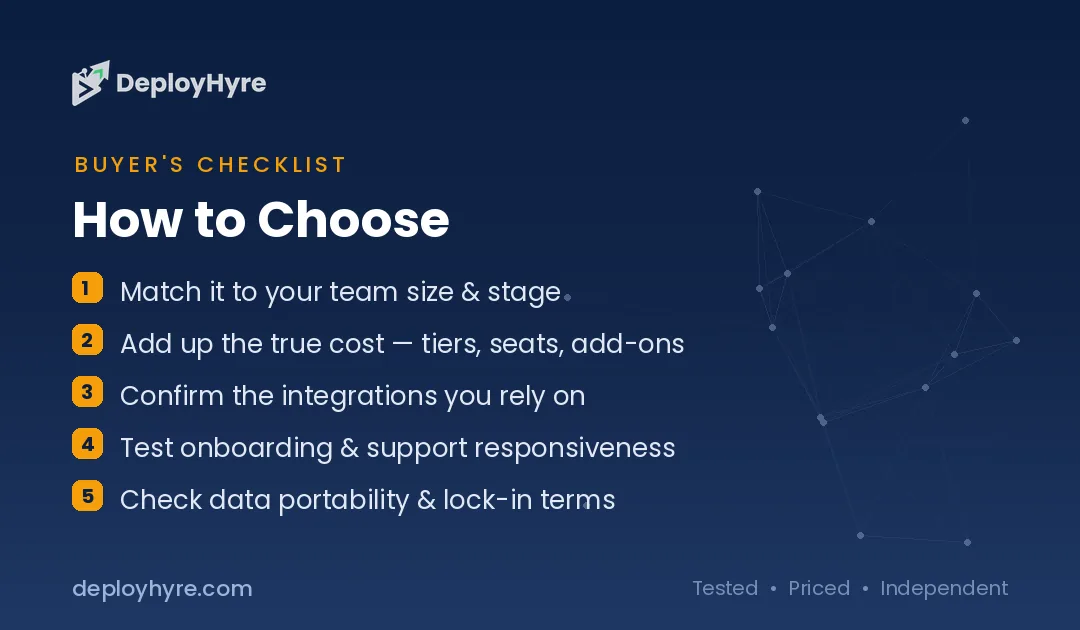
Step 1: Audit your current AI visibility. Use any tool from this list to see where you currently appear (and don’t) across ChatGPT, Perplexity, and Gemini. Identify the prompts where competitors get cited and you don’t.
Step 2: Create citation-worthy content. AI engines cite content that is factually dense, well-structured, and includes original data or expert perspectives. Listicles, comparison tables, and FAQ sections get cited more than narrative prose. Include specific numbers, names, and verifiable claims.
Step 3: Optimize for crawlability. AI search bots need to discover and understand your content. Use clean HTML structure, proper schema markup, and ensure your robots.txt doesn’t block AI crawlers. OtterlyAI’s GEO crawlability audit checks this automatically.
Step 4: Build third-party authority. AI engines don’t just cite your website. They synthesize information from across the web. Build presence across the sources AI cites most: PR coverage, earned media, Reddit discussions, Wikipedia, and social platforms. When multiple sources corroborate your brand’s expertise, AI engines are more likely to recommend you.
Step 5: Monitor and iterate weekly. AI search results are non-deterministic (they change constantly). Track your citation share weekly, identify new prompts entering your category, and refresh content quarterly to prevent citation decay.
What are AI search visibility tools?
They track your brand in AI answers. AI search visibility tools show whether you appear in ChatGPT, Perplexity, and Google AI Overviews, plus your citation share and gaps. Combine them with GEO tools to grow presence.
Why does AI search visibility matter?
More searches end in AI answers. Users may never click a link, so appearing in AI responses drives awareness and trust. Tracking visibility shows whether AI engines recommend your brand to potential customers.
How do I improve my AI search visibility?
Publish authoritative, sourced content. Earn mentions across trusted sites and structure pages for easy extraction, then monitor visibility tools to find gaps. Consistent quality and strong entity signals raise how often AI engines cite you.
To win the map pack too, see the best AI tools for Google Business Profile optimization.
The Bottom Line
AI search visibility isn’t a nice-to-have anymore. It’s the new SEO. By the time declining traffic reveals the gap, competitors have already captured the prompts you were winning. Clawing back citations is slower than losing them because you’re competing on sources and authority, not just page tweaks.
Start with one tool. OtterlyAI ($29/month) offers the best balance of tracking and recommendations for most teams. If you’re enterprise, evaluate Profound. If you’re budget-constrained, LLMrefs ($29/month) or PromptMonitor offer solid coverage at lower price points.
The brands that measure AI visibility now will own the citations that matter in 12 months. The ones that wait will spend twice as long trying to win them back.
Next steps: Pair your visibility tracking with content optimization tools from our best AI SEO tools guide and learn how to structure content for AI with our AI for business guide.
Frequently Asked Questions
What are AI search visibility tools?
AI search visibility tools track how your brand appears in AI-generated search results across ChatGPT, Gemini, Perplexity, Claude, Copilot, and Google AI Overviews. They measure citation frequency, share of voice, source URLs referenced, and brand sentiment. Unlike traditional SEO tools that track Google rankings, these tools monitor the AI engines that are increasingly answering user queries directly.
How much do AI visibility tools cost?
Pricing ranges from $29/month (OtterlyAI Lite, LLMrefs) to custom enterprise pricing (Profound, Scrunch AI). Mid-range tools like AIclicks start at $59/month. Most offer free trials. For teams already using SEO platforms, Surfer AI Tracker and SE Ranking AI Visibility are available as add-ons to existing subscriptions.
Which AI engines should I track?
At minimum, track ChatGPT (largest user base at 800M+ weekly users), Google AI Overviews (appears on Google results), and Perplexity (fastest-growing AI search engine). Add Gemini, Claude, and Copilot based on your audience. Most tools in this guide cover all six major engines.
Can I improve my AI visibility without these tools?
You can optimize your content for AI citations without tracking tools by following best practices: use clear headings, include comparison tables and FAQ sections, cite credible sources, add original data, and use proper schema markup. However, without tracking, you won’t know whether your optimizations are working or which specific prompts you’re winning or losing.
How long does it take to improve AI search visibility?
Results vary, but documented case studies show measurable improvements within 60 to 90 days. Ramp achieved a 7x AI visibility increase within weeks of optimizing. More typical results over 60 to 90 days include doubling or tripling citation rates from a low base. Consistent content optimization and third-party authority building are required for sustained visibility.
What is the difference between AEO and GEO?
AEO (Answer Engine Optimization) focuses on getting your content featured in AI-generated answers. GEO (Generative Engine Optimization) focuses on making your content the kind that AI systems want to cite, including structure, authority signals, and citation-worthiness. Both are subsets of AI search optimization, and in practice, most strategies combine elements of both.

David Austin is a technology writer and software analyst at DeployHyre, where he covers AI tools, SaaS platforms, cloud hosting, and business automation. He focuses on hands-on comparisons of pricing, features, and real-world performance so teams can pick the right software with confidence.
Know AI, SaaS, or cloud tools inside out? Pitch a guest post and get in front of thousands of buyers researching their next tool.