Table of Contents
The best MLOps platform for most teams is the hyperscaler that matches your cloud, SageMaker on AWS, Vertex AI on Google, Azure ML on Azure, with Databricks for unified data-and-ML, Weights and Biases for experiment tracking, and MLflow as the open-source foundation. MLOps platforms manage the machine-learning lifecycle, tracking experiments, versioning models and data, deploying models to production, and monitoring them, so ML moves from notebooks to reliable, repeatable production systems.
The pricing reality to internalize: there is no “MLOps price,” because the leaders bill by consumption, not a platform license. SageMaker, Vertex AI, and Azure ML charge for the compute, storage, and API calls you use, with no separate platform fee, and Databricks bills through consumable DBUs. That means costs escalate with usage and demand FinOps discipline, and it makes cross-platform comparison a modeling exercise rather than a price-list lookup. Open-source options shift the cost to your own engineering time instead.
Every detail below reflects recent vendor pricing models. Because consumption pricing depends entirely on your workloads, we describe the model rather than a single number, and you must forecast your own compute.
Quick Comparison: MLOps Platforms at a Glance
| Platform | Best For | Pricing Model | Note |
|---|---|---|---|
| MLflow | Open-source lifecycle tracking | Free (self-hosted) | Cost is engineering time |
| Weights & Biases | Experiment tracking, research | Free tier + paid | Best-in-class tracking |
| AWS SageMaker | AWS-native ML lifecycle | Usage-based (compute/storage/hosting) | No platform license |
| Google Vertex AI | Google Cloud-native ML | Usage-based | Strong AutoML + GenAI |
| Azure ML | Microsoft-native ML | Usage-based | Enterprise integration |
| Databricks | Unified data + ML | DBU consumption | Needs FinOps discipline |
| Neptune.ai | Experiment tracking at scale | Free tier + paid | Metadata-heavy training |
What MLOps Platforms Do
Machine learning in a notebook is easy; machine learning in production is hard. MLOps platforms bring software-engineering discipline to ML: they track every experiment so results are reproducible, version models and the data they trained on, automate deployment so a model goes from training to serving reliably, and monitor production models for drift as real-world data diverges from training data. Without this, ML projects stall at the proof-of-concept stage and production models silently degrade.
The lifecycle has distinct stages, and platforms differ in which they emphasize. Experiment tracking (Weights and Biases, Neptune, MLflow) records what you tried and what worked. Model registry and versioning manage what is deployable. Deployment and serving push models to production. Monitoring watches for drift and performance decay. The hyperscaler platforms cover the full lifecycle, while specialized tools do one stage exceptionally well and integrate with the rest.
MLOps sits at the intersection of data engineering and software delivery. It builds on the data pipelines in our best AI ETL tools guide and borrows the automation practices from our best AI DevOps tools guide, applied to models instead of ordinary code.
There Is No “MLOps Price,” Only Consumption
The hyperscaler platforms and Databricks bill by consumption, not a platform license, so your MLOps cost is really your compute, storage, and API cost, and it demands active management to avoid surprises. SageMaker charges pay-as-you-go across notebook instance hours, training-job duration, and hosting, which requires meticulous forecasting because the components add up in ways that are easy to underestimate. Databricks bills through DBU consumption that can escalate quickly and needs FinOps discipline. Vertex AI and Azure ML follow the same usage-based logic.
The practical consequences are two. First, you cannot compare platforms on a price list; you must model your training and serving workloads against each provider’s compute rates, which usually means the platform matching your existing cloud wins on integration and negotiated discounts. Second, open-source tools like MLflow, Kubeflow, and the free tiers of Weights and Biases eliminate licensing cost but shift the burden to your own engineering and infrastructure. There is no free lunch, only a choice of where the cost lands.
Best Hyperscaler and Unified Platforms
The right hyperscaler MLOps platform is almost always the one matching your existing cloud: SageMaker for AWS, Vertex AI for Google Cloud, Azure ML for Azure, because the integration, data gravity, and negotiated discounts make same-cloud the default. All three cover the full ML lifecycle, bill by usage with no platform license, and integrate natively with their cloud’s data and compute. Vertex AI is particularly strong on AutoML and generative-AI tooling, while Azure ML leads on enterprise integration. For teams already committed to a cloud, the native platform is the path of least resistance and usually the best value.
Databricks is the choice for organizations that want unified data and ML on one platform, combining the data lakehouse with ML lifecycle management, billed through DBU consumption. It suits data-heavy organizations that want their analytics and ML in one environment rather than stitching separate tools together. The caveat is cost discipline: DBU consumption escalates without active management, so Databricks rewards teams with FinOps practices. Both the hyperscalers and Databricks are the comprehensive, consumption-priced choices for production ML at scale.
Best for Experiment Tracking
Weights and Biases is the best-in-class experiment-tracking platform, the favorite of research-focused teams and foundation-model developers for its polished tracking, visualization, and collaboration, with a free tier and paid plans above it. It excels at the record-what-you-tried stage of the lifecycle, making experiments reproducible and comparable, and it integrates with the hyperscaler platforms rather than replacing them. For teams whose priority is rigorous experimentation, especially in research or model development, Weights and Biases is the specialist worth adding alongside a full-lifecycle platform.
Neptune.ai is the other strong experiment-tracking specialist, particularly suited to metadata-heavy training and large-scale experiment management, also with a free tier and paid plans. Both do one stage of MLOps exceptionally well and are commonly used together with a hyperscaler platform that handles deployment and serving. Choose them when experiment tracking is a genuine pain point and the full-lifecycle platforms’ built-in tracking is not enough, which is common for research-led teams. They pair with the analytics in our best AI data analytics tools guide.
Best Open-Source Foundations
MLflow is the open-source foundation of MLOps, free to self-host and covering experiment tracking, model registry, and deployment packaging, the standard starting point for teams that want lifecycle management without a platform bill. It provides a clear upgrade path, many teams start with MLflow and later add managed capabilities as requirements grow, and it integrates with essentially every other tool in the ecosystem. For cost-conscious teams with engineering capacity, MLflow delivers real MLOps discipline for the cost of running it.
Kubeflow extends the open-source approach for teams running ML on Kubernetes, providing pipelines and orchestration for those with the platform-engineering depth to operate it. Both open-source options reduce or eliminate licensing cost while shifting operational burden to your team, the same trade that runs through every category in modern data infrastructure. Choose them when you have the engineering capacity and want to avoid consumption-based platform lock-in, and treat the hyperscaler platforms as the managed alternative when you would rather buy than build.
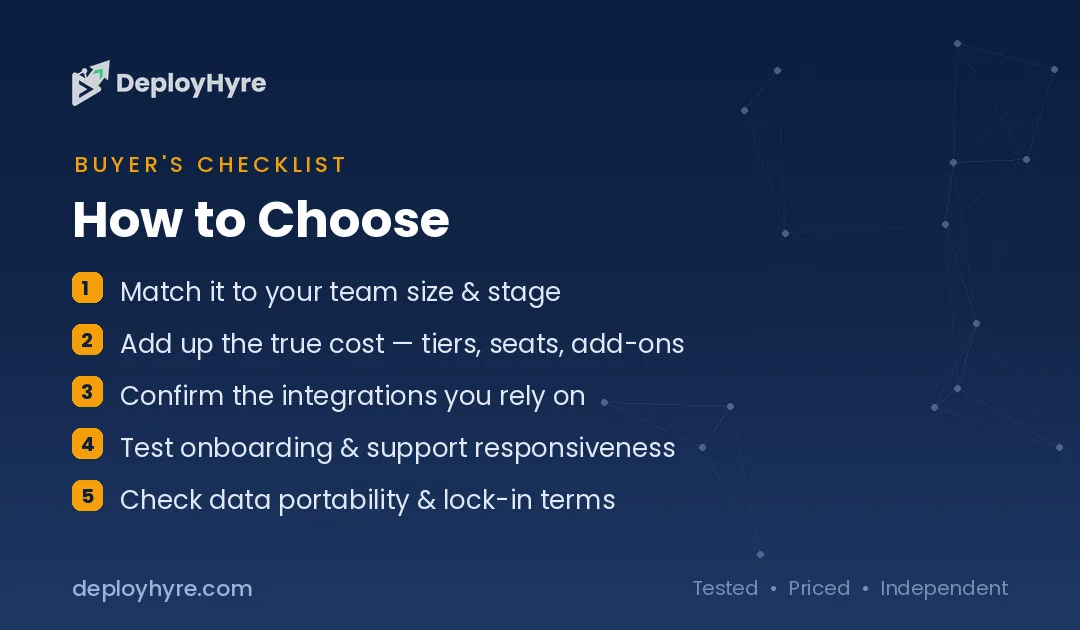
How Should You Choose an MLOps Platform?
Follow your cloud first. If your data and compute already live in AWS, Google Cloud, or Azure, the native platform, SageMaker, Vertex AI, or Azure ML, wins on integration, data gravity, and discounts, and cross-cloud MLOps rarely justifies the friction. This single fact settles the decision for most teams already committed to a hyperscaler.
Then decide managed versus open-source. Consumption-priced managed platforms remove operational burden but demand FinOps discipline to control escalating usage costs. Open-source MLflow and Kubeflow eliminate licensing but require engineering to run. Match this to whether your constraint is engineering capacity or budget predictability.
Finally, identify your sharpest pain. If it is experiment tracking specifically, add Weights and Biases or Neptune alongside a full-lifecycle platform rather than expecting one tool to do everything well. And whatever you choose, budget with the understanding that MLOps cost is consumption cost, so model your training and serving workloads before committing, because there is no flat price to compare.
How We Evaluated These Platforms
We evaluated each platform on lifecycle coverage (tracking, registry, deployment, monitoring), cloud integration, experiment-tracking quality, pricing model, and operational burden. Because the leaders bill by consumption and open-source tools shift cost to engineering, we describe pricing models rather than single figures and note where FinOps discipline is required. We accepted no payment for placement; rankings reflect fit for a stated use case.
The Bottom Line
For most teams the answer is the hyperscaler matching your cloud, SageMaker, Vertex AI, or Azure ML, with Databricks the pick for unified data and ML if you keep DBU costs disciplined. Weights and Biases and Neptune.ai are the experiment-tracking specialists to add alongside, and MLflow the open-source foundation for teams that would rather build. Remember there is no flat MLOps price, only consumption, so follow your cloud and model your workloads before you commit.
Frequently Asked Questions
How much do MLOps platforms cost?
The leaders bill by consumption, not a platform license. SageMaker, Vertex AI, and Azure ML charge for the compute, storage, and API calls you use, and Databricks bills through DBU consumption, both of which escalate with usage and need cost management. Open-source options like MLflow and Kubeflow are free to license but cost engineering time, and tools like Weights and Biases offer free tiers plus paid plans.
Which MLOps platform should I use?
For most teams, the hyperscaler matching your existing cloud, SageMaker for AWS, Vertex AI for Google Cloud, Azure ML for Azure, because of integration, data gravity, and discounts. Databricks suits data-heavy teams wanting unified data and ML. Research-focused teams often add Weights and Biases or Neptune for experiment tracking, and cost-conscious teams start with open-source MLflow.
What is the difference between MLOps and DevOps?
DevOps brings automation and reliability to software delivery; MLOps applies the same discipline to machine-learning models, which have extra challenges: experiments to track, data and models to version, and production drift to monitor. MLOps borrows DevOps practices but adds the lifecycle stages unique to ML, so a model in production stays reproducible and reliable.
Do I need a paid MLOps platform or is open-source enough?
For teams with engineering capacity, open-source MLflow provides real lifecycle management, tracking, registry, deployment packaging, for free, with a clear path to add managed capabilities later. Managed hyperscaler platforms remove operational burden and cover the full lifecycle at consumption cost. The choice depends on whether your constraint is engineering time or budget predictability.
Why is Databricks cost hard to predict?
Databricks bills through DBUs (Databricks Units) consumed by your workloads, so cost scales with compute usage and can escalate quickly as ML and data workloads grow. Without FinOps discipline, monitoring and controlling DBU consumption, bills can rise unexpectedly, which is the main cost caution for teams adopting the platform.

David Austin is a technology writer and software analyst at DeployHyre, where he covers AI tools, SaaS platforms, cloud hosting, and business automation. He focuses on hands-on comparisons of pricing, features, and real-world performance so teams can pick the right software with confidence.